

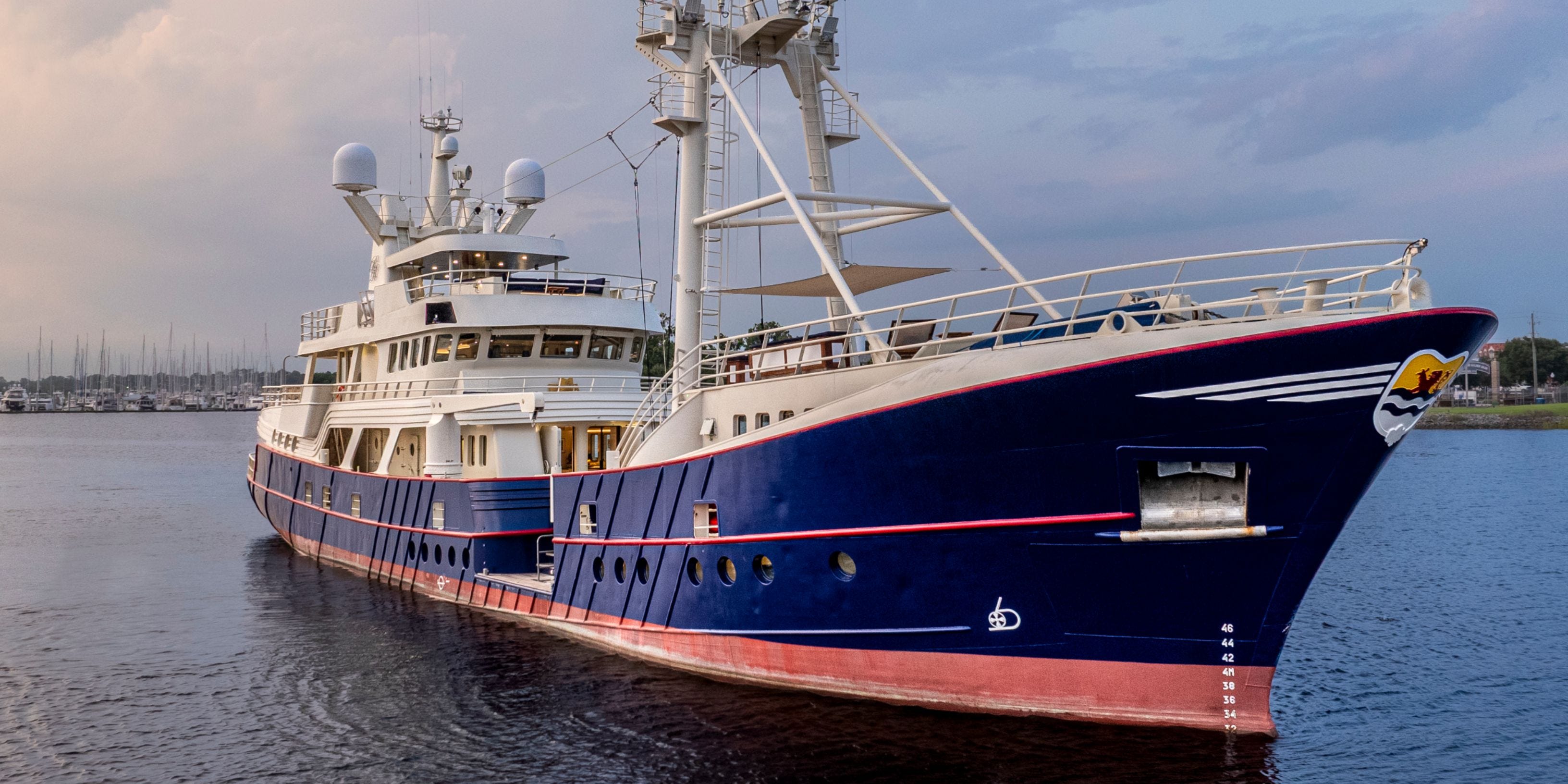
I film a lot of boats (more than 500 now, I think), but few stay with me the way M/Y ‘Scintilla Maris’ has. Her owners, whom I have met a few times now, let me follow her from the final stages of her build at Damen Maaskant in the Netherlands right through to her launch. And, if I am being honest, I’ve felt attached to her ever since.
Part of that is the people. Her owners are incredibly down to earth and a real joy to be around; they’re passionate about her. As a boy, the owner used to draw pictures of trawlers, which is something I also did as a kid. It is a minor detail, but one that has become part of my subconscious attachment to Scintilla Maris. When I say she’s a masterpiece of naval engineering and design, it comes from someone who knows where that kind of dream actually starts.
Now she’s moving on. She’ll be at the Fort Lauderdale International Boat Show from 28 October to 1 November, and on 5 November she sells online through Boathouse Auctions, with no reserve, to the highest bidder (link to auction below). Burgess, her central agent, lists her at $16M, and its brochure gives an appraised value of $23M.
If you haven’t seen my tour of her yet, here it is:
She’s 45.6m (150ft) long, with a 9m beam, a 5.4m draft and a gross tonnage of 499, built with a steel hull, an aluminium superstructure and an iroko deck. Ten guests sleep in five spacious, bright and airy cabins (a master, two doubles and two twins), and eight crew have four cabins. She flies the Marshall Islands flag, is lying in the USA and is a new build, delivered in 2024.
From HD23 to the owner’s suite
Her hull is recorded as originally built by Maaskant in 1988, as the Dutch beam trawler HD 23 Vertrouwen. In my yacht tour video, I described her as the first of eight sister ships from the yard, now part of the Damen Group. Beam trawlers like her worked the North Sea seabed for sole, plaice, turbot and monkfish, and Dutch fishing press reports which I found online put her North Sea career at around 20 years, ending in 2005. She became available through a decommissioning scheme, so her current owners bought her in 2006. Because of their business commitments, the project was deferred for several years, and work at Damen Maaskant resumed in 2019.
Damen Maaskant completely stripped her interior steel to bare metal and removed the old propulsion system, interior, and decking; with the hull bare inside, the yard also took out the dents which had accumulated during her working life. One can only imagine the grit and determination that went into building her, let alone the financial commitment. Few yards can take on the level of work needed to the standard Damen Maaskant delivered.
Not long after she was launched, I sat down for lunch with the owners and representatives from Damen Maaskant. The owners explained that when they saw what was happening to the old fishing fleet, they knew they had to try to save one of the hulls before it was scrapped. So, Scintilla Maris is not just an incredible expedition yacht. She is a living memory of the dwindling Dutch fishing fleet she once served.
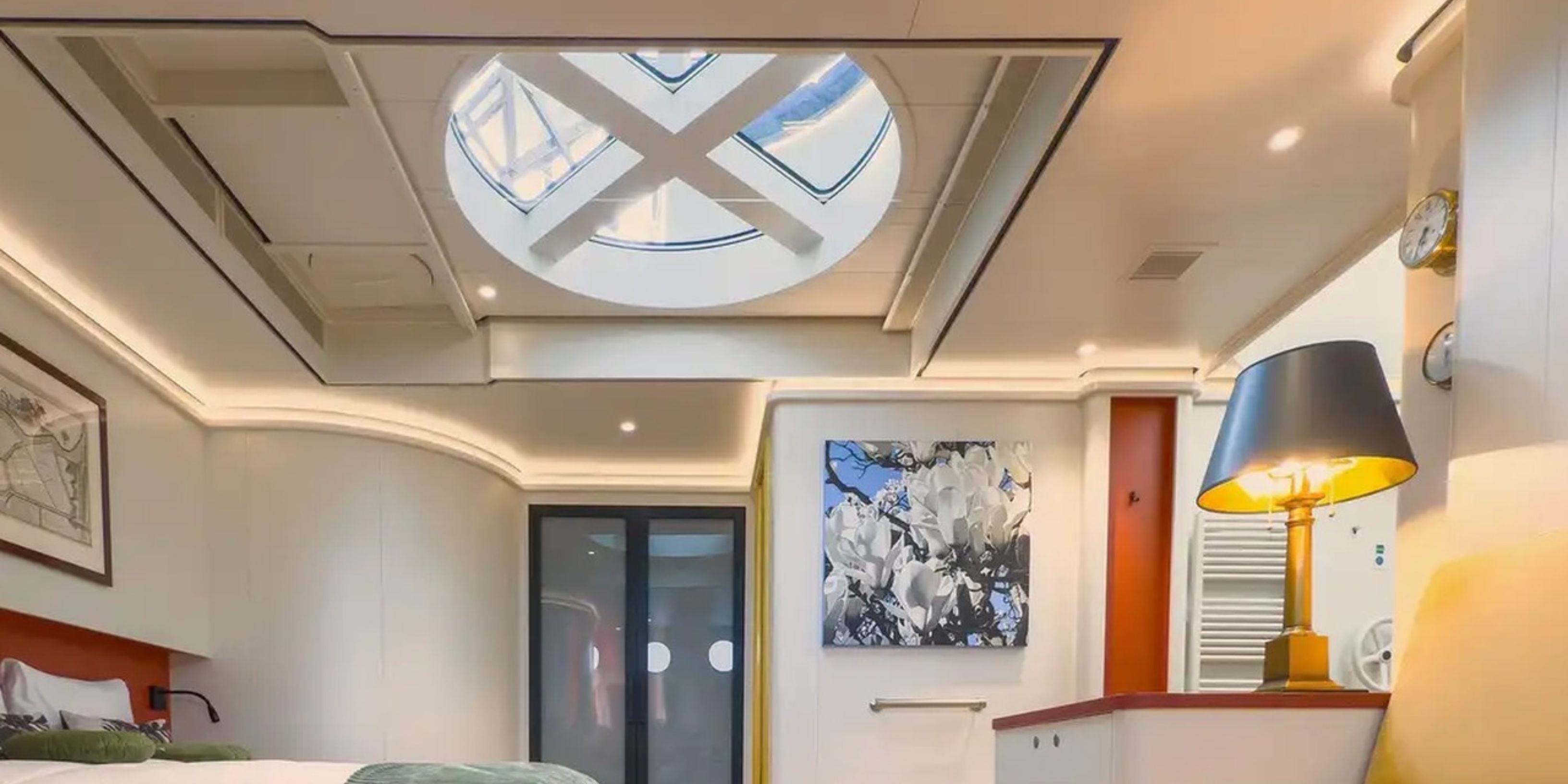
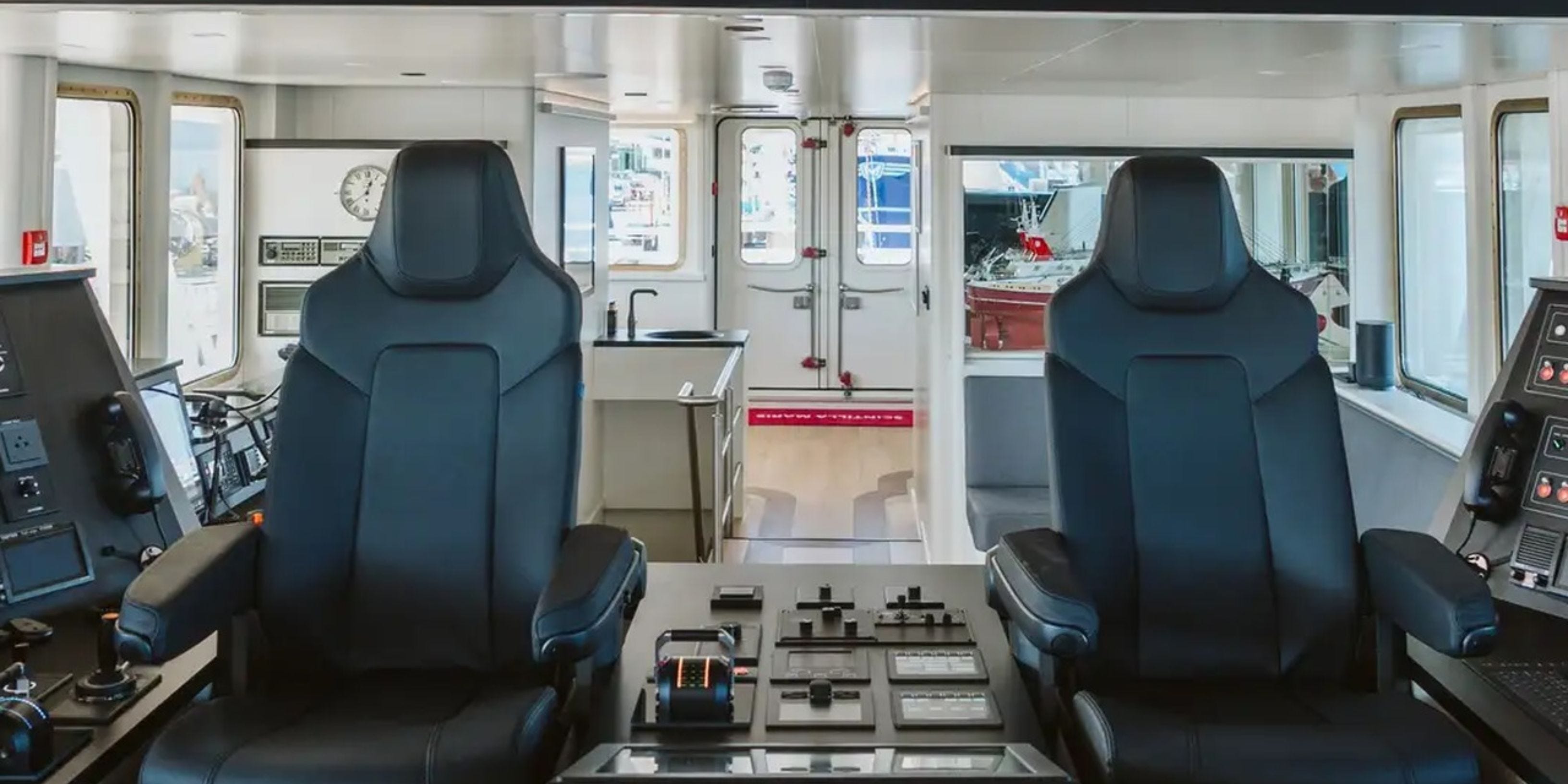
One of the neatest results of the project, aside from the wheelhouse and engine room, lies below decks. Her full-beam owner’s suite sits in the old fish hold, and the hatch that once closed over the catch (image below) now lets daylight down over a vast owner's cabin. On the state-of-the-art bridge, an illuminated model of HD 23 shows where she started life. A very nostalgic nod to her former life working the unforgiving North Sea. Her bridge is one of the best I have seen for an explorer yacht her size. I doubt very much that you would find a better equipped bridge on a <50-metre explorer yacht.
A new build on a recycled hull
Her captain is emphatic that she is “a new build / recycled hull”. Damen describes her as a new-build explorer yacht in the existing hull, and in my tour I called her “really a new build explorer in an existing shell”. I am labouring this point only because she is so much more than a ‘conversion’. Her owner is precise about what was kept: only the bare steel hull and parts of the aluminium superstructure were reused. They stripped out 100% of the infrastructure, grit-blasted the hull and superstructure inside and out, and only then began the new construction, with RINA approving every modification. New are the hybrid diesel-electric propulsion, systems, and interior. Damen Maaskant rebuilt her and handled the naval architecture and exterior design; Vripack designed the interior. In her owner’s words, she is “a hybrid propulsion expedition yacht with a battleship-strength commercial hull”. One early priority for her current owners was getting her under 500GT, compared with about 570GT when the project began, largely by creating more semi-open spaces.
Why reuse the hull? Her captain says it was chosen “for its strength, seaworthiness, seakeeping qualities and safety, as well as for sustainability”, and that replicating a hull of this calibre, while possible, would be unnecessary and ecologically irresponsible when one already exists. My view is that building something this capable from scratch today would take at least 5 years and cost far more, because materials cost more than they did when she was commissioned.
What she was built to do
Her brochure advertises 16,000 nautical miles at a 9.5-knot cruise on just one of her three generators, with 13.5 knots available when needed. Her RINA class carries Unrestricted Navigation, and dynamic positioning lets her hold station where anchoring isn’t an option.
In April 2024, she left the Netherlands on a ten-month shakedown that Vripack puts at about 11,000 miles: London (where I had the privilege of catching up with the owners once more), the Outer Hebrides, the Faroes, Iceland and Greenland, where Vripack says she skirted the east-coast ice floes, then Newfoundland, Nova Scotia, the Canadian and US coasts, Bermuda and home. Vripack also reports that heat recovered from the generators warmed her external steel handrails in Greenland, the owner’s idea, and one that certainly earned its keep!
The steps some of my viewers argued about
Midships on both sides, sections of hull and bulwark were cut away for staircases leading down to water level. In the comments on my tour, viewers called them “very clever”, but they also asked thought-provoking questions about the hows and whys behind the engineering.
Her owner’s reason is practical. At anchor, the tender can be boarded on whichever side is the lee side, sheltered from the wind and swell. A steel box reinforcement under each staircase means the cut-outs add to the hull’s stiffness.
What a hull like this does well
Her captain calls this hull “battleship-strength”. Indeed, having served on a number of different warships, I would say that her hull is better than “battleship-strength”. In the tour I gave her plating as 10mm above the waterline and 15mm below, thick enough to avoid the washboard look of frames showing through thinner plate.
I break down her full RINA class notation in the premium section below.
Life aboard
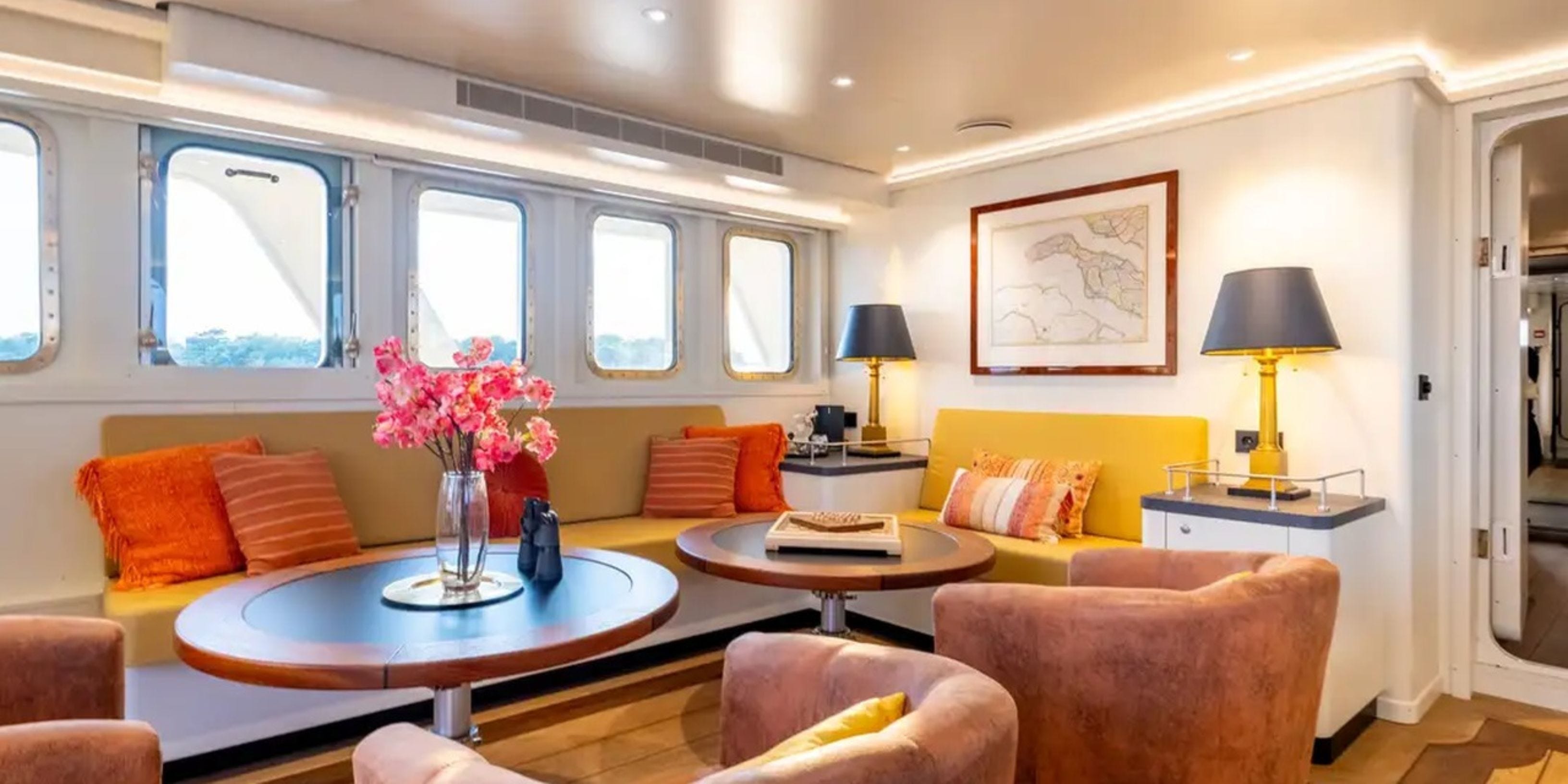
For months aboard, the layout matters as much as the steel. The crew live forward in the whaleback, reaching the main deck without climbing a ladder. Thirty main-deck skylights bring daylight below, while floating floors and low-frequency insulation keep noise and vibration down; on her mini sea trial she was super silent. For long seasons living aboard, that bright, quiet interior counts for a lot.
If working pasts appeal, my pieces on the former research ship that can launch a submarine and Twelen, the ex-government sounding vessel, make good companions.
This article continues below, in “The Wardroom”, because my premium subscribers make it possible for me to write about and film boats like this one. There are no adverts here, so if you’re a paying subscriber, or you become one, a massive thank you!
In the premium section, I cover:
- Crewing her: a sourced salary scenario, and why no honest all-in figure exists yet.
- Range and Tier III: what changes inside an Emission Control Area, and how SCR uses urea.
- Her hybrid system and full class notation explained, and what her listed notation means for high-latitude cruising.
- How the no-reserve auction works for a buyer, from deposits to “as is” terms.
- The records I’d look at before bidding.
- My honest assessment: who she suits and what she asks of an owner.
Crewing her: the cost you can put a number on
Accommodation for eight crew tells you a lot about what Scintilla Maris asks of an owner, before she burns a litre of fuel…[article continues below]
