€195,000 for Bayona, a 57-Tonne Dutch Fishing Boat Turned Home: Could She Cross the Atlantic on Her Own Hull?
She fished out of Texel from 1960, went cockling for a British owner, then became a liveaboard in 2000. I look at her Den Helder yard, her Scania, her range and what getting her to America involves.

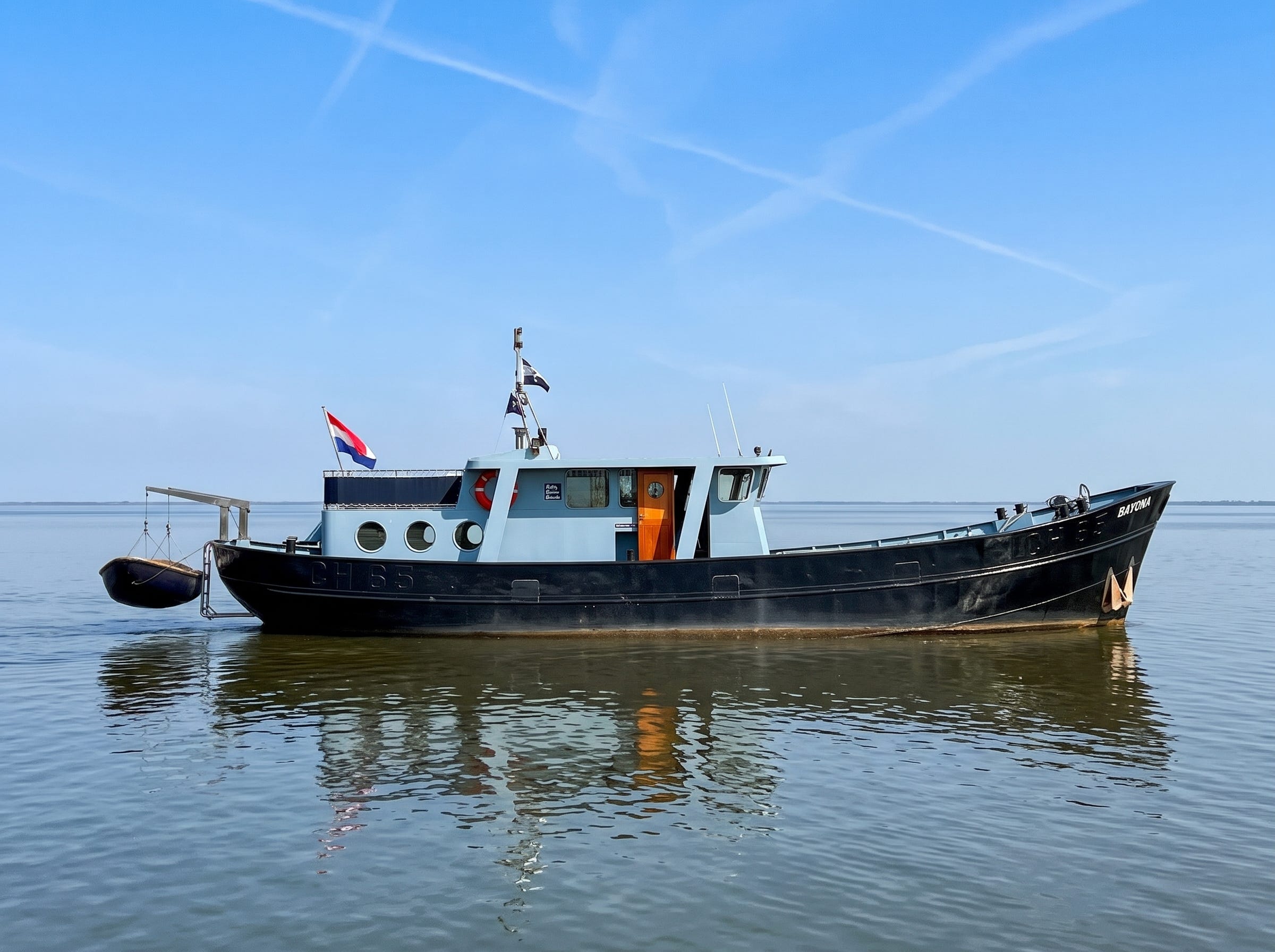
On 8th March 1960, a brand-new steel fishing boat was registered at Oudeschild, on the island of Texel, as TX 88 ‘Anna Maria’. She was 18 metres long, built by Scheepswerf Visser across the water in Den Helder, and she went to work for the Blom family with a 140 hp Kromhout diesel.
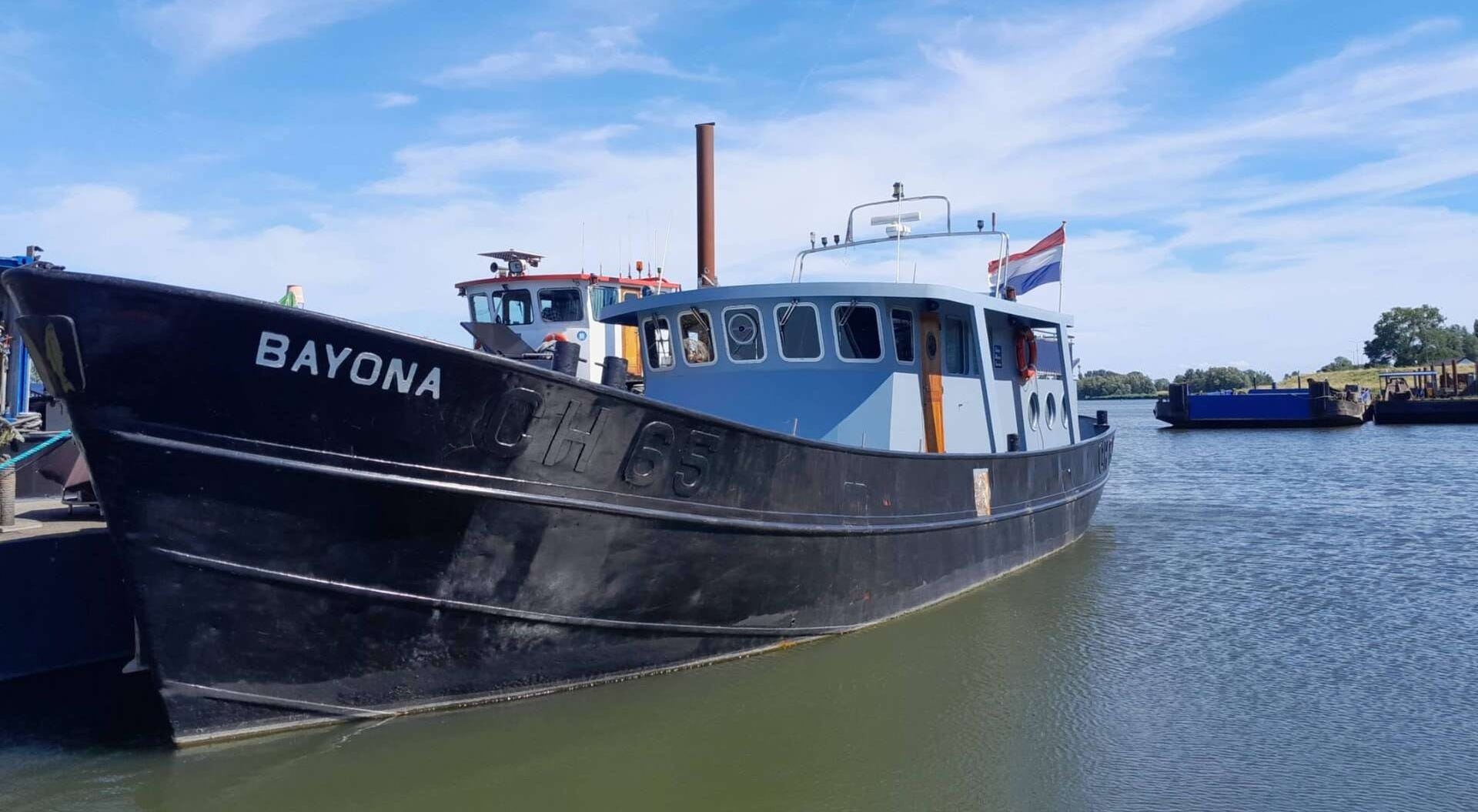
She fished for the next 27 years, changed engines twice and changed her number once. Then in 1989, she was rebuilt for cockle fishing and registered to a company in Merseyside as CH 65 ‘Bayona’, the number still on her bow today. In 2000, she was converted into a home, with a new superstructure, and she was lived aboard from then until 2024. According to her listing, her previous owner even had plans to take her all the way to New Zealand, though she never went.
Today she’s Bayona, and she’s for sale at €195,000 (about $214,000 or £163,000), VAT paid, in the Netherlands (link to listing below). For 57 tonnes of North Sea steel with a 66-year history, that strikes me as a heck of a lot of boat for the money.
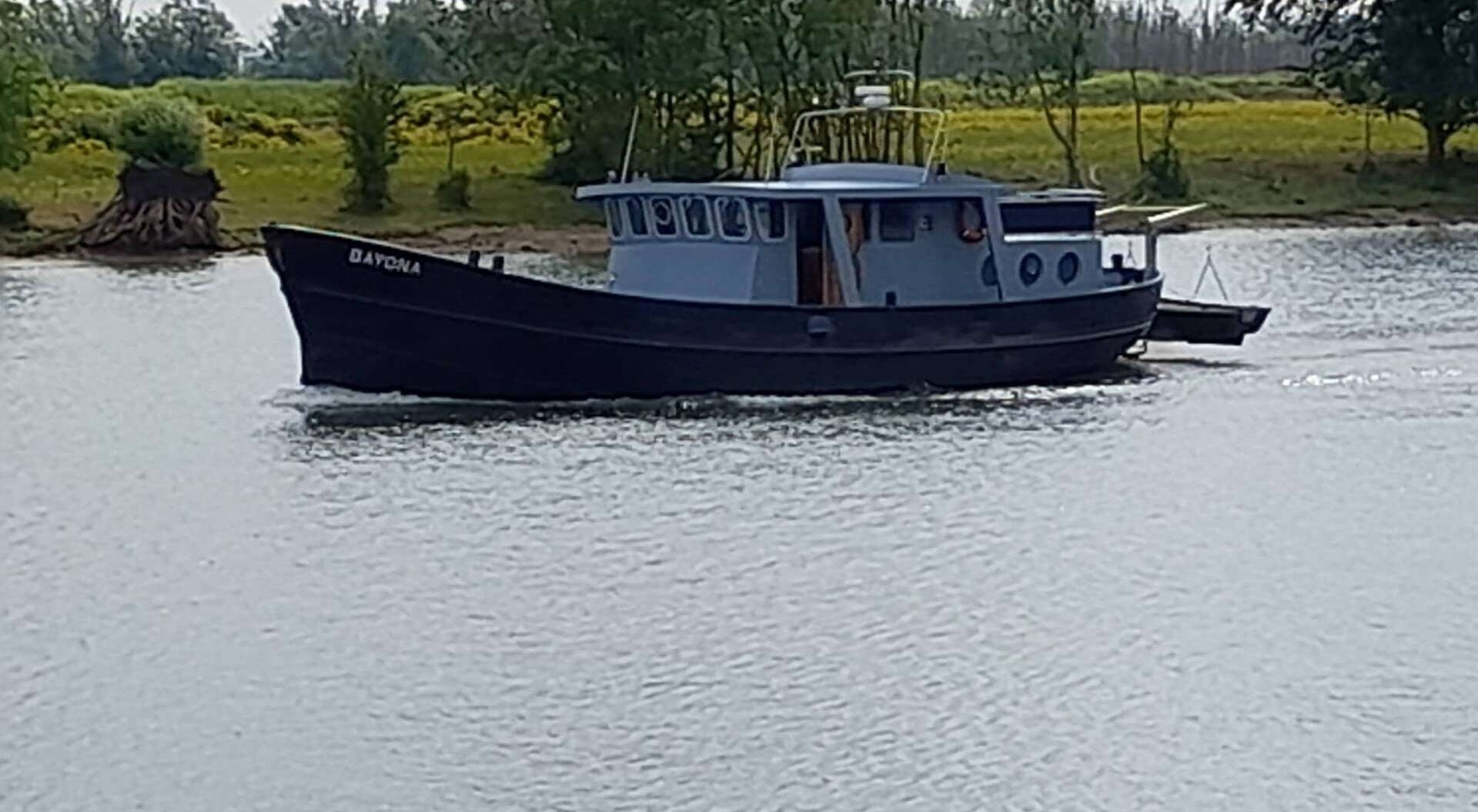
Photos courtesy of the listing broker.
Built by “Iron Willem”
Her builder has quite a story of its own. In 1923, a 22-year-old Willem Visser left the island of Urk to join his older brother Klaas in Den Helder, where Klaas was repairing masts, blocks and oars for the wooden fishing fleet and the Royal Netherlands Navy. In 1928 the brothers bought a yard on Den Helder’s inner harbour, De Lastdrager, with money borrowed from two ladies in Bussum.
After the war, the brothers went their separate ways on two neighbouring yards, one building in wood and the other in steel, and the locals nicknamed them “Houten Klaas” and “IJzeren Willem”: Wooden Klaas and Iron Willem. Bayona is steel, so she’d have come from Willem’s side of the family. Willem died suddenly in 1959, aged just 58, the year before she was registered, and his sons Henk and Okke carried the yard on. The two yards came back together in 1968, and Scheepswerf Visser grew with the Dutch cutter fleet through the 1960s and 1970s. It joined the Damen Group at the end of 1992, and today it’s Damen Shipyards Den Helder, on the very same spot where the brothers started out.
Her own career reads like a tour of the Dutch fishing coast. The Bloms of Oudeschild had her until 1983, when she was renumbered WL 5 ‘Grietje’ for an owner from Marum, in Groningen, and she was taken out of fishing in October 1987. Two years later came her cockling years under the British flag as CH 65, and her name, Bayona. After that she was laid up at Lauwersoog and Zoutkamp, before being sold for pleasure use.
Her listing gives her build year as 1959, and the fishing register records her as completed in 1960, with an engine built in 1959. Either way, she’s a real piece of Dutch fishing heritage, and her old number on her bow is a lovely salute to it.
57 tonnes of North Sea steel
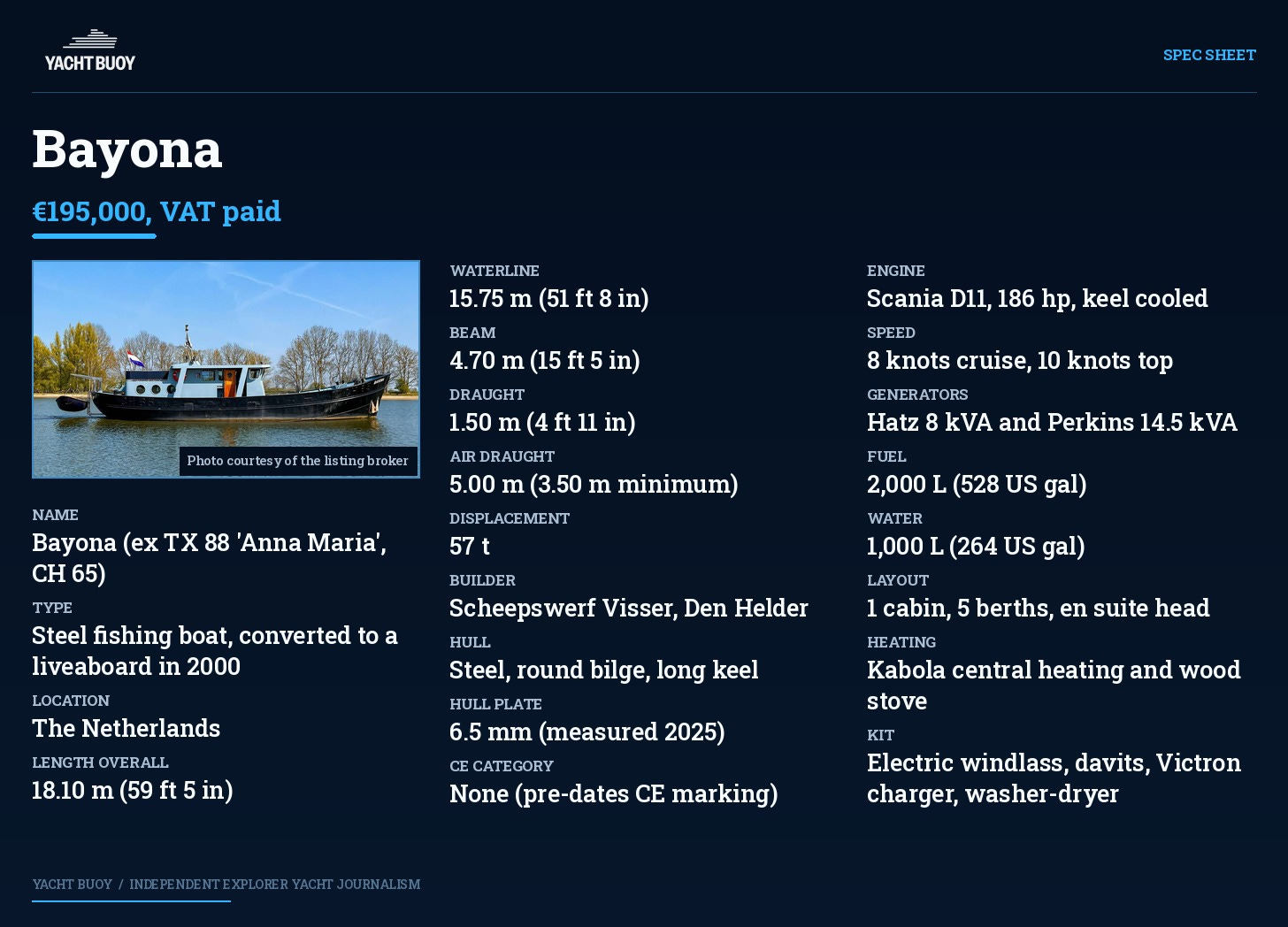
For me, one of the things which really sets Bayona apart is her hull. She’s a round-bilged, long-keeled fishing boat displacing 57 tonnes on a 15.75 metre waterline, built from steel plate her listing gives as 6.5 mm thick on the hull, with 5 mm on the deck and superstructure. Her listing says her hull thickness was measured in 2025, the same year she was pressure-washed, antifouled and completely repainted.
She doesn’t have a CE category, because she pre-dates it. CE marking came in with the EU’s Recreational Craft Directive in the 1990s, for boats built for leisure. In my opinion, though, with a hull form and build like this, especially at 57 tonnes, she’s going to handle rough weather really well, and that hull thickness will only help when the storm comes rolling in.
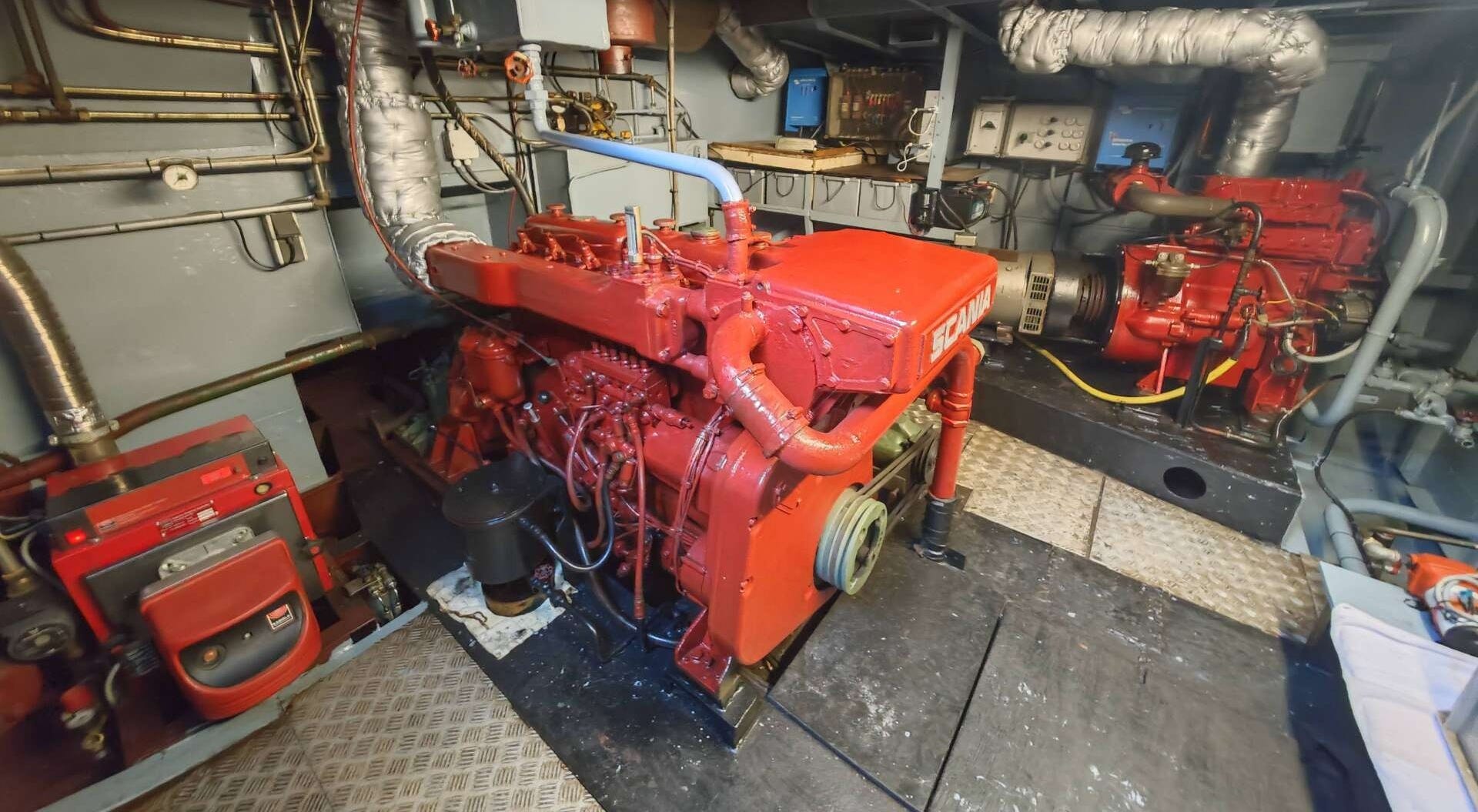
If you’re a hands-on owner, this is the sort of boat that I am sure you’ll love. Looking at her engine room photos, everything is laid out in the easy-access mechanical configuration you’d expect on a working boat like this. Her single Scania D11 is a six-cylinder of about 11 litres, rated here at 186 hp, keel cooled with a dry exhaust, driving a four-bladed propeller through a hydraulic gearbox. She also has two generators, a Hatz 8 kVA and a Perkins 14.5 kVA, plus a Victron charger and a Kabola boiler for her central heating, and her listing says the engine room was refitted in 2025.
Life aboard: a boat for two
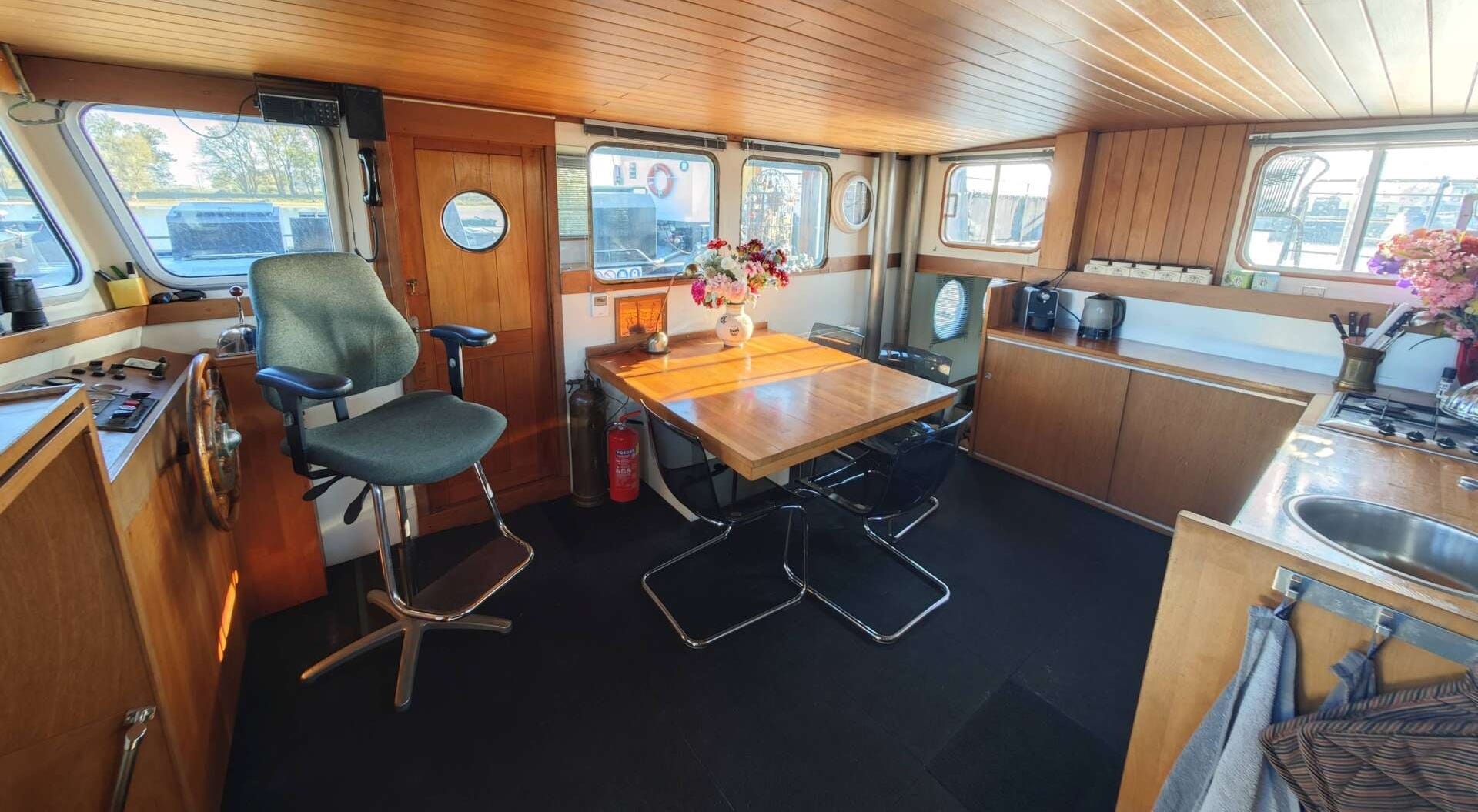
Inside, Bayona is laid out for a couple who want to cruise off and explore by themselves. Her deck saloon does everything: the helm with its wooden wheel and helm chair, a dinette, and the galley, with a four-burner gas hob, a fridge and a freezer.
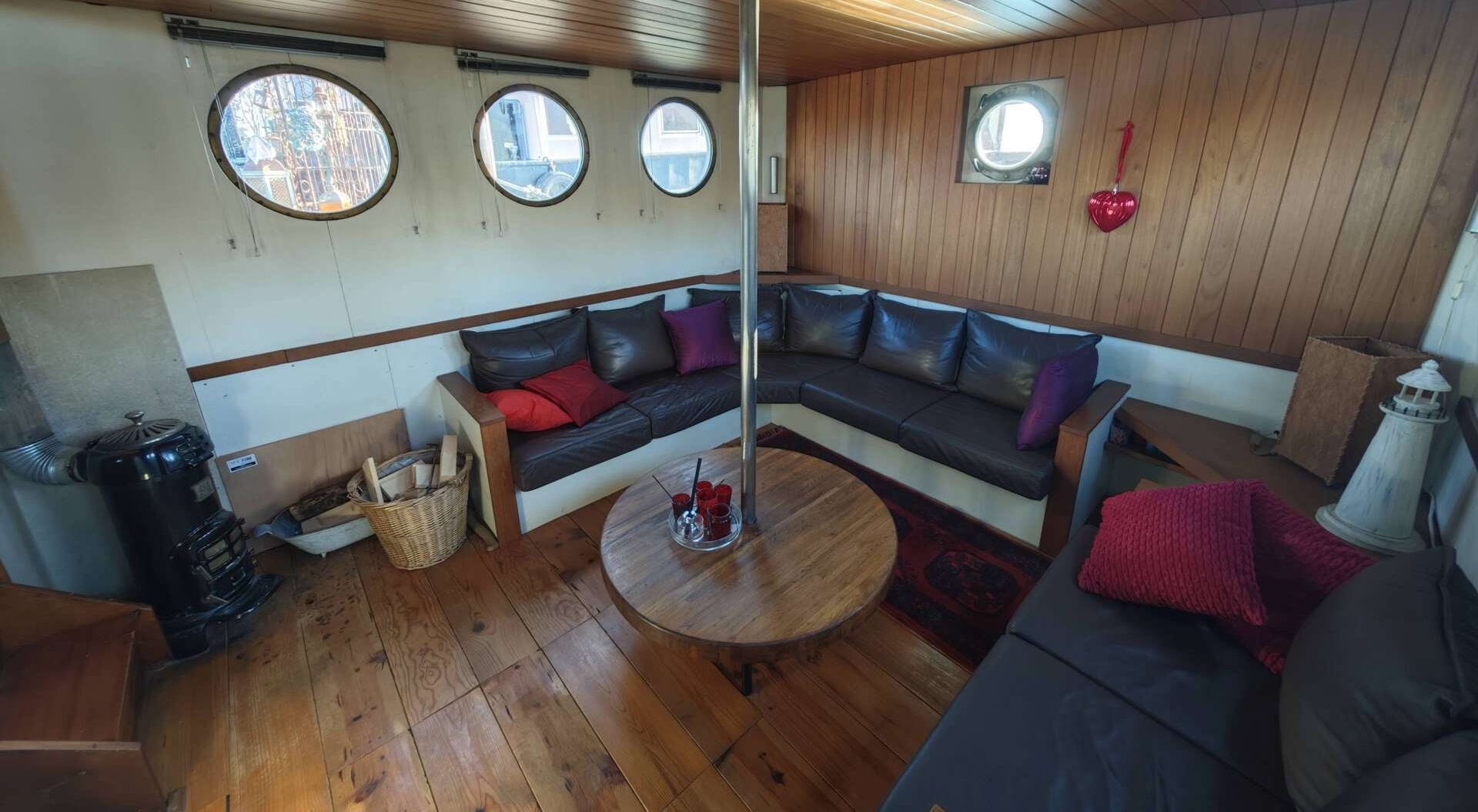
Down below there’s a cosy lower saloon with 2.02 metres of headroom, a wraparound settee and a wood-burning stove, backed up by the Kabola central heating, so she’s a boat you could happily live on through a northern winter, just as she was lived on for 24 years.
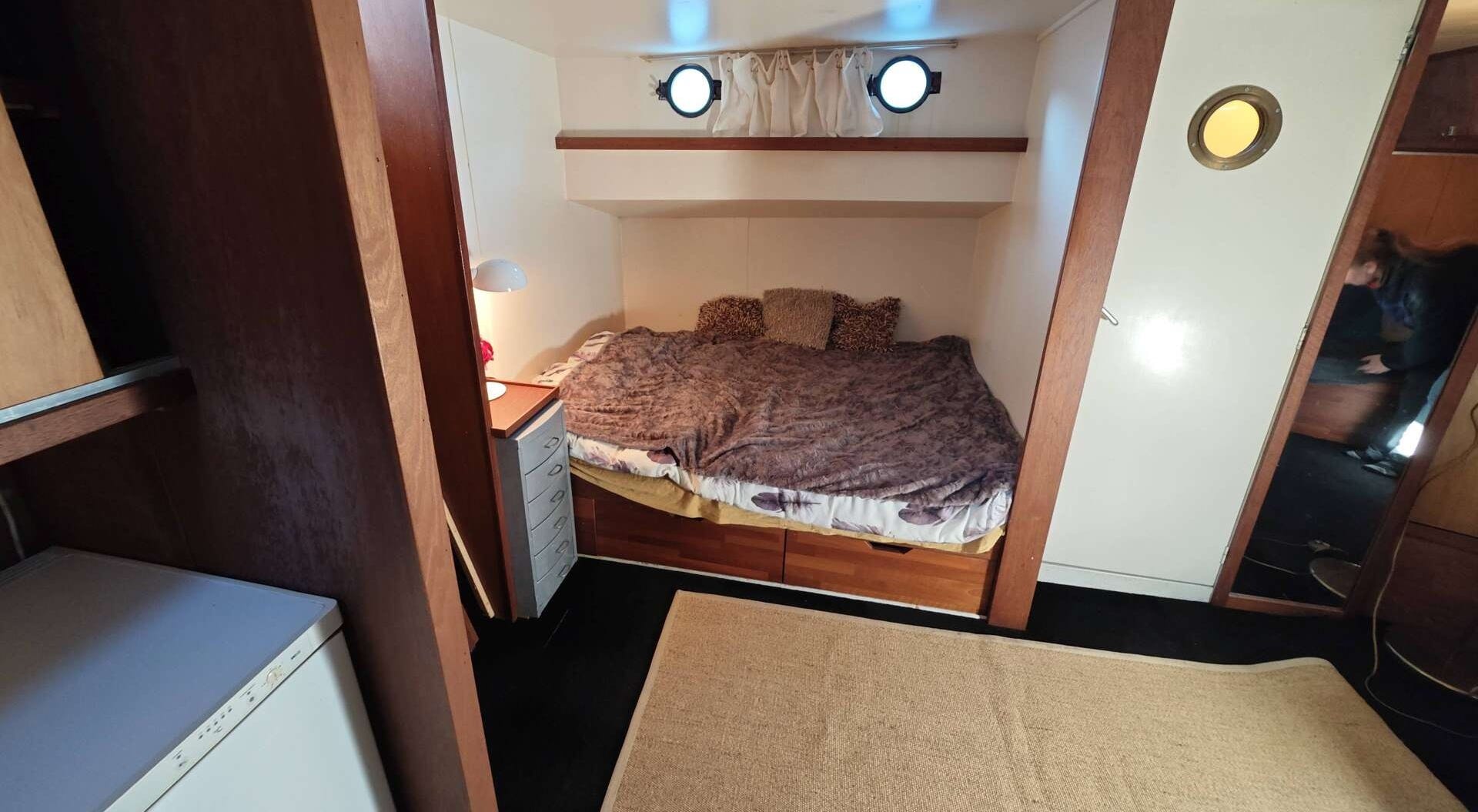
Her one cabin is forward. It has a 2.00 by 1.50 metre double, plus twin single berths and another single, so there’s room for guests who don’t mind sharing, and an en suite head with an electric toilet and a shower. There’s even a washer-dryer. For two people, she’s a spacious and comfortable home on the water.
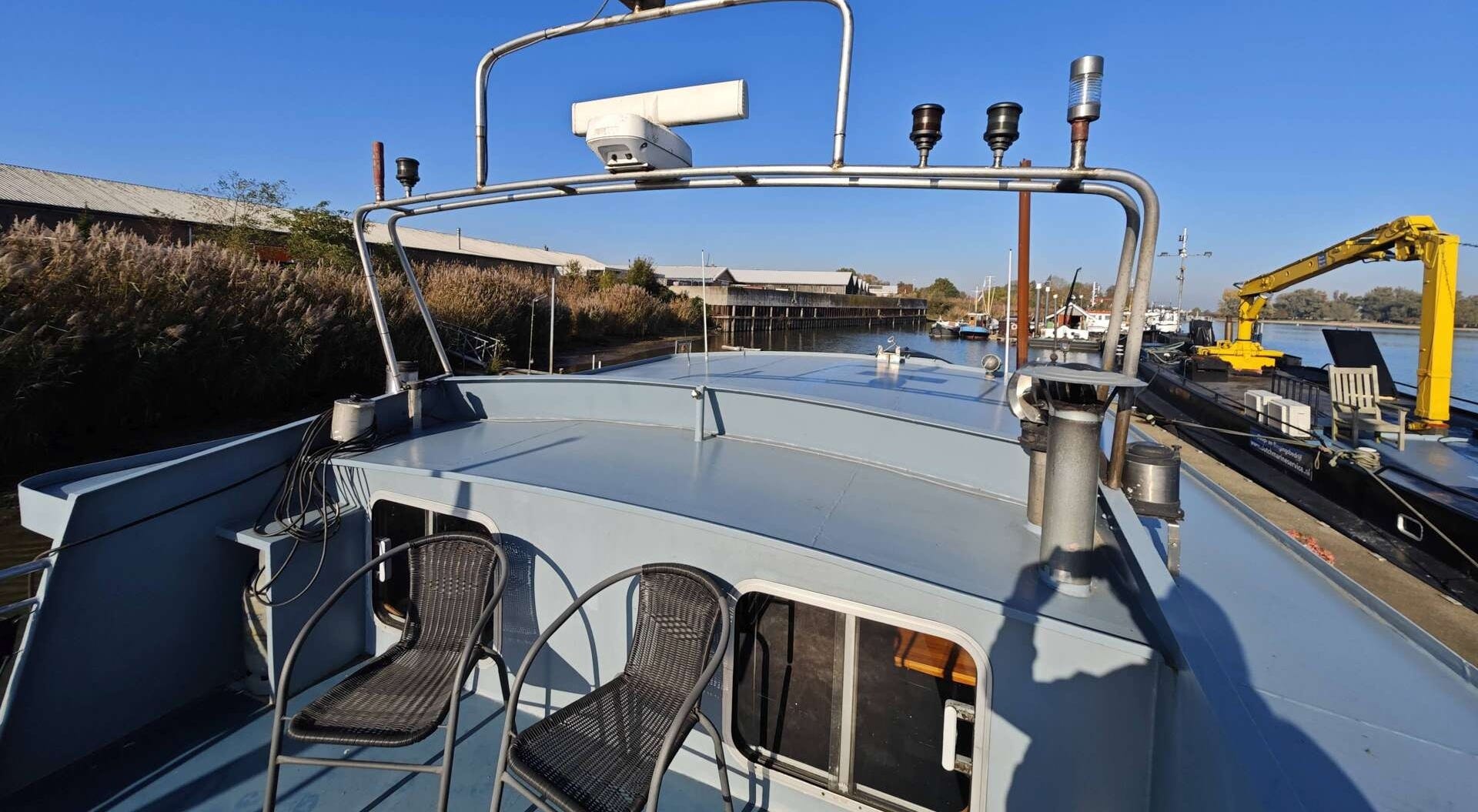
Going by her photos, her black hull could definitely do with a bit of TLC on the outside, but that’s the fun of a boat like this: you’ve got a blank canvas. There’s a really large coach roof on top of her wheelhouse, with plenty of room for some really good equipment up there, and her open aft deck has davits for a tender.
Whether she could cross the Atlantic on her own hull, and what shipping her to America would cost instead, are the first things I’ve worked out in the premium section.
This article continues below, in “The Wardroom”
A quick thank you to everyone in The Wardroom, existing and new alike: your support keeps both the YouTube channel and this newsletter advert-free and independent, and lets me keep writing about and filming boats like Bayona.
In the premium section below, I cover:
Why 2,000 litres (528 US gallons) gives her roughly 960 NM at 6 knots, and what that means for an Atlantic crossing: northern legs of up to about 820 NM against 2,100 NM from Cape Verde
About $41,000 to $43,000 in freight to ship her to the US, against roughly €22,000 in crew day rates to take her there herself
1.5% US duty, the Jones Act and the EPA, 20% UK import VAT, and what her VAT-paid status means for EU buyers
6.5 mm plate and two engine dates: what I’d check on her hull and her Scania, plus a Dutch certificate question at 128 cubic metres
What €195,000 buys, and roughly €10,500 to €36,000 a year to keep her, from a Dutch marina to the Hamble
Her coach roof: what 3 to 4 kW of solar would give you, from about 13 kWh a day in a Dutch June
My honest assessment: who she suits
Could she cross the Atlantic on her own hull?
As ever, I’ve done the research, so you don’t have to…
