

I will be honest with you; I had no intention of writing this today, Thursday 14th May.
Having published the Beauport piece just a couple of days ago, I came into my office this morning planning to spend the day editing my next YouTube walkthrough video, which is coming out on Friday. One blog every four days is the cadence I try to hold, and I had every intention of honouring that. So if you are reading this two days after the last one, I apologise for the inbox interruption.
But then I saw this boat….
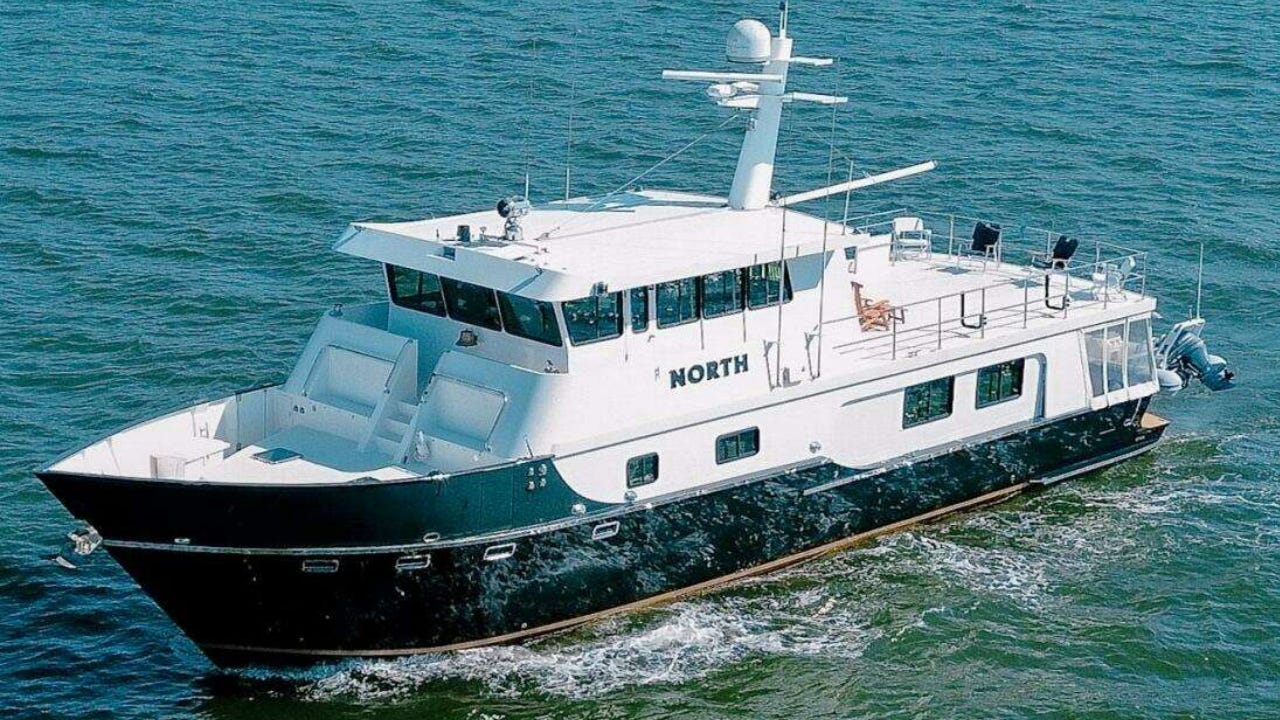
There are vessels that ask to be written about, and ‘North’ is one of them. Not because she is the most exotic vessel I have covered, or the most extreme in range or specification, but because she represents something I find genuinely rare at this price point, a purpose-built, custom-constructed aluminium pilothouse with a provable history, a serious interior, and a recent refit that has already absorbed the financial pain that typically awaits the next buyer.
I thought my Substack subscribers, specifically, would appreciate her. So here we are.
The Vessel
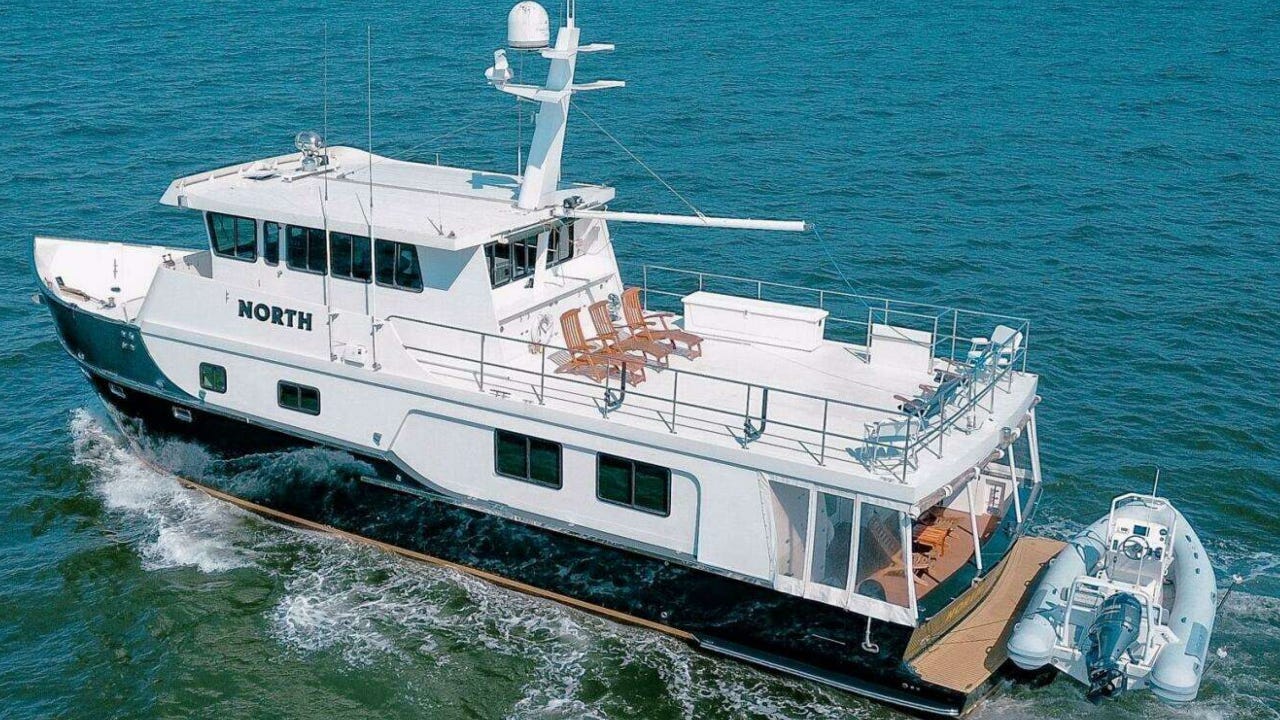
North is a 72-foot custom aluminium pilothouse trawler, built by Darling Yachts in Jeffersonville, Indiana. Her hull was laid down in 1998. She was launched in 2002, dropped into the Ohio River after 4 years of continuous construction. She is currently asking $726,000 USD, listed with Tony Lavin at Ignition Marine in Vancouver, British Columbia.
She is 71’6” on the waterline, 19 feet of beam, drawing 5 feet of water. Her hull is quarter-inch aluminium plate throughout, faired and finished in Imron paint to a standard that the spec sheet notes with quiet pride: most observers assume she is fibreglass. That is worth pausing on for a moment. Aluminium builds are not typically known for their cosmetic finish. The combination of quarter-inch plating with a faired, glasslike surface speaks to a builder who understood that structural integrity and finish quality are not mutually exclusive.
She is powered by twin Cummins 6BTA Diamond Series diesels, 450hp each, with 2,900 and 2,986 hours respectively on the clocks. Two Westerbeke 32kW generators sit alongside. Her fuel capacity is 1,470 gallons, giving her a quoted range of approximately 2,000 nautical miles at 8 to 8.5 knots.
That range figure, and the passage history behind it, is where her story begins.
The Builder
Darling Yachts is not a name you will find in the pages of the major European yacht design houses. Dan Darling ran a small, deliberate custom yard in Jeffersonville, Indiana, on the south bank of the Ohio River, building boats for owners who came to him with specific visions and the patience to see them through. He was not producing production yachts. He was building one boat at a time, to order, for people who knew what they wanted.
Dan Darling is a third-generation marine builder. His family’s connection to the craft predates the yard’s 1991 founding, and that heritage shows in the deliberate, unhurried approach to North’s construction.
The couple who commissioned North came to Dan in the mid-1990s with a clear brief: they wanted a vessel designed from the outset to complete the Great Loop. For those unfamiliar, the Great Loop is the roughly 6,000-mile inland waterway circumnavigation of eastern North America, running from the eastern seaboard through the Atlantic Intracoastal Waterway, around Florida, across the Gulf of Mexico, up the Mississippi and Illinois river systems, through the Great Lakes, and back down via the Hudson River and the Erie Canal.
Got a boat?
Know of a vessel, for sale, charter, or otherwise, that you would like me to feature in a future dispatch? You can send me a direct message or email me via john@yacht-buoy.com
It is a long, technically demanding passage through shallow channels, lift bridges, fast-running rivers, and exposed coastal water, and it requires a vessel designed with range, shallow draft, controlled beam, and drop-down mast clearance for the bridges of the inland waterway system.
4 years of construction. Every cabinet, every system, every piece of hardware specified by the owners working alongside the builder. The original mast was a drop-down configuration, designed for the low bridge clearances of the Loop route. When later owners took her north to Alaska, they replaced it with a more substantial permanent mast to carry the updated electronics the Alaskan passages demanded. That single modification tells you something about the trajectory of her life: a vessel built for one extraordinary purpose that kept finding new ones.
The Aluminium Question
Most serious offshore trawlers in the sub-$1M bracket are either fibreglass production builds or steel displacement vessels. Custom aluminium pilothouse construction at this price point is unusual, and worth understanding.
Aluminium offers a compelling set of properties for long-range cruising. Its weight is substantially lower than steel at equivalent structural strength, which means a faster hull speed for a given power output, or greater fuel economy at equivalent speed. It does not rust. Maintained correctly, it does not require the periodic epoxy painting and sacrificial anode management that steel demands. And unlike fibreglass, which fatigues under repeated impact loading over long passages, a well-engineered aluminium hull absorbs stress progressively and predictably.
The counter-argument is electrolytic corrosion: aluminium and dissimilar metals in contact, in salt water, create galvanic current that will eat the aluminium over time. Managing this requires attention to bonding, anode replacement, and shore power isolation. It is not difficult, but it is a discipline, and any buyer considering North would want to understand the current state of her bonding system and anodes as part of due diligence.
What the Darling build demonstrates is that aluminium, in the right hands, produces a hull that can pass for fibreglass aesthetically while offering structural properties no fibreglass build of comparable length can match. Quarter-inch plating is commercial specification. At 72 feet, with that wall thickness, North is structurally in a different league to any production trawler of comparable size.
The Passage History
North did not spend her life on a marina dock.
The original owners completed the Great Loop, as she was designed to do. Subsequent owners took her to Alaska. Not once. According to a video posted on social media with Tony Lavin at Ignition Marine, she has made the Alaska passage and returned multiple times. That route, from the Pacific Northwest up through the Inside Passage and into Alaskan waters, is one of the more demanding coastal passages in North America: tidal channels with significant current, frequent fog, remote anchorages far from yard facilities, and weather that does not behave predictably. It is exactly the kind of passage that reveals what a vessel is actually made of.
She has also been to the Caribbean. She has been up and down the British Columbia coast under her current owner, who has used her extensively in the waters around Vancouver.
The picture that emerges is of a vessel that has been operated by owners who went places. She is not a marina queen in a pretty jacket. She has been to Alaska three times, completed the Great Loop, crossed to the Caribbean, and worked the Pacific Northwest coast for years. The engine hours, 2,900 and 2,986 respectively, tell a story of a well-used but not overworked boat. For a vessel of this age and this passage history, those hours are reasonable.
What Is Aboard
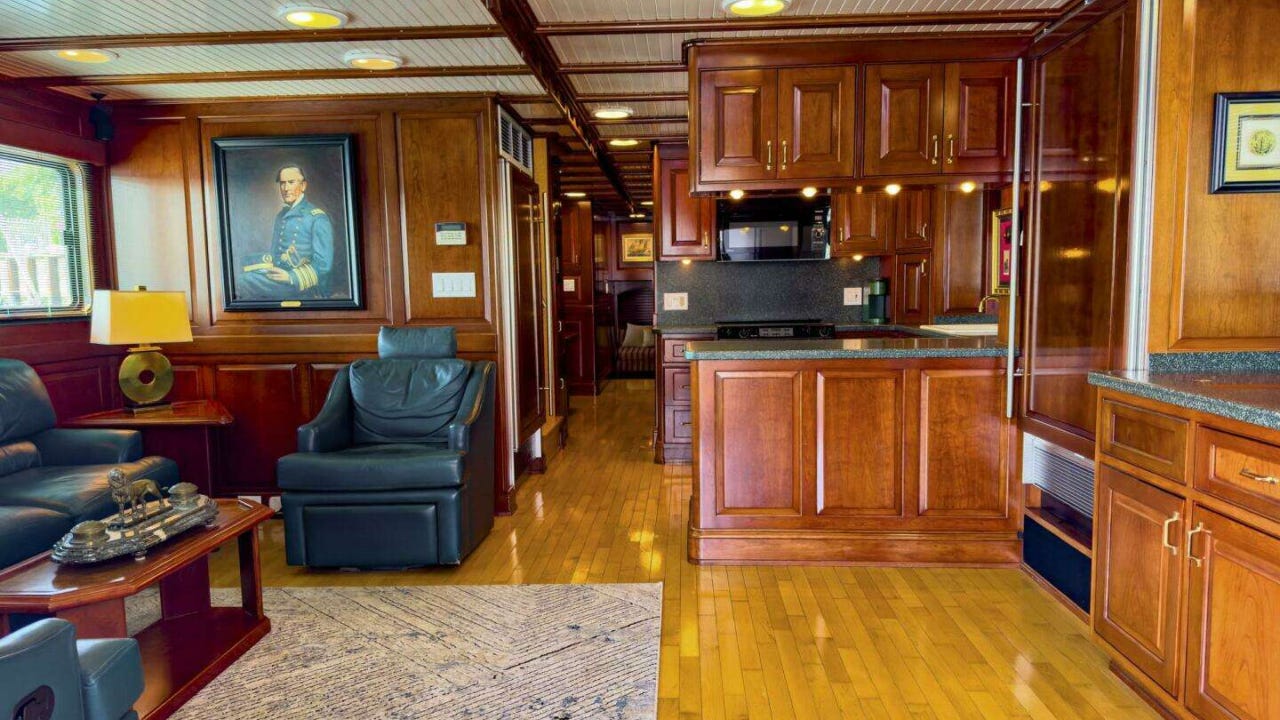
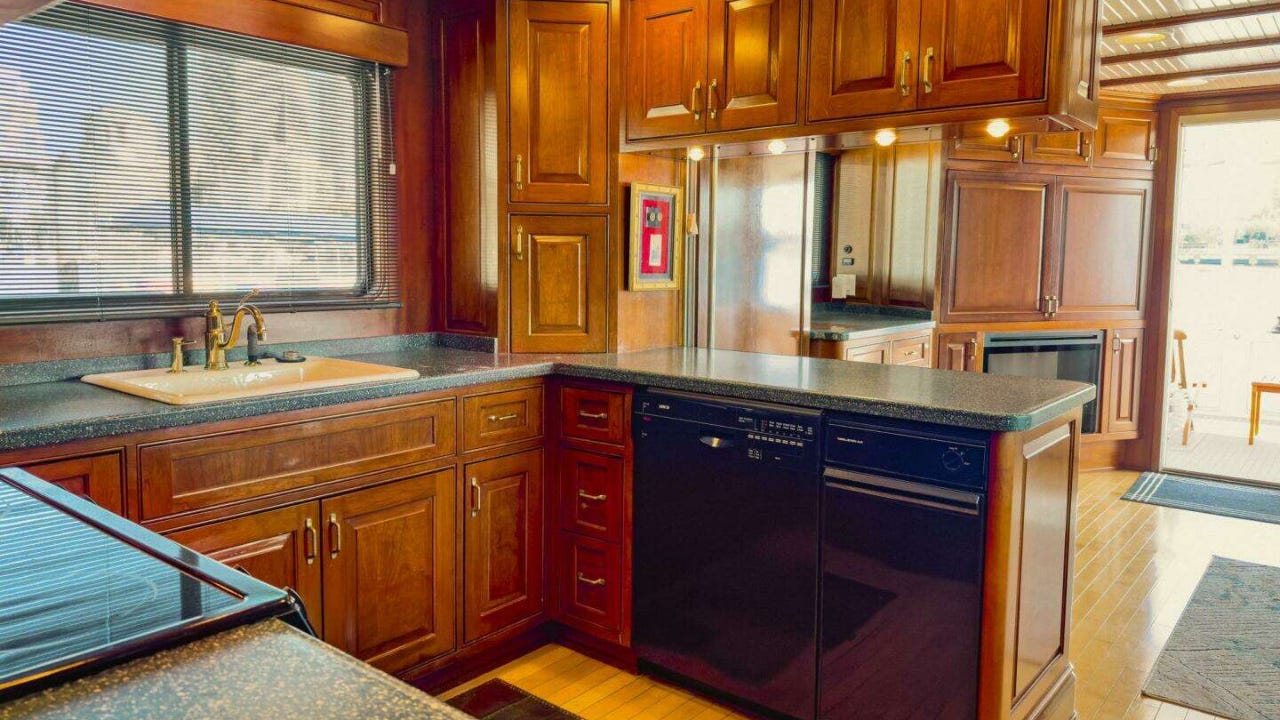
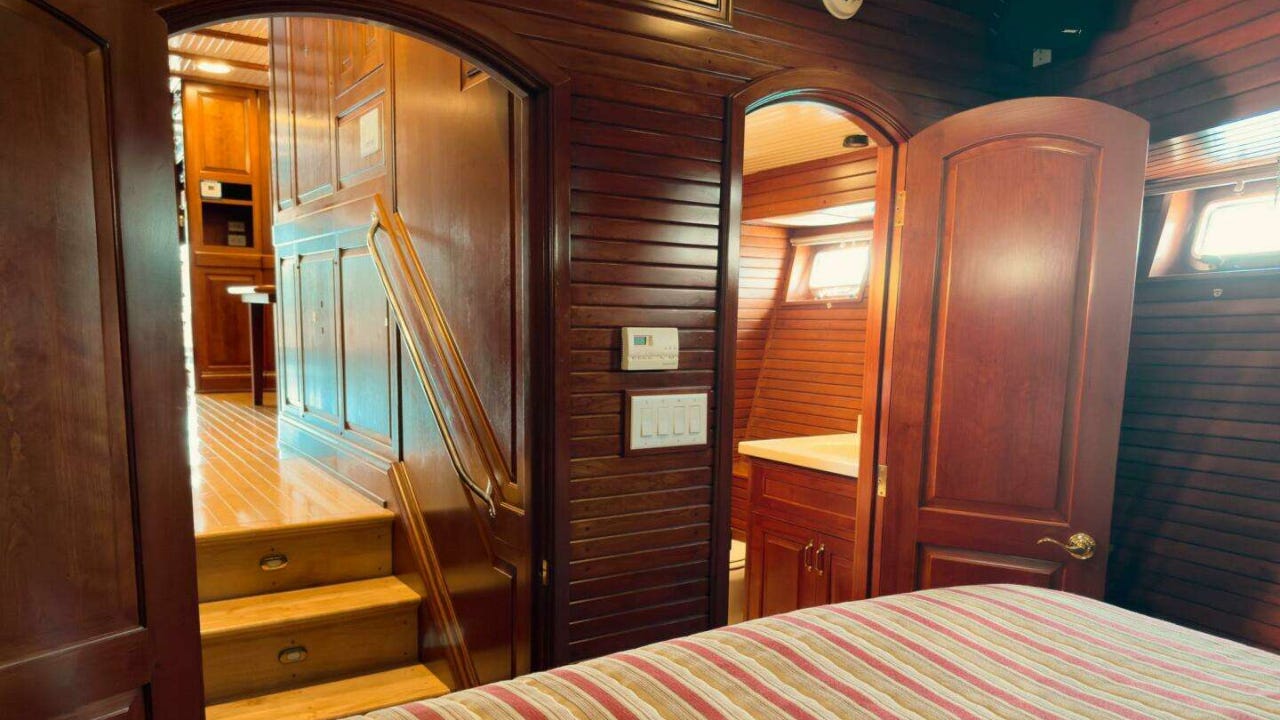
The interior of North reflects the 4 years of owner involvement in her construction. Cherry cabinetry throughout, with arched doors fitted with solid brass Baldwin hardware. Tongue-and-groove ceilings. Birdseye maple stairs. Black ebony-inlaid tables made from 500-year-old reclaimed oak in the formal dining area.
This is clearly not a standard production interior. This is what happens when two people spend 4 years specifying a vessel they intend to live aboard. The formal dining room seats a proper table. There is a full-size Sub-Zero refrigerator and a separate full-size freezer. A big dishwasher. A washer and dryer in the dining area. 7-foot headroom throughout.
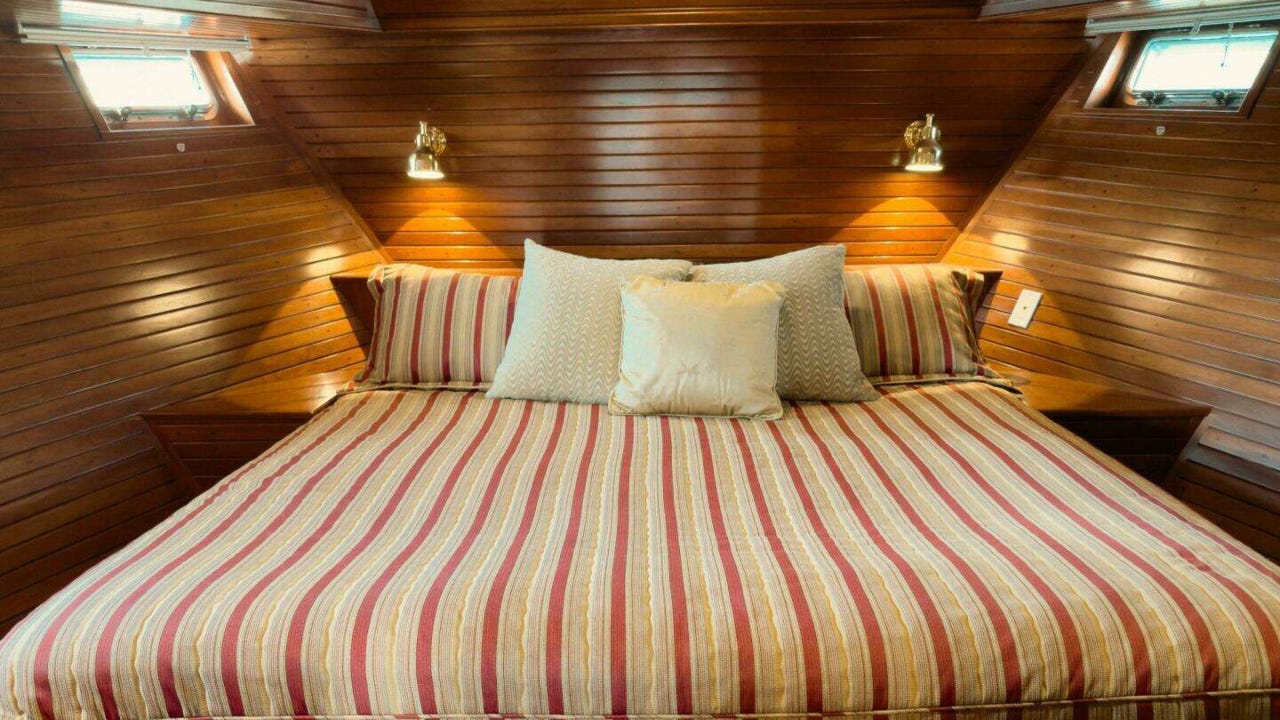
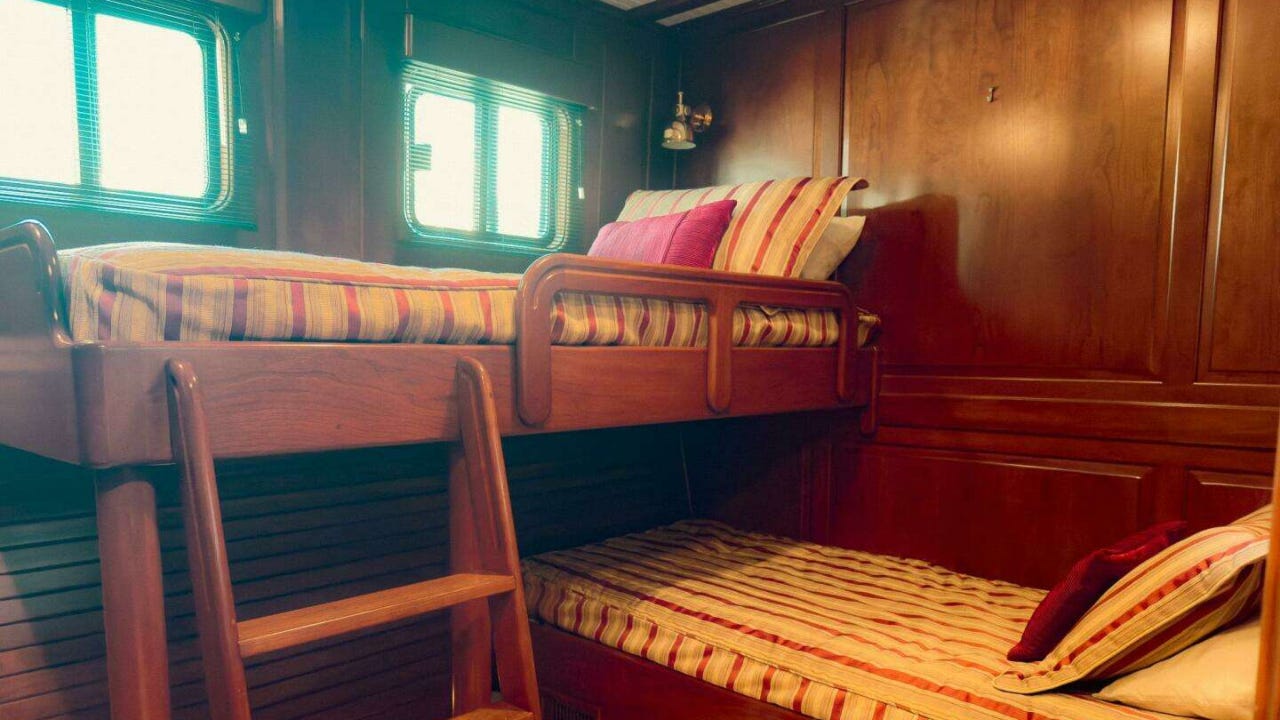
The master stateroom has a king bed with walk-around access on both sides and cedar-lined storage wardrobes. The guest cabin offers an L-shaped twin berth layout that Tony Lavin notes is genuinely spacious and could be reconfigured if a buyer prefers.
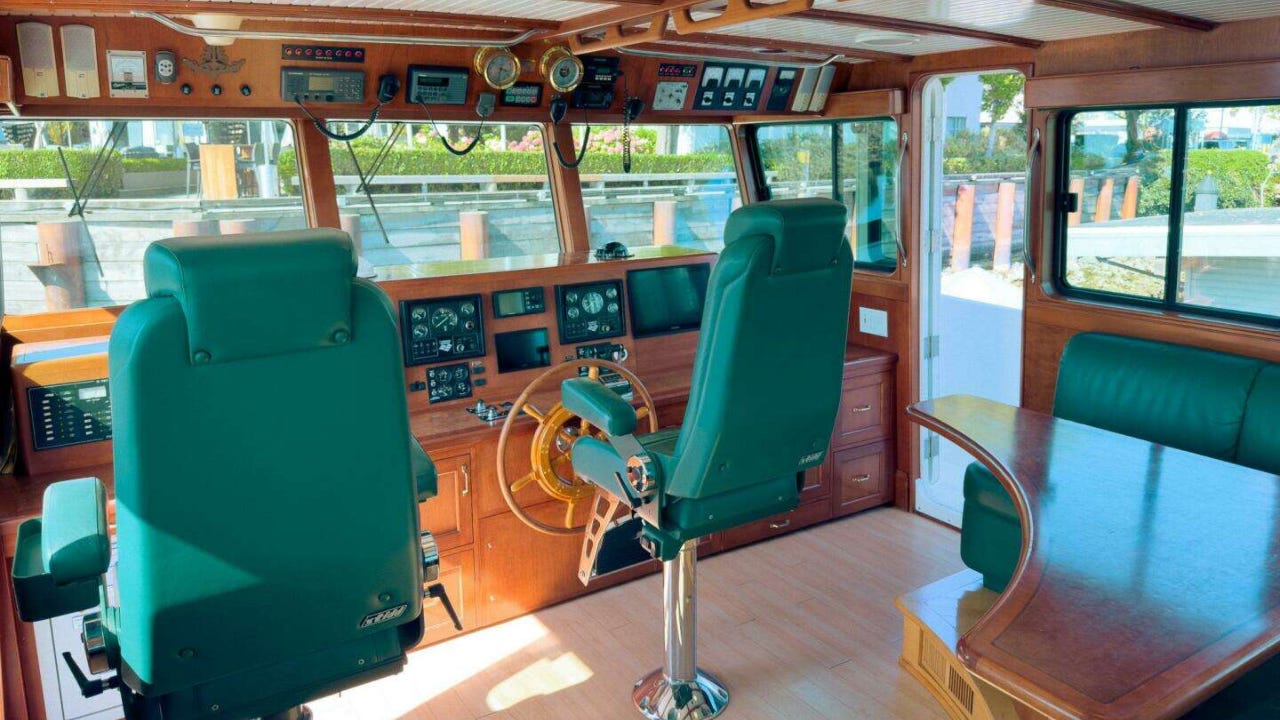
The pilothouse spans the full beam. Dual Stidd helm chairs in green leather. An Edson teak wheel. Furuno radar, FLIR thermal imaging for night running, dual Garmin chartplotters, SSB radio, and Nobeltec navigation software. Hydraulic bow and stern thrusters. Dual Glendinning controls at the helm and at the Portuguese bridge for single-handed docking. Outside steering positions port and starboard on the bridge deck.
The tender is a Highfield 16-foot aluminium RIB with a 90hp Yamaha outboard, deployed via a custom hydraulic davit at the transom.
A Note on the Accommodation Layout
One question worth addressing directly: North has two staterooms, which for a 72-foot vessel may seem modest. It is worth understanding why.
She was designed from the outset as an owner-operator vessel, not a charter platform or a boat built to accommodate six people regularly. The couple who commissioned her wanted somewhere to live and travel, not a floating hotel. The two-stateroom layout reflects that intent: a serious master cabin and a well-proportioned guest cabin, with the space and finish budget concentrated on quality rather than quantity of berths.
For buyers who want additional sleeping capacity, the salon accommodates a king-size pull-out, which covers occasional guests comfortably. And for those who genuinely need a third cabin, the space exists within the vessel to add one for approximately $15,000 USD. It is a straightforward conversion. Whether it is the right one is a different question: a vessel designed around two or three people tends to live better at that number than one reconfigured to sleep eight. The owner-operator philosophy that shaped North’s layout was not an oversight. It was the point.
Her current asking price is $726,000 USD. She is in Vancouver, British Columbia. Potential moorage transfer in Vancouver may be available to the right buyer.
The Recent Investment
A June 2023 survey assessed North as being in above average condition. Since that survey, the current owner has invested more than $300,000 CAD in professional hull restoration, mechanical corrections, and general modernisation. Over 500 labour hours were dedicated to the hull restoration alone, returning the surface to the state you see in the photographs. Every item flagged in the mechanical survey has been professionally addressed.
That level of investment at this stage of ownership is worth understanding for what it means to the next buyer. The current owner has already absorbed the discovery and remediation phase. The vessel has been assessed by a professional surveyor, every identified issue has been resolved, and the result has been independently documented. Vessels in this state represent a fundamentally different proposition from comparable vessels offered “as-is” at similar prices.
The current owner is transitioning to a small local commuter boat. She is not selling because anything is wrong with North. She is selling because her operational life has moved on from what a 72-foot passagemaker requires.
For those who stop reading here, the essentials are these: a purpose-built, custom aluminium pilothouse trawler, 72 feet, proven across thousands of miles from Indiana to Alaska, in above-average surveyed condition, recently invested, asking $726,000 USD in Vancouver.
She is not a production boat. She is not a conversion. She was built from the ground up for extended cruising, by an owner who spent 4 years getting her right.
What the free section cannot tell you is what she actually costs to own and operate. The Cummins service intervals, the fuel burn reality across a Pacific Northwest season, the insurance picture for a 72-foot custom aluminium vessel, the annual maintenance reserve that any serious buyer should set aside, and what the $300,000 CAD refit bill actually represents in terms of remaining useful life on the major systems: that is what The Wardroom is for. Along with my honest assessment of what I would want to look at on a viewing, and my read on whether $26,000 USD is a fair price for what she is.
After all, it is my paying subscribers here on Substack who make it possible for me to do this work properly. I have genuinely enjoyed researching North. A subscription costs less than 1 hour of marina fees….
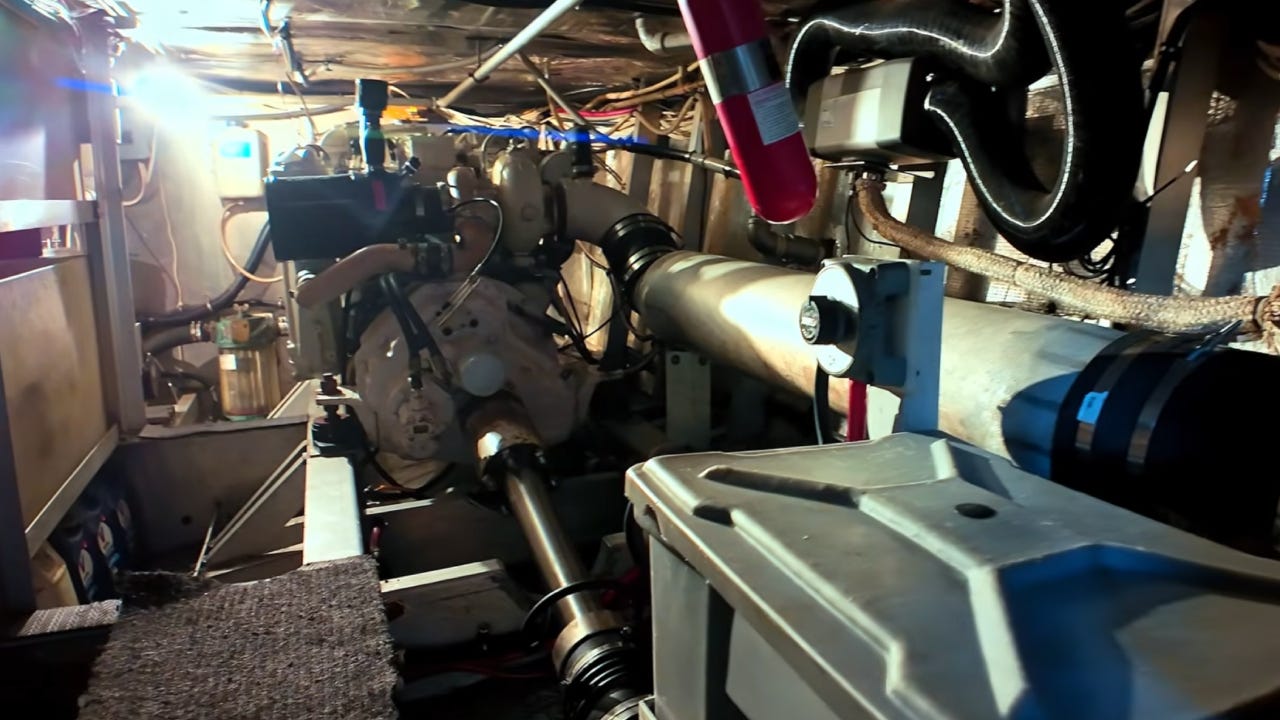
The Engine Room
The twin Cummins 6BTA Diamond Series is one of the better choices a builder could have made in 2002 for a vessel of this type, and that remains true today……[Article continues below]
