

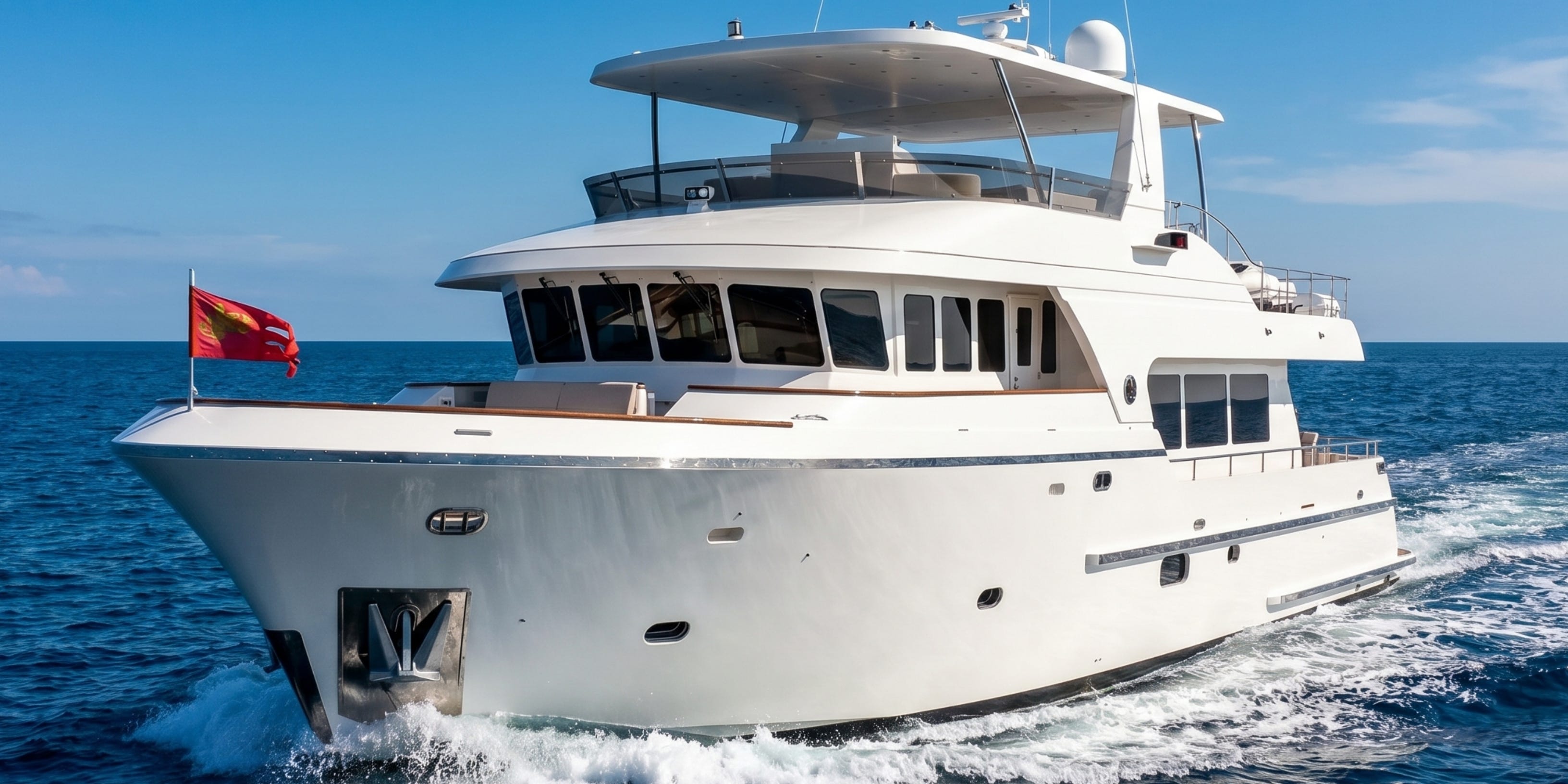
Most serious buyers considering a 70-80ft passage-maker will run through the usual high quality names (this is not an exhaustive list!): Nordhavn, Bering, Selene, perhaps a Vripack custom build if budget allows. These are excellent vessels, and they should be on any shortlist. But there is a yard operating out of northern Italy that has been quietly hand-building long-range explorer yachts in cold-moulded wood and epoxy, to Dutch naval architect designs, and almost nobody outside the Mediterranean seems to know they exist.
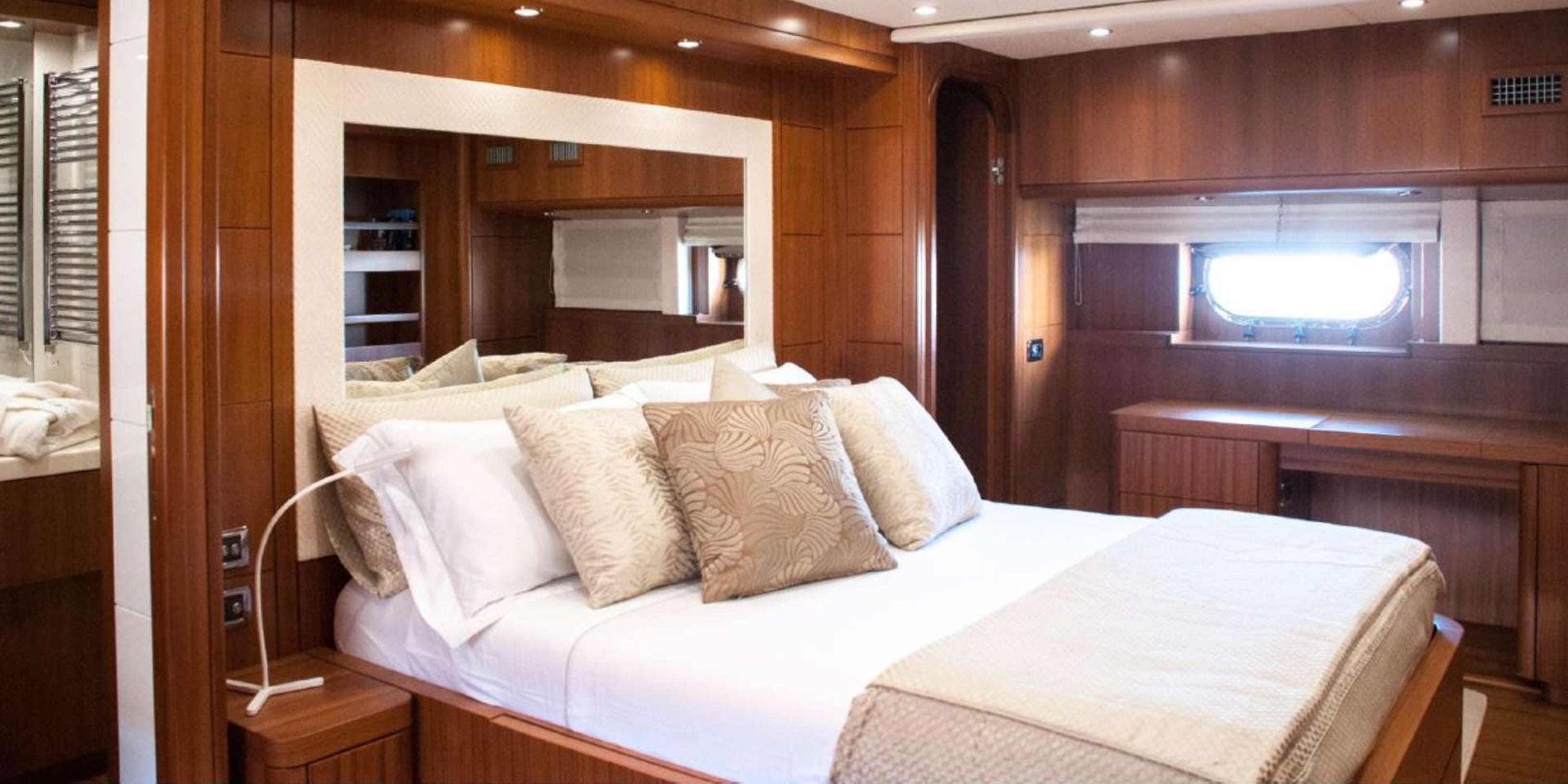
The vessel currently sitting with De Valk in Antibes is a Favaro Yachts Explorer 76, built in 2015 to a Ginton Naval Architects hull form. She is 23.3 metres of traditional wooden West System construction, displaces 61 tonnes, carries 7,200 litres of fuel, and has a 1,400 nautical mile range at her cruising speed of 10.5 knots. She accommodates six guests in three en suite cabins with dedicated crew quarters aft, and is equipped with zero-speed stabilisers plus a gyroscopic stabiliser, a 120-litre-per-hour watermaker, two generators, and solar panels. She is asking €1,590,000 VAT not paid.
Some of you will recognise her…she appeared in a Yacht Buoy Short on my YouTube channel back in January 2023.
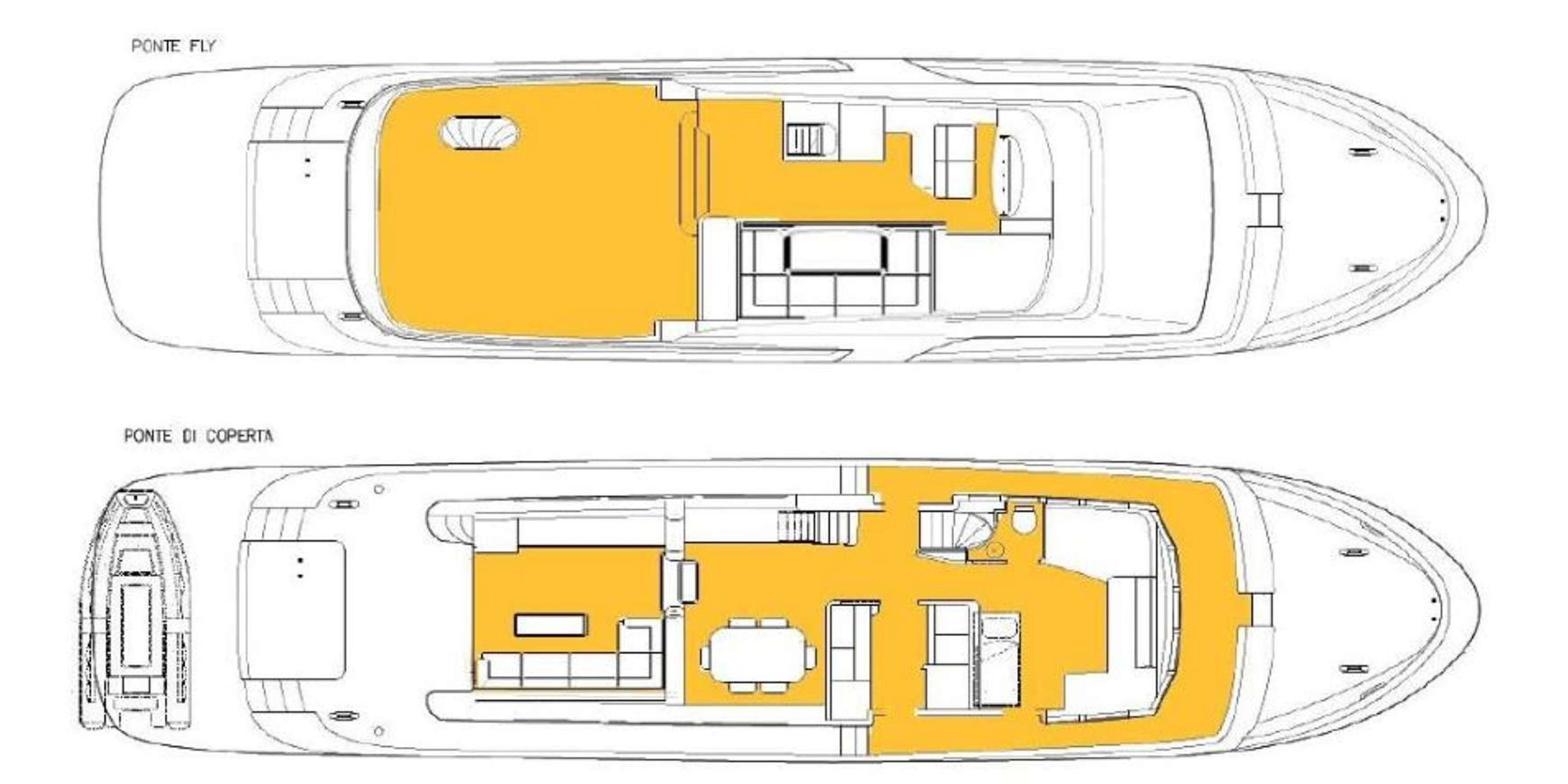
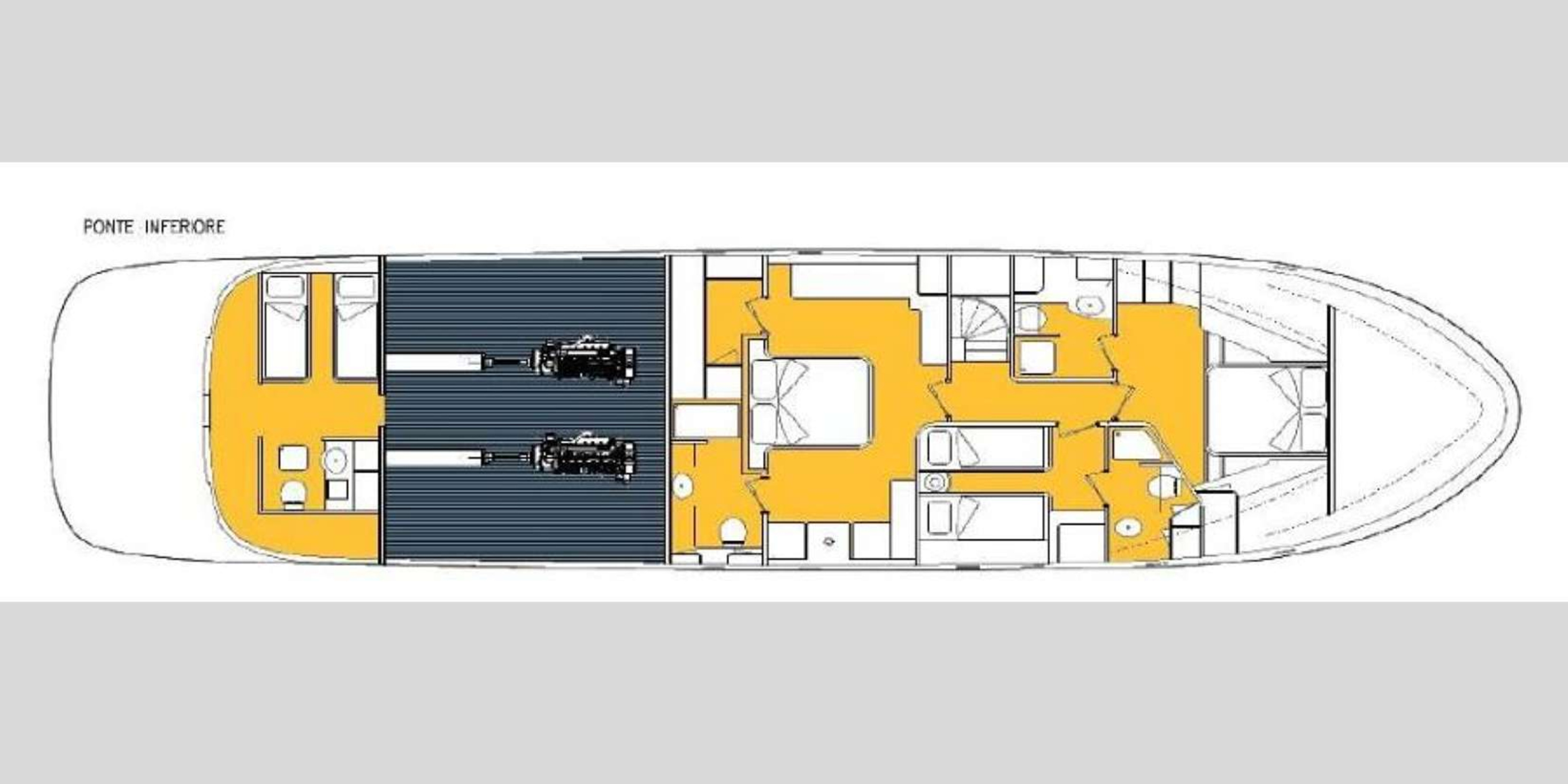
The Builder Nobody Talks About?
Favaro Yachts is a small, custom Italian yard with historical ties to the Veneto region which is the same stretch of coast that produced some of the finest wooden boat building traditions in Europe. They are not a volume producer. They do not have a marketing department, a trade show presence, or a brochure portfolio with forty models. What they have is a commitment to building individual vessels by hand, in wood, using the West System epoxy method that has defined the upper end of traditional composite construction for over 50 years.
The West System method, developed by Gougeon Brothers in Michigan and adopted worldwide for serious wooden boat construction, involves building a hull from cold-moulded or strip-planked timber, then saturating every surface and laminate with epoxy resin. The wood provides the structure, the stiffness, and the acoustic insulation. The epoxy creates the waterproof barrier, bonds the layers chemically rather than mechanically, and produces a hull that, when properly executed, has lower water absorption than conventional GRP and a natural thermal insulation that steel and aluminium simply cannot match. The result is quieter at anchor, warmer in cold climates, and cooler in hot ones.
The Explorer 76 appears to be Favaro’s signature hull. A closely related variant, the Favaro 23.20, operates as a charter vessel in Italian waters (Naples and Sicily) suggesting that more than one hull has left the yard, and that the design has proven itself in real-world use. Beyond that, public records are sparse. Favaro are not the kind of yard that issues press releases.
The naval architect is Ginton, based in Haarlem in the Netherlands. Ginton’s portfolio spans explorer yachts, superyacht projects, and long-range displacement cruisers. Their work includes collaborations with Van der Valk and other established Dutch yards. The Explorer 76 hull form reflects their displacement cruising philosophy: generous 5.75 metre beam, full displacement underwater body, and a shallow 1.5 metre draft that gives her access to anchorages that deeper-drafted vessels cannot enter.
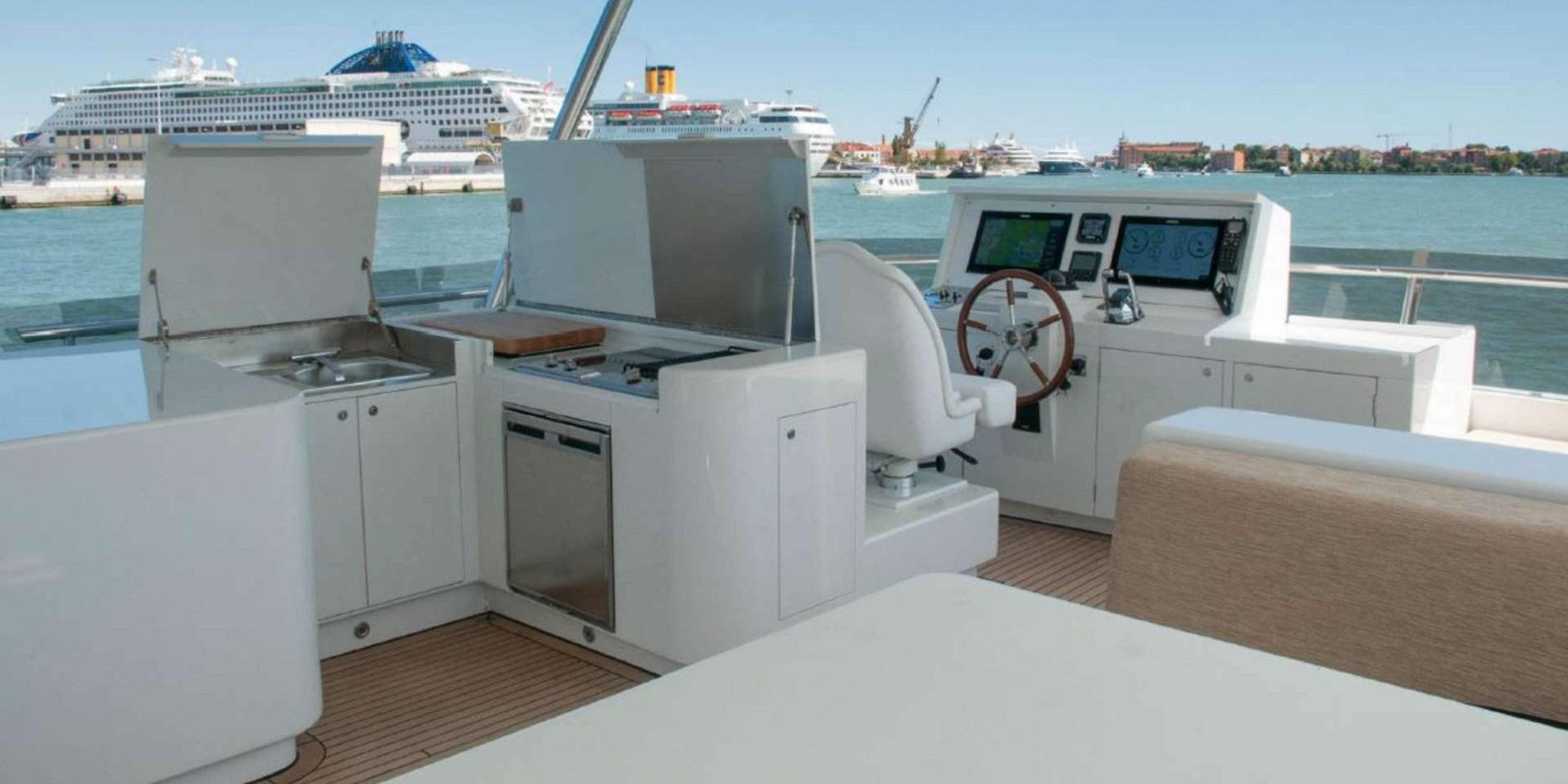
At 23.3 metres and 61 tonnes, she is a substantial vessel. High freeboard, large saloon windows, enclosed flybridge, bathing platform aft. She looks like a vessel that could leave tomorrow and not return for six months.
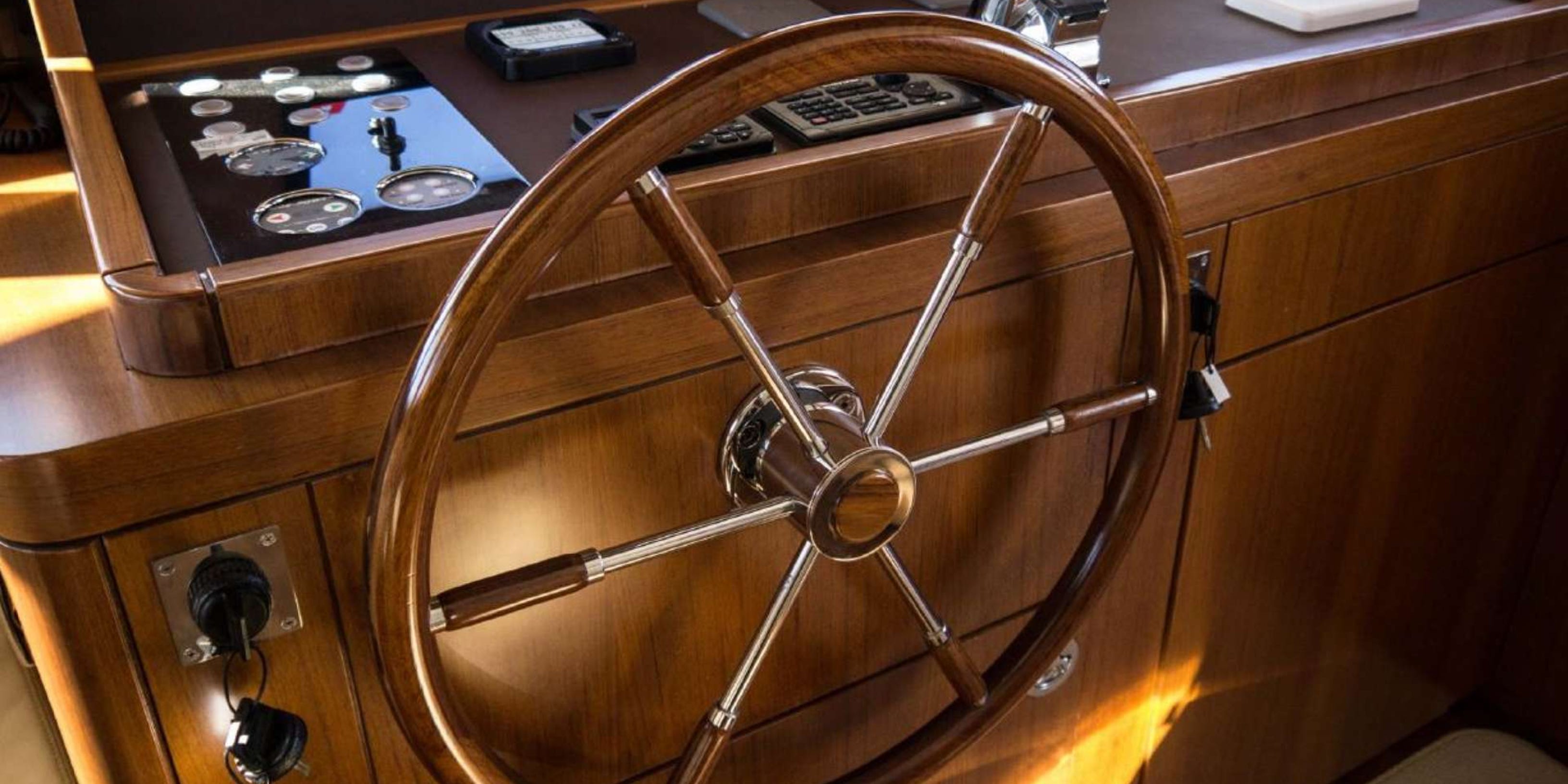
What 1,400 Miles Actually Means
Range claims are always worth interrogating, as range depends on many different factors. The 1,400nm figure on the Explorer 76, however, is accurate.
Real-world range for an explorer yacht can drop 30-40% below advertised figures when conditions turn against you. Waves are the biggest culprit: every time the bow punches through a sea, the hull loses momentum and the engines work harder to recover it. Short, steep chop is far more punishing than a long swell, and beam seas that set the yacht rolling force constant rudder corrections that bleed fuel quietly and continuously. Wind compounds the problem. A 15-knot headwind demands roughly 10-15% more horsepower just to hold the same speed, and a yacht with a high superstructure and a tender on the foredeck is catching considerably more of it than the naval architect modelled in the tank.
Ocean currents add another variable that no range figure can account for. Fighting a 2-knot opposing current is the equivalent of running on a treadmill! Fuel burns, the clock runs, but the nautical miles don't come. Temperature matters too: engines are less efficient in hot, humid air, where lower oxygen density reduces combustion output, while cold northern waters actually increase hull buoyancy and reduce drag, which is why the same yacht will often outperform her Mediterranean numbers on a Norwegian passage. And none of this accounts for payload. Manufacturer range figures are typically derived with minimal load; a fully provisioned explorer carrying fuel, water, crew, guests, and supplies for an extended passage can add several tonnes, cutting speed and range from the moment she leaves the dock.
The spec sheet states fuel consumption at 50 litres per hour at cruising speed. With 7,200 litres aboard, she carries 144 hours of fuel at cruise and at her quoted cruising speed of 10.5 knots, that produces 1,512 nautical miles in flat conditions. The 1,400nm figure therefore already incorporates a sensible operational reserve. Whoever specified the vessel was thinking about real passages, not brochure arithmetic.
Her two John Deere marine diesels produce 280hp each, 560hp combined. John Deere’s marine engine range has an excellent commercial reputation: widely deployed in workboat and fishing vessel applications worldwide, with parts and service available in most major port cities. Service intervals are typically 500 hours for minor services and 1,000 hours for major inspections. The spec sheet shows 2,800 hours on both main engines which is well into working life but nowhere near the end of it on well-maintained diesels. For a 2015 build, 2,800 hours represents a reasonable and reassuring usage history. It also places a major service interval in the near term, which is a known cost a buyer should factor into the negotiation.
The primary generator (23kW) and secondary generator (16kW) each show 1,500 hours. Two generators of different output capacity is the right arrangement for a vessel of this range as the smaller unit handles hotel loads at anchor, the larger covers heavy electrical demand underway or when running galley, air conditioning, and charging simultaneously.
And the watermaker? 120 litres per hour, enough to sustain four people aboard indefinitely without entering a marina to fill tanks. Combined with the solar panels and the 1,600-litre fresh water capacity, she has the self-sufficiency architecture of a genuine passage-maker.
A Vessel Quietly Waiting for the Right Buyer…..
The Explorer 76 appeared on Yacht Buoy as a Short back in January 2023, and she has been quietly waiting in Antibes ever since. The explorer yacht market at this price point often moves slowly by nature as buyers considering a €1.5M+ passage-maker are doing their homework carefully, and that process, understandably, takes time.
There are a few reasons a vessel of this specification attracts a considered buyer rather than a quick one. The first is simply that Favaro Yachts is not a household name outside the Mediterranean. Nordhavn and Helmsman Trawlers, for example, have spent decades building international brand recognition; Favaro have spent that same time building boats. For a buyer who does their due diligence, who really understands the Ginton pedigree, inspects the construction, and has the vessel properly surveyed so the absence of a famous badge on the transom is irrelevant. For a buyer who buys on name recognition alone, it is not necessarily the “right” vessel.
Got a boat?
Know of a vessel, for sale, charter, or otherwise, that you would like me to feature in a future dispatch? You can send me a direct message or email me via john@yacht-buoy.com
The second is the wooden construction. There is a generation of explorer buyers who arrived in this market via commercial and steel-hull backgrounds, and for whom "wood" and "ocean passage" sit in separate mental categories. That perception is not well-founded when it comes to a properly executed West System build, but it does narrow the buyer pool. The third is that at €1,590,000 excluding VAT, she is priced for a buyer who has done the analysis and recognised the value, not someone hunting for an obvious bargain.
The right buyer for this vessel will look past all of that. They will see a 2015 handbuilt explorer, Dutch-designed, Italian-built, fully equipped, with 1,400 nautical miles of genuine range and a draft shallow enough to go places most expedition yachts cannot follow. That buyer exists. She is simply waiting for them.
What the Market Necessarily Doesn’t Tell You
The Wooden Hull Question
The question serious buyers will ask about traditional wood-epoxy construction is the right one: *is this genuinely suitable for blue-water passage-making, or is it a beautiful Mediterranean vessel that will reveal its limits in serious ocean conditions?*
