

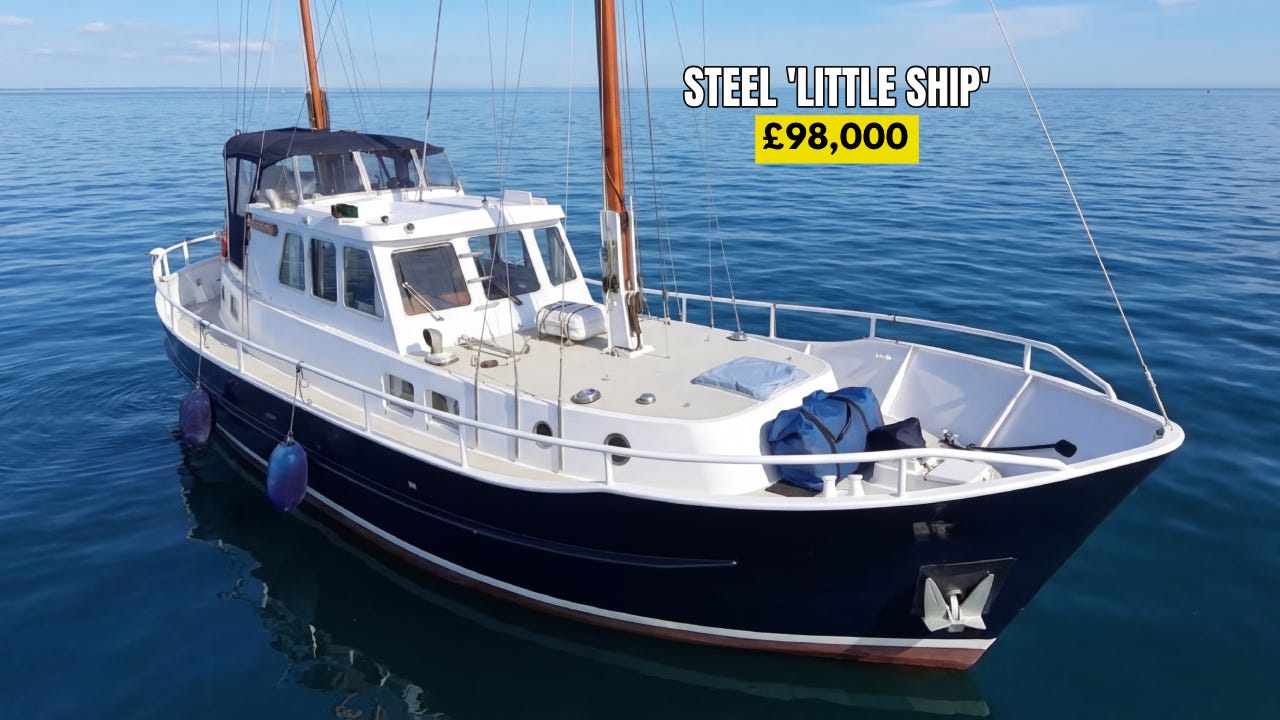
Update, September 2026: Castaway has now sold. The piece below stands as written — the designer, the yard, the engineering and the real running costs of a Dutch steel kotter, none of which changed when she found a buyer. If you are looking for something in the same vein, I keep a hand-picked selection of boats for sale here: yacht-buoy.com/yachts-for-sale
If you’ve just watched the video, you’ll already have a sense of what Castaway is. Steel, purposeful, built with the kind of honesty that commercial yards applied to working vessels because nobody could afford a ship that broke. What you might not know is who designed her, who built her, and why those two names together represent something genuinely significant in the world of Dutch yacht building.
That’s what this piece is for.
The Man Who Designed Her
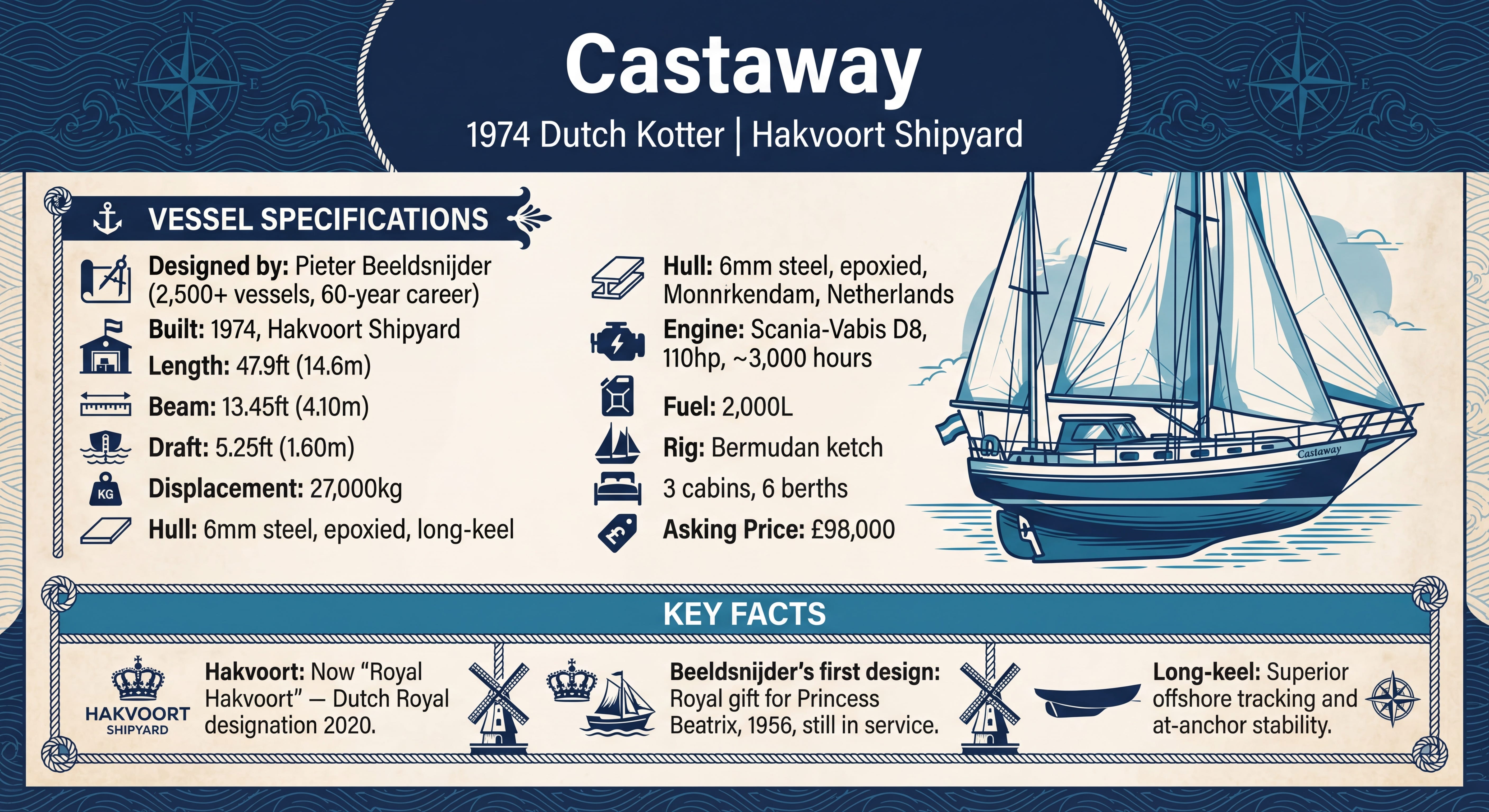
Pieter Beeldsnijder was one of the most prolific Dutch naval architects of the twentieth century. In a career spanning more than 60 years, he produced over 2,500 vessel designs; everything from fishing vessels to superyachts, but always with the same underlying philosophy: build it for the owner who’s actually going to live on it, not the brochure photograph.
His first major commission set the tone for everything that followed. In 1956, he was asked to design a 49-foot traditional Dutch sailing yacht as a gift from the Dutch people to Princess Beatrix for her 18th birthday. That vessel, De Groene Draeck (The Green Dragon), is still in the Dutch royal family’s possession today. Seventy years afloat. That tells you something about how Beeldsnijder approached his work.
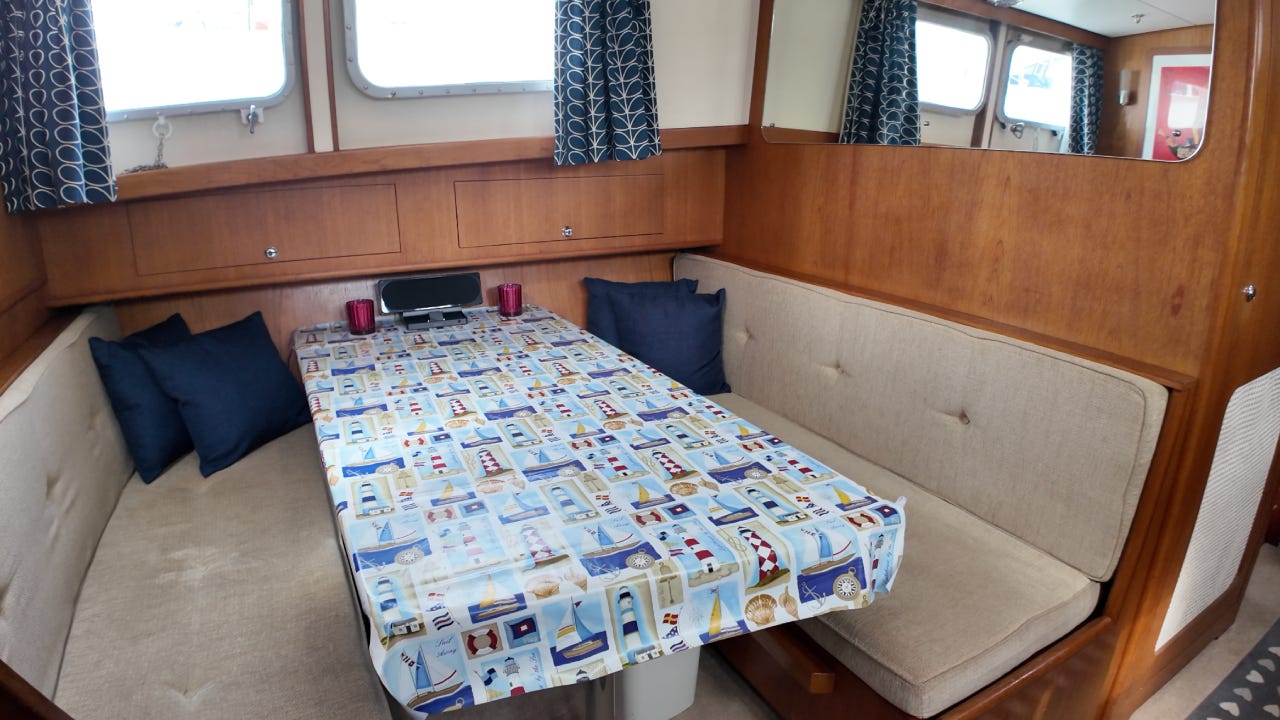
His design philosophy was disarmingly practical. “Each boat is a dream come true,” he said, “and I want to make it 10 out of 10. It is important to know if a person likes to read, watch TV, whether there will be meetings with business partners on board, children.” Before he put pencil to paper, he understood the person the vessel was being built for. That is why Beeldsnijder interiors feel lived-in and functional rather than impressive and slightly inconvenient.
Castaway was designed at the peak of his working powers. She reflects all of it.
The Yard That Built Her
In 1974, the Hakvoort Shipyard in Monnickendam had been building fishing trawlers for fifteen years. Albert Hakvoort had founded the yard in 1919 and his family had expanded it through fire… literally: a blaze in 1955 destroyed two sheds while the yard was uninsured, and the family rebuilt by hand. By the time they launched Castaway, they had completed 70 fishing trawlers and established a reputation for steel construction that commercial operators trusted with their livelihoods.
Commercial yards build differently to yacht yards. Where a yacht builder optimises for weight and appearance, a commercial builder optimises for survival. Hakvoort’s trawlers had to work the North Sea in all conditions, year-round, with no option to call it a day and return to harbour if things got uncomfortable. That engineering culture is baked into the hull Beeldsnijder designed and Hakvoort welded.
Today, Hakvoort holds a Royal designation from the Dutch government - one of the rarest honours in Dutch commerce, reserved for companies of genuine national significance. They didn’t build superyachts in 1974. They built vessels that worked. Castaway is the product of that.
What She Is
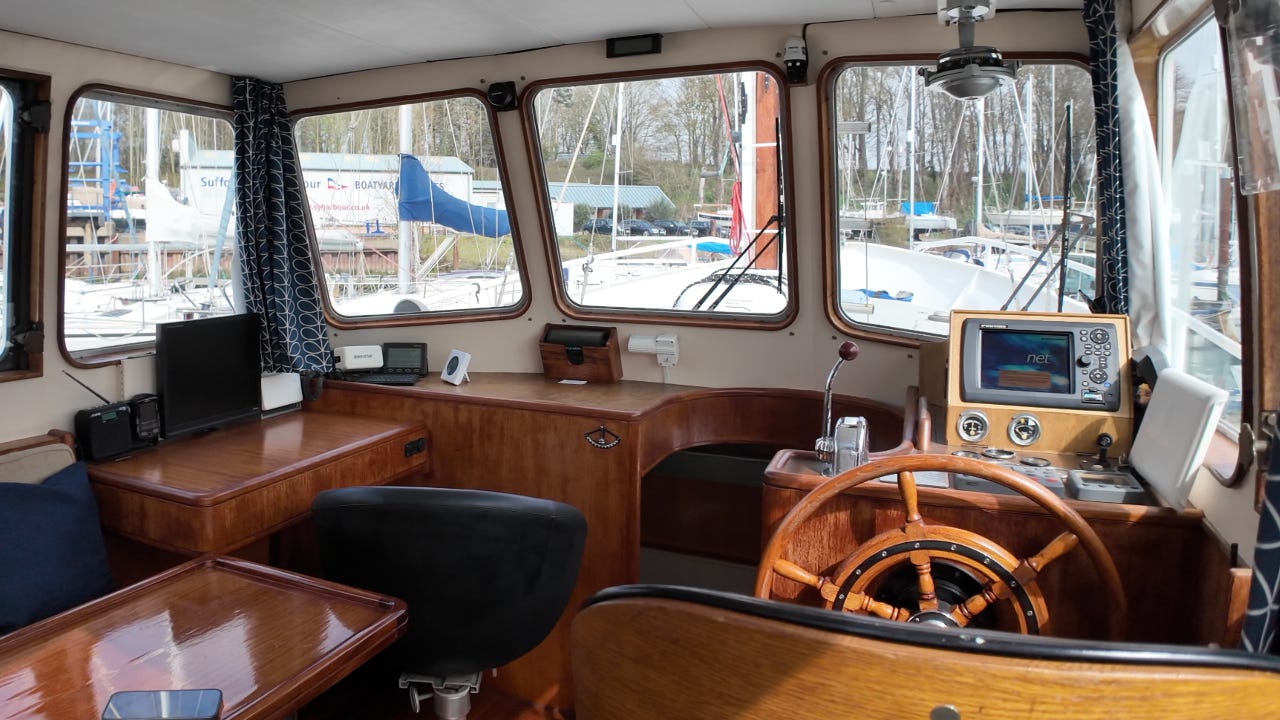
Castaway is a 47.9-foot (14.6-metre) steel motor ketch with a long-keel displacement hull, keel-cooled engine, and a Bermudan ketch rig on wooden masts that can be lowered for canal cruising. Her displacement is 27 tonnes. Her hull is 6-millimetre steel, now epoxied. Her superstructure is aluminium. She was built to a design that puts the bow high and the freeboard tall - exactly what you want when a North Sea swell is coming over the quarter and you would rather stay dry.
The long keel is the defining characteristic. In modern yacht design, long keels have been largely abandoned in favour of fin keels that allow better light-air performance and tighter turns. But long keels do something fin keels fundamentally cannot: they track. Once a long-keel vessel is pointed somewhere, she goes there. In rough conditions, when a fin-keel yacht is yawing and demanding constant attention from the helm, a Beeldsnijder kotter is simply sailing. The helm loads up in heavy weather, the boat stays on course, and the crew can actually do other things.
At anchor, the difference is even more pronounced. The long keel and high displacement mean Castaway rolls slowly and predictably in a beam swell. A modern fin-keel yacht of similar length will snap back and forth in the same conditions, making sleep difficult and meals an exercise in plate management. These are not small things on a passage.
The Engine
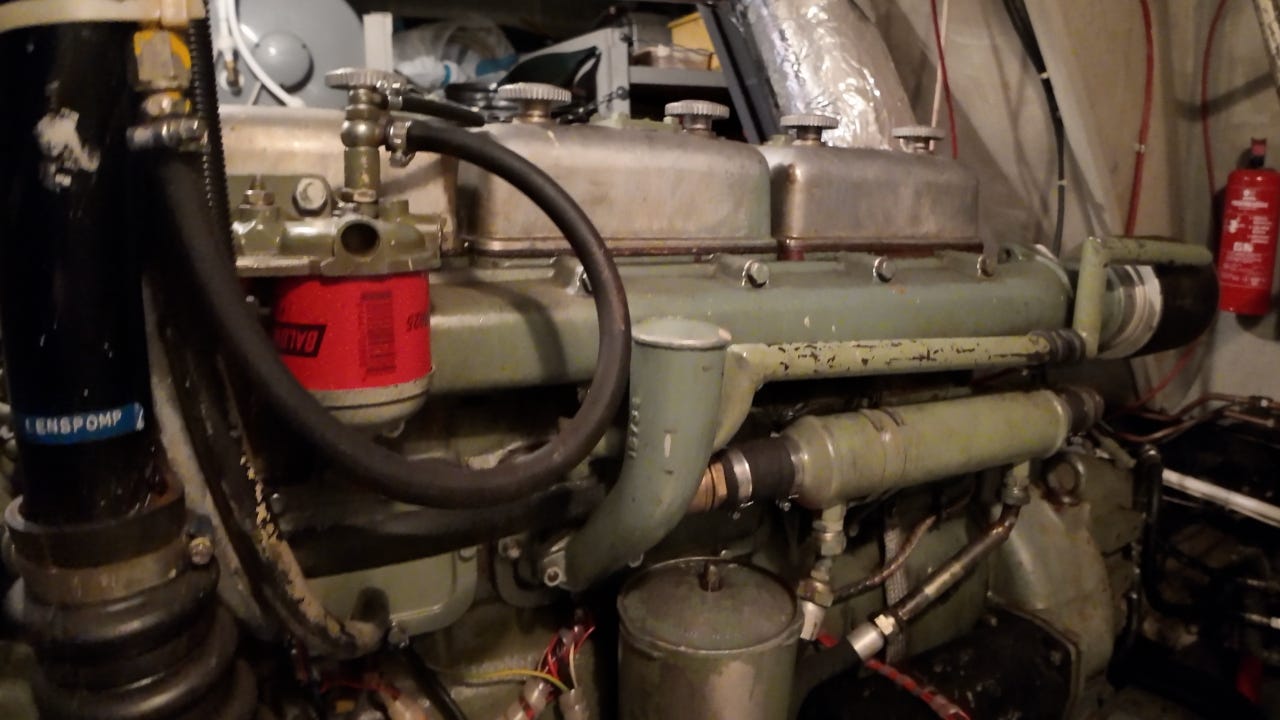
The Scania-Vabis D8 is a six-cylinder, eight-litre, naturally aspirated diesel producing 110 horsepower at a maximum of 1,500 rpm. That maximum RPM figure tells you everything you need to know about how this engine was designed to work: slowly, steadily, pulling hard at the bottom of the rev range where diesel engines are happiest and most economical.
At 3,000 hours, the D8 is well within its working life. Properly maintained marine diesels of this generation routinely reach 10,000 to 15,000 hours before requiring major work. Scania is, of course, a global brand…trucks, buses, industrial plant and parts are available from dealers throughout Europe. Any competent marine diesel engineer can service it without specialist knowledge or imported components. That matters when you’re in a Portuguese marina and something needs attention.
Fuel consumption at typical cruising speeds of 8 to 9 knots runs to approximately 12 to 16 litres per hour. The 2,000-litre tanks provide a range of approximately 1200 to 1500 nautical miles, sufficient for coastal passages with planned fuel stops.
Looking for Something Like Her?
Castaway is sold, but she was never a one-off. Over on the Yacht Buoy site I keep a hand-picked selection of boats currently for sale. Every one has been personally inspected, filmed or reviewed by me, and nothing goes on that list unless I genuinely rate it on build quality, value and engineering.
Browse the current selection here: yacht-buoy.com/yachts-for-sale
What Ownership Costs
The £98,000 asking price is only the beginning of the conversation. Here is what Castaway will likely cost to run.
