

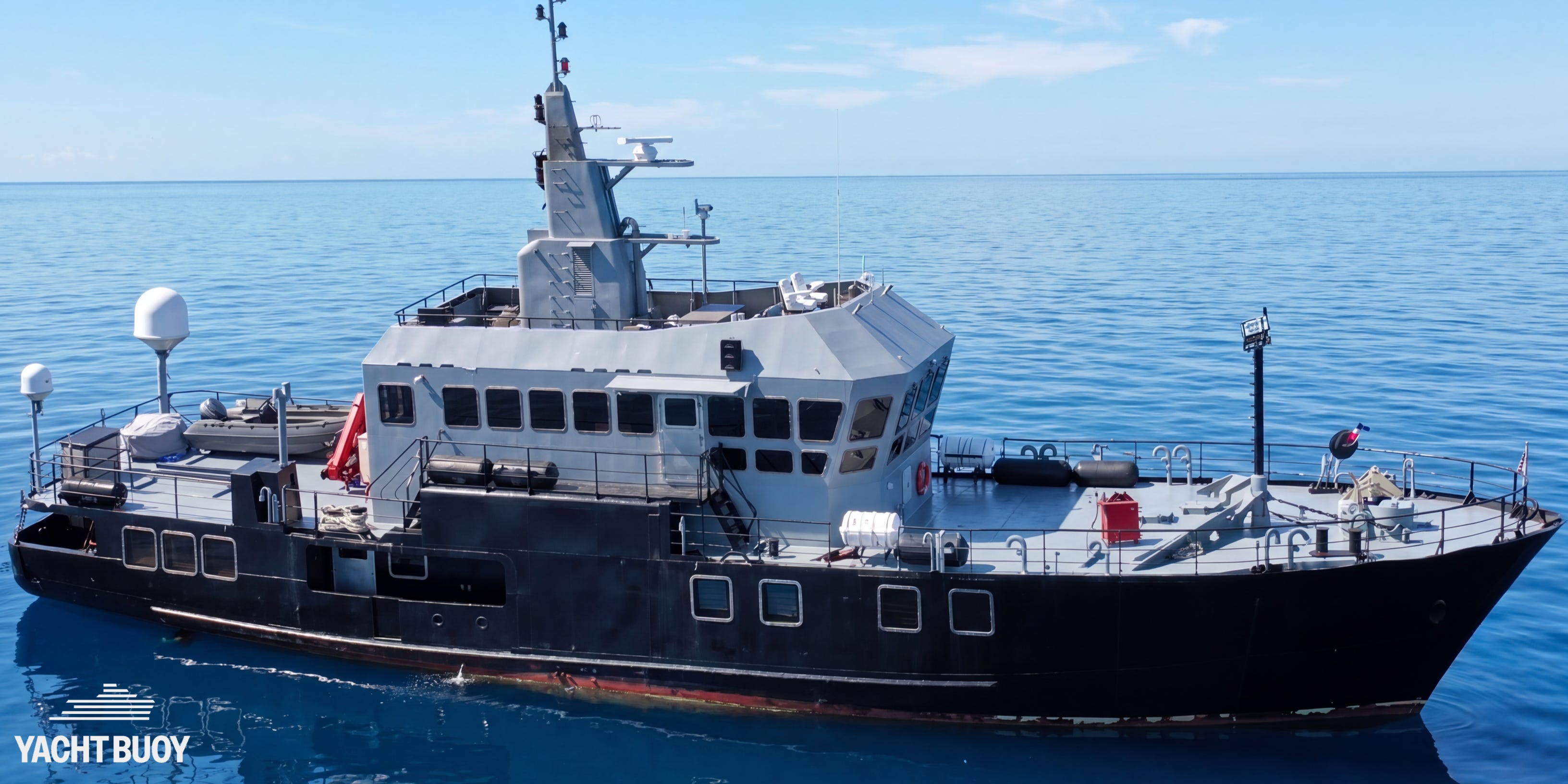
There is a category of vessel the yacht world does not quite know what to do with. Not a purpose-built superyacht, not an oil-rig support vessel conversion, not a sailing ketch with a watermaker bolted on. Something harder to classify, and in many ways more interesting for it.
The Anne S. Pierce started her life in 1982, built to work the North Atlantic. Not the North Atlantic of sailing glossies and golden-hour photographs, the real one. Grey, cold, and brutal, where the season dictates everything and the sea does not negotiate. She was a scallop dragger, operating on Georges Bank and the Grand Banks alongside the Nova Scotian fleet that worked those waters for decades before the fishery collapsed. Purpose-built to haul dredges across the seabed in conditions that would have most yachts running for shelter.
In 2021, at Glovertown Shipyard in Newfoundland, she was reborn. A rebuild so comprehensive that she effectively classifies as a new vessel in everything except her bones. And those bones, as it turns out, are exactly what you want in an expedition yacht.
I filmed a full tour of the Anne S. Pierce for the Yacht Buoy channel, and I was lucky enough to stay on board overnight. The owner and crew were some of the best people I have encountered in this industry; warm, knowledgeable, and genuinely proud of what she had become. That kind of pride shows in a boat. She is now available for sale at €3.85 million.
That price point deserves some context, which is what this article is about.
Why €3.85 Million Is the Interesting Number
The original blog I wrote for this vessel suggested that comparable expedition yachts in this condition would ask $7.5 to $8.5 million. That was accurate. A new-build Bering 120 — 120 feet of steel expedition yacht with ice-class credentials asks at least €6.5 to €7.8 million, with a 12 to 18 month wait for delivery. A Horizon RP120 runs €6.8 to €7.5 million. And that is before you factor in the customisation costs that come with speccing a new-build to your requirements.
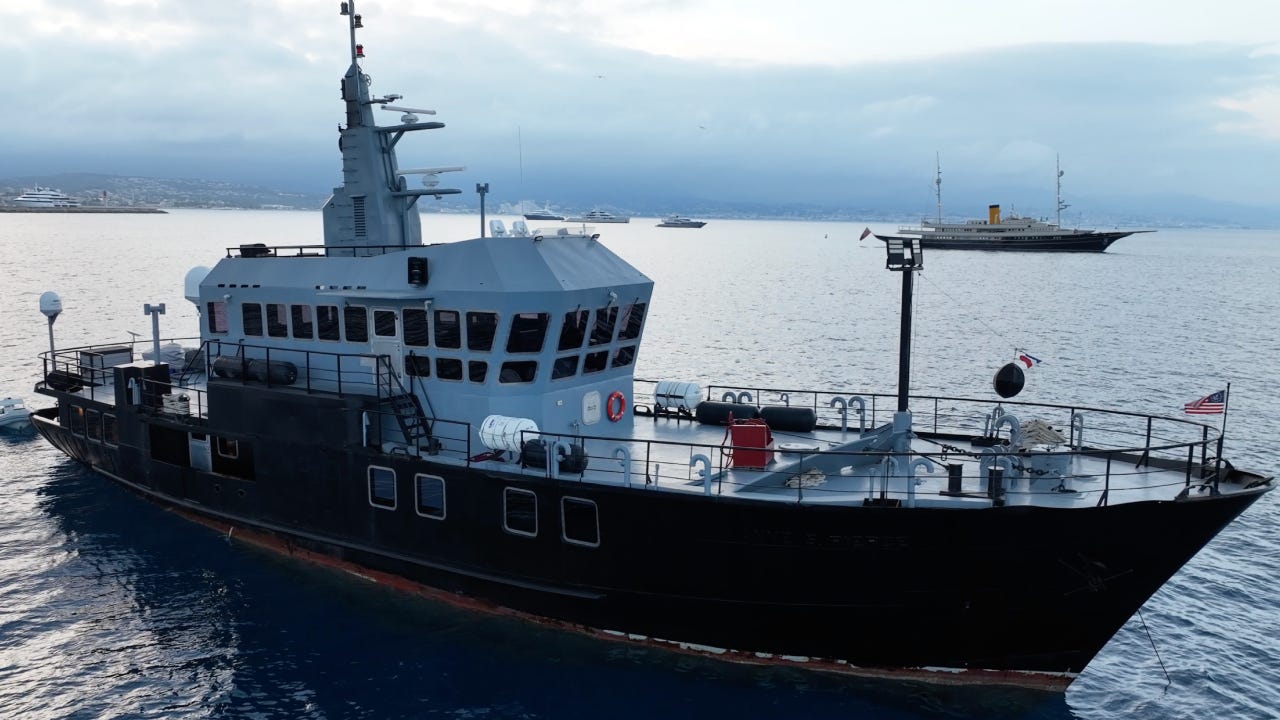
The Anne S. Pierce is €3.85 million. Ready to go. Currently in Marseille.
That is not a distressed sale figure. This is a fully rebuilt, ice-class rated, 120-foot steel expedition vessel with two Caterpillar D399 V16 engines, a 7,000 nautical mile range, and five double staterooms. When a vessel like this is priced where she is, it is worth paying attention.
She Was Built for the Worst the Atlantic Could Offer
Commercial scallop fishing on Georges Bank is not gentle work. The fleet operated year-round in conditions that most recreational vessels avoid by design: heavy swells, gales, ice formation in winter, sea temperatures that hover around four degrees Celsius. Scallop dredges are dragged across the seabed at a 3.5:1 cable ratio, hauling thousands of pounds of catch per tow. Repeatedly. Every day. For months.
The structural demands of that operation are extraordinary. Heavy steel hulls. Robust deck machinery. Engines capable of sustained towing loads without complaint. Wide beam and genuine stability, not the paperwork kind, to handle the asymmetric loading of a dredge hanging off one side of the vessel. The Anne S. Pierce’s hull is 3/8 of an inch steel across the main body, stepping up to half an inch in the bow and stern. She carries bilge keels, uses fuel and seawater as ballast, and has 30,000 pounds of steel shot placed in the engine room to tune her trim.
That is not yacht engineering. That is working-vessel engineering applied to something that now carries people instead of shellfish. For buyers interested in genuine expedition capability, and by genuine I mean the kind of passages where the weather window matters more than the anchorage, the distinction is significant.
At 120 feet overall, with a 14-foot draft and a beam of 25.8 feet, she is a substantial and serious vessel.
The Engine: A Caterpillar D399
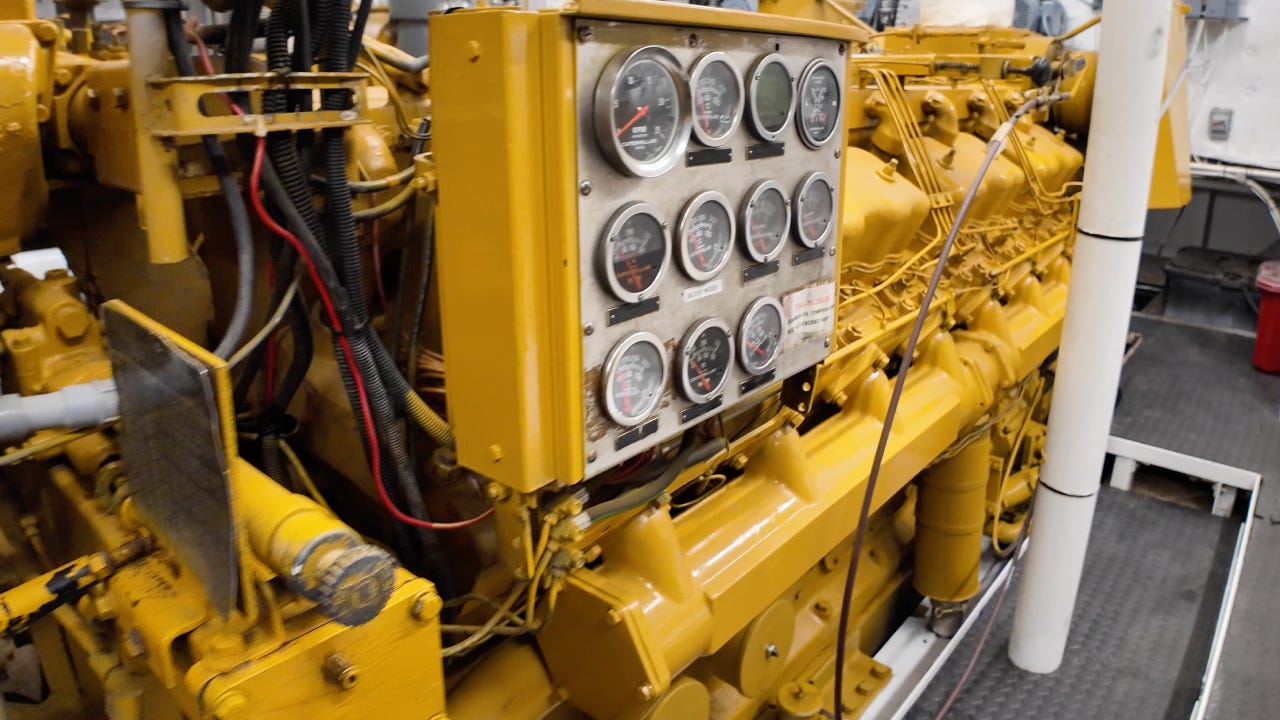
The main propulsion is a Caterpillar D399, a 16-cylinder V configuration producing 1,100 horsepower driving a 9-foot propeller through a 4:1 reduction gearbox. The D399 earned a reputation in commercial fishing circles that I suspect its engineers would approve of: “cast iron elephant.” It is one of the most proven large displacement marine diesels ever built. Cat D399s spent their working lives powering everything from offshore supply vessels to fishing boats running 6,000 to 8,000 hours per year. They are designed for 30,000 hours of operating life with proper maintenance, and they achieve it routinely.
The D399 is not fashionable. It is not quiet, and it is not small. What it is, is bulletproof. Mechanical fuel injection, no computer controls, enormous low-end torque, and a parts supply chain that is genuinely global. Any competent Cat engineer anywhere in the world can service it. There is no proprietary software, no dealer dependency, no obscure component that requires an eight-week wait. You can find D399 parts in Halifax, Miami, Marseille, and Singapore.
For a vessel intended for serious blue-water passages in remote locations, that matters more than fashion.
For generation, three units: a Cat 3306 six-cylinder running a 70kW generator with a Danfoss PTO for thruster power, a Cat 3304 four-cylinder at another 70kW, and a Cat 2.2 delivering 25kW for quiet anchor operations. Three generators across two power tiers is considered redundancy engineering.
Range: 7,000 Miles Is a Real Number
The Anne S. Pierce carries 21,000 gallons of fuel across six tanks and one day tank. At cruising speed, range is approximately 7,000 nautical miles.
Cruising speed is 9 knots, with a top end of 12. She is not sprinting past anything. But that 7,000-mile figure puts the United Kingdom from Miami. It puts the Azores from the Caribbean. It opens up passage-making that requires pre-positioned fuel drops or tender support for most expedition yachts. She was designed to go far, reliably, in the kind of weather conditions where “far” means choosing to be at sea rather than waiting for a window in harbour.
The 2021 Rebuild
Glovertown Shipyard in Newfoundland carried out a comprehensive conversion that took a working scallop dragger and produced an expedition superyacht. The phrase “extensive rebuild” is overused in boat listings, typically covering a new coat of paint and refurbished upholstery. What happened at Glovertown was substantively different.
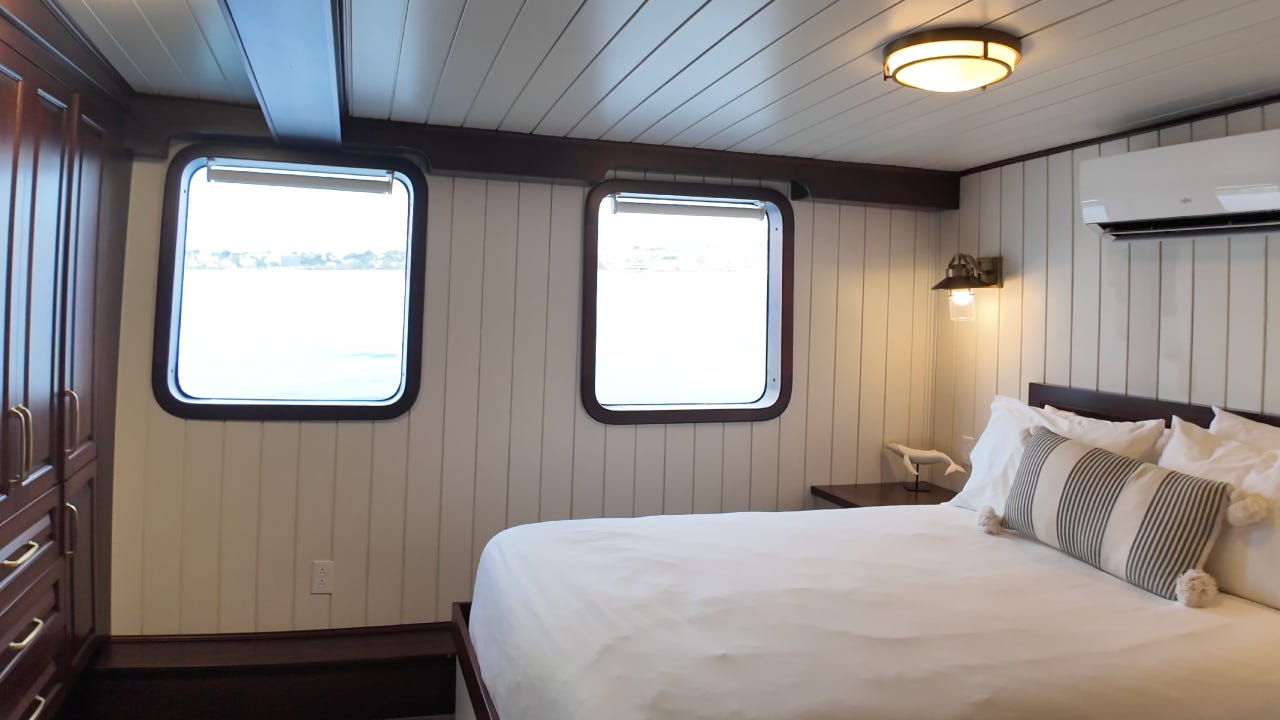
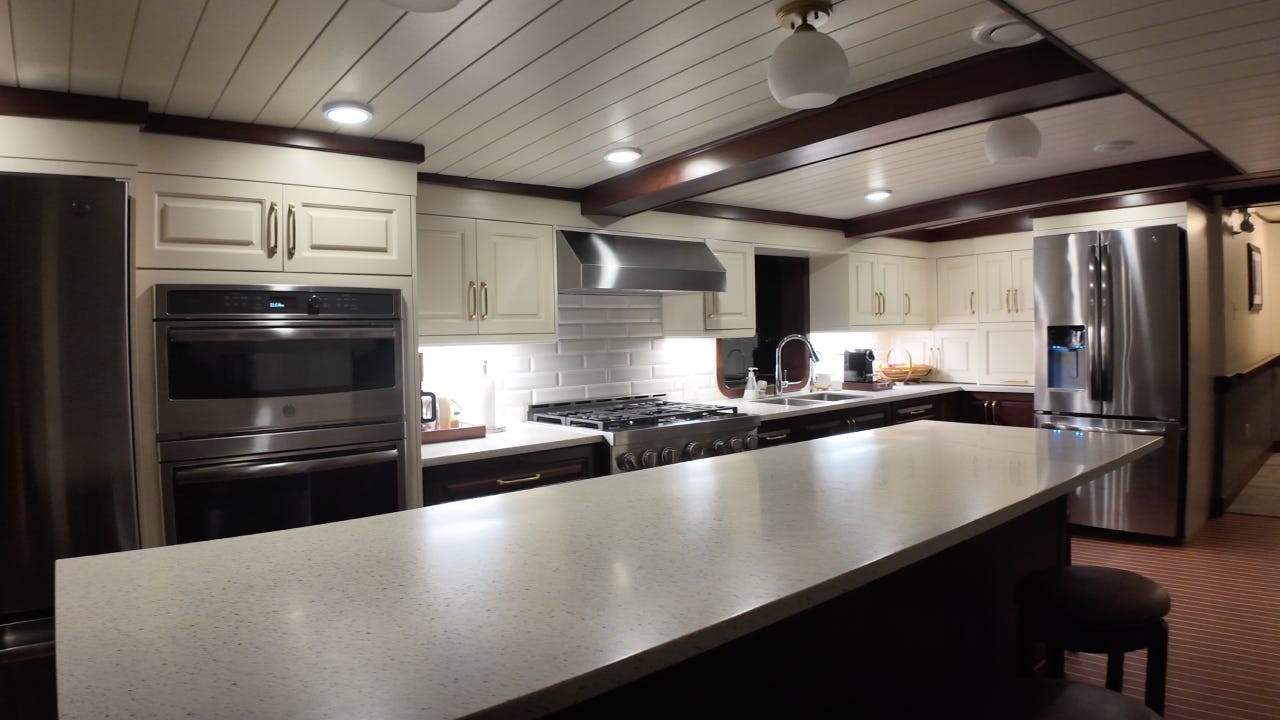
The interior now includes five double staterooms and six crew berths, a main salon, custom galley, and wood-burning fireplaces throughout. Sixteen Fujitsu air conditioning split units, Starlink internet across the vessel, and a Blue Water desalination unit producing 70 gallons of fresh water per hour. Navigation through two Furuno radars, NavNet depth finding, Time Zero software, and a full suite of modern safety equipment. The vessel recently passed an inclination test confirming her stability figures post-rebuild.
Equipment extends to a 3-ton Amco knuckle boom crane, a Hawboldt winch — Hawboldt are the Nova Scotia manufacturer whose deck machinery was standard fit across the Atlantic Canadian scallop fleet, built to commercial fishing standards — and two tenders: a 2021 16-foot Whaley and a 2023 13-foot Zar RIB.
She is CE-A certified and carries ice-class rating. She was in Halifax when I filmed her. She is currently in Marseille.
What She Is, and What She Is Not
The Anne S. Pierce is a genuine offshore expedition vessel. She has the range, the hull construction, and the engineering pedigree for passages that properly built expedition yachts achieve. Northwest Passage. January Atlantic crossing. Extended Alaskan seasons. She has the credentials.
She is also a converted working vessel, and that character runs through everything. The proportions below decks, the relationship between accommodation and machinery space, the general feel - these reflect a vessel designed to work, not to lounge.
The 2021 rebuild has addressed finish and comfort directly, but the bones remain those of a North Atlantic scallop dragger. For buyers who understand and value that provenance, it is a feature. For buyers who want a superyacht that happens to have range, it is worth looking at carefully during survey..
The 14-foot draft is a real consideration. The Bahamas, the Chesapeake, the shallow coastal anchorages; she is not going to those places with ease. Her natural habitat is open ocean and ports with genuine depth. Plan your itinerary accordingly.
At €3.85 million, with comparable new-build expedition yachts asking €6.5 million and up, the pricing reflects confidence in the vessel rather than compromise on it.
What It Actually Costs to Run the Anne S. Pierce
Let us start with the engine room, because that is where the largest numbers live.
