

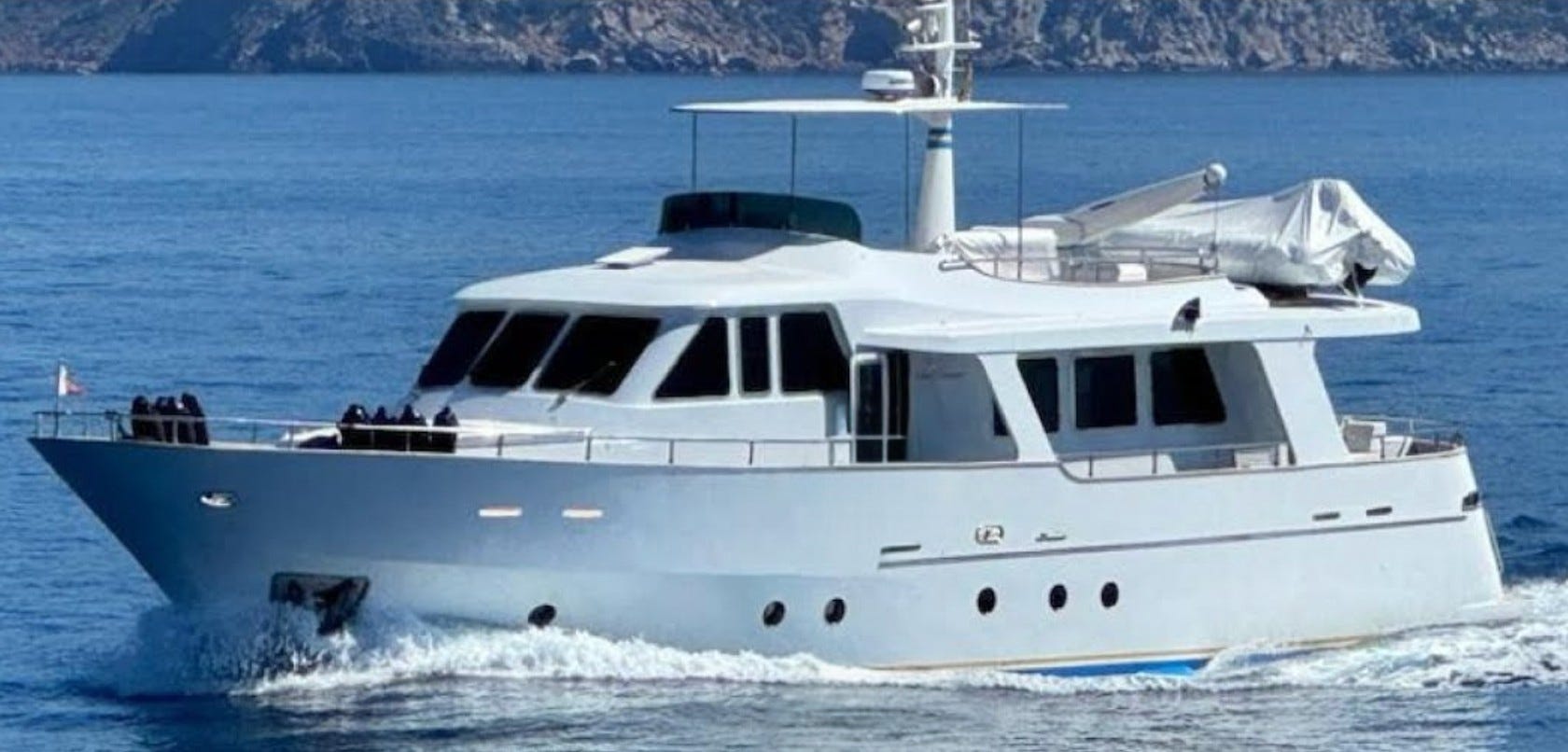
There is a particular effect that the Benetti name has on people who follow the European yacht market. It lands somewhat differently from other Italian builders. It carries the weight of mega-yachts, of large steel motor yachts built for serious owners, of a shipyard that has been launching vessels from the Viareggio waterfront since the 19th century. So when a Benetti appears in a G Marine (Italy) brokerage listing at €350,000, you read it twice.
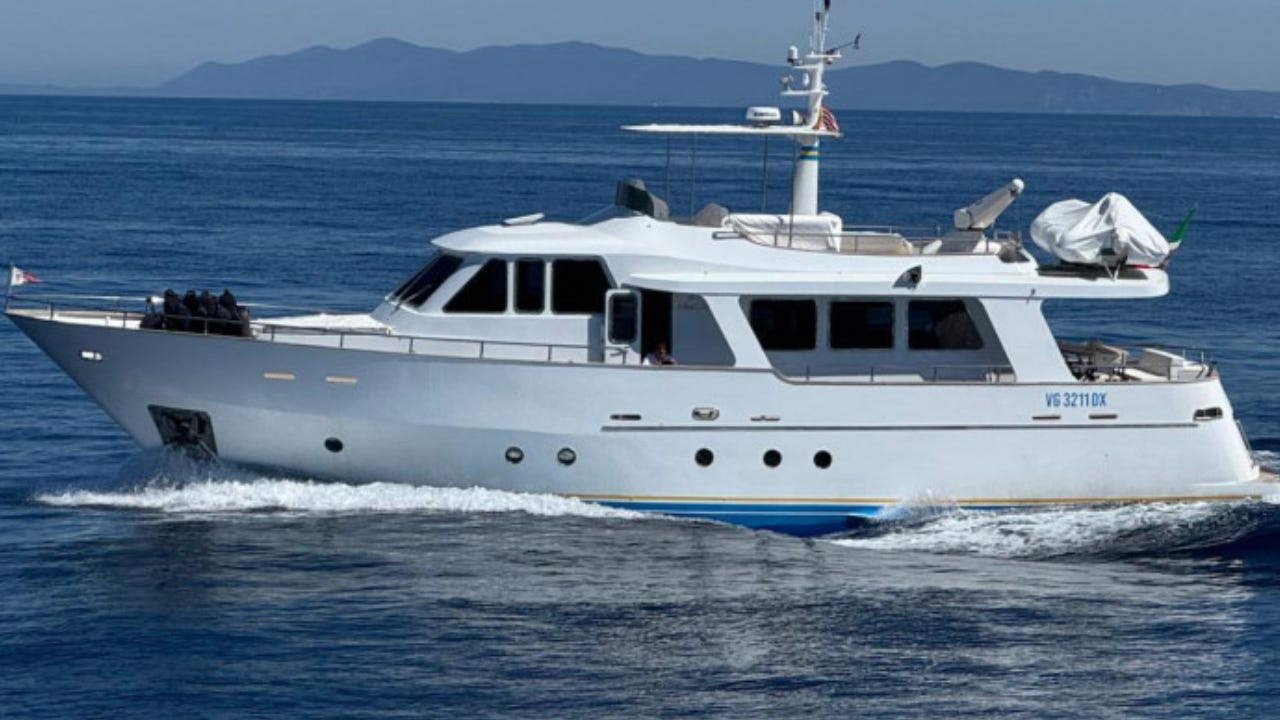
The vessel in question is a 2001 Benetti Sail Division 20, which was listed with Mediaship Italy and recently discounted from €400,000 before selling to a Yacht Buoy reader. She is 19.21 metres, aluminium-hulled, flybridge-configured, and found a buyer who understood what she is and, just as importantly, what she is not. The name on her transom is genuine. What it represents in this context requires some explanation, because the Benetti Sail Division is not the same yard as the parent company, and the distinction matters for how you evaluate this vessel in the market.
The Benetti Sail Division: A Different Kind of Benetti
Benetti Sail Division was established in 1978 as a separate arm of the Fratelli Benetti shipyard, originally commissioned to build aluminium sailing yachts at a time when the parent yard was focused almost exclusively on large steel motor yachts. The arrangement was brief. By 1981, the division had been separated from the parent company under Riccardo Benetti, and as aluminium sailboats fell out of fashion in favour of fibreglass construction, BSD pivoted intelligently rather than fading quietly.
The yard moved into refit work on older Benetti motoryachts, then into building its own motoryachts, and by the mid-1990s had carved out a distinct identity in the Italian market.
What made BSD’s motoryachts recognisable was their aesthetic restraint. At a time when many Italian builders were competing on visual spectacle, BSD went in the opposite direction.
The yard became known for its rounded and canoe-stern motor yachts, for build quality that prioritised durability over showmanship, and for an ethos that the company’s own marketing described as “elegant and discreet,” vessels that “capture attention by their class and understatement.” That positioning attracted a specific kind of owner: experienced, uninterested in ostentation, looking for genuine cruising credentials in a platform that would endure.
The Benetti 20 sits at the smaller end of BSD’s production range. The yard’s flagship work ran to vessels of 105 feet and beyond, including Explorer-style long-range cruisers and the later Logica series co-designed with Luca Brenta. The 19.21-metre flybridge is a more modest proposition, but it shares the build philosophy of the larger vessels: aluminium construction, solid engineering, and lines that have aged well precisely because they were never chasing a trend.
The Hand Behind the Lines
The Benetti 20 was designed by Studio Starkel, the Trieste-based naval architecture practice founded in 1982 by Roberto Starkel. If Starkel’s name is less famous outside Italian yachting circles than it deserves to be, that is partly because his most celebrated work was in sailboat design, where his designs earned genuine competition results and the attention of serious owners.
Starkel graduated with a degree in naval engineering in 1977 and spent his career as something of a purist: rigorous on hydrodynamics, restrained in aesthetics, consistently more interested in how a vessel moves through the water than in how she looks tied to a pontoon.
His motor yacht work followed the same instincts. Later in his career, Starkel worked with builders including Maxi Dolphin on elegant displacement and semi-displacement motor yachts, and his signature approach, seaworthy hull forms with minimalist external styling, is evident in the Benetti 20. He passed away in December 2022. Vessels bearing his name are regarded by experienced brokers and cruising owners as a mark of considered design. The Benetti 20 is not a famous model, but the hand behind her hull is a credible one.
The Vessel
She sits at 19.21 metres on the waterline, with a beam of 4.74 metres and a draft of 1.80 metres. Displacement is 52 tonnes, a figure that places her firmly in full-displacement territory and gives some indication of why the owner describes her as feeling “built in a very smart way.” A 52-tonne aluminium flybridge at 19 metres is not a light vessel. She is built to absorb rather than deflect a sea state, and that mass, combined with Starkel’s hull form, is the foundation of whatever seakeeping quality she offers.
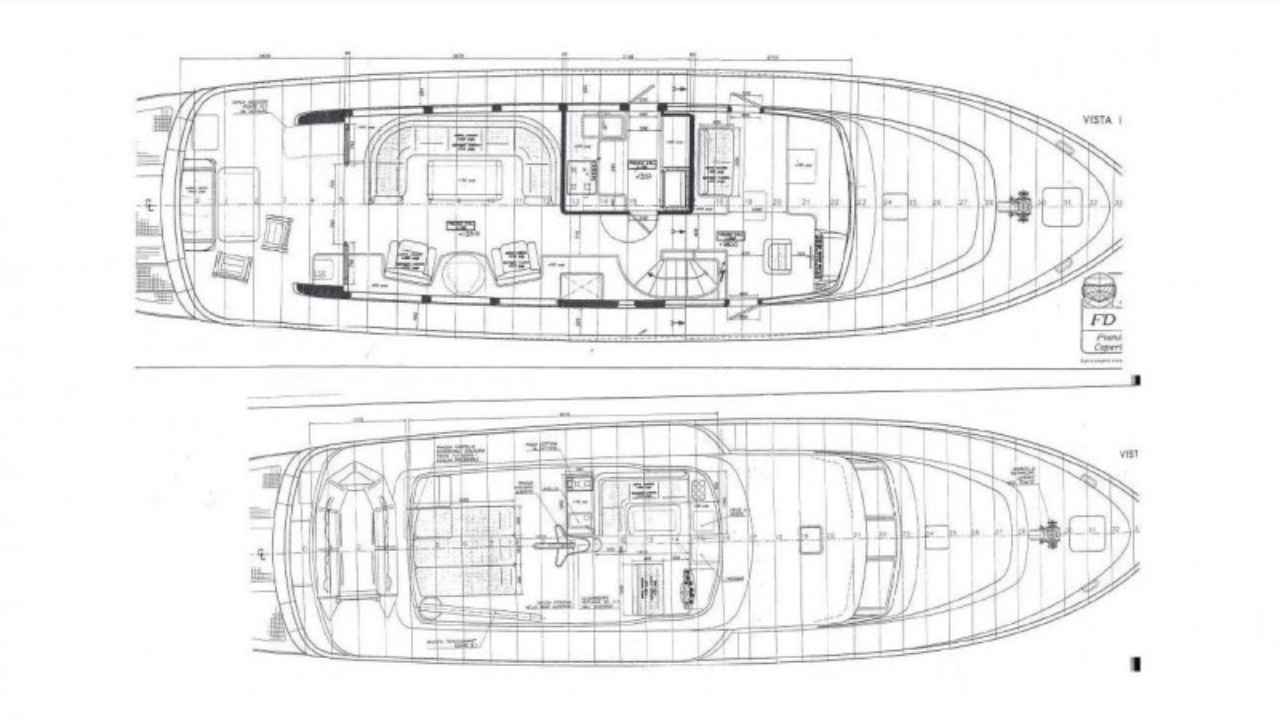
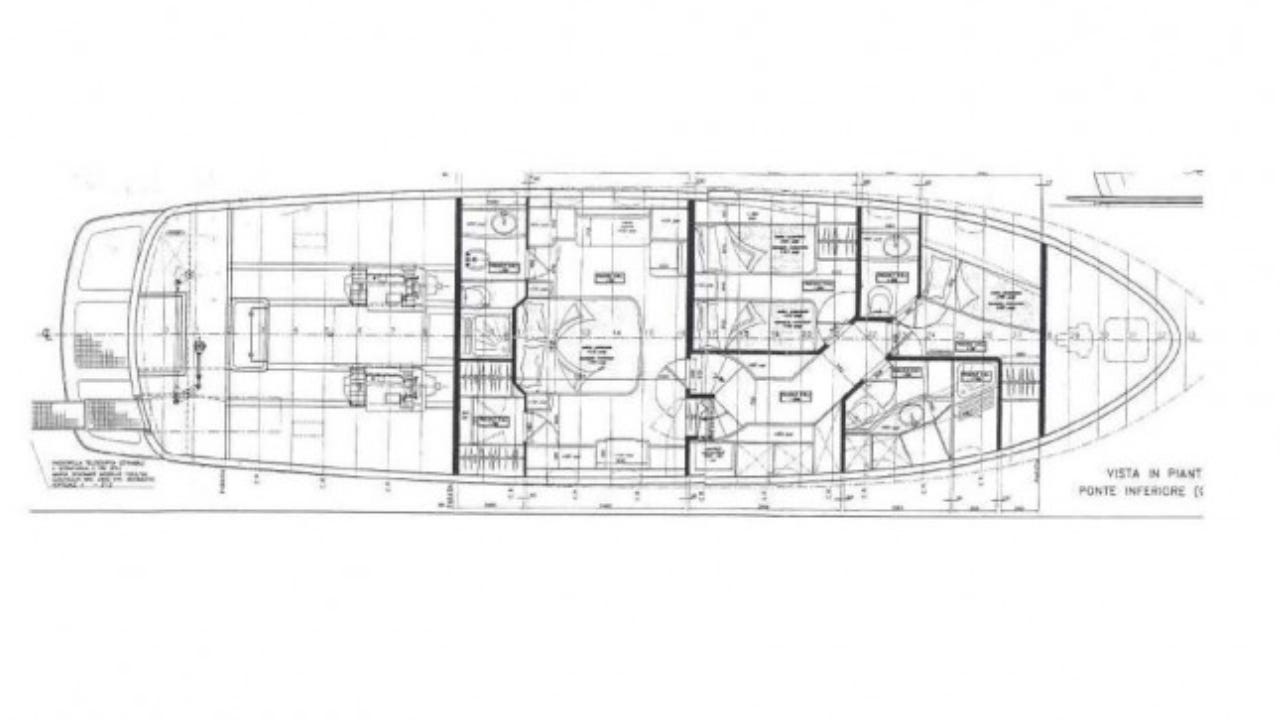
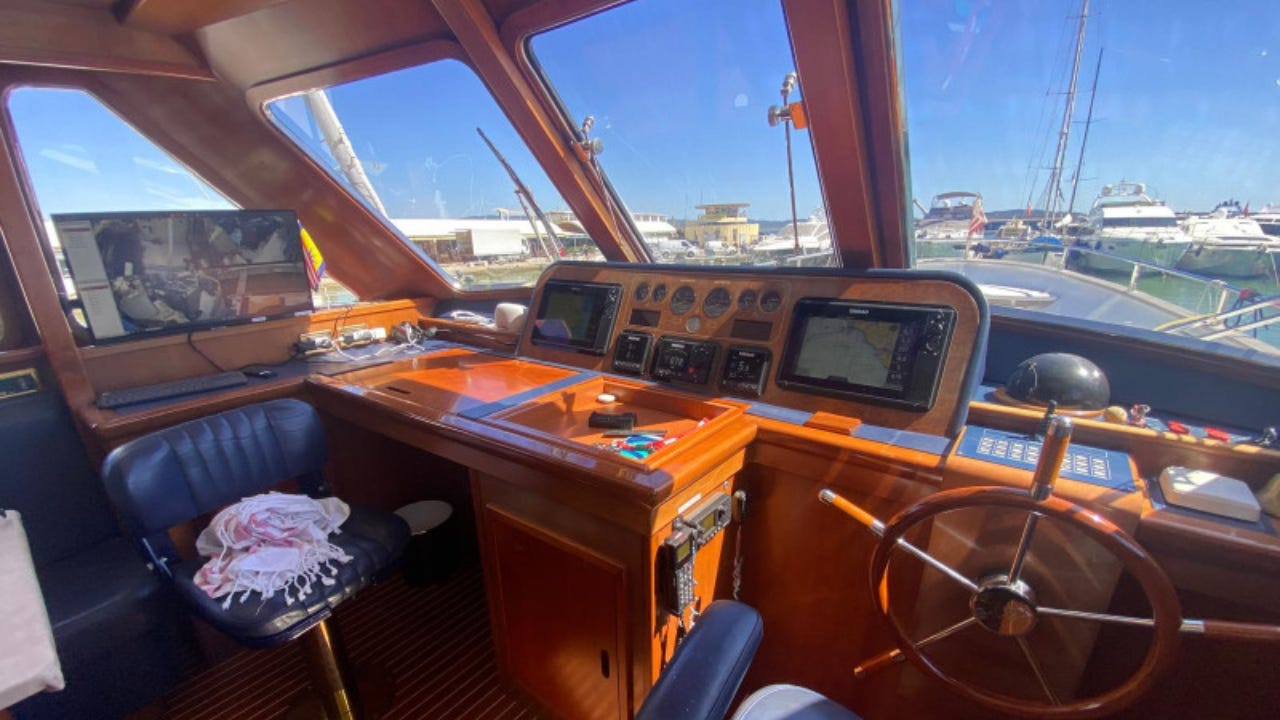
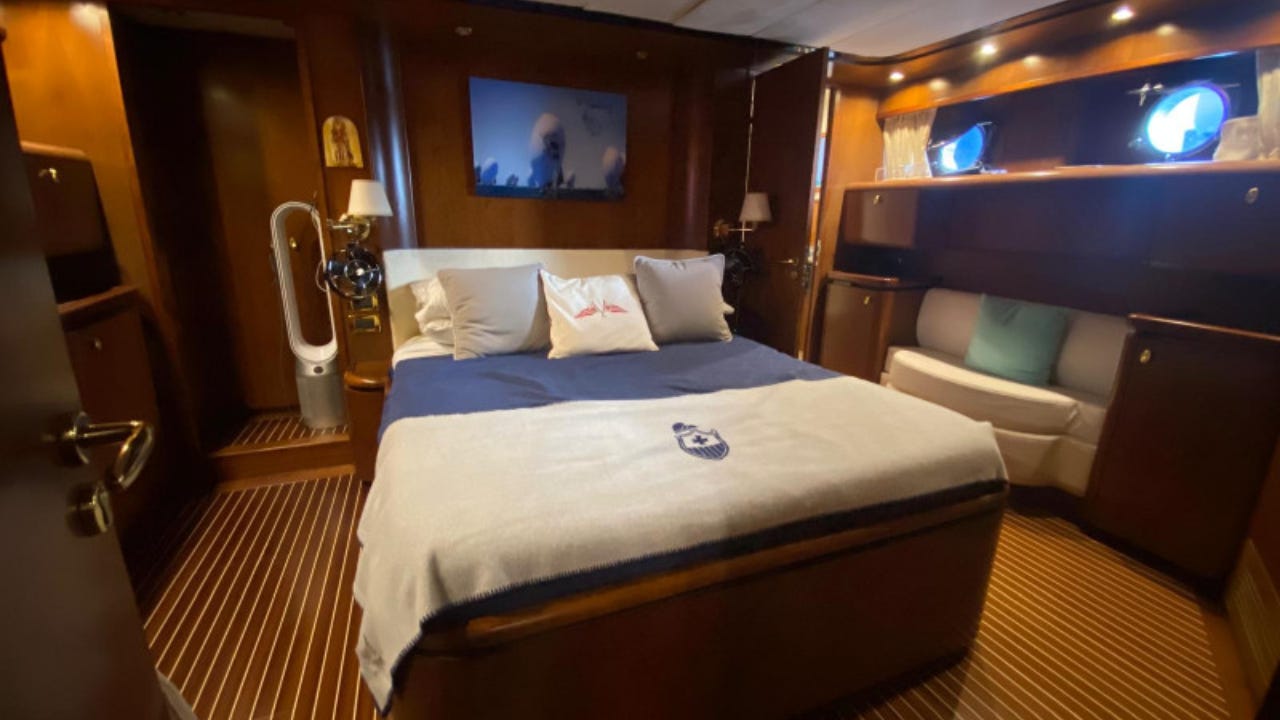
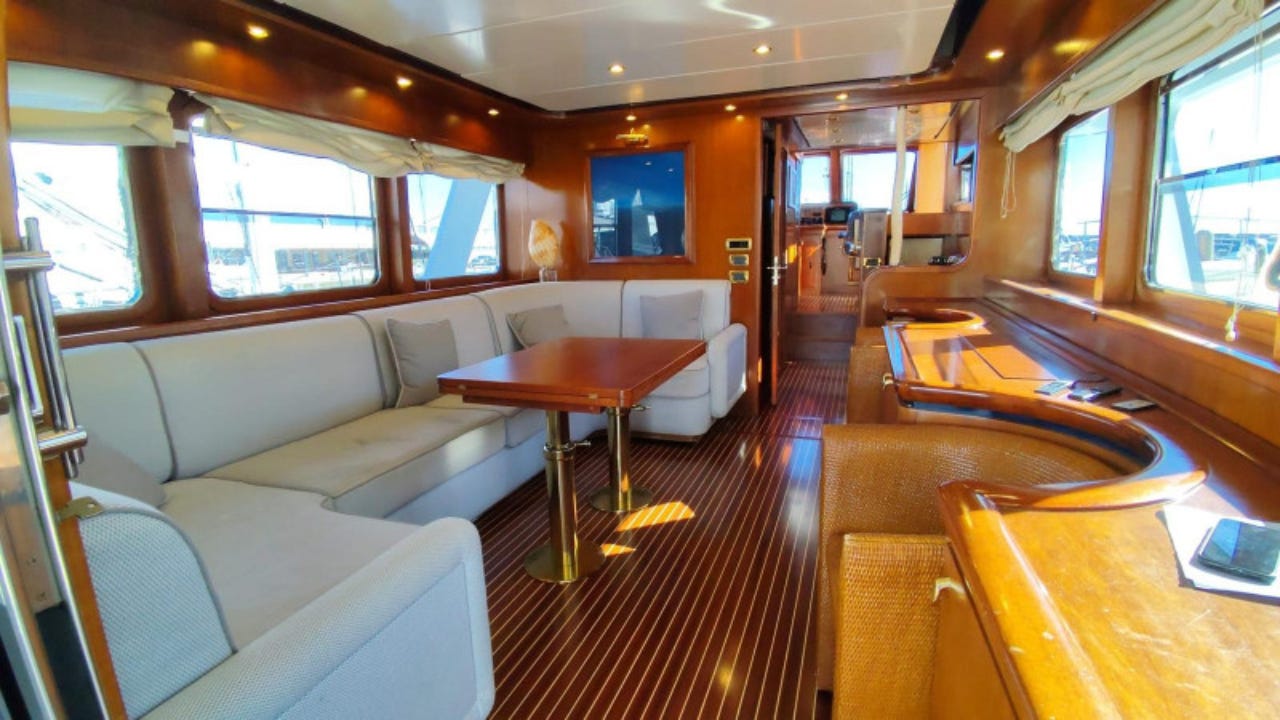
The flybridge configuration gives three helm stations: main deck, flybridge, and cockpit, a practical arrangement that means she can be handled from whichever position conditions require. The cockpit station in particular is a useful feature for manoeuvring in marina environments without relying entirely on crew. A ducted bow thruster is fitted, along with stabilising fins, electric mooring winches, and a telescopic electric davit for the tender. Teak decks are present throughout. The accommodation runs to three guest cabins, each with en-suite bathroom and electric heads, plus a crew berth with its own bathroom, a layout that works efficiently for a vessel of this length and makes genuine extended cruising viable without the compromises of a more cramped interior.
The Engine Log
This is where the Benetti 20 becomes even more interesting as a purchase proposition.
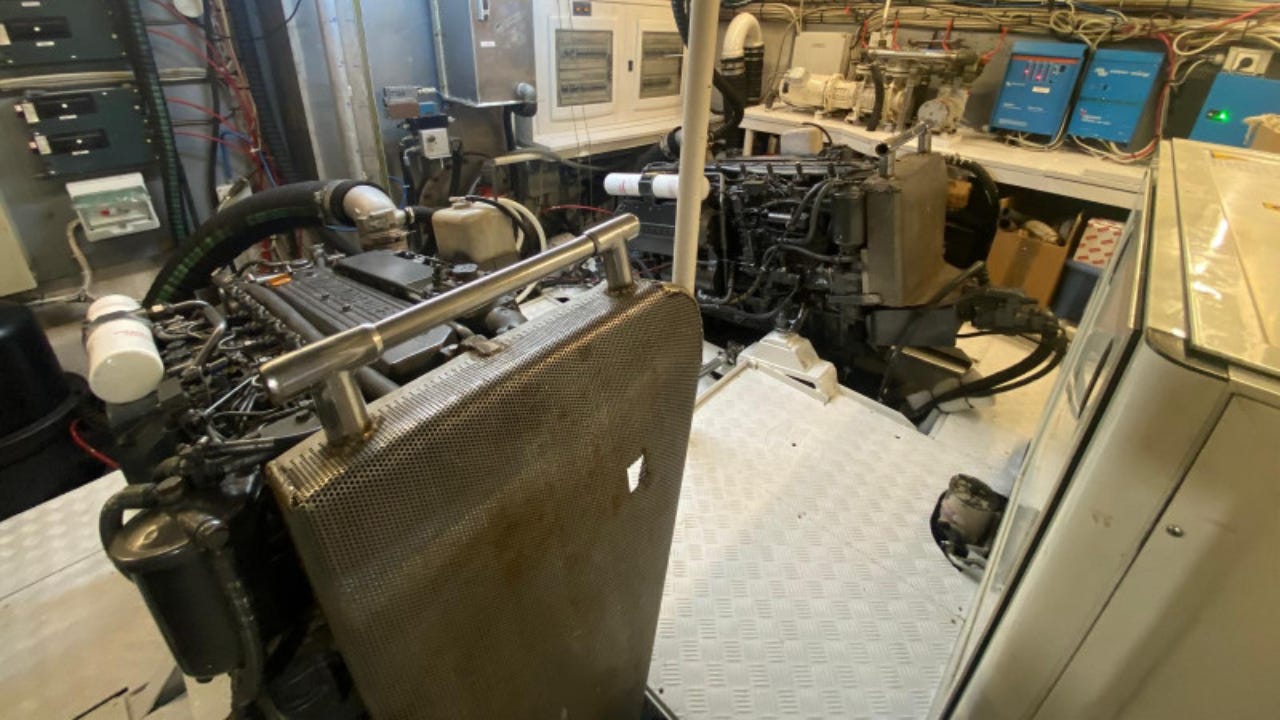
The vessel is powered by twin 430HP Yanmar diesel engines. They are the original engines from a 2001 build, and they show 3,200 hours on the clock at last logging, with engine maintenance completed in 2025. That figure, 3,200 hours on a vessel built 25 years ago, works out to approximately 130 hours per year. It is light use by any measure. It tells you that this vessel has not been covering long offshore passages at full throttle, and has not been pushed hard by owners who treated the engine room as an afterthought.
Yanmar marine diesels of this class have an earned reputation for exceptional reliability. The engines are built conservatively, with cast-iron blocks, straightforward fuel injection systems that are far less electronics-dependent than modern equivalents, and marine-specific cooling designed for long service. The service life of a well-maintained Yanmar of this era is widely cited at 8,000 to 20,000 hours depending on duty cycle and maintenance history. At 3,200 hours, these engines are, by that standard, still in the early portion of their working life.
The last heat exchanger service was completed in 2023. Batteries were replaced in 2023. Engine maintenance was carried out in 2025. This is not the service history of a vessel that has been held together with optimism and deferred attention. A qualified marine surveyor should still conduct compression and leakdown testing as part of any pre-purchase survey, but the headline numbers here are favourable.
The aluminium hull was refitted in 2024, with fresh antifouling applied in 2025 and sea-cocks replaced in 2024. The picture that emerges is of a vessel that has been maintained with the kind of regularity that older aluminium builds require, and that has benefited from a professional yard period within the last 18 months.
The listed price is €350,000 with VAT paid. That figure recently dropped from €400,000. The listing also notes that brokerage fees are excluded.
What the total purchase price actually amounts to, what the realistic ownership cost looks like year on year, what the 2024 hull refit tells a buyer about the vessel’s underlying condition, and what a surveyor ideally should be specifically looking for on a 25-year-old aluminium flybridge of this specification: all of that is covered in the premium ‘The Wardroom’ below.
The True Purchase Cost
The listing price of €350,000 is the starting point, not the finishing line…[article continues below]
