

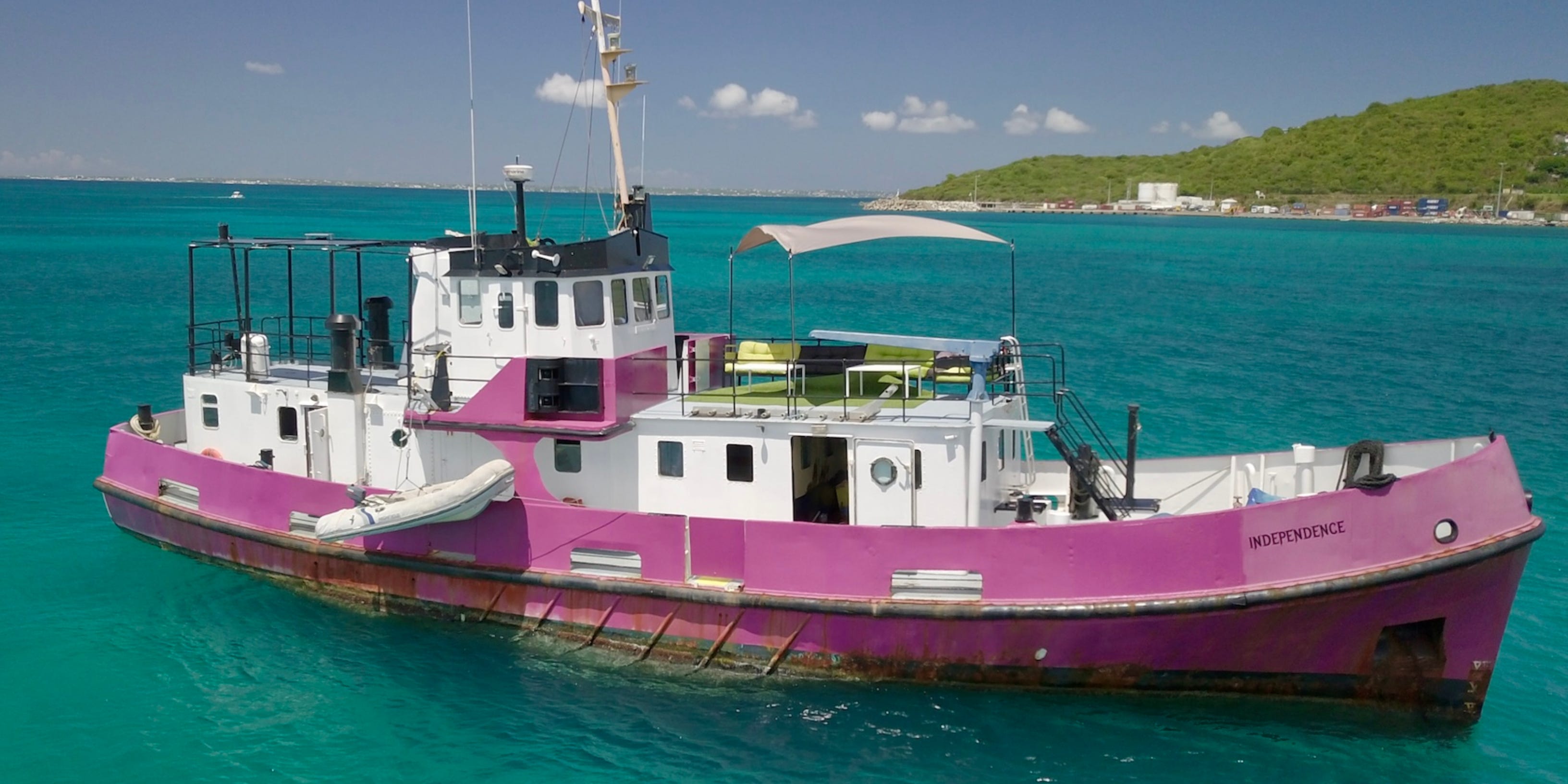
A few weeks ago, I received a message from the owner of a rather unusual boat. Not from a broker, not from a yard, but from the person who actually lives with her. I always love getting messages from owners, as it gives me a chance to really understand the boat and, of course, share what I have found, with you, my subscribers.
It is also exactly the kind of thing The Wardroom community was built for. If you own a vessel with a story worth telling, or if you know of one, this is what happens when you get in touch.
The boat in question is M/Y Independence, a 1970 C.D. Holmes Clovelly Class Fleet Tender. She was originally commissioned by the Ministry of Defence here in London (where I am based) as part of a series of vessels built between 1967 and 1982 to handle the unglamorous but essential work of ferrying passengers and cargo around Royal Navy establishments. North Seas operations, English Channel crossings, 100 passengers or 25 tons of cargo at a time, that was her world for the first chapter of her very important life.
That chapter ended. The second chapter brought her across the Atlantic and into the Caribbean sun.
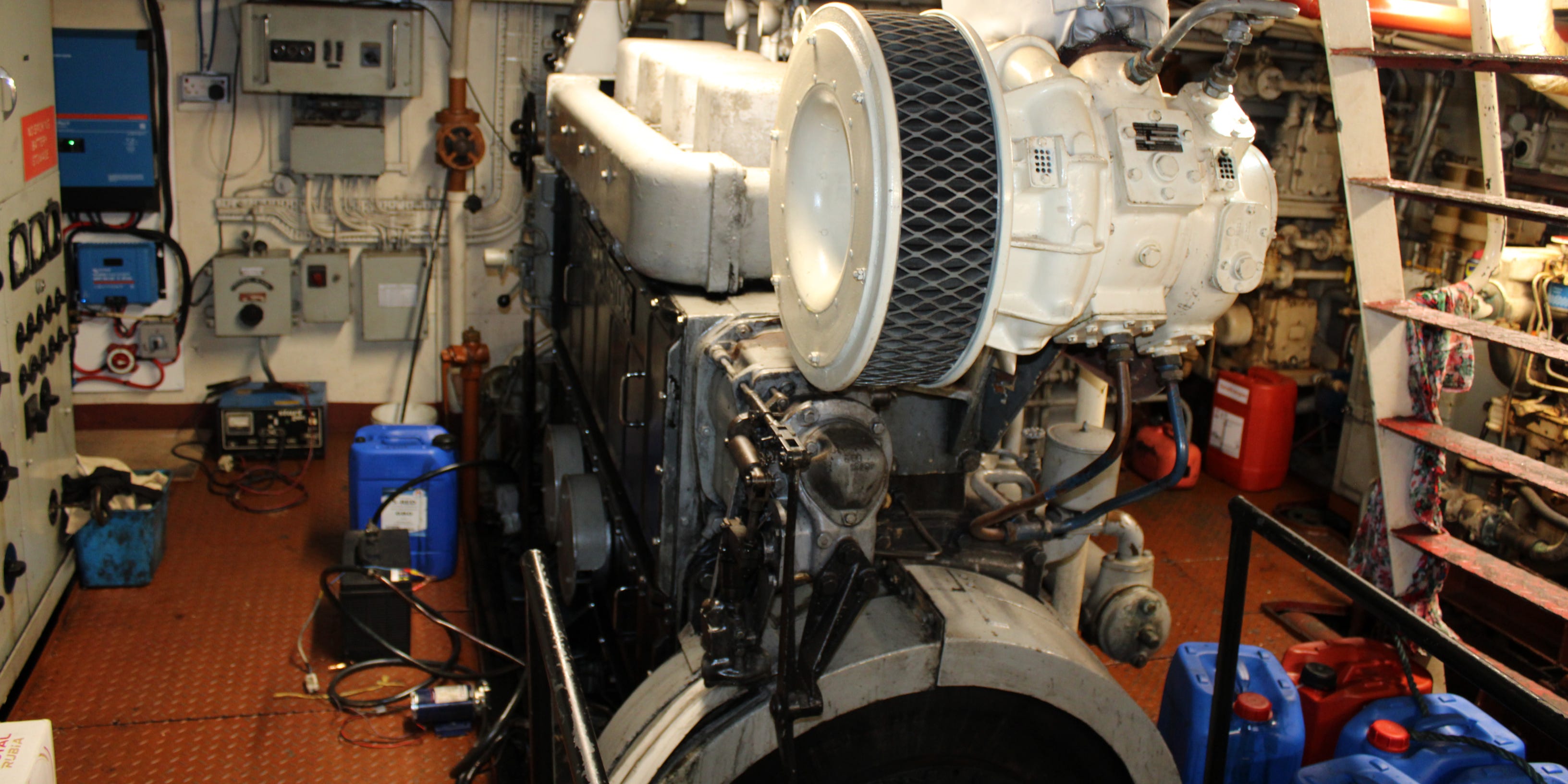
She measures 22.9 metres bow to stern (just under 75 feet), with a 6.4 metre beam and a 3 metre draft. Not enormous. Not a superyacht. But with a steel hull designed for the notoriously rough North Seas, a 330 horsepower Lister Blackstone diesel at her heart, and more than 55 years of maritime history behind her, she is considerably more vessel than her modest dimensions suggest.
The C.D. Holmes Legacy
C.D. Holmes was a commercial shipyard operating out of the Beverley yard in East Yorkshire. They took over the facility in 1963 following the liquidation of the previous operator, Cook, Welton and Gemmell. They were the kind of yard that built things to last: workboats, service vessels, naval tenders, constructed to Lloyd’s 100A1 classification standards and designed for extreme tough working conditions.
The Clovelly Class, officially the Royal Maritime Auxiliary Service (RMAS) fleet tender programme, saw approximately 32 vessels completed across multiple UK yards over a 15-year period. C.D. Holmes built several of them. The class was designed with four different deckhouse configurations, but the hulls and machinery were essentially identical across the fleet; a design decision that reflected the Royal Navy’s preference for standardisation and reliability. The Lister Blackstone diesel, the Lloyd’s 100A1 structural specification, the heavy-duty anchoring and cargo handling gear, all of it was common to every vessel in the class.
This matters because it means Independence is not a one-off unknown quantity. She belongs to a documented family of vessels with known specifications, known service histories, and a known performance record. Her sister ships have been cruising the Atlantic and Pacific for years. MEON, a 1982 Clovelly Class example, was refitted and sailed from France to French Polynesia before selling in Tahiti. FAMILY, originally RMAS Denmead, is currently offered at €950,000 through a major brokerage. The class has a proven cruising pedigree.
What She Is Today
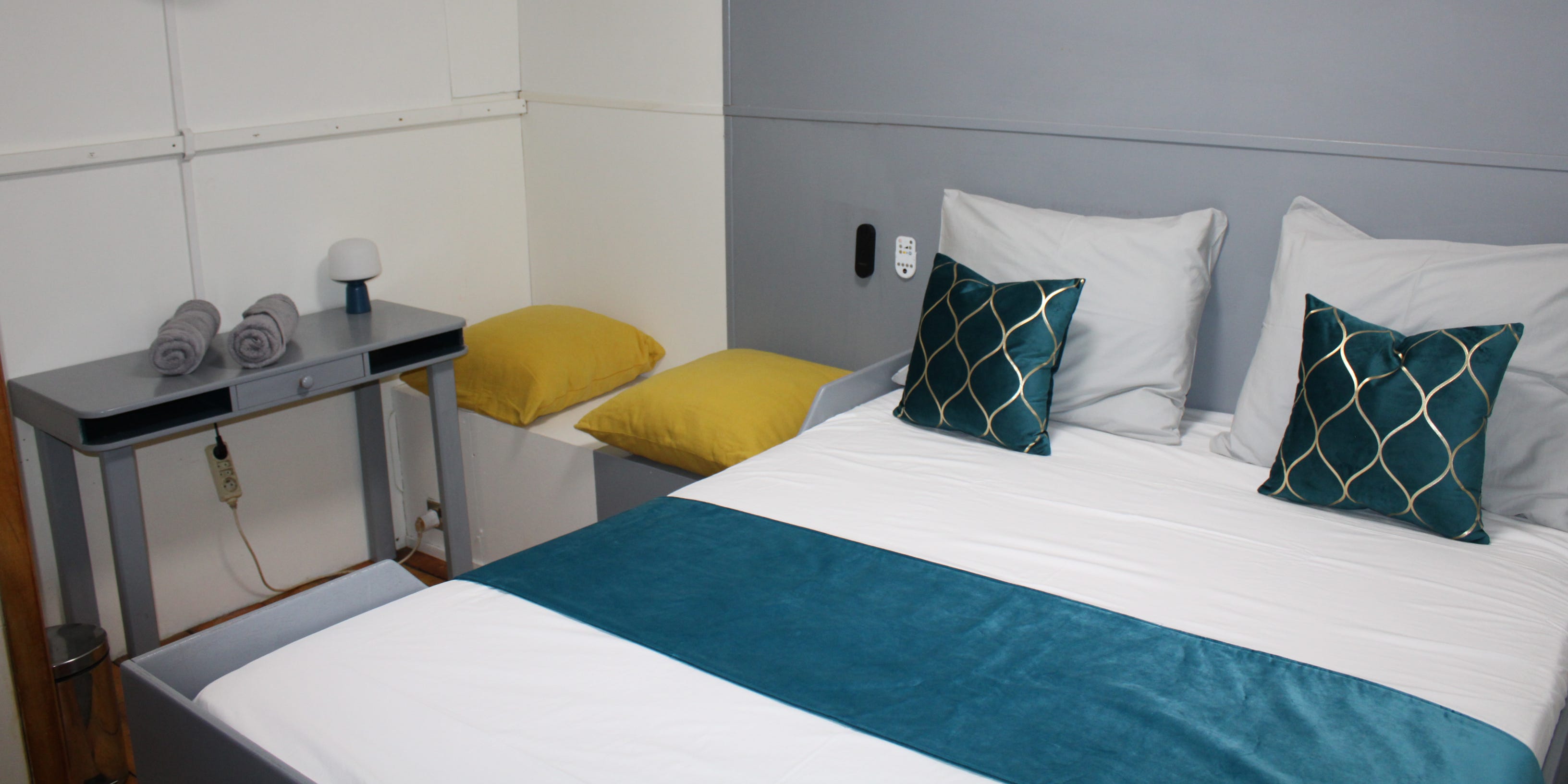
Independence has been converted from her naval configuration into a family yacht and explorer vessel, with accommodation for 11 berths across 6 cabins and 3 WC/shower heads. She is currently in the Caribbean (at Marigot, St. Martin) and she is configured for comfortable life aboard. And wow, what a place to call ‘home’. I went to the caribbean during my time afloat in the Royal Navy (HMS Norfolk - F230) and I fell in love with the place. It seems a world away from the cold and wet London where my current offices can be found. Anyway, I digress!
This vessel carries a total of approximately 6,450 litres of diesel across two main tanks plus a 764 litre day service tank. At cruising speed, which is 7.5 knots on 22 litres per hour, she has a passage-making range of around 2,200 nautical miles. That puts the entire Caribbean arc within reach from a single departure point, and opens transatlantic passages to anyone with the patience to make them. At maximum speed (9 to 10 knots on 45 litres per hour), range reduces considerably, but she is not built for rushing around.
The 2,000 watt solar panel array and Victron 5000KVA inverter/charger speak to a serious commitment to self-sufficiency. A 240 litre per hour water maker. Two generators: a Perkins 50KVA and a freshly rebuilt Kubota 17KVA (rebuilt February 2025). The hydraulic anchor winch carries approximately 170 metres of chain on a 300 kilogram anchor. This is not an explorer yacht that cuts corners on the fundamentals.
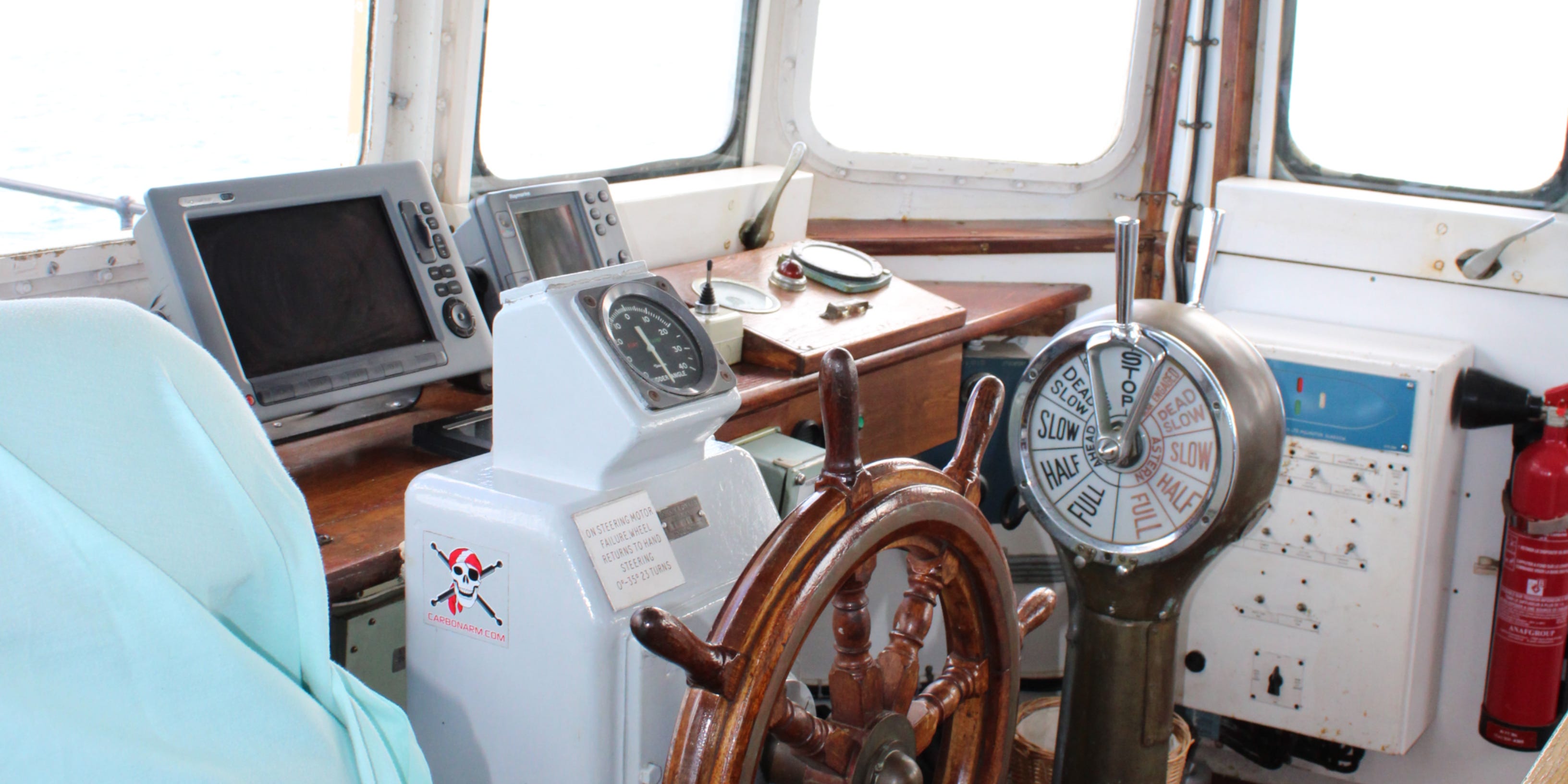
Navigation is Raymarine throughout: radar, echo sounder, chart plotter, GPS. AIS is fitted. The original Royal Navy liquid compass is still aboard, a detail that feels entirely appropriate.
She is offered at $605k via Yacht Services SXM.
Got a boat?
Know of a vessel, for sale, charter, or otherwise, that you would like me to feature in a future dispatch? You can send me a direct message or email me via john@yacht-buoy.com
Why This Matters
We have covered a converted RMAS vessel before. The response was significant. There is something about these boats, the weight of their history, the honesty of their construction, the knowledge that they were built for conditions far more demanding than anything a private owner is likely to encounter, that resonates with a particular kind of buyer.
Independence is a smaller, more accessible proposition than the larger naval conversions we have covered. At 75 feet, she sits in a scale that a two-person or small-family crew can actually manage. The Caribbean location means she is already where many buyers want to be. The 2023 engine overhaul means the most expensive mechanical item is in known condition.
Her owner is not a broker. They are a person who bought this vessel, lived with her, and cared enough about her story to reach out directly. That counts for something.
Below the paywall, paid subscribers get the full ownership picture: what a steel hull in the tropics actually requires, what the Lister Blackstone ERS4 means for servicing and parts availability in remote locations, what realistic running costs look like, what I would want to verify before making an offer, and how finance works (or doesn’t) for a 55-year-old converted naval vessel. You will also get access to The Wardroom, where you can ask questions and discuss this vessel directly. Join us below.
The Ownership Reality
The Engine
The Lister Blackstone ERS4 is one of the genuinely reliable engines to emerge from the second half of the twentieth century.
