

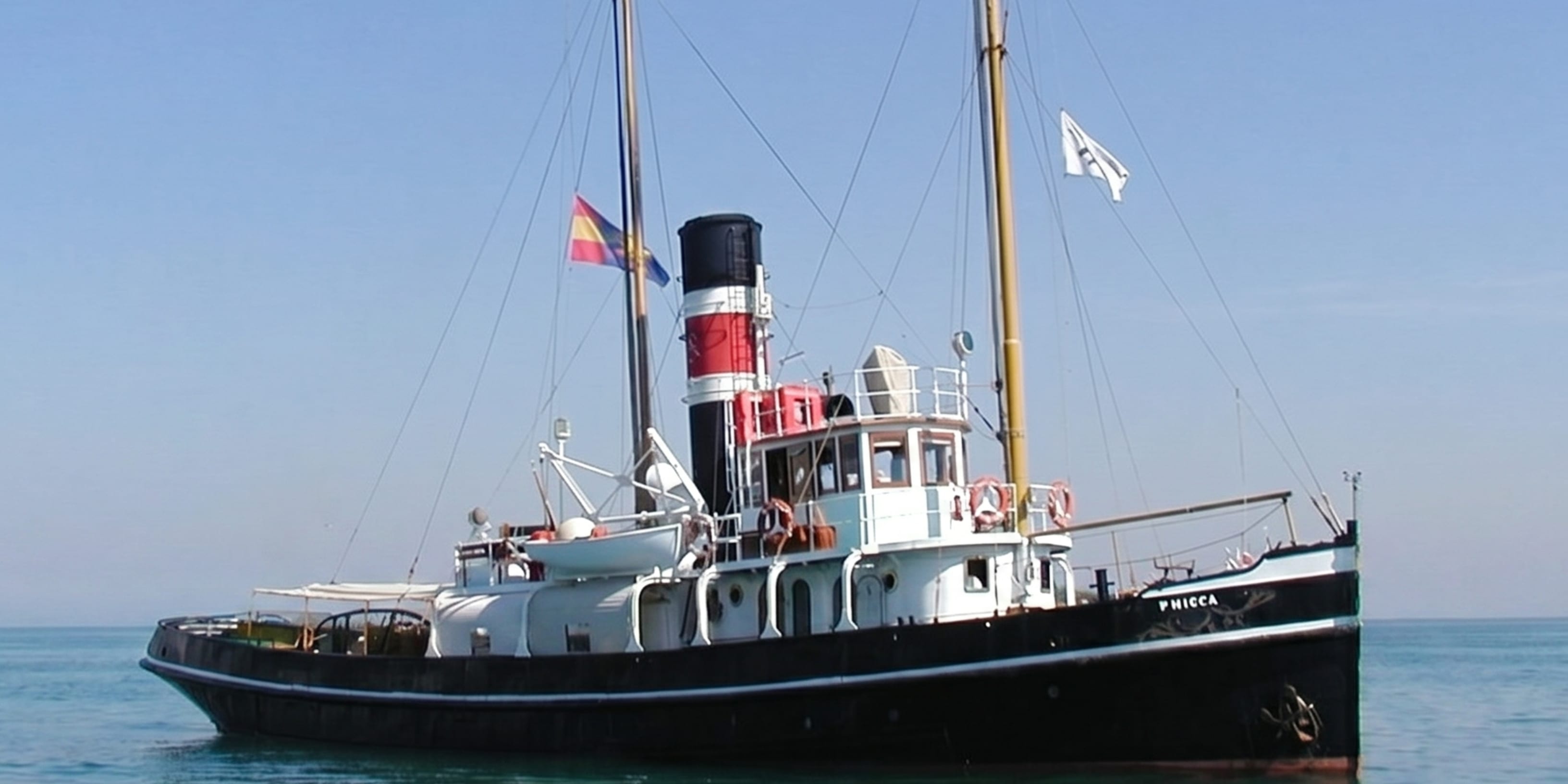
There is a vessel moored at the Tecnomar yard in Fiumicino, on the outskirts of Rome, that I have been thinking about since the moment it popped up on my radar.
This elegant vessel is 31 metres long, 335 tonnes of riveted Victorian steel, and she was built by hand in South Shields on the River Tyne in 1895. Her engine; the original engine, the one she left the yard with 131 years ago; is a triple-expansion steam engine producing 500 horsepower. It turns at 87 revolutions per minute. It has been doing so for 131 years..
Her name is M/Y Pietro Micca. She is listed with De Valk Sint Annaland at €250,000 (details below).
I want to be honest with you from the start: this is not a conventional yacht write-up, and I am not going to write about her as though it is. She is not for the buyer who wants a comfortable weekend on the water. She is for a very specific kind of person; someone who looks at 131 years of unbroken maritime history and feels not the weight of it, but the privilege.
Before we get into what she costs to run, I want to tell you about the man who saved her. Because this vessel’s story, more than almost any I have covered on my website, is really a human story.
She Was Called ‘Dilwara’
She was launched on 4 September 1895 at the yard of J.P. Rennoldson and Sons, South Shields, Yard Number 166. Her builder was one of the great names of Victorian tug construction; founded around 1800, Rennoldson and Sons built at the peak of Britain’s industrial dominance of the seas, a yard on the River Tyne that at its height could produce 6,000 gross tons per year and had a patent slipway stretching 240 feet. When the yard closed in 1929 in the recession, the Dilwara was 34 years old and still working. She is, as far as anyone knows, the oldest surviving Rennoldson vessel still in operational condition.
Her original owner was the United Steam Tug Company, and her purpose was exactly what her name implied: deep-water rescue and salvage. An ocean-going tug, not a harbour shunter. She could make 10 knots and carry fuel for 2,400 nautical miles. She crossed the North Sea and worked Atlantic waters in the era when a working tug genuinely needed those capabilities, when there were no radio calls for a container ship’s salvage team, when a steam tug arriving at a stricken vessel was quite literally the difference between life and loss.
In 1905, she was sold to Fogliotti and Penna of Naples, and renamed Pietro Micca. The name was a deliberate choice: Pietro Micca was a Piedmontese soldier who in 1706, during the Siege of Turin, deliberately ignited a powder magazine to stop a French advance, sacrificing his own life to save the city. He is a Savoyard national hero. The Neapolitans who bought a 10-year-old British steam tug and gave her the name of a man who gave everything for something bigger than himself were, perhaps, making a statement.
She worked the Mediterranean for 88 years. Port tug. Harbor assistant. During the Second World War she served as a steam supplier to US Navy vessels in Naples. She did not stop working until 1993, when she was finally retired as modern diesel tugs rendered her obsolete. She was 98 years old and still operationally sound.
And then she was almost sold for scrap.
40,000 Hours
In 1996, Pietro Micca was facing demolition. What happened next is the kind of thing you read about and find almost implausible...
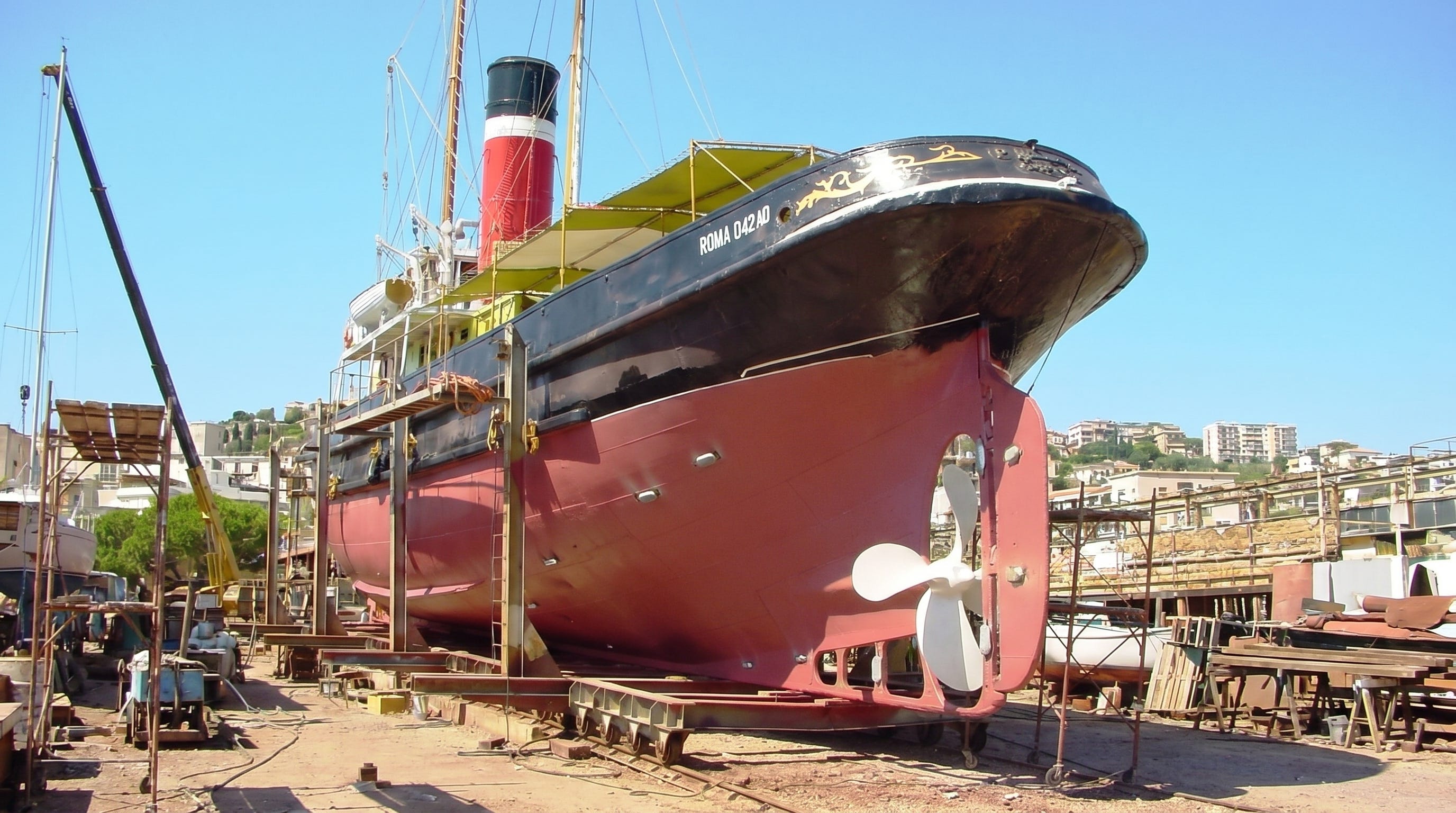
A group called the Associazione Amici delle Navi a Vapore G.L. Spinelli; the Association of Friends of Steam Ships; stepped in. Their president, Pier Paolo Giua, took personal charge of her salvation. They moved her to the Tecnomar shipyard at Fiumicino, outside Rome, and began what became a decade-long restoration.
40,000 hours of skilled labour.
I want you to sit with that number for a moment or two. At a conservative Italian rate of €50 an hour for specialist marine work, that is €2,000,000 in labour alone. At the rates commanded by the kind of heritage steam engineers this work requires; men who understand a 131-year-old triple-expansion engine and know how to rebuild a Scotch firetube boiler from the inside out; you are looking at €3,200,000 and more. Add materials: steel plate, boiler tubes, valves, piping, rigging rope, copper window frames, paint, a new wooden wheelhouse. The total restoration investment sits somewhere between €2.5 million and €4.2 million.
She is currently listed at €250,000 with De Valk St Annaland (full details below)
Got a boat?
Know of a vessel, for sale, charter, or otherwise, that you would like me to feature in a future dispatch? You can send me a direct message or email me via john@yacht-buoy.com
That is not a typo and the comma is not in the wrong place. That is a man and an association choosing the vessel’s survival over any return on their investment. What they wanted was not money. No profit. Not a mark-up on their investment.They wanted a custodian. Someone who understands what this vessel actually is and, more important, what she represents.
By the time the work was complete, Pietro Micca had achieved Italian Naval Registry Class A1 certification on both hull and machinery. That is the highest rating the Italian registry issues. She is, in every legal and technical sense, a fully operational steam vessel. She moves under her own power. Her 131-year-old engine turns. Her boiler raises steam. She sails.
The Engine
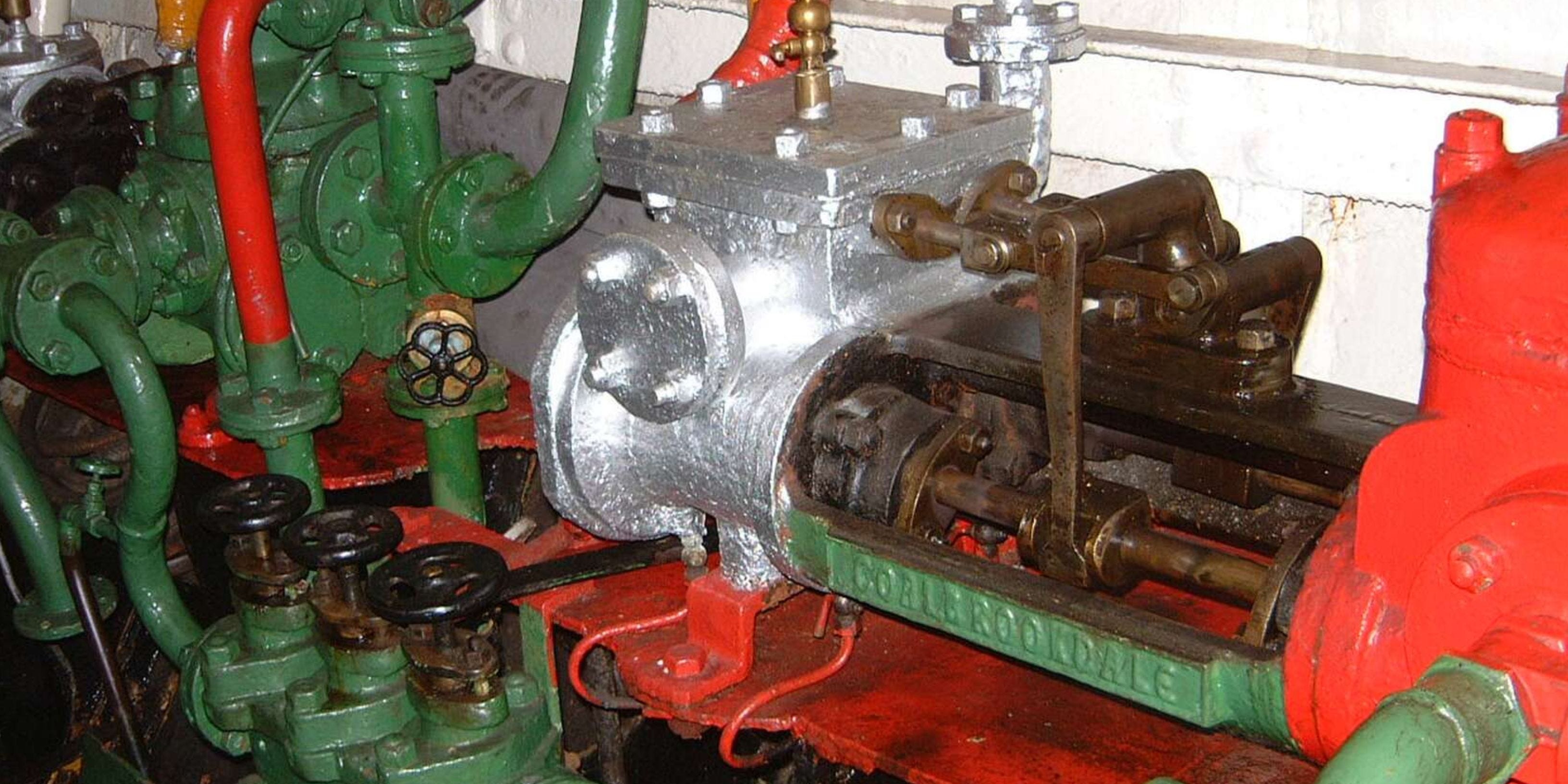
I have been covering yachts and vessels for years, and I can say without hesitation that the triple-expansion steam engine aboard Pietro Micca is the most extraordinary piece of marine machinery I have ever written about.
Here is how it works.
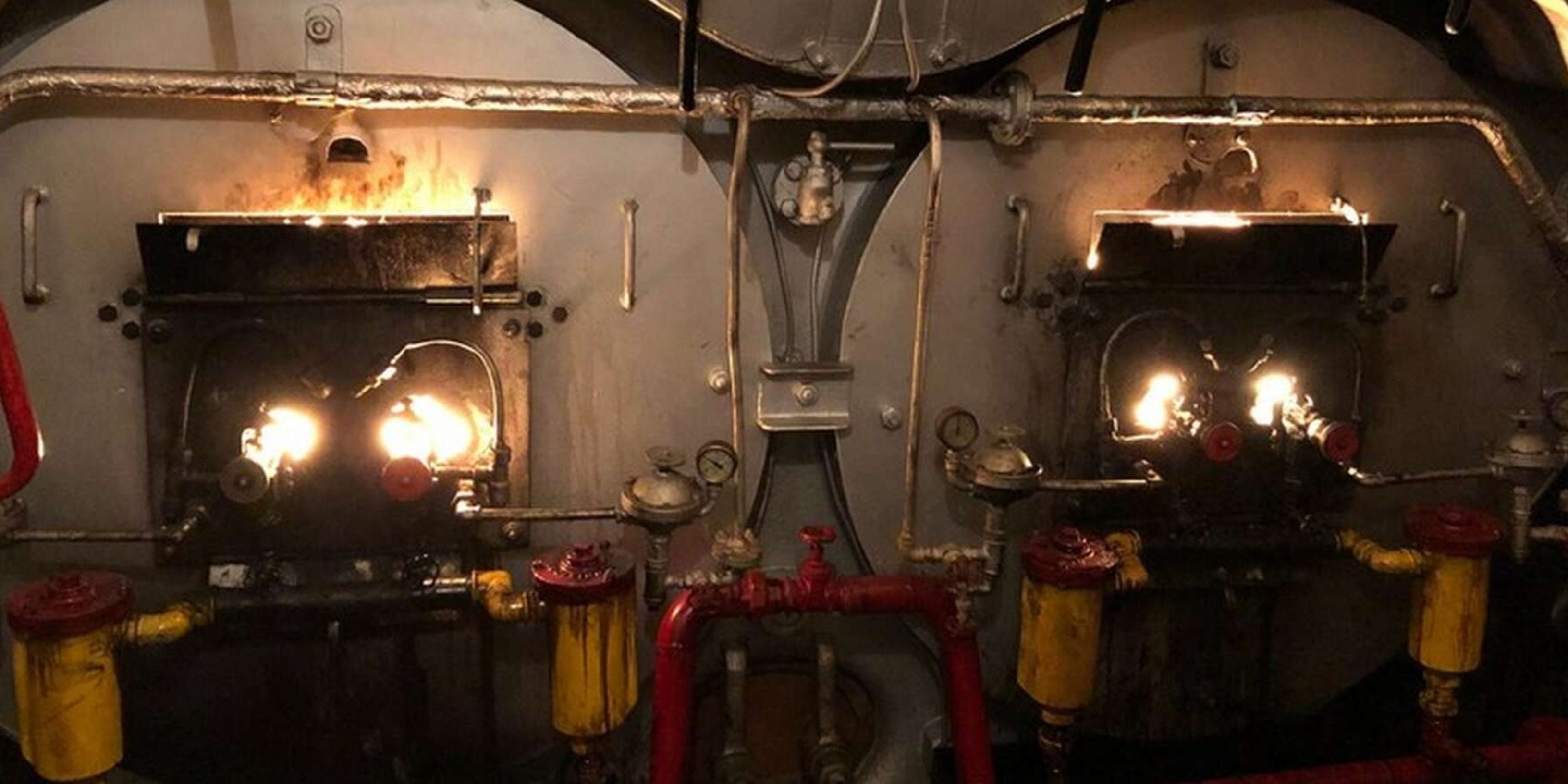
Steam is generated in the Scotch firetube boiler; a compact, reliable design favoured for tugs of this era. Water is heated to raise steam at 9 kilograms per square centimetre (roughly 128 PSI). That steam is then admitted to the first, smallest cylinder: the high-pressure stage. It pushes the piston, turning the crankshaft, then exhausts at intermediate pressure into the second, medium-sized cylinder. That cylinder extracts more work from the now-lower-pressure steam, which then exhausts again into the third, largest cylinder; the low-pressure stage; where the final mechanical energy is wrung from what remains of the original steam charge before it is directed to the surface condenser, where it cools back to water and is recycled into the boiler.
Three cylinders. Three chances to extract useful work from the same single charge of steam. The three cranks sit 120 degrees apart on the shaft, creating an inherently balanced rotation; smooth, deliberate, at 85 to 87 revolutions per minute. There is almost no vibration. The engine does not roar. It breathes.
Victorian marine engineers considered the triple-expansion engine the pinnacle of steam reciprocating technology. They were right. When the steam turbine arrived after 1897, it eventually superseded it for large, high-speed ships. But for a working tug in 1895, there was nothing better on earth.
This engine was built by Rennoldson and Sons in their own engineering works, specifically for this vessel. It has been in continuous service, with the interruption of the restoration period, for 131 years.
The boiler was converted from coal to heavy fuel oil in 1953. The fuel is BTZ grade IFO-380; what the industry calls bunker fuel, a dense, viscous oil that must be pre-heated to 90–150 degrees Fahrenheit before it will flow through the injection system. The heating comes from a branch of the steam lines themselves. At full power, she burns 4 tonnes of it every 24 hours.
She has enough capacity to steam 2,400 nautical miles without refuelling.
The Vessel Today
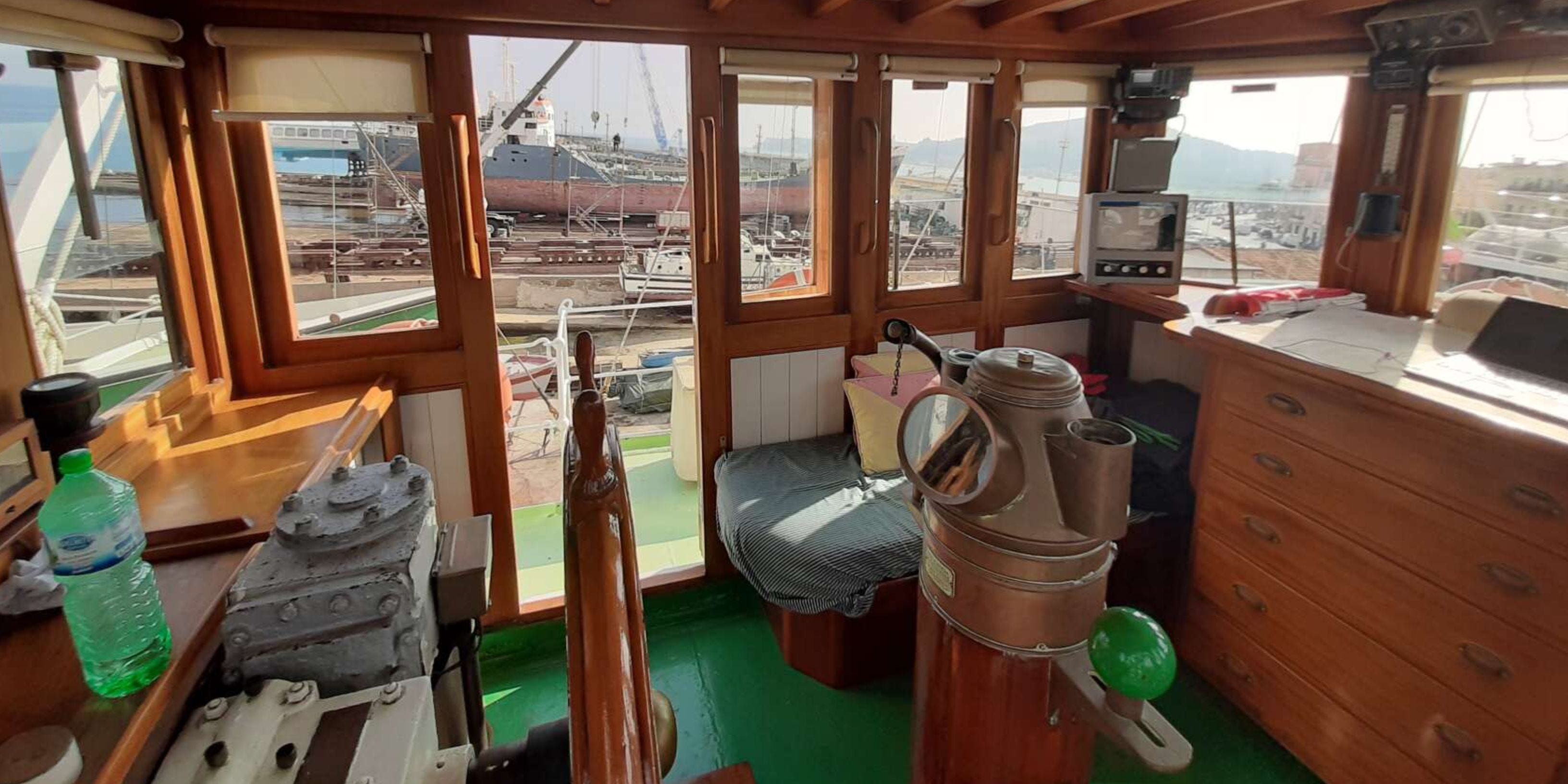
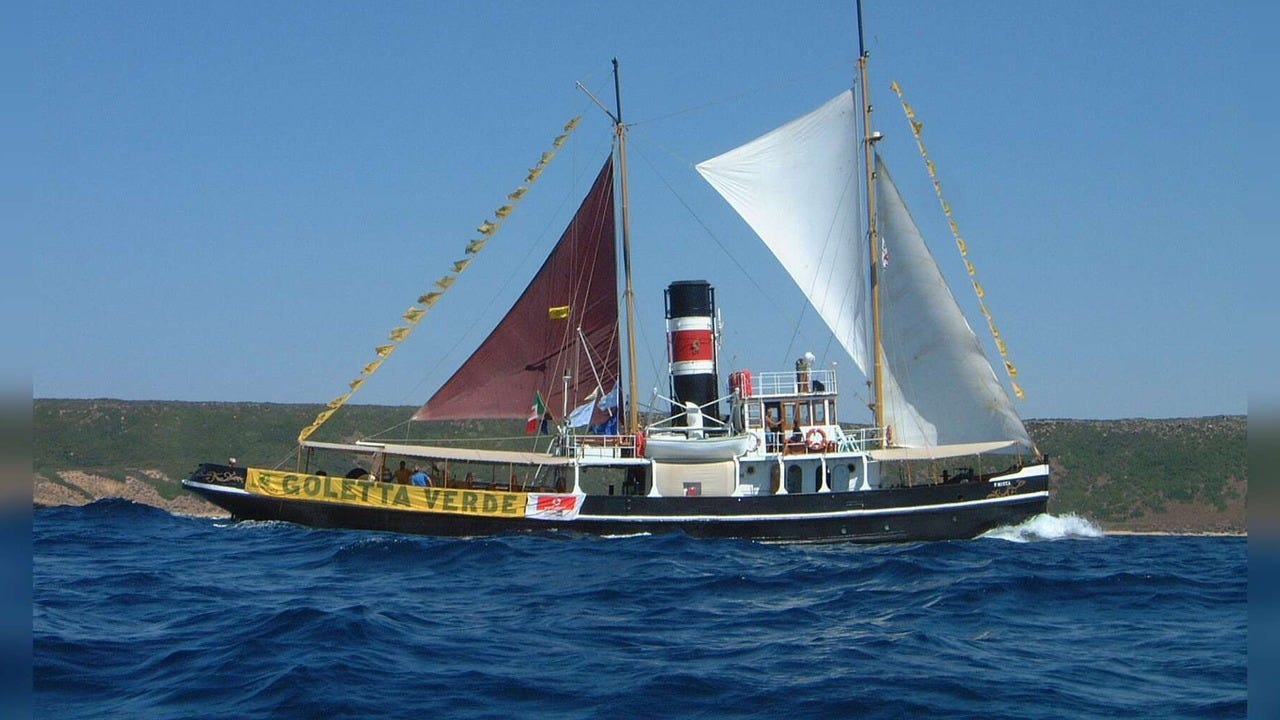
Pietro Micca is 31.10 metres long with a beam of 6.40 metres and a draft of 3.60 metres. She displaces 335 tonnes. Her hull, deck, and superstructure are all steel. The wheelhouse is entirely new, fitted during the restoration. Her window frames are copper.
She is rigged as a two-masted schooner. This was not decorative when she was built; when a working tug in 1895 crossed the North Sea, sails were functional. They provided auxiliary propulsion, balanced the vessel in heavy weather, and gave the crew options if the engine failed far from shore. Today the schooner rig is primarily ceremonial; deployed for heritage demonstrations and educational cruises; but it works. Every winch and sail-handling device aboard is steam-powered, drawing from branch lines off the main boiler. There is no electric motor involved.
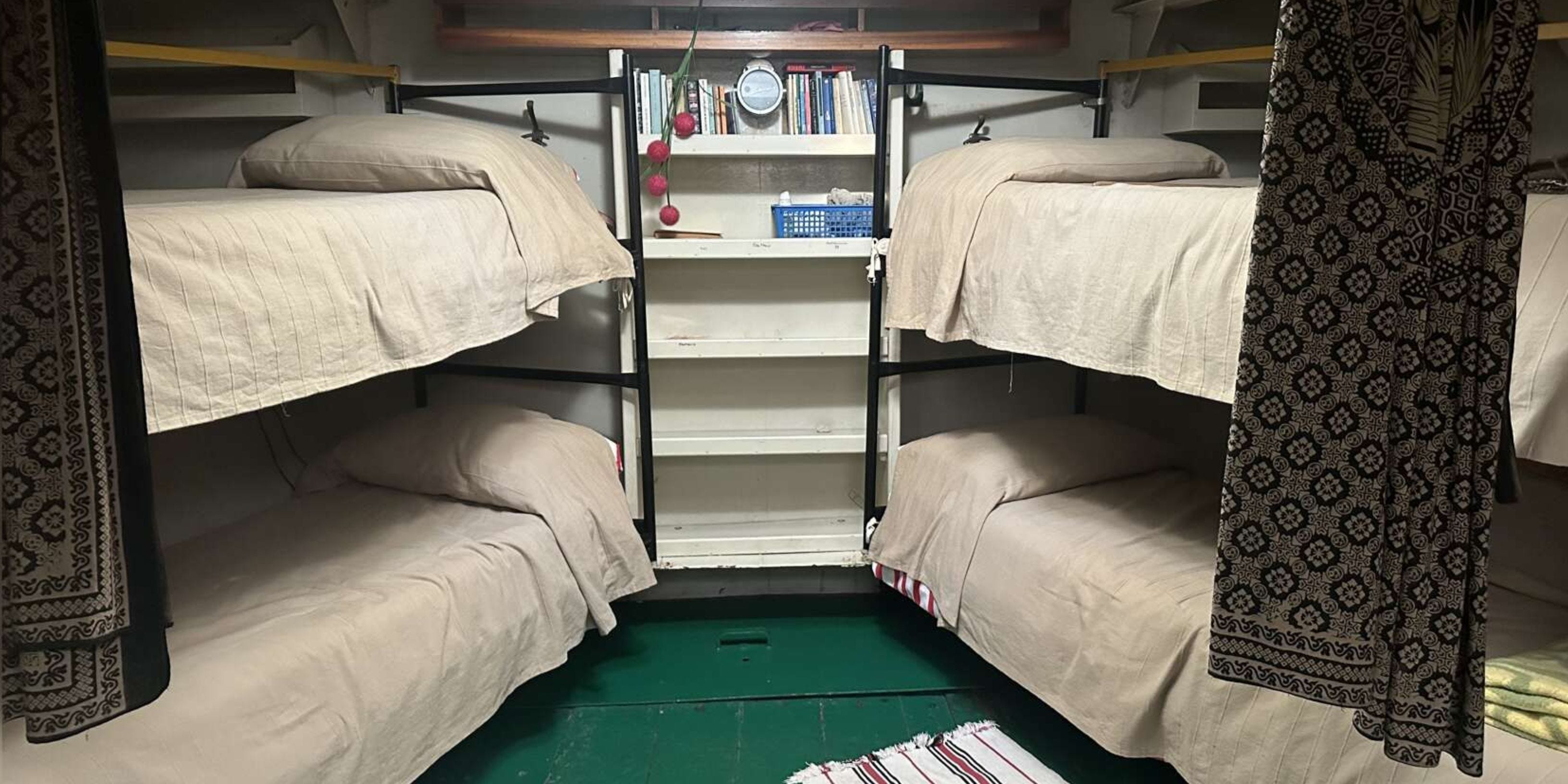
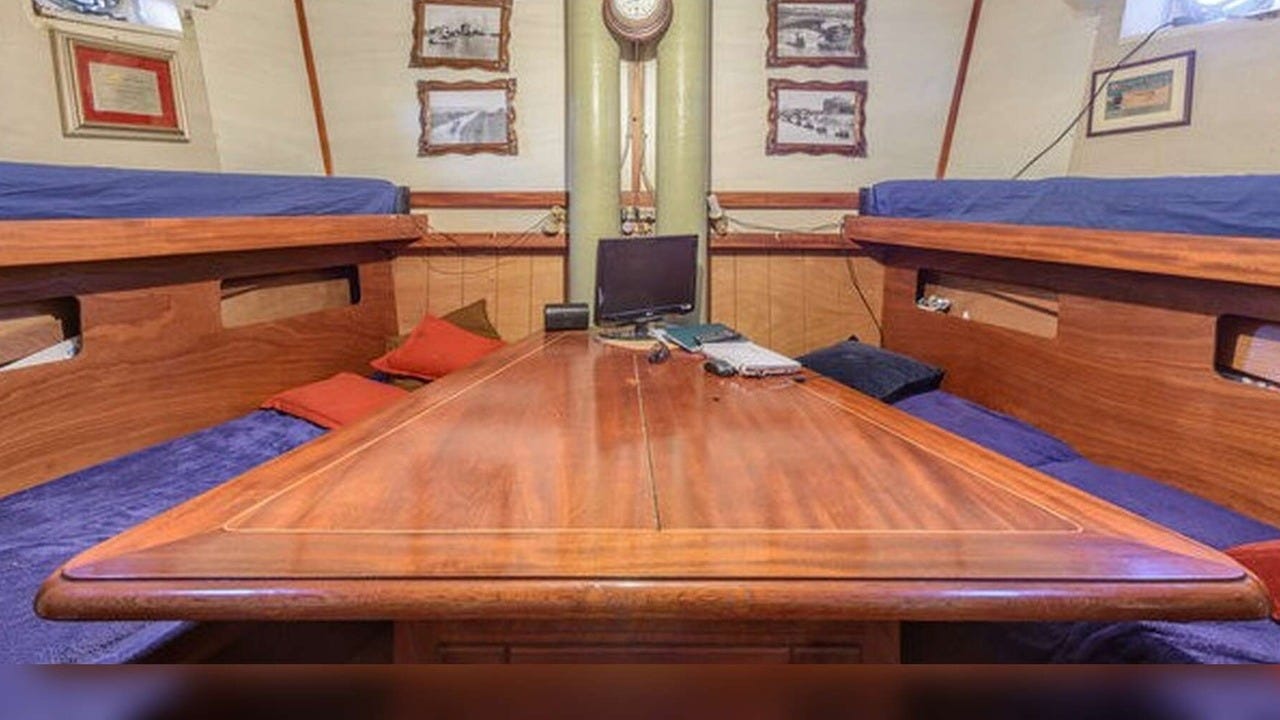
She carries 4 cabins and berths for 18. She has a saloon, dinette, galley, and pilot house. She is classified as a motor yacht by the Italian registry, which is, if we are honest, one of the more understated descriptions in the history of marine registration.
Her generator is an original Sunderland Forge and Engineering steam-powered unit producing 110V. There is a backup diesel generator for 220V modern power. She has 6 solar panels.
She comes with 2 life rafts, 2 dinghies, radar, GPS, VHF, and every navigation light required for operation in EU waters.
She is, in short, operational. Not a museum piece. Not a project. A working ship.
One thing worth noting before we go further, because the listing spec sheet can cause confusion for an untrained eye. It lists the fuel tanks as 2 x 20,000 litres. Those are not fuel tanks in the conventional sense; they are the boiler water tanks. The Scotch firetube boiler needs a constant supply of fresh water to generate steam, and those two 40,000-litre combined tanks supply it. The actual fuel; the BTZ heavy oil; is held in a separate 40,000-litre tank. On a diesel yacht, you fill up and go. On Pietro Micca, water management and fuel management are two entirely separate disciplines, and both matter before you leave the berth.
The seakeeping question is one I know will come up, so let me address it honestly.
Pietro Micca was not built to sit in a marina. She was built in 1895 to operate in the North Sea and the North Atlantic, towing disabled vessels in conditions that would keep most vessels tied up alongside. Her hull form is a deep, round-bilged displacement hull with a long keel and a 3.60-metre draft; exactly the characteristics that make a vessel stable and directionally assured in a seaway.
At 335 tonnes, she has enormous inertia and will not be thrown around by short, steep chop in the way a lighter vessel would. She will roll in a beam sea; all displacement vessels do; but she will roll slowly and predictably, not violently.
She was designed by people who understood that tugs work in foul weather because that is precisely when other ships need help. Flat-calm conditions are not a requirement. That said, a 131-year-old steam vessel with a boiler that takes 20 hours to raise from cold is not a vessel you take out lightly in a Force 8. The seamanship demands of managing a steam-powered vessel in heavy weather are considerably greater than those of a modern diesel yacht, and the engineering watch commitment does not reduce just because conditions are rough. She is capable in a seaway. She requires experienced hands to be there.
If something went wrong with the engine in European waters, where would you actually go?
The honest answer is that the pool of specialists who can work on an 1895 triple-expansion steam engine is small but it exists, and it is concentrated in the UK, the Netherlands, and Germany. In the UK, engineers with heritage steam experience are most accessible through the maritime museum community and organisations such as the Steamship Historical Society; yards in the Tyne and Wear area, where vessels like Pietro Micca were built, retain some institutional memory of this machinery.
In the Netherlands, the working steam preservation community around the former Rijnvaart fleet means there are engineering workshops familiar with Scotch boilers and Victorian reciprocating engines. In Germany, similar expertise exists around Hamburg’s maritime heritage organisations. None of these are walk-in repair shops; you are commissioning specialist work, and it takes time and planning.
Parts, where they cannot be sourced, must be fabricated; but that is true of any heritage machinery and the Italian Class A1 certification implies the restoration team at Tecnomar already has experience doing exactly that. If Pietro Micca were taken to the United States, the picture is more concentrated.
The best-resourced steam heritage engineering in North America I could find during my research, sits around the Great Lakes region; Sturgeon Bay in Wisconsin and Toledo in Ohio both have yards with commercial steam experience from the Lakes fleet era. On the East Coast, the SS Jeremiah O’Brien preservation crew in San Francisco and the SS John W. Brown in Baltimore operate triple-expansion steam vessels and represent the deepest pool of practical knowledge for this machinery type in North America.
Neither is a commercial repair yard in the traditional sense, but both have the hands-on expertise and no doubt the willingness to help a fellow steam operator work through a mechanical problem. For a custodian based on the US East Coast, Baltimore would be the sensible first call.
Three questions I suspect are already forming in your mind: could someone actually live aboard her? And if the right custodian turns out to be in North America or Australia, what would it cost to get her there? Both are worth asking. Both have answers. They are below the paywall.
Below the paywall I cover what it actually costs to keep M/Y Pietro Micca alive year on year: the full fuel budget, crew costs and where you find a qualified steam engineer in 2026, boiler certification, the major overhaul reserve, and the heritage revenue model that makes this kind of ownership viable.
I also go into the liveaboard question properly; what living aboard a 335-tonne Victorian steam vessel actually looks like day to day, what she has and what she would need. And for anyone reading this from outside Europe, I have worked out what a delivery voyage to North America or Australia would cost and what it would involve.
Then my honest survey priorities for a 131-year-old hull, the finance picture (it is not a mortgage conversation), and my verdict on whether Pier Paolo Giua is asking the right price.
Paid subscribers also keep the lights on for articles like this one; my research is self-funded, and your subscription is what makes that independence possible. You will also get access to The Wardroom, where paid subscribers discuss these vessels with me and fellow explorer yacht enthusiasts, anonymously if you wish. If you have ever been curious about what it means to steward something genuinely irreplaceable in 2026, everything worth knowing is below.
The Reality of Ownership
Let me be direct about what this vessel costs to operate, because the €250,000 asking price tells only paints a small piece of a much bigger picture and financial commitment. Any serious buyer deserves to understand it before they fall in love.
Fuel is the dominant fact of life…[article continues below]
