

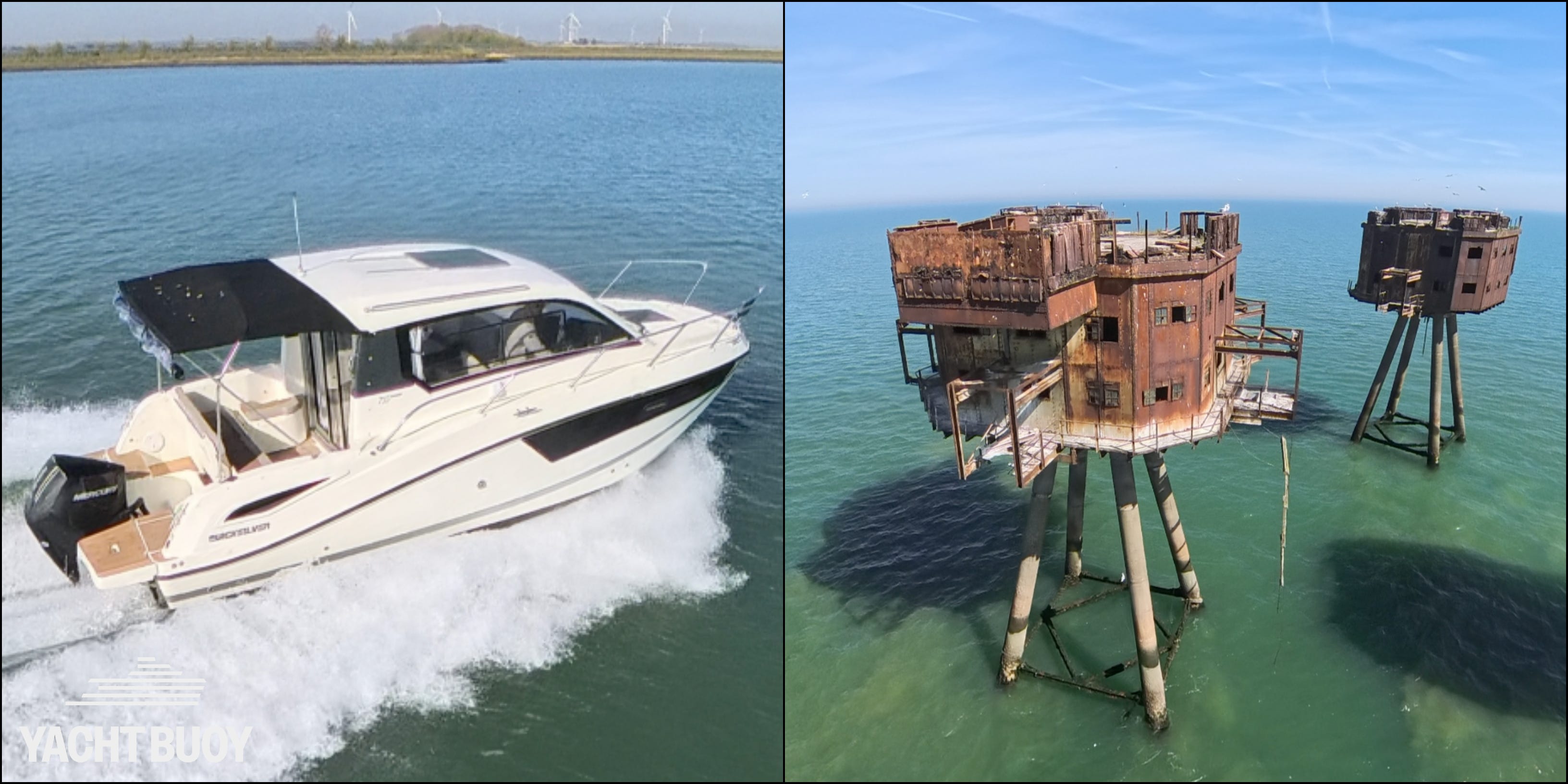
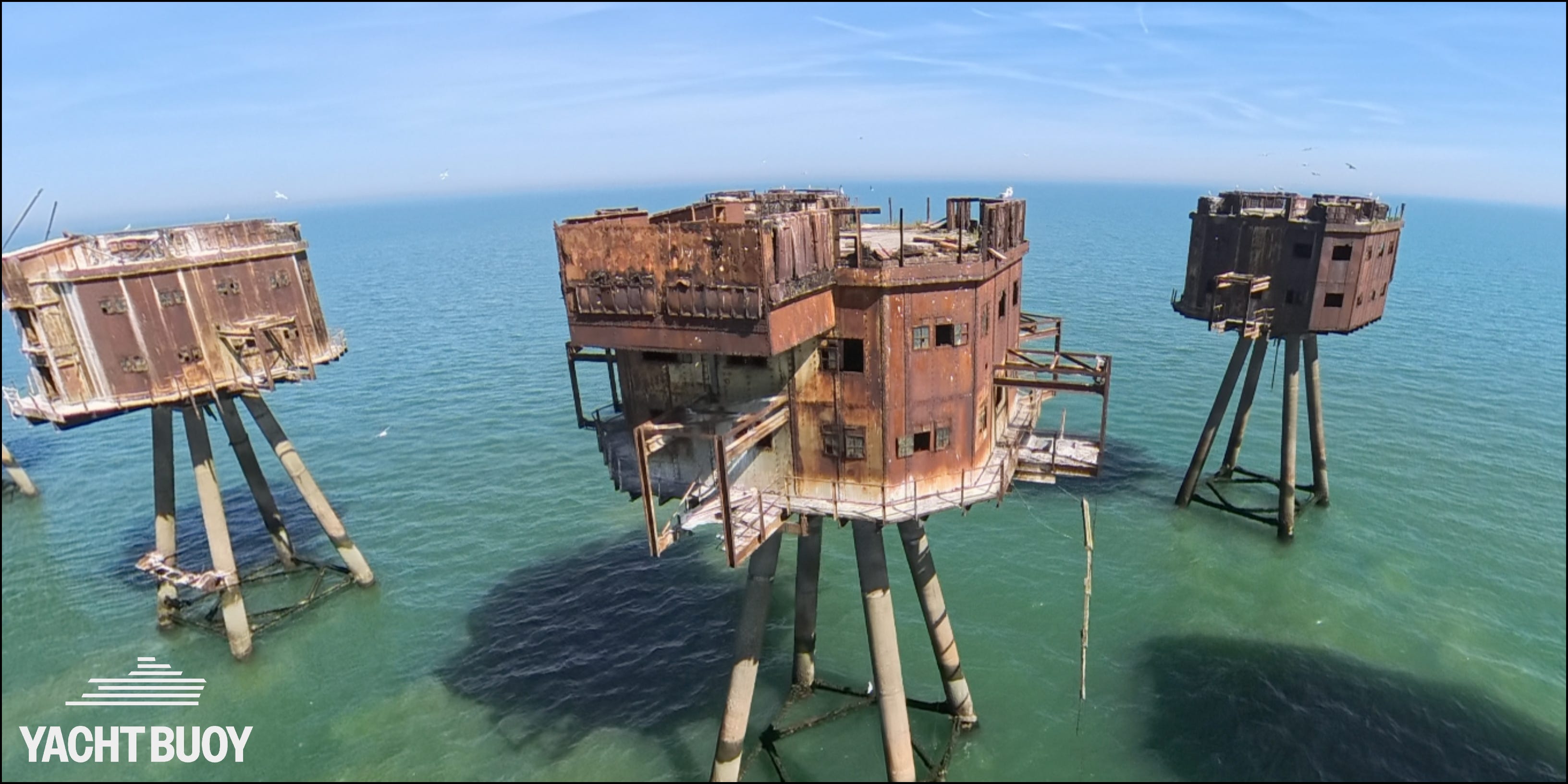
If you have just watched the video, you will know that I took the QuickSilver 755 Weekend out on the Essex coast with Tom from Clarke & Carter Yacht Brokers, and we headed out to the Red Sands Towers. We came back to the marina with about 30 litres of fuel left in the tank, which tells you something about how committed we were to making the most of the day (and what our average speed was during the trip!)
What the video did not cover is how that boat ended up in my hands in the first place, what the arrangement actually looks like, and why I am now responsible for keeping a £98,000 brokerage vessel in showroom condition whilst actively using her for passage-making on the River Crouch.
That is what this article is about.
The Boat
Before we get into the deal, it is worth understanding what the QuickSilver 755 Weekend actually is, because context matters here.
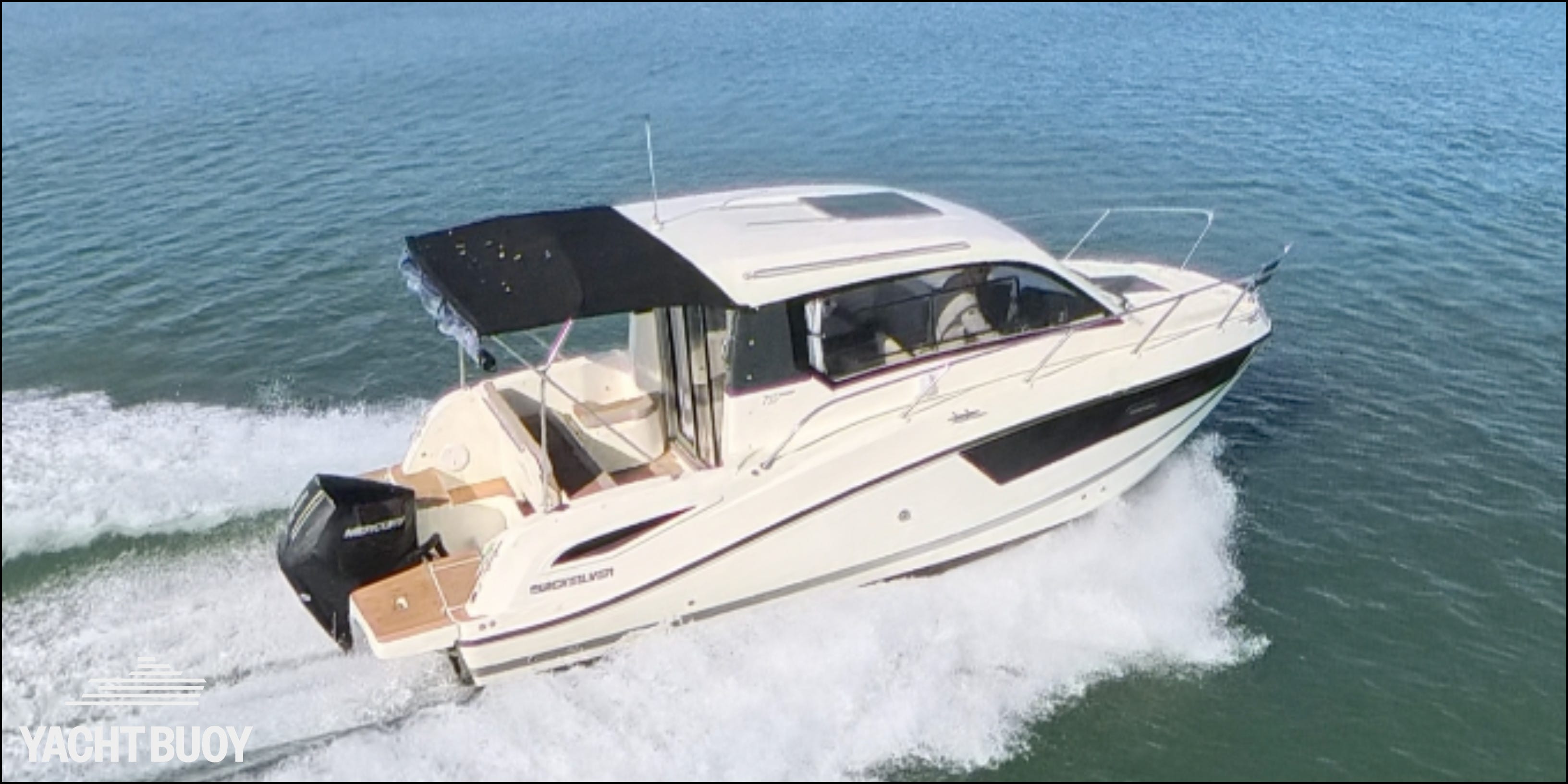
The 755 Weekend is a 7.55-metre open sports cruiser built by QuickSilver, the French-owned brand that has been producing performance dayboats and weekenders for decades. This particular example is fitted with a Mercury 250HP V8 Verado outboard - a four-stroke unit that produces serious power from a relatively compact installation. At 7.55 metres with a shallow draught, she is genuinely well suited to the Essex coast, where the sandbanks shift, the tidal streams on the River Crouch run at five knots on a good tide, and you want a boat that can get into shallow water without drama.
She is currently listed by Clarke & Carter at £98,000 against an original value closer to £130,000, which makes her exceptional value for a boat in this condition with this specification. Clarke & Carter have priced her to sell, and at this figure, I would not expect her to sit on the market for long.
The Mercury V8 Verado deserves a mention of its own. Verado outboards have built a strong reputation for smooth power delivery and low vibration at speed, which matters considerably - the helm position sits enclosed within the saloon, giving a comfortable, protected working environment that makes a real difference on longer coastal passages.
Engine refinement matters here because you feel everything at the helm. The V8 configuration provides considerably more low-end torque than four-cylinder alternatives, which translates to strong performance off the mark and confident handling in tidal conditions. The boat also tops out at around 30 knots, which is important for the kind of filming I have in mind. Quick in, quick out. As someone running my own business, time is not a luxury I have in abundance, and a boat that can cover ground quickly and get me back to the marina on schedule makes a genuine operational difference. For the coastal passage-making I have in mind — including trips to London and beyond — this engine and hull combination is genuinely well matched to the environment.
How the Deal Came About
This did not happen overnight. The arrangement with Clarke & Carter took months of conversations, several meetings, and a deal that, at one point, nearly did not happen at all.
I am not going to go into every detail of why it nearly did not happen. What I will say is that without Tom and Angus, the Managing Director of Clarke & Carter, this arrangement would not exist. Tom kept the conversation alive when it could easily have been quietly shelved, and Angus made the final call that made it work. I owe both of them credit for that.
The basic structure is straightforward. Clarke & Carter loan me the vessel, I pay for the fuel and the insurance, and they take care of everything else — including the berth and engine servicing. The boat remains their listing. She is actively for sale and could be sold at any point. I am, in effect, a very hands-on caretaker with filming rights.
What makes this arrangement genuinely interesting, from an industry perspective, is that it represents a different kind of broker relationship than the one most people assume exists. Brokers want their boats seen. They want serious buyers to understand what a vessel feels like in real conditions, not just on a pontoon. Buyer want to see a boat being used in real-life day-to-day use, rather than just being shown off in flashy promotional videos.
A YouTube channel with the kind of audience that Yacht Buoy has built represents something brokers are increasingly interested in; a direct line to exactly the people who might buy the boat or who are thinking about getting in to boating for the first time.
Tom, who you will have met in the video, handles the vessel management from the Clarke & Carter side. The handover process is exactly what you would expect from a professional and well established brokerage - the boat is inspected before and after every use, any issues are reported immediately, and she goes back in the same condition she left in. There is a particular discipline to using a brokerage vessel that I did not fully appreciate until I was doing it. You are not just responsible for your own safety. You are responsible for someone else’s asset.
From the Royal Navy to the River Crouch
I joined the Royal Navy at sixteen. That is not an unusual starting point for people of my generation who grew up near the sea and wanted something more demanding than a conventional education could offer.
Over the years that followed, I served aboard HMS Sheffield — a Type 22 Frigate, and the namesake for the Type 42 Destroyer that was lost in the Falklands War in 1982. Serving on a ship that carried that name was not something you ever forgot. I also served on HMS Invincible, a light aircraft carrier with genuine operational history (she also went down to the Falklands in ‘82) and a presence you felt rather than measured, and USS Klakring, a guided-missile frigate of the United States Navy. American naval culture and British naval culture share a common foundation but diverge in ways that are illuminating if you pay attention.
After shipborne service, I spent eighteen months in an underground bunker in North London. I cannot tell you much about what happened there, except that it was a long way from the sea and that the River Crouch felt particularly appealing by the time I eventually left.
I also volunteered at RNLI Southend-on-Sea lifeboat station for two years - something we will be revisiting in the next video, as it happens.
Transitioning from military watchkeeping to civilian coastal cruising is a shift that sounds straightforward but takes adjustment. In the Navy, the structure is the safety net. Every decision sits within a framework of doctrine, procedure, and oversight. On a civilian vessel, the structure is yours to create. The River Crouch does not care about your service record. The sandbanks do not yield to rank. You are responsible for the decisions you make, and for keeping the boat in one piece, because there is nobody else to share that responsibility.
I find that transition clarifying rather than uncomfortable. But it took time.
The next video is already in planning. We are heading to the SS Montgomery, the Mulberry Harbour, and Southend Pier - and I will be stopping in at my old RNLI Southend-on-Sea lifeboat station where I volunteered for two years. If you are a premium subscriber, join me in the Wardroom and ask me anything about the boat, the deal, or what is coming next.
Welcome to the Wardroom
The Numbers Behind the Deal
Since this series is built around transparency, here are the actual costs behind the arrangement.
