

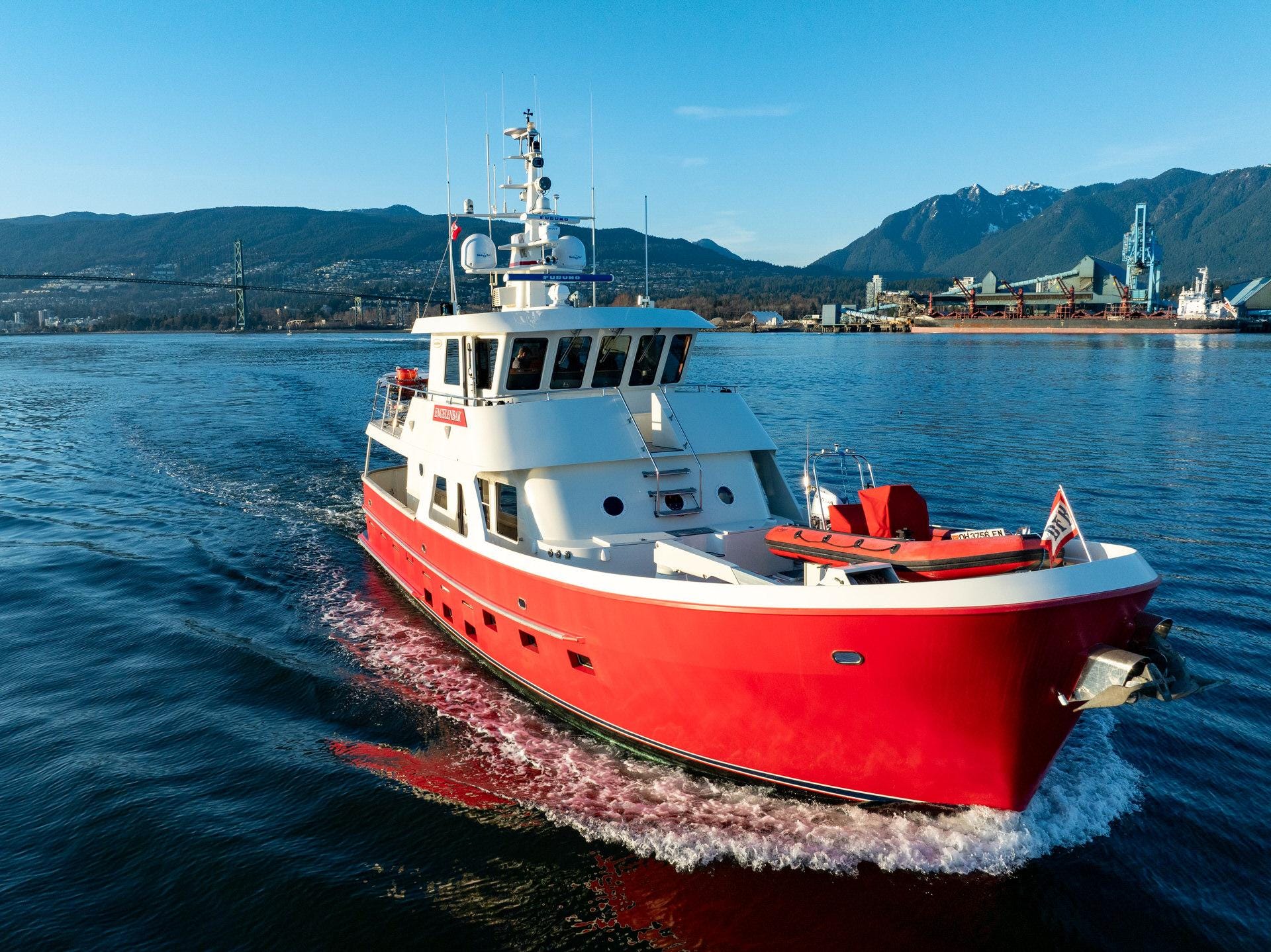
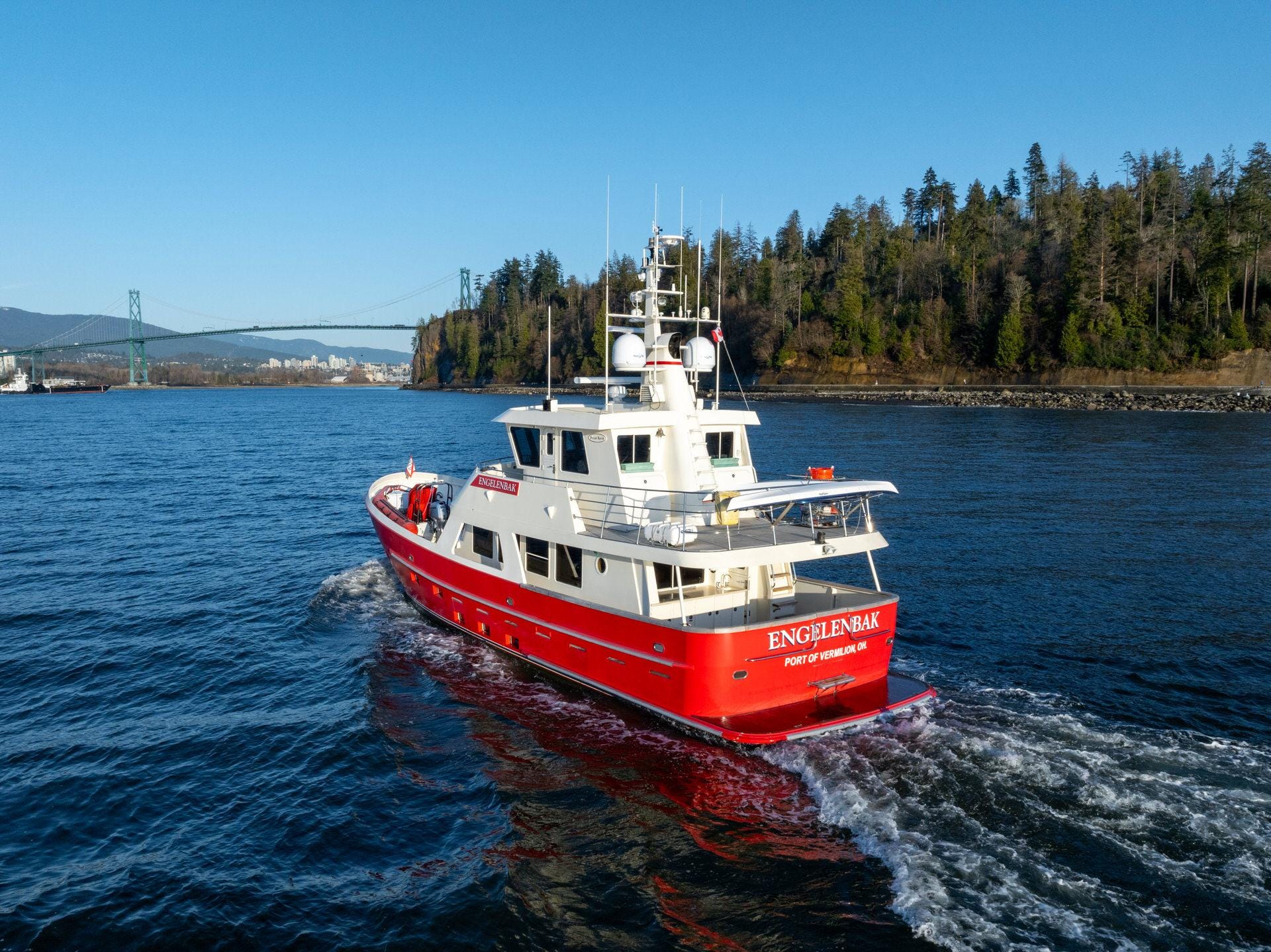
If you've ever dreamt of a go-anywhere expedition yacht with true ocean-crossing capabilities, then Engelenbak—a 62ft North Sea trawler—should be on your radar. Built in 2002 by Alberni Engineering and designed by Greg C. Marshall, this capable explorer is ready for new adventures with a new owner. With a steel hull, long-range fuel capacity, and comfortable accommodations, Engelenbak combines commercial-grade safety with the comfort of a proper liveaboard yacht. Whether you're navigating the fjords of Norway, exploring remote Pacific islands, or tackling a transatlantic crossing, this vessel has the resilience and capability to take you wherever your journey demands.
A Hull Built for the High Seas
Engelenbak was designed with safety in mind. Its solid steel hull, oversized I-beam keel, crash bulkhead, and multiple watertight compartments ensure excellent safety in any sea state. Redundant systems, dry stacks for all engines, keel cooling for heat sources, and a pair of heavy-duty anchoring systems also make it a true ocean-going vessel.
Additional safety features include oversized ground tackle systems, a uniquely protected active stabilisation setup, and a backup steering hydraulic system to ensure redundancy. With a vessel of this calibre, every system has been engineered to withstand harsh conditions, providing much-needed peace of mind on those long, far-off voyages.
Performance & Range
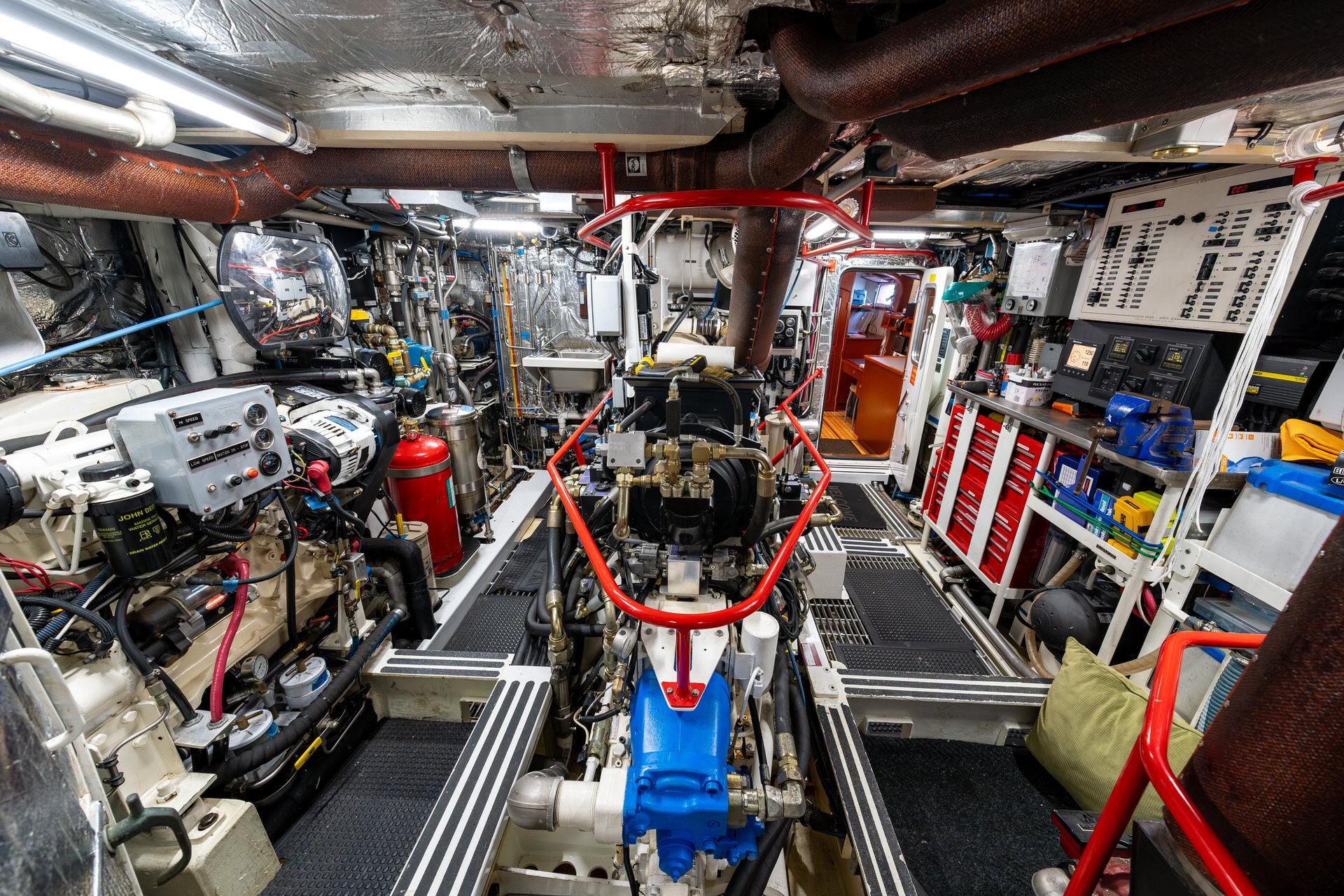
Powered by a reliable John Deere 6125 AMF main engine, Engelenbak cruises comfortably at 8.5 knots, delivering an impressive 5,000 nautical mile range. A variable pitch Hundested propeller maximises efficiency, while a John Deere 4039D auxiliary engine provides additional backup power. Active stabilisation and a 16-inch hydraulic bow thrust ensure steady motoring in rough seas and light manoeuvring in tight anchorages.
This vessel is engineered for long-range cruising. Its multi-tank fuel system provides balanced fuel distribution and allows the all-important fuel polishing, ensuring clean and reliable operation over extended passages. With redundant fuel transfer and filtration systems, the risk of fuel contamination disrupting operations is minimised, making it an ideal choice for serious passage-making. The last thing you want on any ocean crossing passage is to have to deal with contaminated fuel getting into the engine.
Spacious and Comfortable Interior
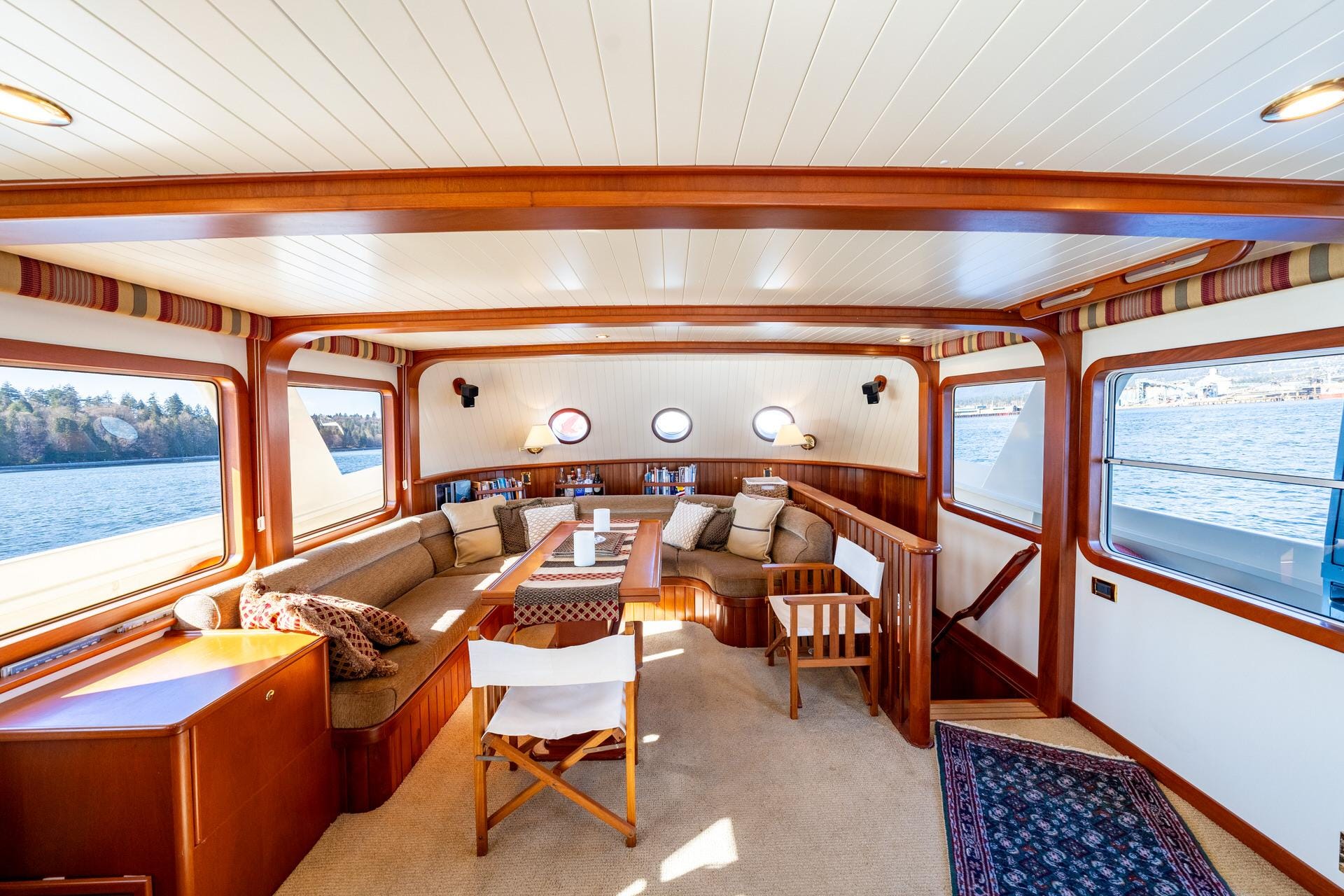
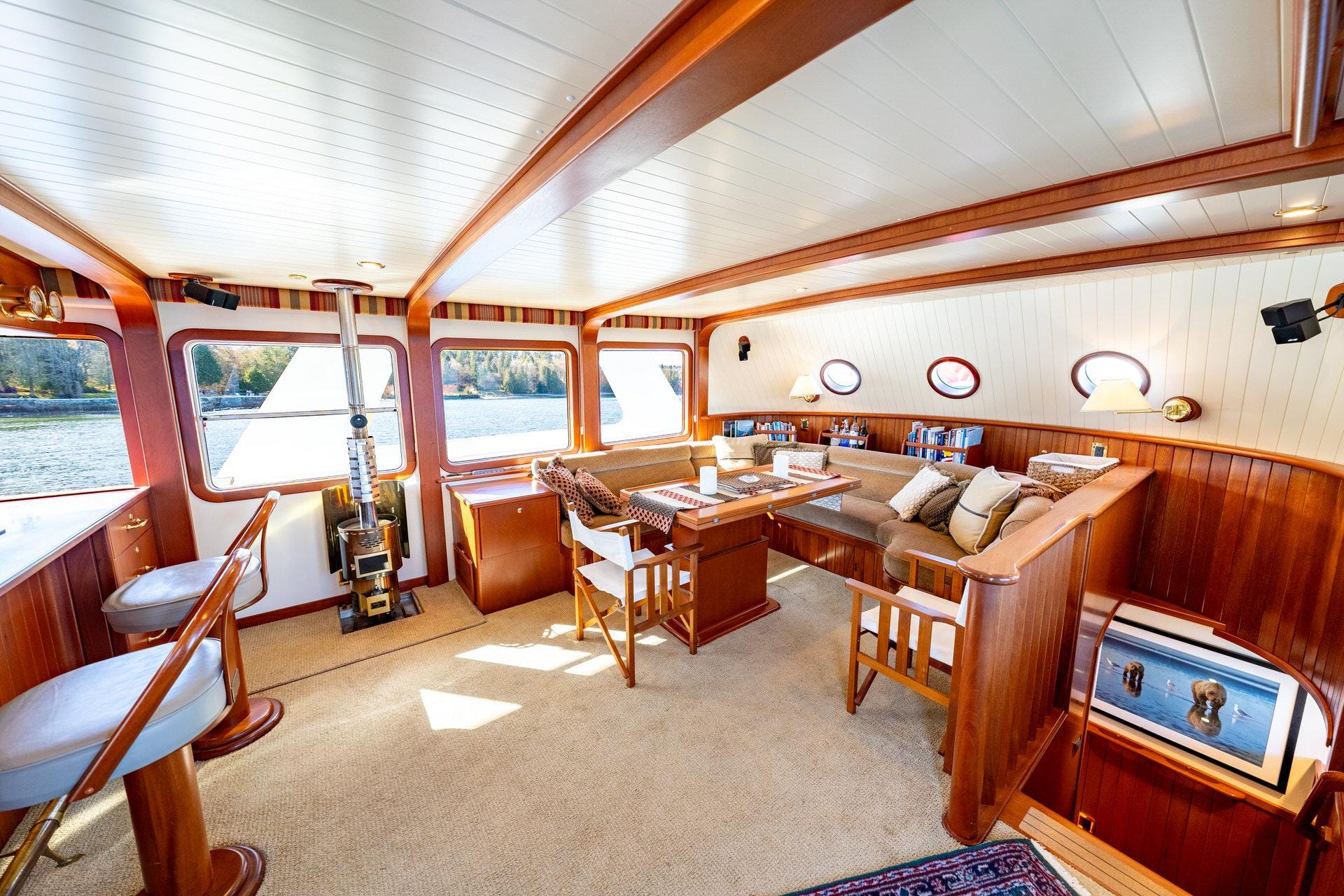
Step inside, and you're greeted by a warm, inviting interior finished in rich Honduran mahogany. The saloon features a hydraulic lift dining table that converts from a coffee table to a 10-person dining setup. The galley is fully equipped with Sub-Zero fridges, a Wolf propane cooktop, a Miele dishwasher, and an ice maker
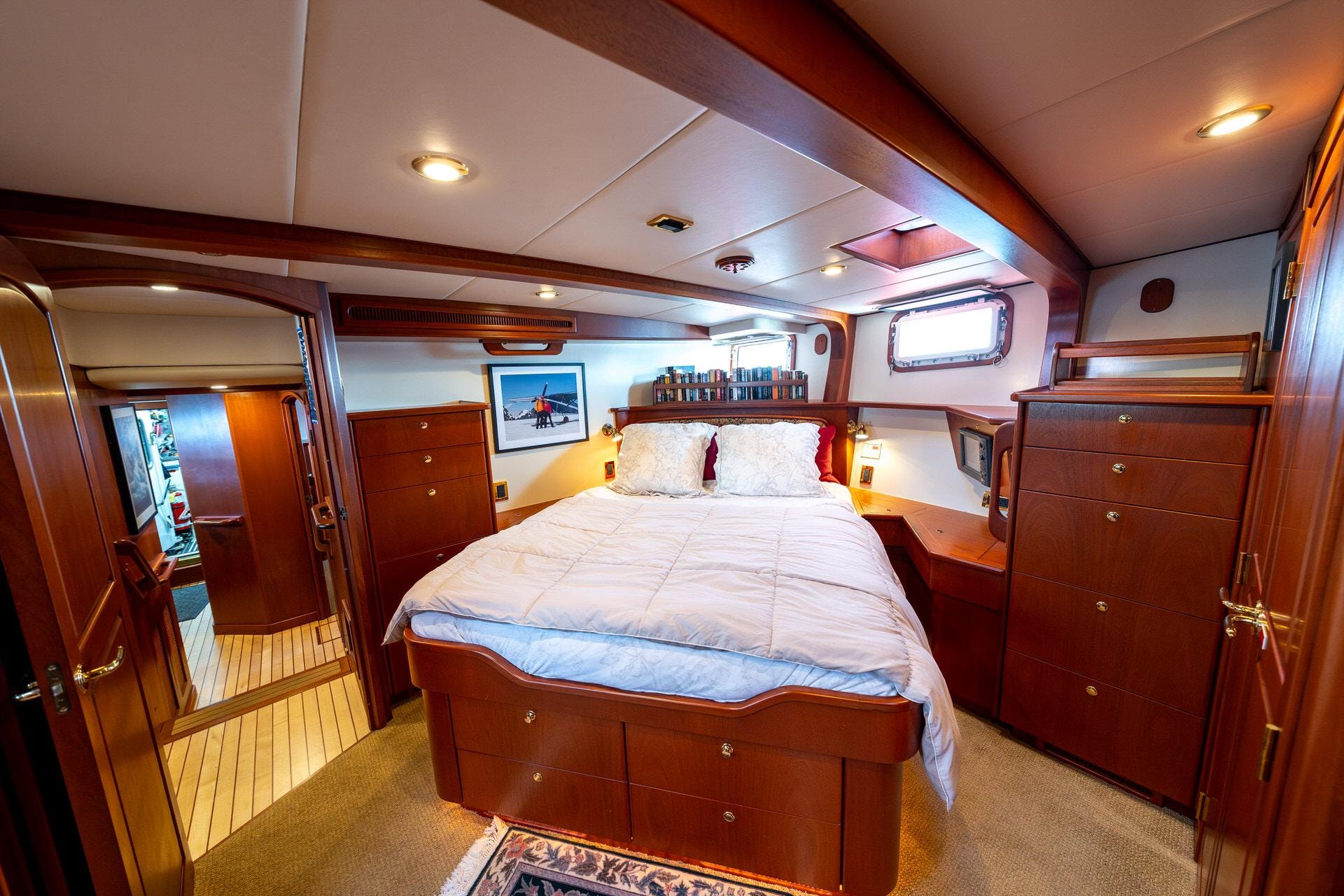
Accommodations are designed for both luxury and practicality. The owner’s stateroom features a walk-around queen bed, cedar-lined closets, and an en-suite with a full-size Corian shower. A bonus stateroom with twin bunks is ideal for crew or additional guests, and the guest stateroom offers another large island double bed with en-suite facilities. A dedicated office space with a fireproof safe, built-in desk, and separate laundry facilities adds to the vessel’s liveaboard appeal.
Additional living space includes a spacious pilothouse seating area with panoramic views, making it an ideal space for comfortable long-haul passages. The galley layout also offers additional pantry storage, ensuring supplies for extended trips are easily managed. Every element of the interior has been carefully designed to provide the best balance between practicality and luxury.
A Pilothouse Packed with Tech
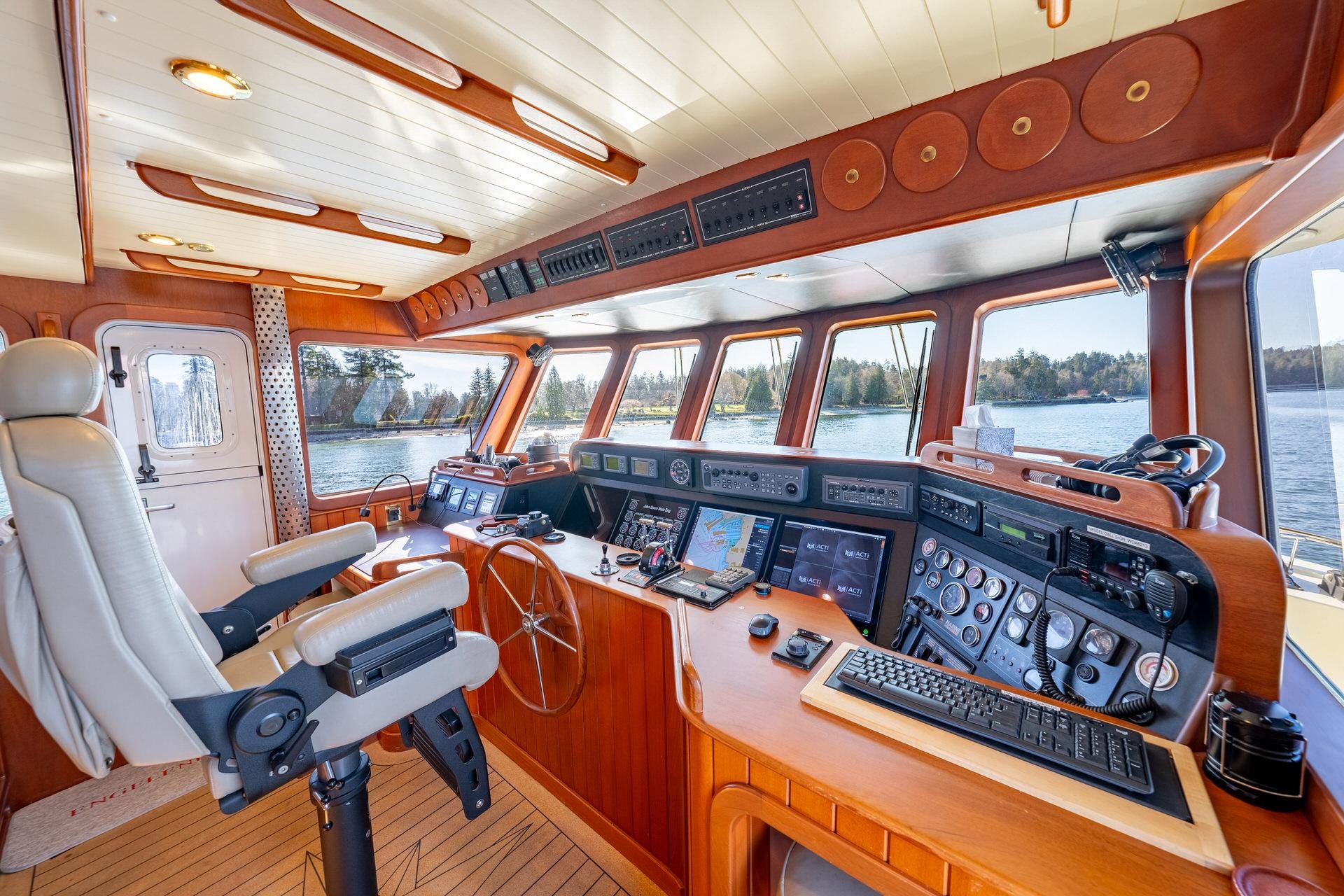
The pilothouse is a serious command centre with four Hatteland multi-function displays, Furuno radar and sonar systems, Maretron electronic monitoring, and dual navigation computers. Side deck doors provide easy access to the Portuguese bridge and wing stations, making docking a breeze. Diamond Seaglaze windows with heated glass ensure clear visibility even in extreme weather.
The vessel is also equipped with multiple redundancy systems, including a secondary autopilot and emergency tiller controls. High-tech weather monitoring sensors, CCTV surveillance and remote satellite communication systems make this pilothouse an operator’s dream.
Mechanical and Electrical Systems for Total Autonomy
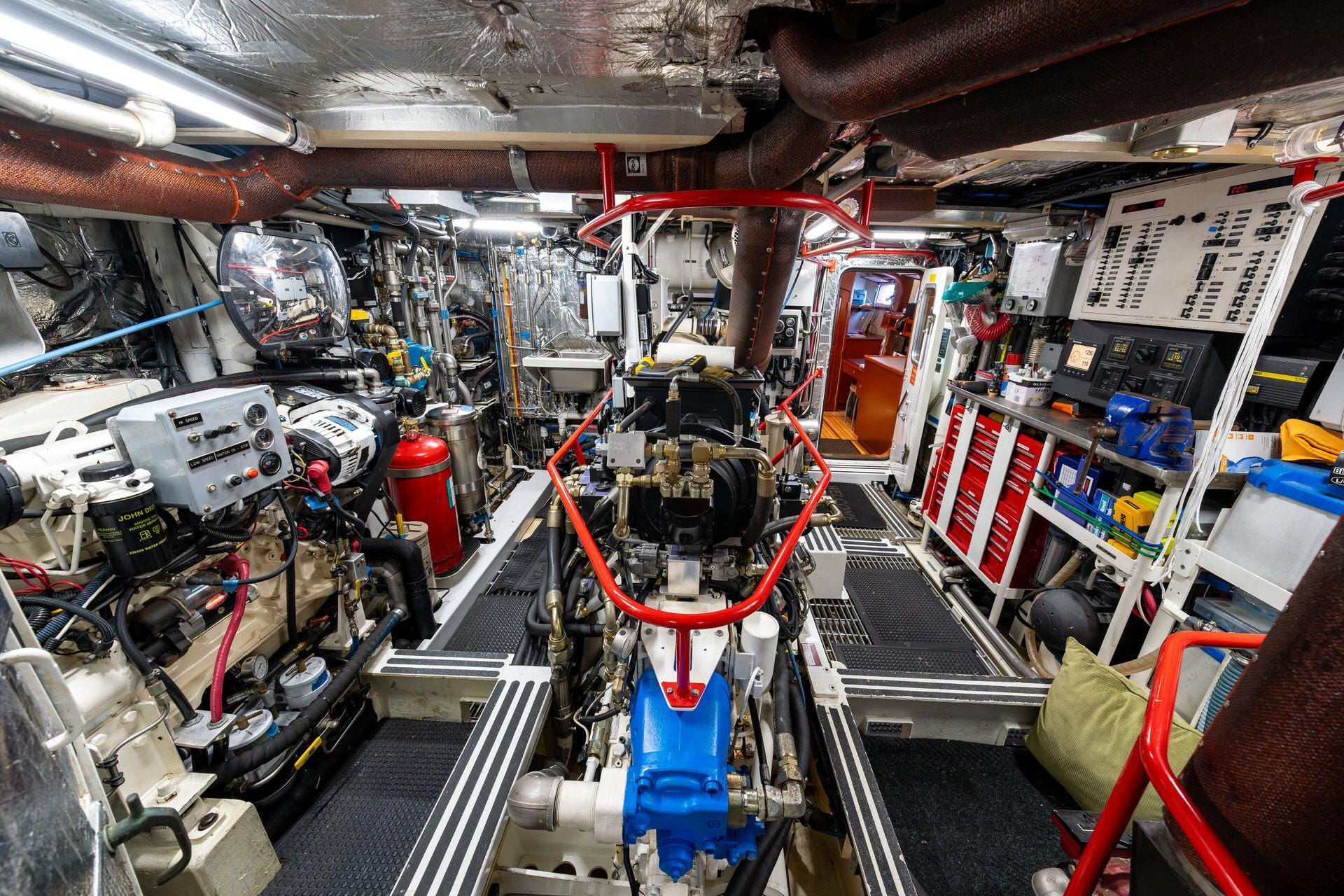
Engelenbak is built for complete independence at sea. A Village Marine watermaker produces 50 gallons per hour, and an Olympia diesel boiler provides central heating. Electrical power comes from a new Northern Lights 12kW generator, a 20kW hydraulic generator, and two Victron Energy inverters, backed by an impressive 16-battery AGM house bank.
The hydraulic system is equally robust, powering the bow thruster, windlasses, stabilisers, davit, and an auxiliary fire pump. Additional safety features include fire suppression systems, built-in bilge alarms, and emergency lighting throughout the vessel.
Deck Layout & Tenders
The foredeck houses dual anchor systems—a 210lb Forfjord anchor with 100ft of chain and 400ft of wire rope, plus a 150lb CQR anchor with 800ft of chain. The 14'6" Polaris RHIB with a 50hp Honda outboard is launched via a Steelhead 1,500lb hydraulic davit. A Switlik SAR-6 hard shell life raft ensures safety for all aboard.
Additional deck features include ample storage lockers, a dedicated BBQ and outdoor sink station, and a built-in workstation for maintaining mechanical components. Wing stations on both sides provide additional docking control, and oversized scuppers ensure excellent drainage in heavy weather.
Final Thoughts
At $1,400,000 and currently located in Vancouver, Engelenbak represents a great opportunity to own a truly capable expedition yacht. Whether you're planning an Alaskan adventure, a transatlantic passage, or a Pacific island-hopping voyage, this North Sea trawler is ready to take you there in comfort and safety.
Designed for serious mariners who prioritise safety, range, and autonomy, Engelenbak delivers in every category. Its robust build, cutting-edge technology, and thoughtful accommodations make it an unbeatable choice for those seeking adventure on the high seas.
Premium Subscriber Exclusive
Want to go deeper? My premium subscribers get access to an in-depth comparison of hull materials—steel, aluminium, GRP, and wood—examining the pros and cons of each. Learn how your choice of hull material affects maintenance, weight, durability, and long-term costs when selecting an expedition yacht.
Join now to unlock this and other exclusive content!
Choosing the Right Hull Material: Steel, Aluminium, GRP, or Wood?
When selecting an expedition yacht, one of the most critical decisions is the hull material. The choice between steel, aluminium, GRP (fibreglass), and wood significantly impacts maintenance, weight and long-term costs. Each material has its strengths and weaknesses, making it essential to choose based on your intended use and cruising grounds. Let’s break it down.
