

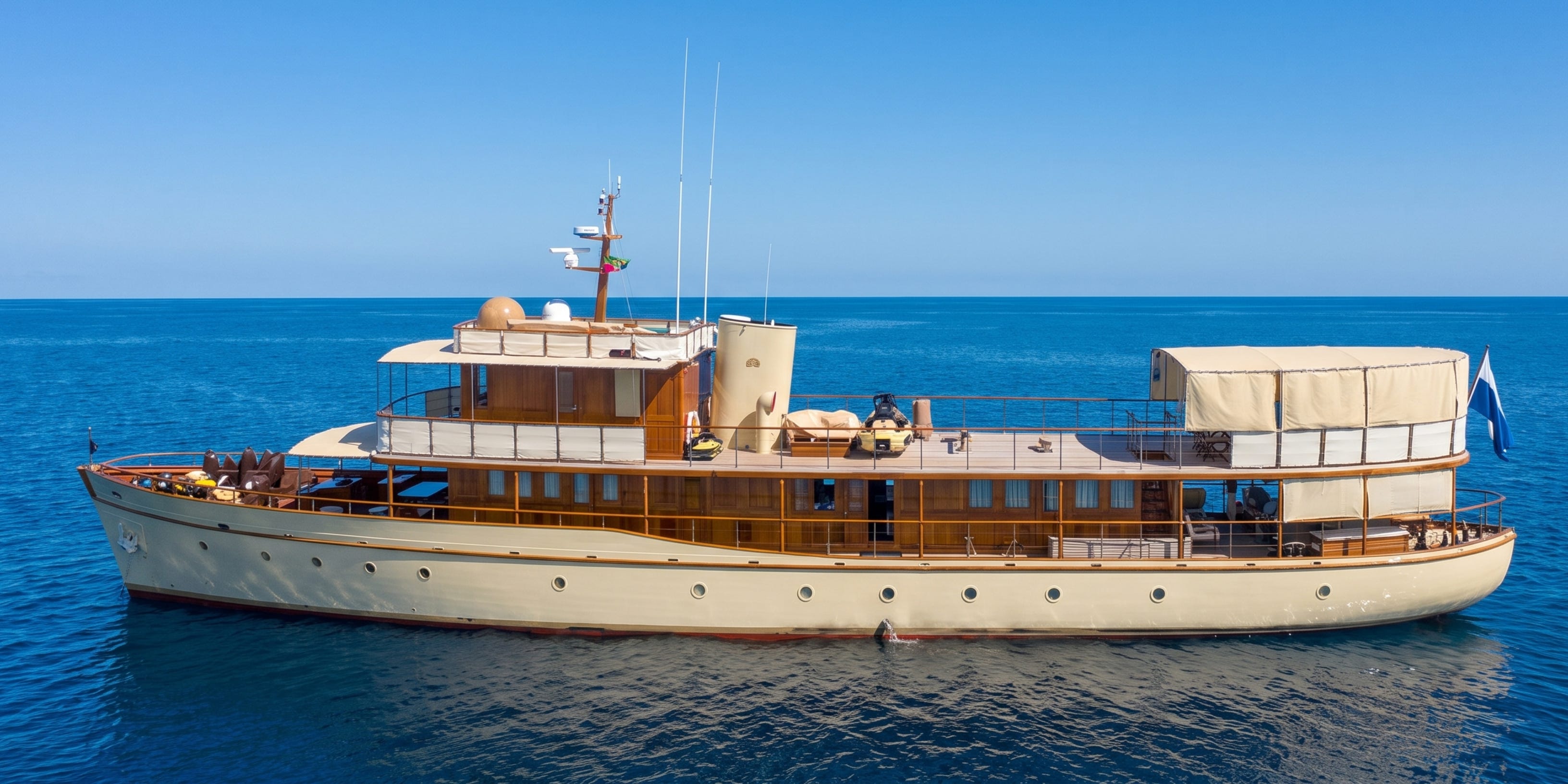
Most of what I write on here is about buying boats. Brokerage deep dives, ownership realities, the true cost of running a 35-metre steel hull through a Norwegian winter. That is the world most of you are in, or heading toward. But not everyone wants to own a yacht, and to be honest, not everyone should….
Ownership is a commitment that goes well beyond the purchase price.
It demands lots of time, attention, and a particular kind of patience that not every lifestyle can absorb. Charter is a different proposition entirely. You choose when, where, and for how long. You step aboard with your group, the crew handles everything, and when the week is done you walk off without a marina bill, a survey anxiety, or a winter storage problem. For people who love the sea but live busy lives, charter is not a compromise. It is often the preferred choice.
I have started writing about charter yachts because the same detailed approach I apply to brokerage listings applies here. What does it actually cost? What does the rate include, and what does it not? Is this vessel as good as it looks? My regular readers know I will not give you a brochure. So when a boat pops up on my radar screen, to to speak, that I think is worth your attention, I am going to say so.
Over The Rainbow of London is definately worth your attention.
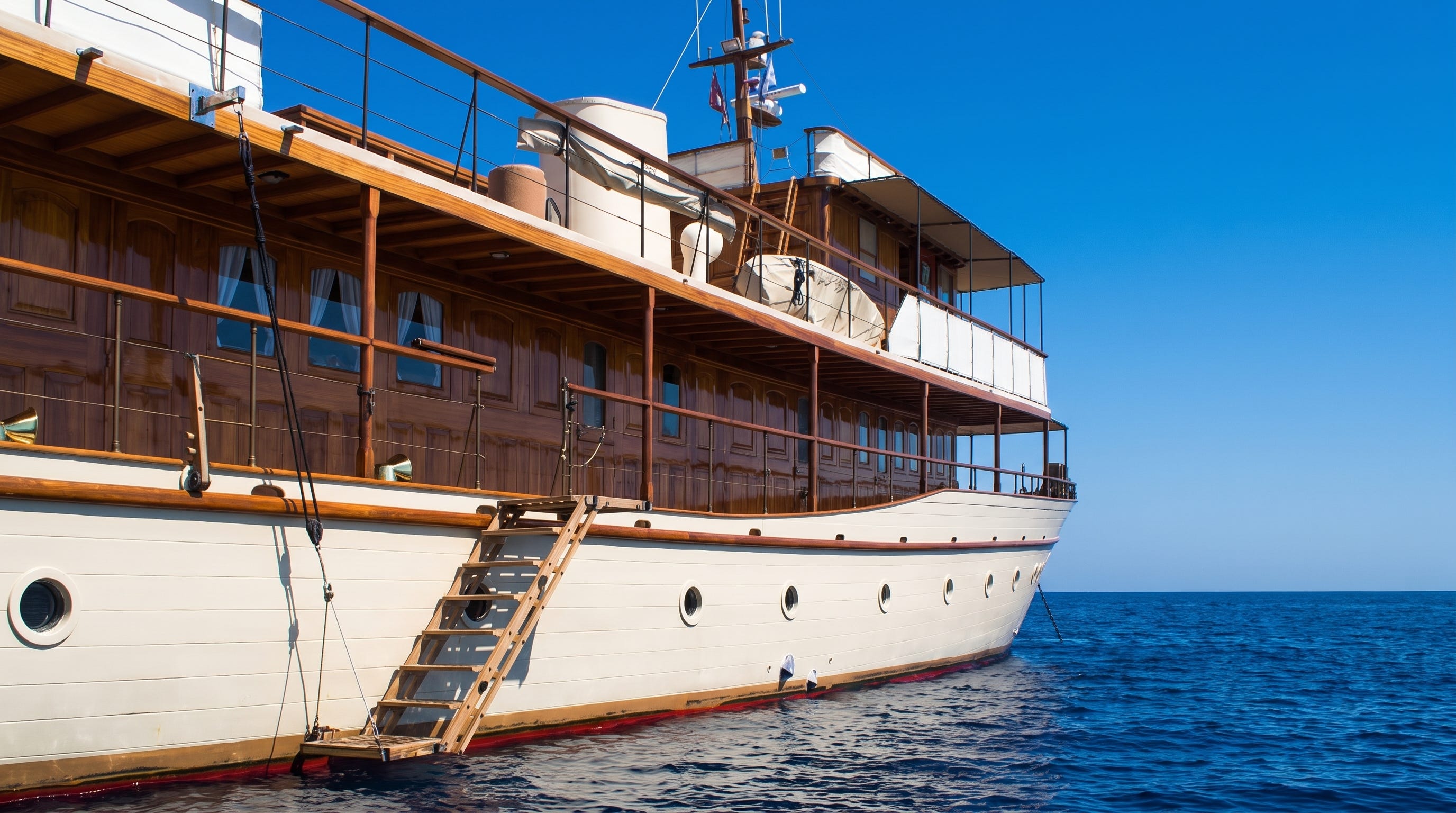
There is a particular feeling you get when you step aboard a genuinely old wooden boat. Not the false nostalgia of a modern replica with teak trim glued over a GRP hull. The real thing. The kind of boat where the grain of the Honduras mahogany has darkened with decades of care, where the proportions of every doorframe and handrail speak a design language that simply does not exist anymore. That is what you are stepping into when you board M/Y ‘Over The Rainbow of London’.
She was built in 1930 by Dickie & Sons at their yard in Bangor, North Wales. The yard had moved there from Tarbert in Scotland just a few years earlier, and by the time they laid this keel they had a solid reputation for quality wooden construction that commercial and private clients trusted completely. At 35 metres and 136 gross tonnes, she was a serious piece of work: teak hull over oak frames, a beam of 6 metres, and a draft of 3.2 metres that speaks to the seakeeping priorities of the era rather than the shallow-anchorage convenience of the modern Med circuit.
She was launched as ‘Janetha IV’, built for a Glasgow owner who cruised the Scottish coast through the 1930s. Then the Royal Navy came for her.
From Welsh Shipyard to Royal Navy Patrol Vessel
I spent years in the Royal Navy, aboard HMS Sheffield and HMS Invincible among others, and there is something that resonates personally about a boat with wartime service. When the requisitions came at the outbreak of the Second World War, Janetha IV was taken into service and commissioned as HMS Corax. She became a coastal patrol vessel, her dining saloon converted into an officers’ mess.
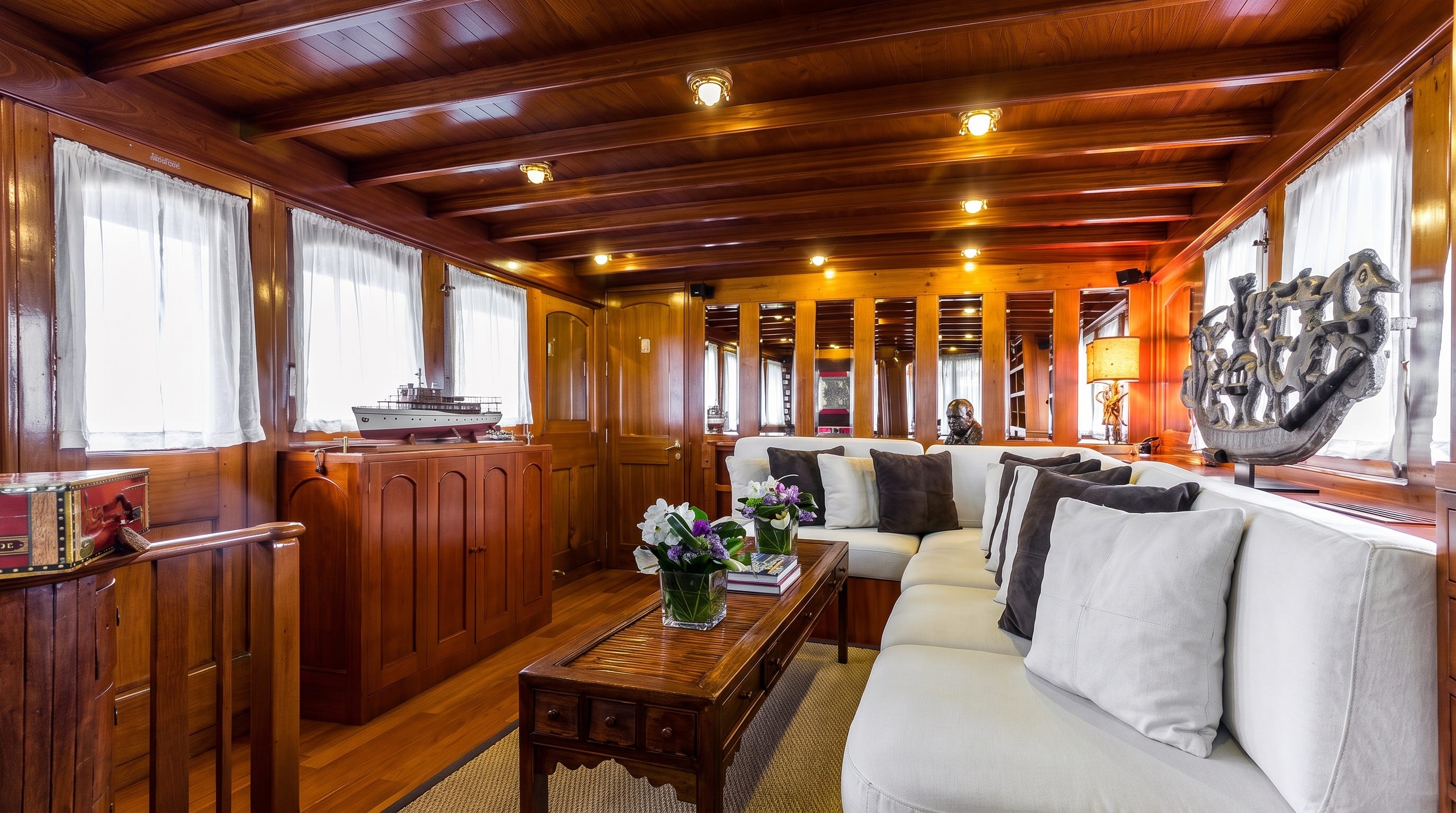
The detail that stops me every time I read it? The original Honduras mahogany panels in that mess still carry dart scars from the wartime officers’ recreation. They are still there. Nobody has varnished over them, sanded them smooth, or decided they did not belong. They remain as evidence that this boat was alive through something significant, and whoever has cared for her since had the wisdom to let the history speak.
The Royal Navy strengthened her for wartime service. 71 ribs were reinforced on either side of the hull. That structural work, laid down in a Welsh shipyard and reinforced under Admiralty direction more than 80 years ago, is still the skeleton she sails on today.
The Mediterranean Years: From Floating Casino to Folon’s Canvas
After the war, ‘Over The Rainbow’ crossed the Atlantic (she was ‘Lady Jeanetta’ by then) and cruised the American coast before returning to the Mediterranean. There, in the years when Greece had strict laws against gambling ashore, she became a floating casino serving the Athens community. Renamed ‘Ismini III’, she spent decades largely off the public record, changing hands several times.
Her rediscovery came in the 1990s, when an English enthusiast brought her to the Côte d’Azur and introduced her to the charter market as a classic vessel. What happened next is, I think, what makes ‘Over The Rainbow’ genuinely extraordinary....
Jean-Michel Folon fell in love with her.
Folon was a Belgian artist of the first rank. Born in Brussels in 1934, his whimsical, humanistic work appeared in the Metropolitan Museum in New York, in the pages of The New Yorker, on the walls of the London Underground at Waterloo station, and in permanent collections across Europe. He designed sets for opera at Venice, Geneva, and Rome. He illustrated Kafka, Camus, and Ray Bradbury. He received the Legion of Honour from the French President. When he died in Monaco in 2005, his foundation in La Hulpe, Belgium, housed in a Solvay castle, held one of the most significant private art collections in Europe.
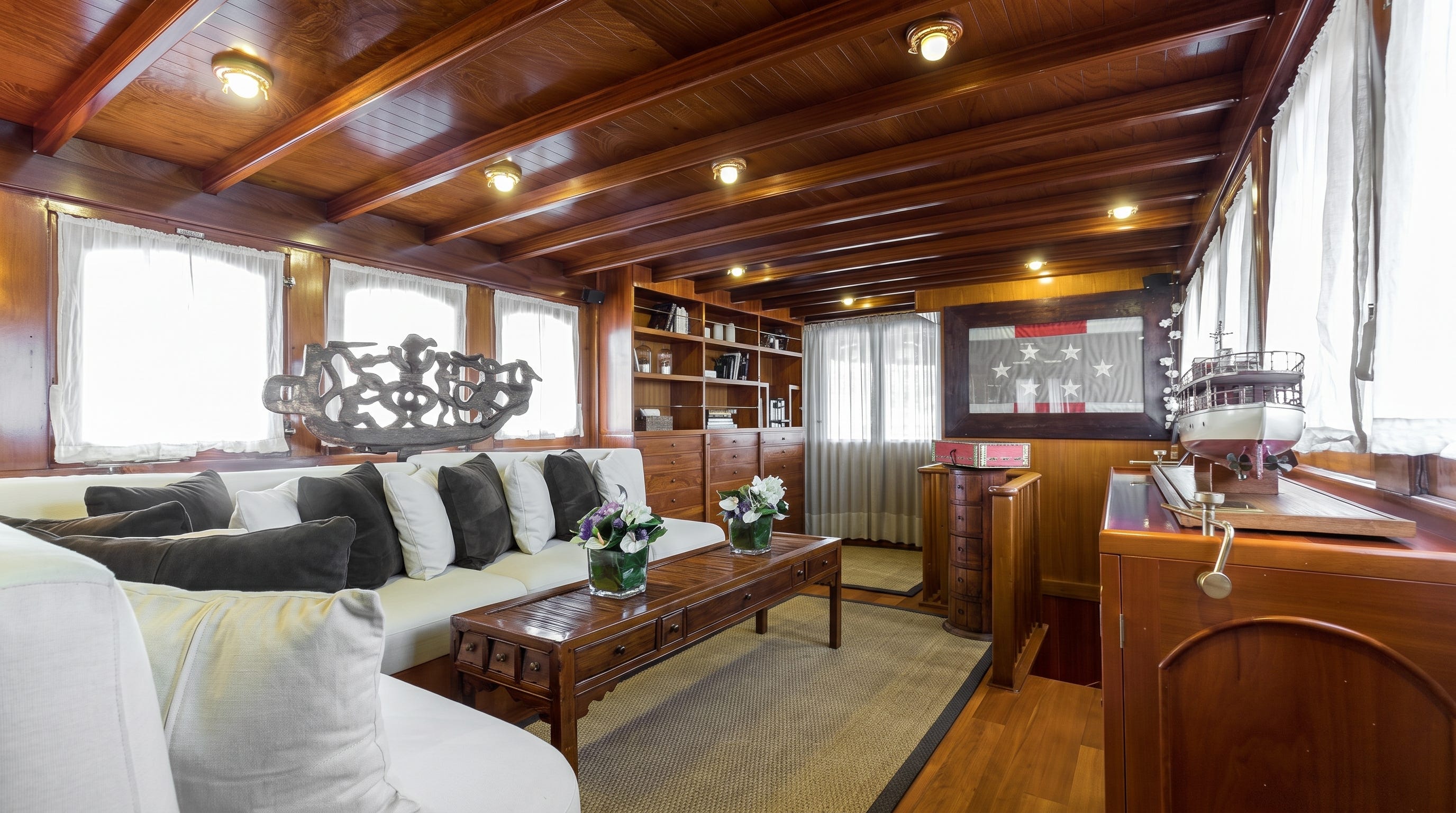
He is the only artist I have come across who chose a 1930 Welsh-built motor yacht as a design project.
Folon did not modernise her. He did the opposite. He worked to preserve every element of her historical character: the proportions, the original fittings, the authenticity of the wooden interior, while bringing his particular artistic sensibility to bear on how it all sat together. The result was not a restoration in the conventional sense. It was more like a careful act of intimate curation, by someone who understood both what she had been and what she could be.
When the current owners acquired her in 2017 and carried out a significant refit in 2018 and 2019, they were working from a foundation that Folon had already given enormous thought. The Hemingway library came with the boat: a substantial collection of Ernest Hemingway’s literature that forms part of the onboard character in a way that is hard to explain but immediately felt when you are sitting in the saloon in a Corsican anchorage with nothing particular to do...
What She Offers as a Yacht Charter
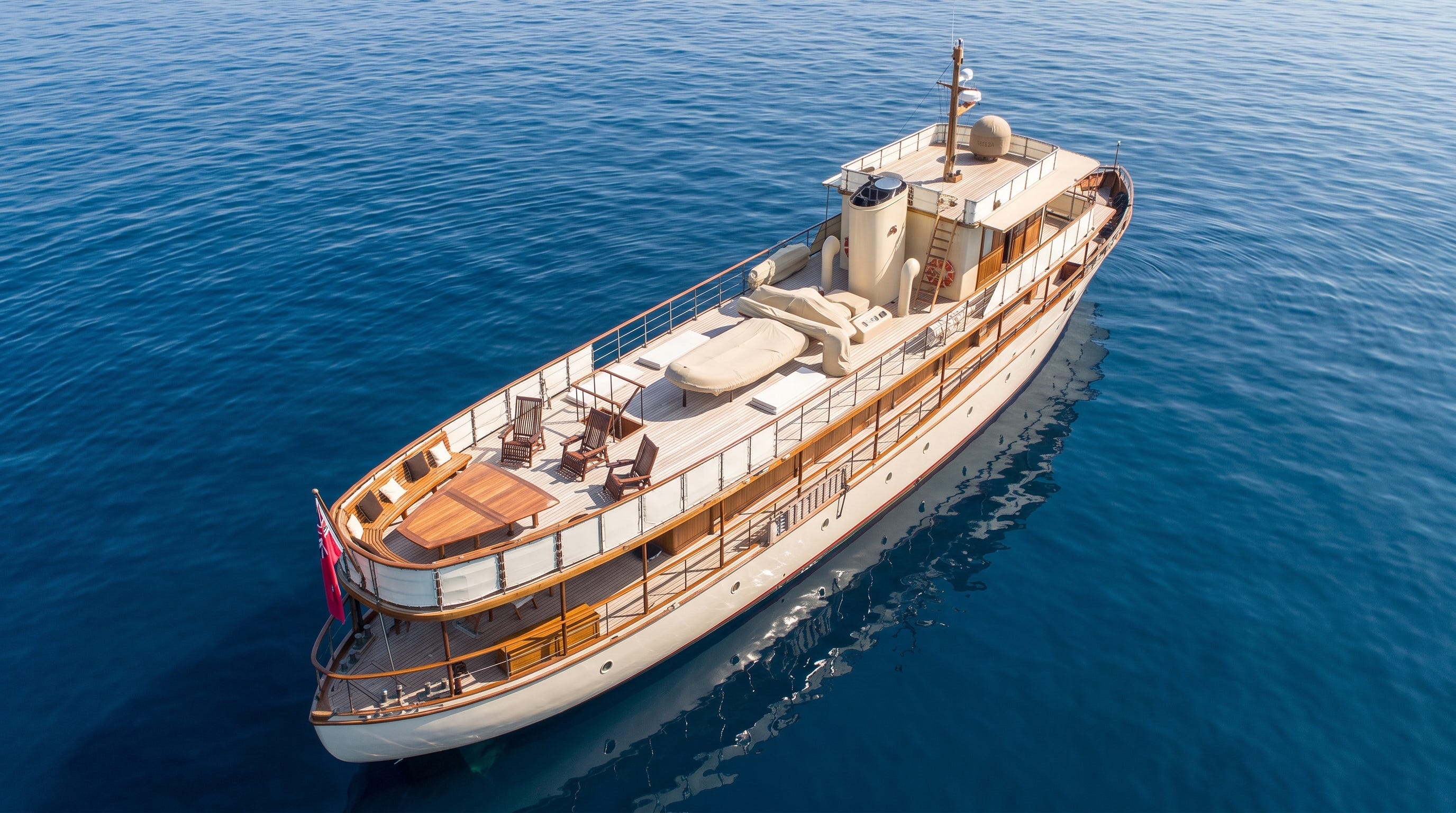
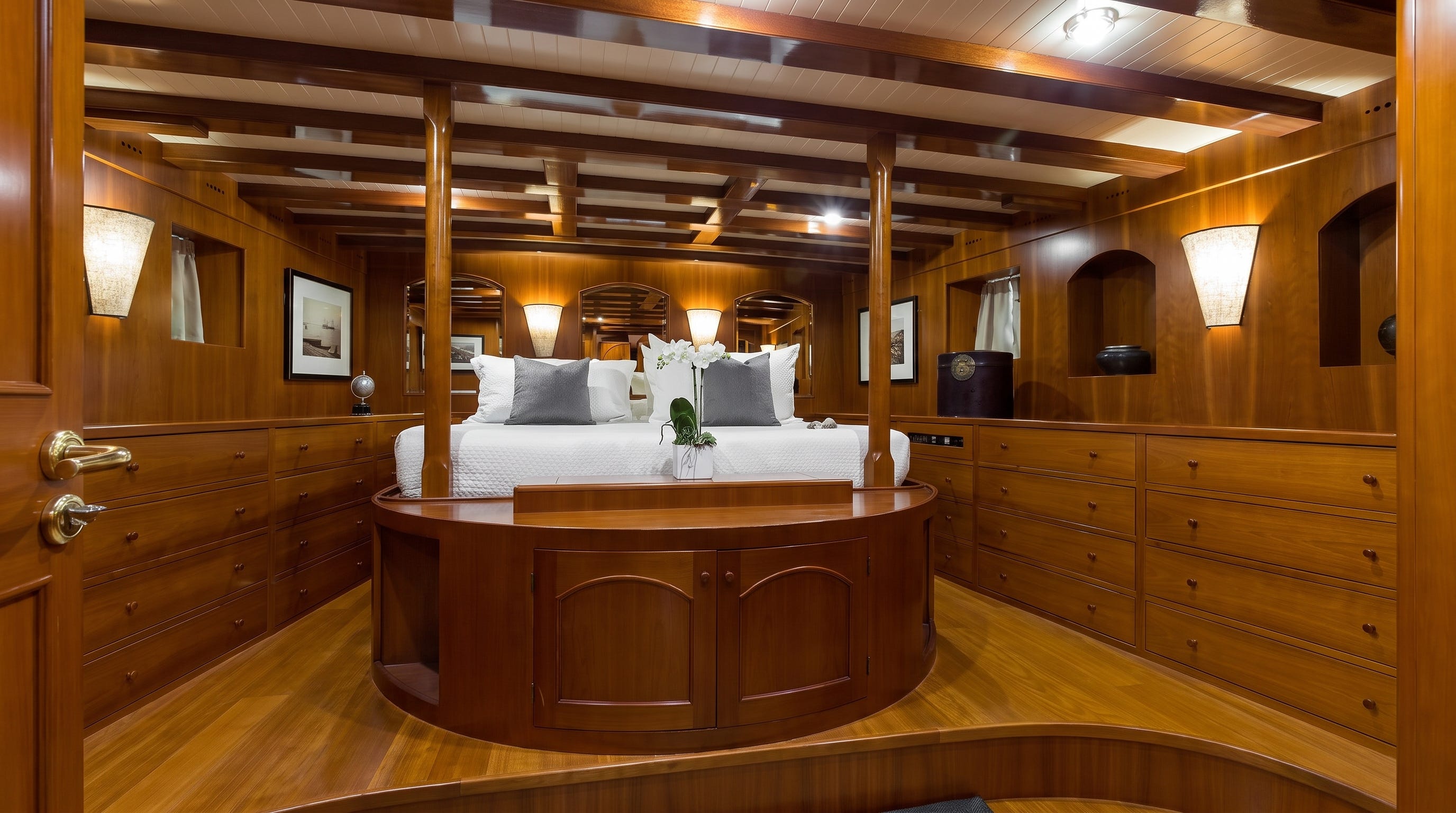
Over The Rainbow takes 11 guests across four cabins: a master suite, a VIP stateroom, two double cabins, plus convertible berths and a Pullman. Five crew. Her deck spaces are generous and well-suited to groups who want to use them. She was built in an era when outdoor living aboard a motor yacht was taken seriously, and that layout has survived intact.
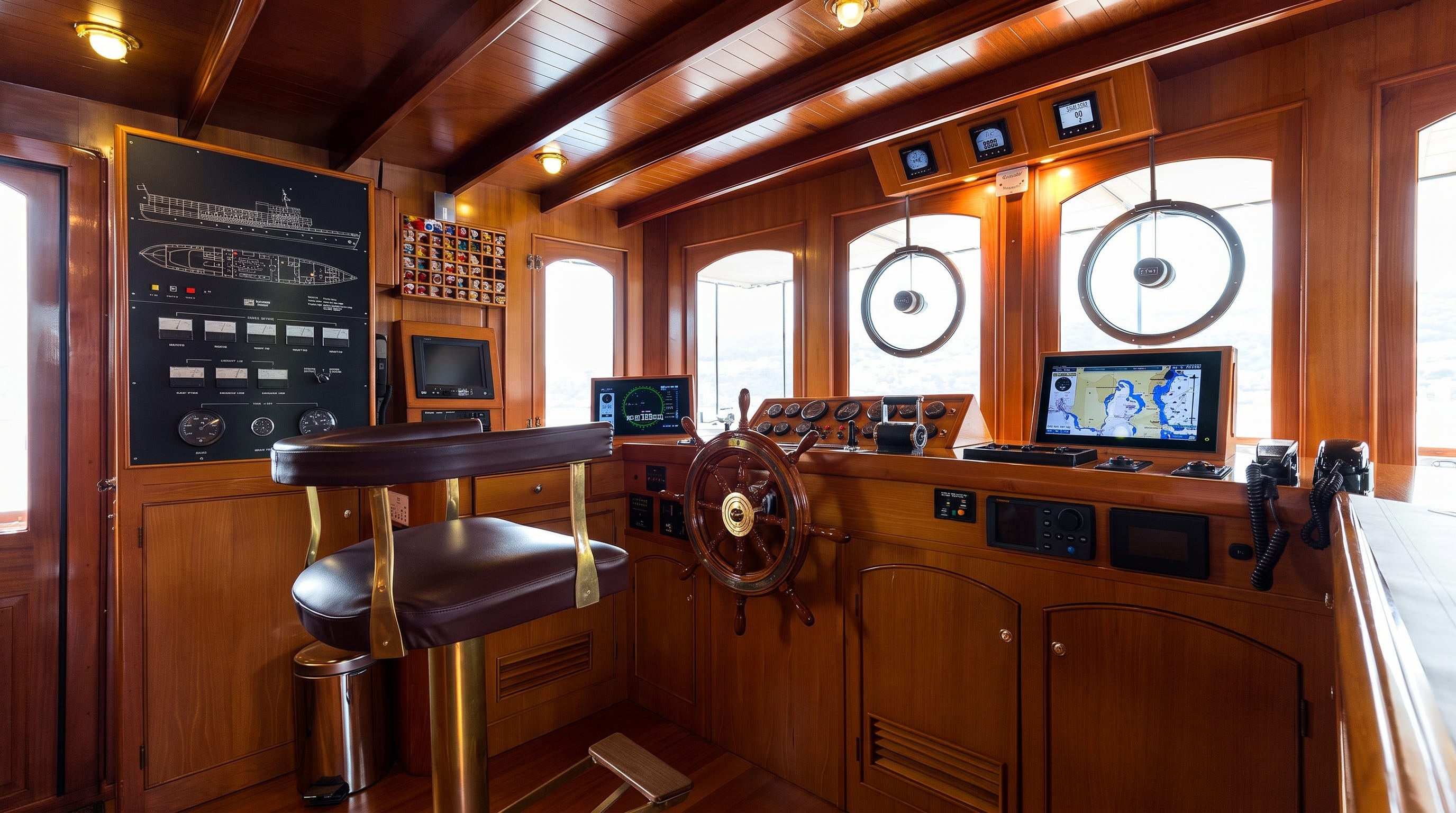
Her cruising speed is 10 knots. This is not a vessel for covering ground quickly, and that is entirely the point. The Mediterranean at 10 knots is a different experience from the Mediterranean at 25. You anchor somewhere beautiful. You use the Seabobs, the kayaks, the paddleboards, the Waverunner, the fishing equipment. The crew provision you well. In the evenings you are in a port that does not look like a car park for GRP. At 10 knots, the Med gives you itself rather than rushing past the window.
Her at-anchor and underway stabilisers mean the experience at rest is comfortable even in a moderate chop, and the air conditioning and Wi-Fi are entirely modern. She does not ask you to rough it. She asks you to slow down.
The charter rate is €65,000 per week, year-round, no seasonal premium. That figure is the same in July on the French Riviera as it is in February off Montenegro. The + expenses means an Advance Provisioning Allowance on top, which covers fuel, provisioning, port fees, and consumables. I go through the full cost breakdown in the premium section below, so you can see exactly what a week aboard actually costs once everything is accounted for.
She operates throughout the Mediterranean: Croatia, France, Greece, Monaco, and Montenegro are all on the itinerary. The hot spots her crew know well include the Amalfi Coast, Corsica, the French Riviera, the Ligurian Riviera, Sardinia, and the Balearics. Of course, at 10 knots, you are not covering the whole list in a week. You are choosing one stretch of coastline and experiencing it fully.
If Over The Rainbow sounds like the right boat for your group, you can enquire about availability directly. I work with the vessel’s charter agency as a referral partner, and if you book through me I receive a commission at no cost to you. I want to be upfront about that. The link to enquire is below.
This article continues below in “The Wardroom”
In the premium section, I cover:
- The true total cost of a week aboard: the full APA breakdown, gratuity expectations, provisioning, port fees, and what a week actually costs once every line item is added up
- What €65,000/week actually buys you: how she compares to a modern 35m charter yacht at the same or higher rate, and what you gain and lose
- The wood hull question: what a 96-year-old wooden boat in charter service really means for the experience, and what the owner faces to keep her in this condition
- My honest assessment of the value: is €65,000/week the right price, or is there a better use of that budget elsewhere in the Mediterranean classic fleet?
The True Total Cost of a Week Aboard
The €65,000/week base charter fee is where the headline rate ends and the arithmetic begins. For a crewed Mediterranean charter of this category, the industry standard is to add an Advance Provisioning Allowance (APA) on top of the headline rate. This is not a hidden extra. It is a well-established mechanism that covers the variable running costs of the charter: fuel, provisions, port fees, and consumables. You pay it upfront and receive a reconciliation at the end; anything unspent comes back to you.
