

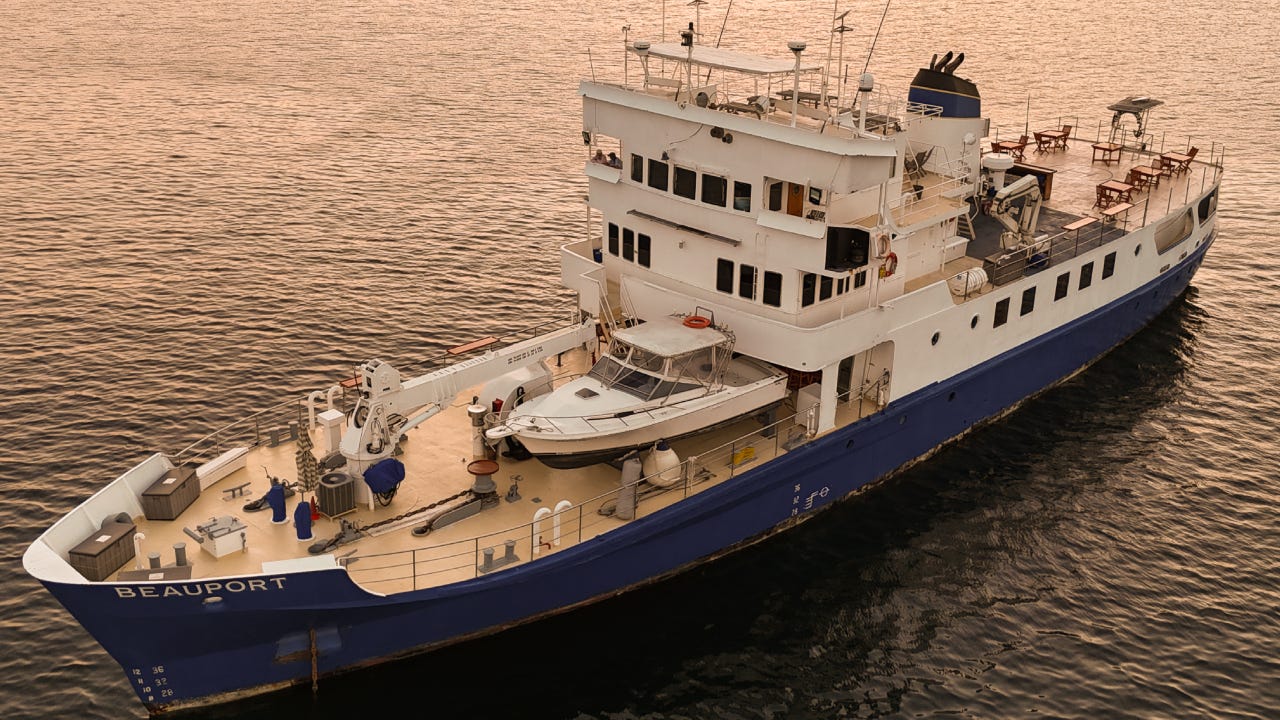
Occasionally a broker reaches out not to push a listing, but because they genuinely believe their vessel deserves a proper audience. Antonio Palazuelos of FGI Yacht Group made contact about a vessel called Beauport, and having looked into her, I think he was absolutely right.
She is 169 feet of steel. Built in 1960 by Davie Yards in Quebec, delivered to the Canadian Coast Guard, and operated as a light icebreaker and patrol vessel on the St. Lawrence Seaway and Great Lakes for 33 years. Privately purchased in 1993, converted at considerable expense to a private expedition yacht, and overhauled again in 2023.
She is asking $2,995,000, located in Panama Province, and home to an owner who loves her enough to stand his own watches and get his hands dirty alongside the crew.
That last detail matters. I will come back to it.
The Shipyard That Built Her
Beauport did not come from a production yacht builder. She came from Davie Yards, and that distinction is worth understanding before you look at anything else.
Davie was established in 1825 in Lauzon, Quebec, on the south bank of the St. Lawrence. It is one of the oldest shipbuilders in North America, and the oldest to retain its founding name, and it built the kind of vessels that needed to survive. Government contracts. Naval commissions. Arctic patrol boats. Ferries for some of the most demanding freshwater routes on the continent. During the Second World War, Davie launched 35 warships, corvettes, minesweepers and destroyers, and the yard never stopped evolving from there.
When Davie built vessels for the Canadian Coast Guard in the post-war decades, the design brief was simple: these boats must work, they must survive, and they must keep working in conditions that would destroy a vessel built to lesser standards. Cold water. Moving ice. Remote operations far from any yard facility. The hulls that came out of Lauzon in the 1950s and 1960s were not necessarily elegant in the traditional sense, but they were built with a seriousness of purpose that most contemporary yacht construction cannot match.
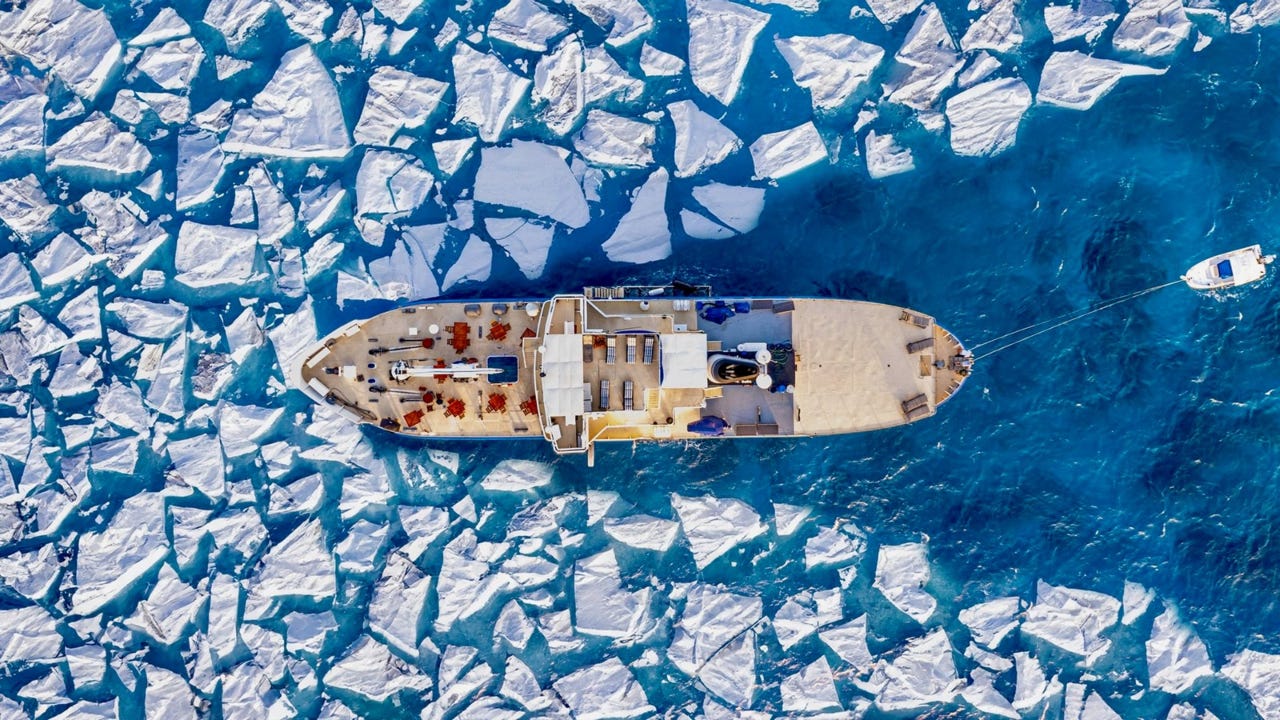
Beauport was delivered in 1960. She was a light icebreaker, which means she was designed with a reinforced bow and specific hull geometry to push through pack ice at low speed rather than smash through it at high speed. Her plates are heavier than you would find on any modern yacht of comparable length. Her fittings were specified for service, not appearance. She was built to last, because the Canadian government needed her to last, and in the 66 years since her launch, she has given no indication that she intends to stop.
33 Years in Government Service
From 1960 to 1993, Beauport worked the St. Lawrence Seaway and the Great Lakes. Her operational territory included some of the most challenging conditions in the world: winter ice, variable currents, shallow channels, and the constant operational pressure of government service where breakdowns have real consequences.
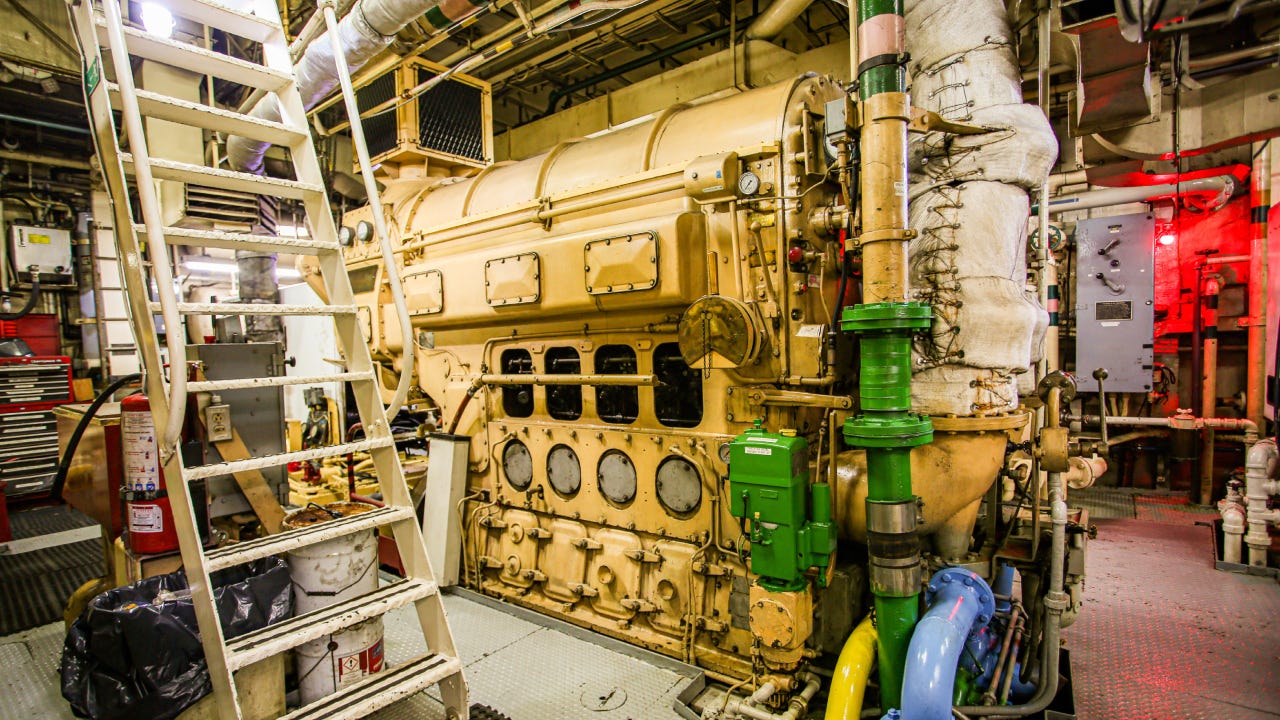
Her engines were chosen with this in mind. The twin Fairbanks Morse opposed piston diesels that sit in her engine room today are, of course, not modern engines. They are, however, an engineering choice that deserves respect. The opposed piston configuration, two pistons sharing a single cylinder with no cylinder head, was adopted by the US Navy in the 1930s and became one of the most reliable and robust marine diesel designs ever produced.
Got a boat?
Know of a vessel, for sale, charter, or otherwise, that you would like me to feature in a future dispatch? You can send me a direct message or email me via john@yacht-buoy.com
The Canadian government specified Fairbanks Morse engines for exactly the reason you would expect: they were difficult to break, relatively straightforward to maintain with trained hands, and they kept running in conditions where more fragile machinery would have given up.
Each unit produces 640 horsepower. Together, they push Beauport to 12 knots maximum and a comfortable 10 knots cruising. That gives her a range of 5,000 nautical miles at cruising speed, enough to cross the Atlantic without a fuel stop, enough to reach the majority of the world’s expedition destinations from a Caribbean or Mediterranean base.
Her original crew complement was 34. She had 34 people aboard because she was a working vessel, not a leisure platform, and a vessel of this type doing government work required that many hands. The 1993 conversion stripped that configuration down and rebuilt the interior for private ownership. But the infrastructure that supported those 34 government personnel, the redundant systems, the heavy engineering, the operational resilience, that infrastructure is still there.
The 1993 Conversion
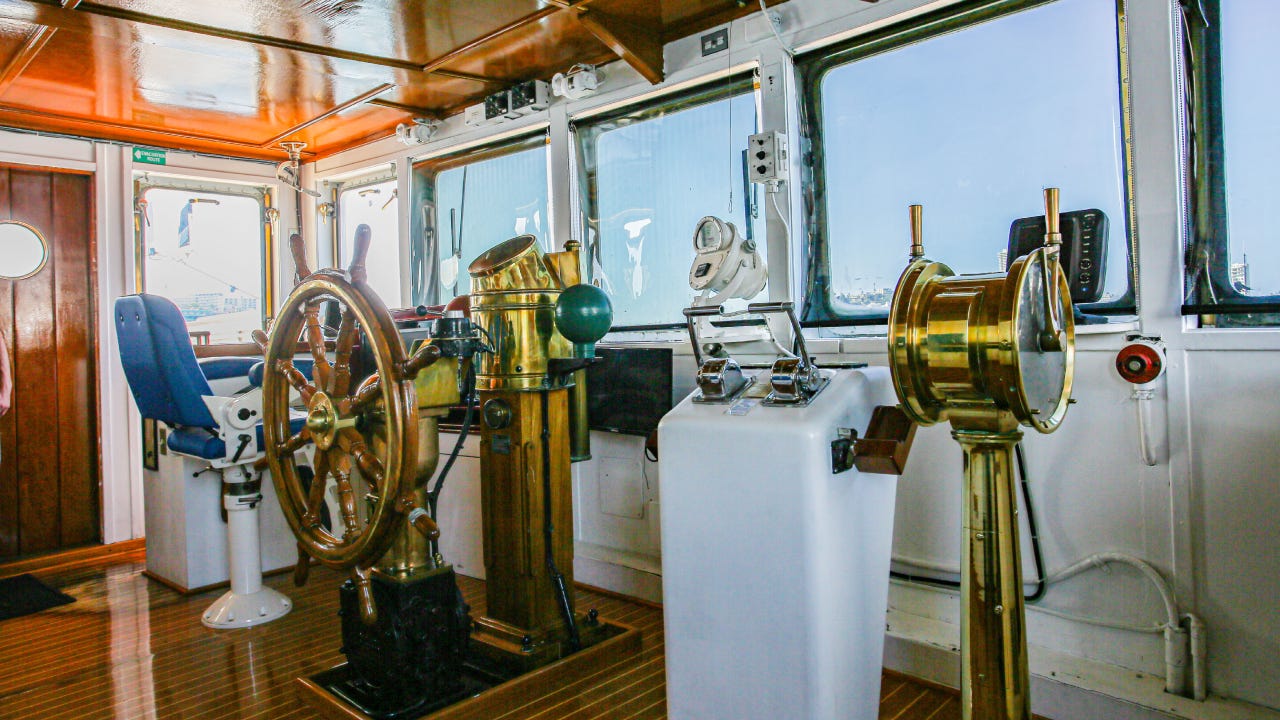
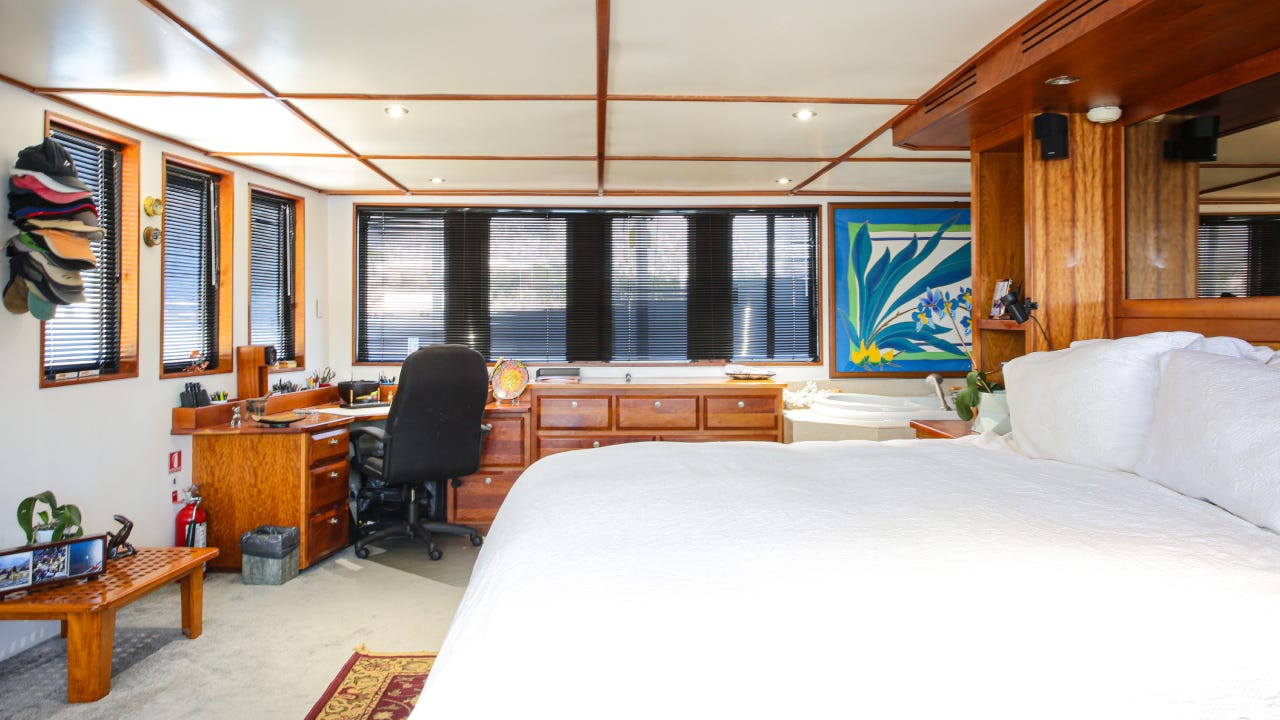
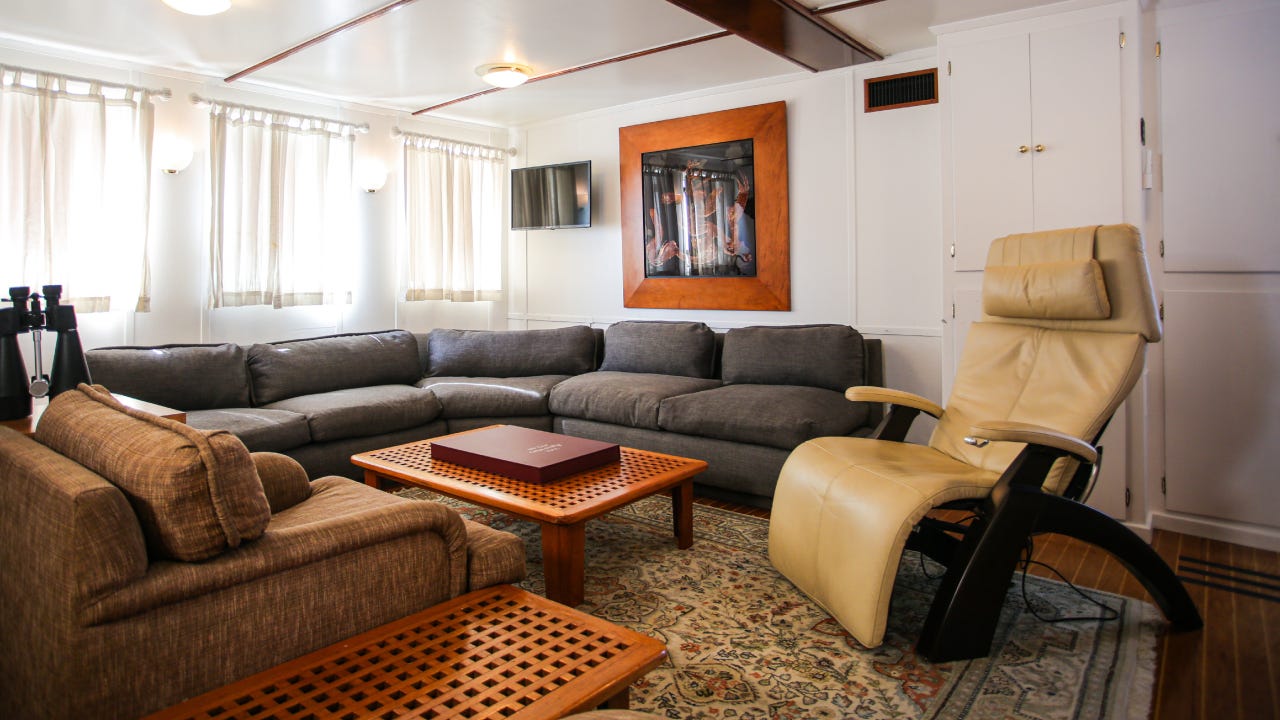
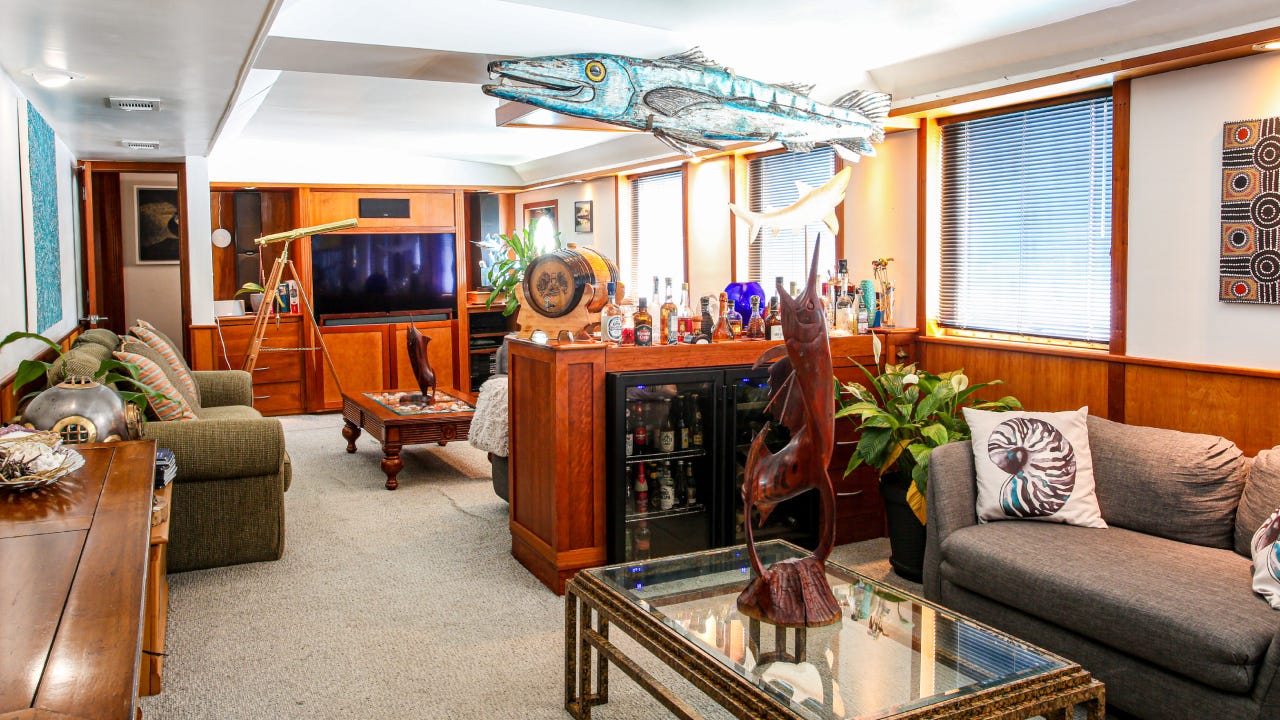
The private buyer who acquired Beauport in 1993 made a significant bet. Taking a 33-year-old government vessel and converting her to private expedition standards is not a small undertaking. The work involved a complete interior redesign: ten guest staterooms, a formal dining area that seats twelve, a main saloon, a sky lounge with a wet bar, an owner’s private deck, and three exterior deck spaces. Cherry wood panelling throughout. Full air conditioning. Koopnautic stabilisers for underway comfort. A helipad.
What the conversion left intact was the part that mattered most: the Davie hull. The keel, the frames, the plating, the structural logic of a vessel built to government icebreaking standards. You can replace an interior. You cannot replicate 60 years of steel that was built right in the first place.
She has been refitted multiple times since 1993, with the most significant recent work completed in 2023. Both Fairbanks Morse engines were overhauled, a full reconditioning of the main propulsion machinery, fuel systems, and bearing replacement. The John Deere generators were serviced and upgraded. This is not cosmetic work. Engine overhauls on vessels of this type represent genuine capital commitment, and the decision to invest in those engines in 2023 tells you something about the current owner’s relationship with this boat.
The Man Who Lives Aboard Her
Antonio briefed me on something that I think is the most telling detail in this entire listing.
The current owner is, in his words, something of a Jacques Cousteau figure. He lives aboard Beauport full time. He loves fishing. He loves exploring. And he is, in the genuine sense of the phrase, an active member of the crew: he takes part in maintenance, he stands his own watches, he is a working participant in the operation of his vessel rather than a passenger on it.
This matters for two reasons.
The first is practical. A vessel maintained by an owner who actually understands and cares about her mechanical wellbeing is a very different proposition from a vessel maintained at arm’s length by a management company. The 2023 engine overhaul was not a reluctant pre-sale preparation job. It was the decision of a man who expected to be aboard this vessel for years to come, and who wanted her machinery in proper condition.
The second reason is harder to quantify, but it is just as important. Beauport has been lived in. She has been used as she was intended to be used. Someone has already done the work of figuring out how to operate a 169-foot expedition vessel as a daily reality rather than as a weekend fantasy. The systems have been tested. The logistics have been worked out. The vessel is, in the most honest sense of the word, proven.
What She Is Actually For
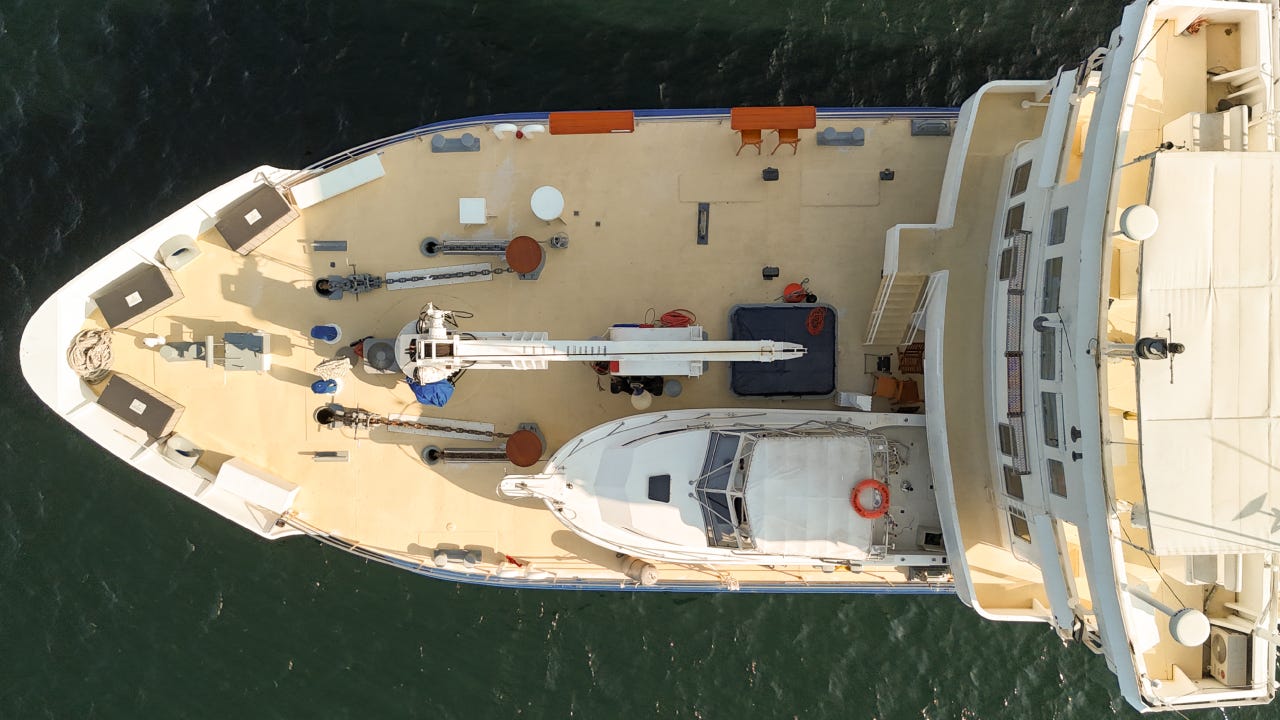
One of the many photographs of Beauport that Antonio sent me shows a tender sitting on her foredeck. Not a dinghy. Not a RIB. A full-size sport cruiser, perhaps 30 feet long, sitting on the forward deck of a 169-foot vessel as casually as a Land Rover in a car park.
That image tells you more about Beauport’s purpose than any specification sheet.
The foredeck can accommodate two tenders of up to 40 feet. Not one. Two 40-foot tenders, simultaneously, on the bow. There is additional deck space alongside the funnels for further tenders, dive equipment, or, and this is not a figure of speech in the context of this vessel’s owner, submarines, Land Rovers, or whatever other expedition hardware the programme demands.
This is a mothership.
Not in the loose sense that any large yacht with a dinghy on deck is a mothership. In the precise, operational sense: Beauport is a vessel from which expeditions are launched, sustained, and returned. She provides the range, the storage, the accommodation, and the heavy infrastructure. The tenders, the submersibles, the chase boats: those are the instruments. Beauport is the platform from which they operate.
Her shallow draft of 3.05 metres for a vessel of this displacement is no accident. The original Davie design was built for the St. Lawrence Seaway and the Great Lakes, which demand shallow-draft capability. That same shallow draft now allows Beauport to access anchorages and coastlines that are entirely off-limits to deeper-keeled expedition vessels of comparable length and build quality.
She can go places that a modern 50-metre explorer yacht cannot reach.
At 5,000 nautical miles of range, she can also get there without depending on fuel availability along the route.
The questions that matter for any serious buyer are not about what Beauport looks like from the outside. They are about what her machinery will actually cost to operate, what the 2023 engine overhaul genuinely covered and what her classification status means for the kind of passages her range makes possible.
Those are the questions I want to answer for Wardroom members.
The Machinery
The Fairbanks Morse opposed piston engines are the most important single fact about Beauport’s operating economics…[article continues below]
These are not modern diesel engines. They were designed in a pre-electronic era, and they operate on principles that predate most of the engineering conventions that modern marine diesel technicians have trained on. Finding a yard with genuine Fairbanks Morse expertise requires specific research. Parts exist, but sourcing them requires access to specialist suppliers rather than a call to the nearest Volvo or Caterpillar dealer.
