

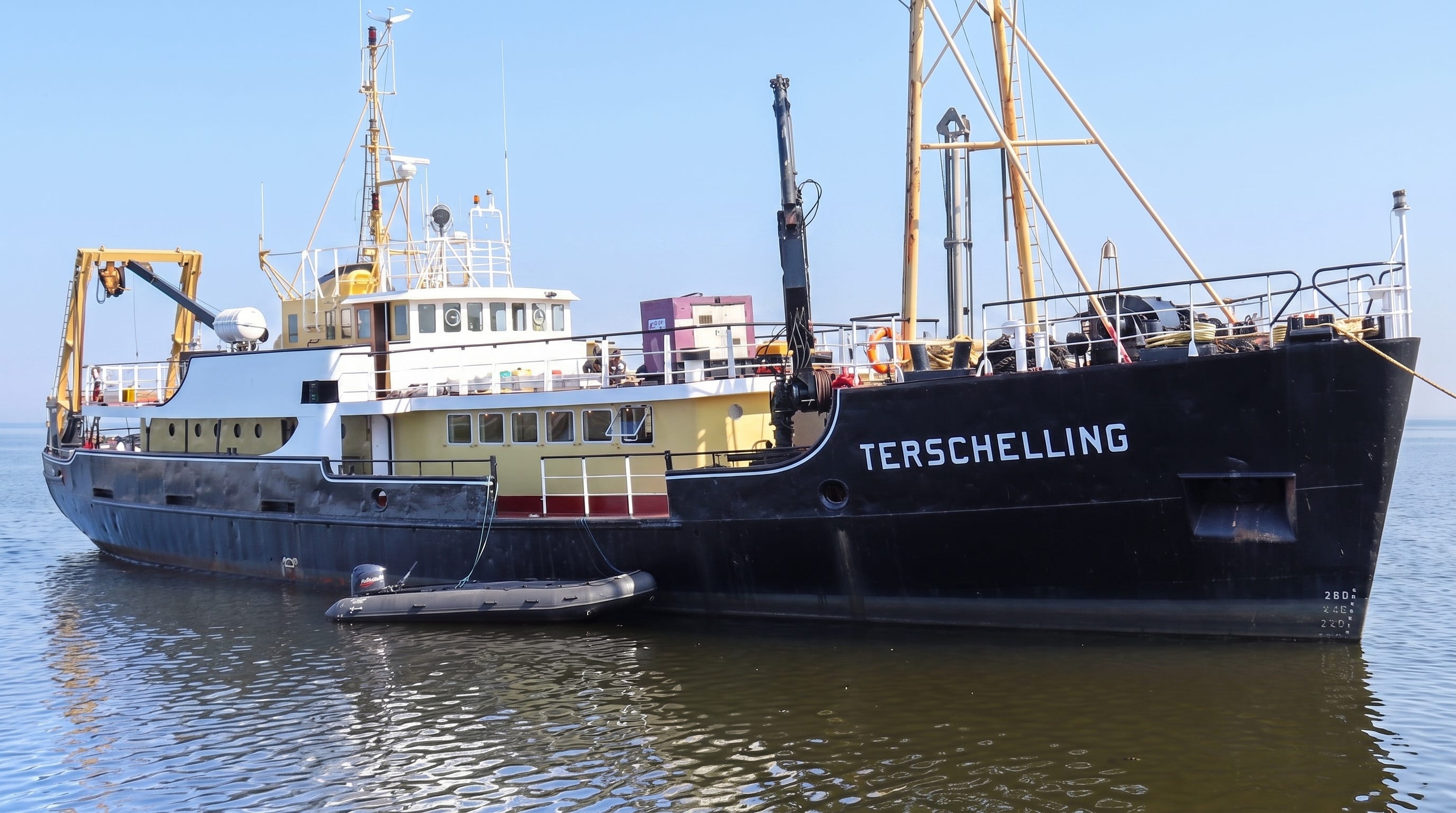
I always think that there is a special kind of boat worth writing about just because she was never built to be marvelled by the explorer yacht community. No yacht designer sketched her lines with an owner’s tastes in mind. There was no exclusive naming ceremony with a bottle of bubbly and a crowd. She was built to work, and she worked for a government agency most of her guests probably never heard of, for 25 years.
Her name is Terschelling, and if you have never heard of her before, then that is rather the point.
Launched on 23 September 1963 from the yard of the Zaanlandse Scheepsbouw Maatschappij in Zaandam, this vessel was built for the Royal Netherlands Navy and given the pennant number ‘A948’. However, she did not stay in that role for long.
Within the same year, she was transferred to Rijkswaterstaat, the Dutch government department responsible for the country’s vast network of intricate waterways, coasts and public works, and put to work as a buoy-laying and supply vessel in the Wadden Sea and along the Dutch coastline. For the next 25 years, that was her mission. Placing and upkeep of the vital navigation buoys that keep merchant ships off the sandbanks of one of the busiest and shallowest coastal regions in Europe.
She was decommissioned on 10th January 1989, after roughly 25 years in Rijkswaterstaat service.
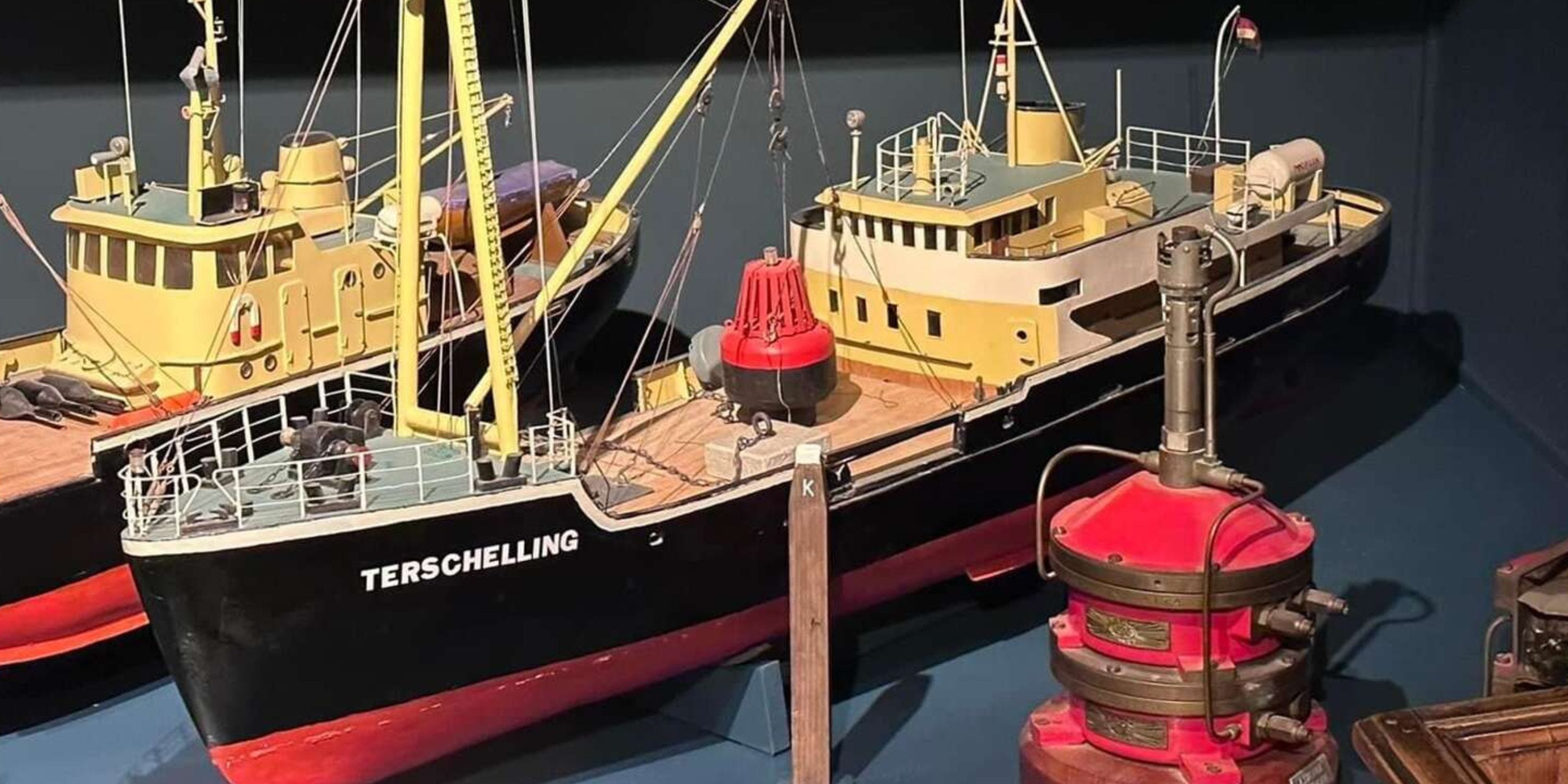
What happened next tells you why boats like this are worth writing about. She did not go to a yacht refit yard. She went to Plymouth here in the UK. She became a dive and salvage tender, working first under Boston Marine and later GEOSA Ltd. Over the ensuing 10 years, she was quietly present at some genuinely momentous moments in British maritime history. She was involved in operations at the Plymouth Breakwater Fort in the mid-1990s. She also served as a base ship for the Resurgam and SubMap projects.
In 2001 and 2002, she supported trials of the Autosub autonomous underwater vehicle for what was then the Southampton Oceanography Centre. This was vital work that was quietly building the foundations of modern underwater robotics. In 2003, she was part of the support fleet for the Mary Rose project, which was one of the most significant maritime archaeology efforts the UK has undertaken.
I only found this out after a detailed dig through Dutch and British maritime records, which turned up a career including a Dutch government pennant number, a British dive charter business, and survey work over the wreck of Henry VIII’s flagship, two decades after the Mary Rose herself was raised from the Solent. That is not a résumé you see often in the explorer yacht space. This is a boat that has earned her keep, twice over, in two different countries, doing two completely different jobs.
Which brings us to job number three…
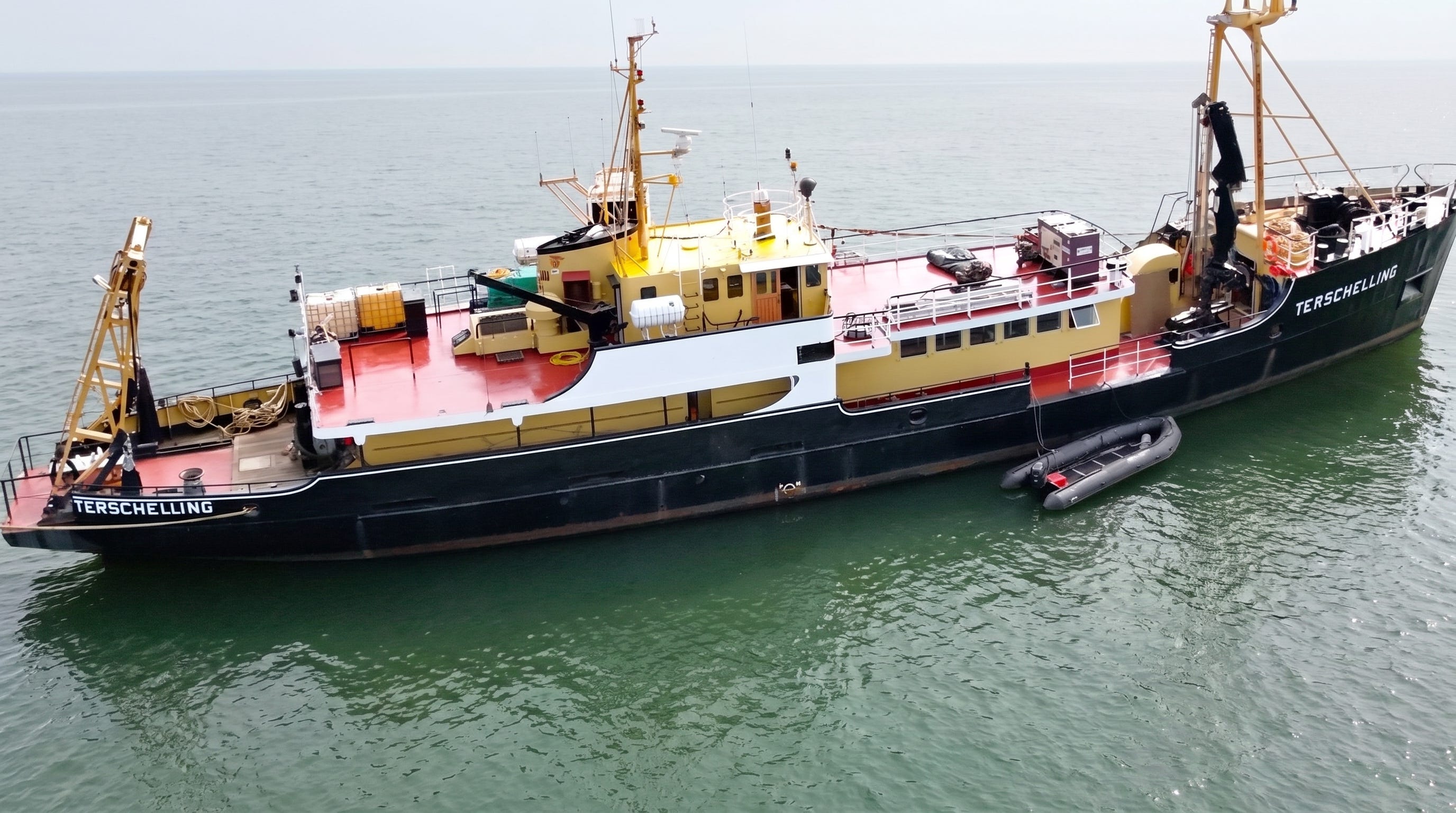
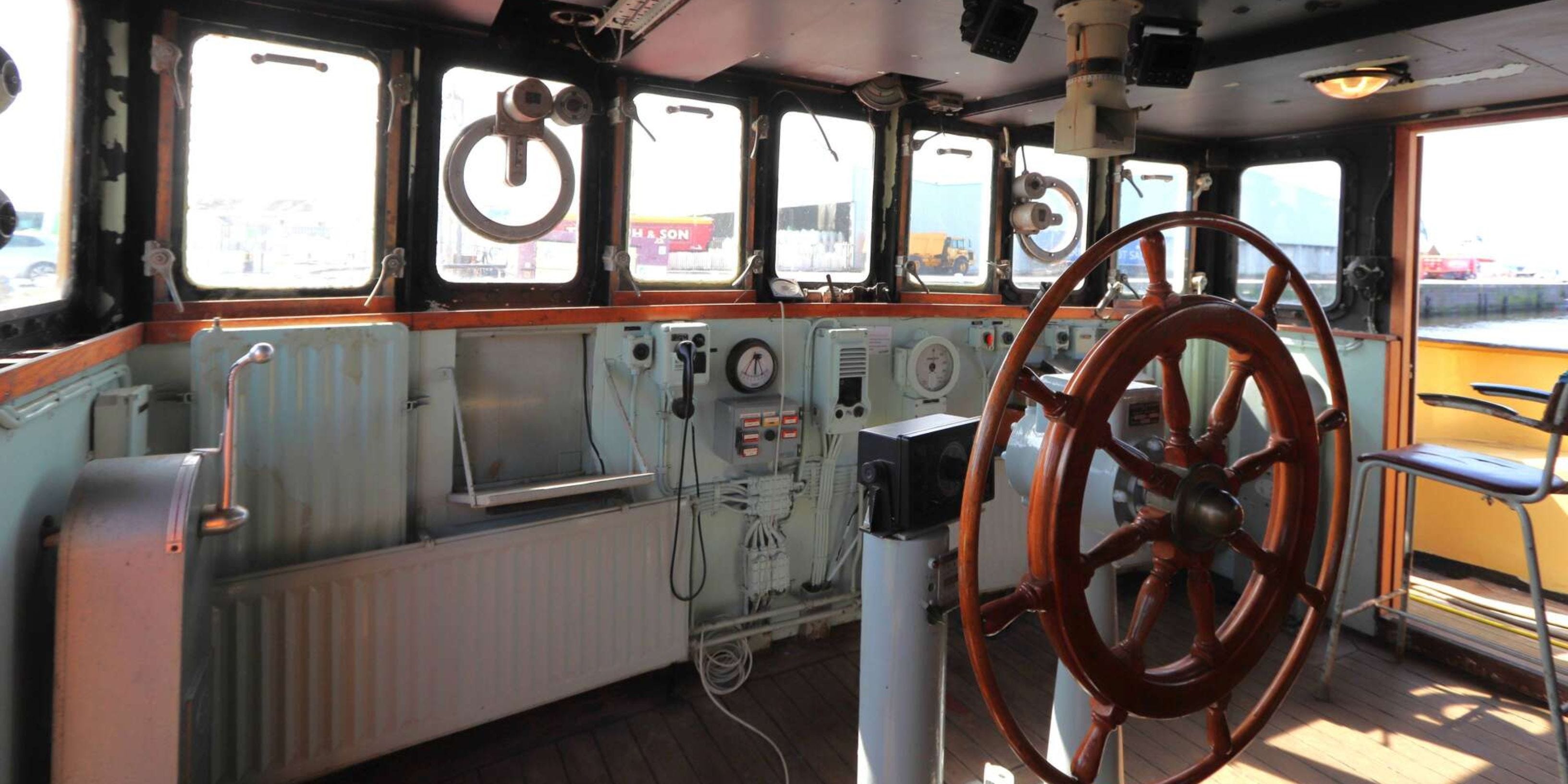
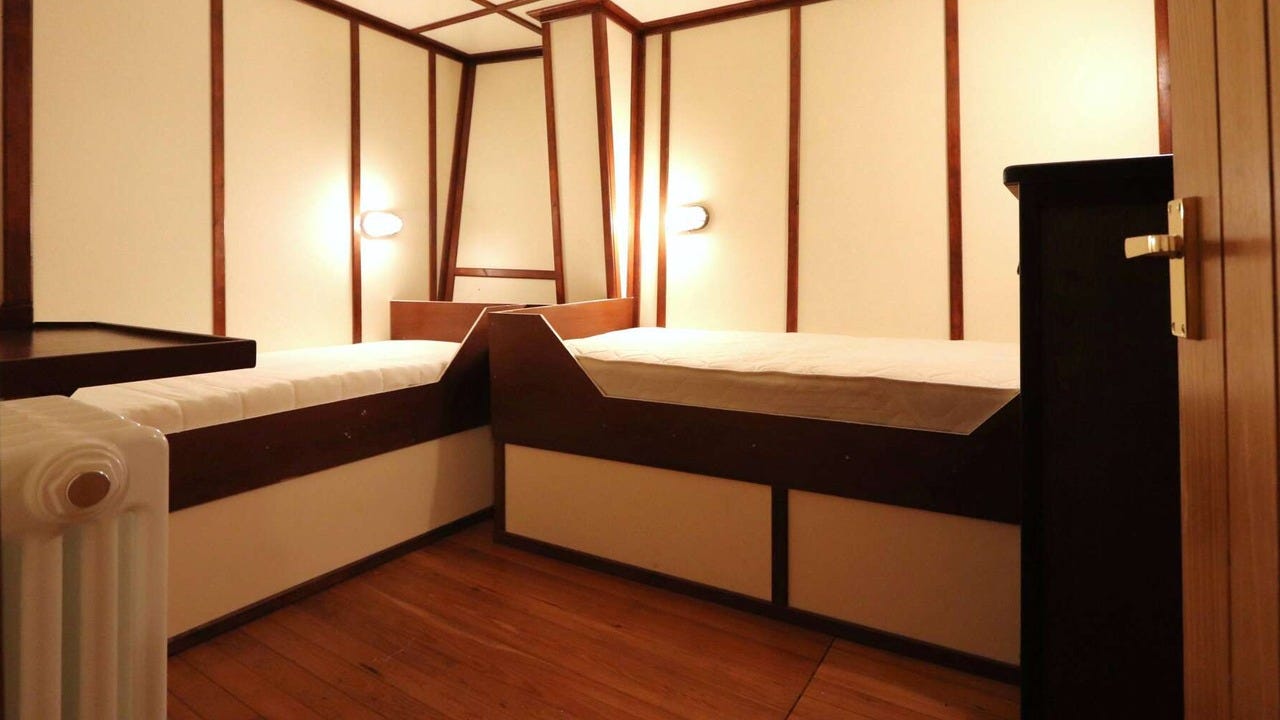
In 2023, The Polarship GmbH of Hamburg took ownership and set about a conversion, completed under class, to turn her into an Arctic expedition yacht. As you can imagine, the work was significant. The old buoy deck has given way to a 70 square metre panorama saloon. Crew quarters once intended for Rijkswaterstaat deckhands have been substituted by six en suite cabins, accommodating up to twelve guests.
The previous operator’s marketing refers to two 5.3 metre Zodiac tenders with 60hp outboards for shore excursions and wildlife watching. However, the current spec sheet lists a more modest Inmar dinghy with a 60hp Parsun outboard. She retains her impressive Ice Class 1 rating, which is the credential operators look for when planning itineraries to Svalbard, Greenland, and the Arctic coast of Norway.
Ice Class 1 is worth lingering on. It is a classification society rating (the Dutch and German societies use slightly different ladders, but the principle holds across them) that certifies a hull’s steel thickness, framing and propeller protection for operating in first year sea ice of a given thickness, so largely the kind of ice you meet at the edges of the Arctic shipping season rather than a vessel built to force her way through multi year pack ice like a true icebreaker.
It sits below the heavier Polar Class and Finnish Swedish 1A Super ratings used by dedicated icebreakers, but it is considerably more than a classic steel hull holds. In practice, it means Terschelling can push into brash ice and loose first year ice at the fringes of Svalbard and the Arctic Norwegian coast with a real margin of safety that a non ice classed explorer yacht won’t have, which is precisely why operators pursuing that itinerary look for the rating specifically rather than treating it as a ‘nice to have’ addition.
The Polarship’s marketing invoked images of polar bear watching in Svalbard, orca snorkelling off Arctic Norway, and Christmas voyages to high latitudes. It is a vision that clearly appeals to those searching for the last fragments of untouched nature. The vessel itself is more than capable of supporting such ambitions regardless of what Mother Nature throws at her (and her guests)
On 14th July 2026, insolvency proceedings were opened against The Polarship GmbH. The company’s website is still live and, at the time of publishing this article, still describes a season of epic expeditions that, as things stand, nobody is booking.
That is why Terschelling is currently listed with De Valk Hindeloopen at €1,200,000, VAT exempt, with broker Hans Visser noting that “the existing business, including its operational activities and commercial opportunities, may also be acquired, granting a unique turnkey expedition enterprise with immediate earning potential ” (link to listing below). Read frankly, that means the boat and the business plan are both on the table.
For me, this proposition changes the question a potential buyer ought to ask from “is this a good boat” to something rather more useful…
This article continues below, in “The Wardroom”
In the premium section below, I cover:
The Bolnes engine reality: what it actually costs to keep a single 1963 Bolnes eight-cylinder diesel running today, who still services them, and what a rebuild looks like when the first manufacturer stopped making parts in 1989
Reading an insolvency correctly: what actually happens to a vessel and her operating business when the company behind her collapses, and the specific questions a buyer needs answered before touching the “turnkey enterprise” claim
The market comparison: how Terschelling’s €1,200,000 stacks up against Beauport, Sherakhan, and other government-hull-to-explorer conversions I have covered, and whether this price reflects the work already done or the seller’s urgency
My honest take on what this conversion is actually worth: a line-by-line look at what twelve guests, six cabins and Ice Class 1 genuinely justify, and where the number stops making sense
