

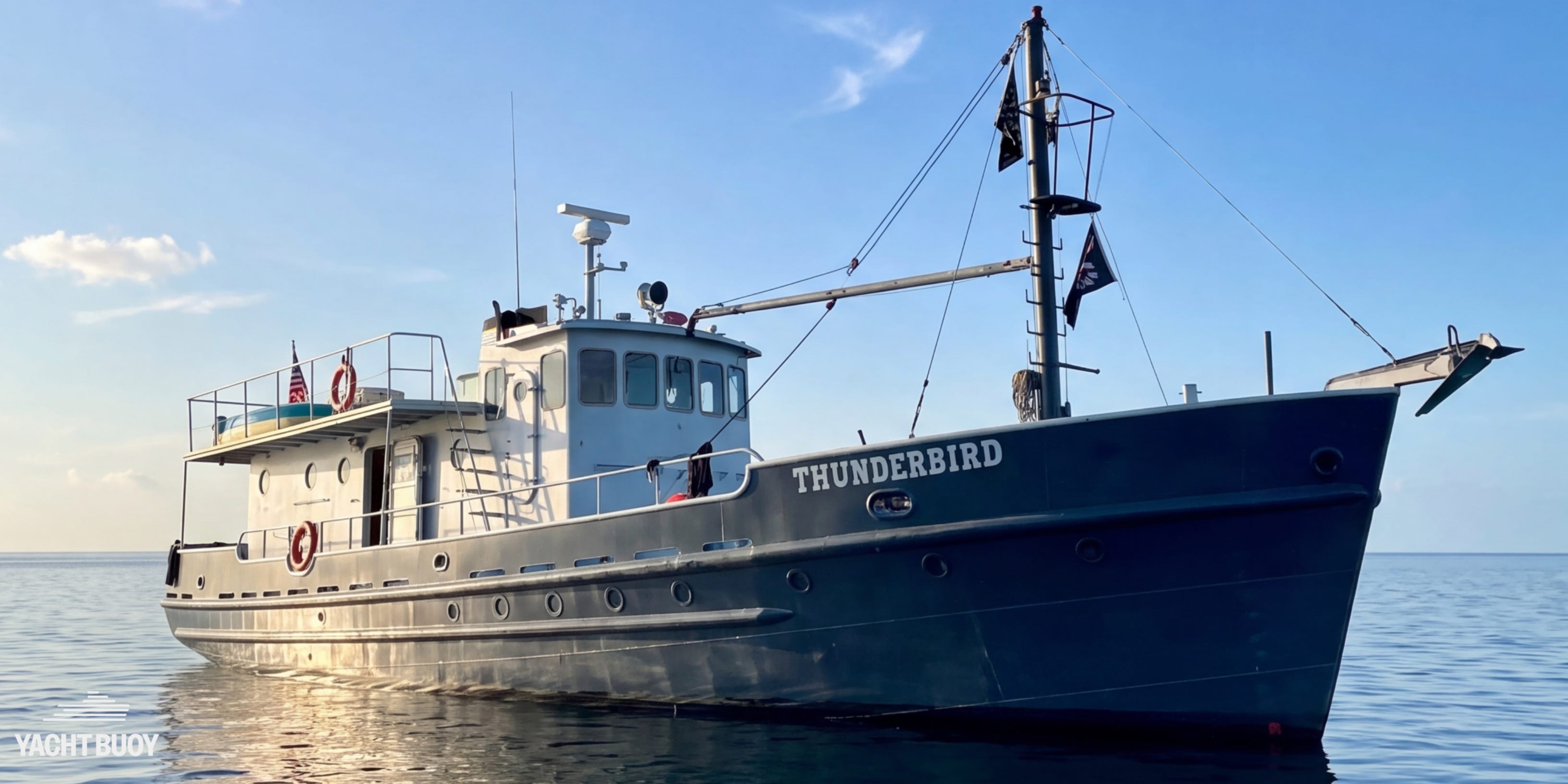
I was scrolling Instagram on a quiet evening, as you do, when she stopped me cold.
Just a photograph. But there was something about those lines, that silhouette, the no-nonsense steel geometry of a former working military vessel, that cut straight through everything else in my feed. I am ex-Royal Navy. Anything that carries military heritage in its bones tends to do that to my fellow veterans and me… So I read the caption….
And I found a story I felt deserved to be told.
Editor’s note: Since this piece was originally written, Thunderbird has sold (purchased by a reader). The story and figures below are preserved as originally reported at the time of the sale.
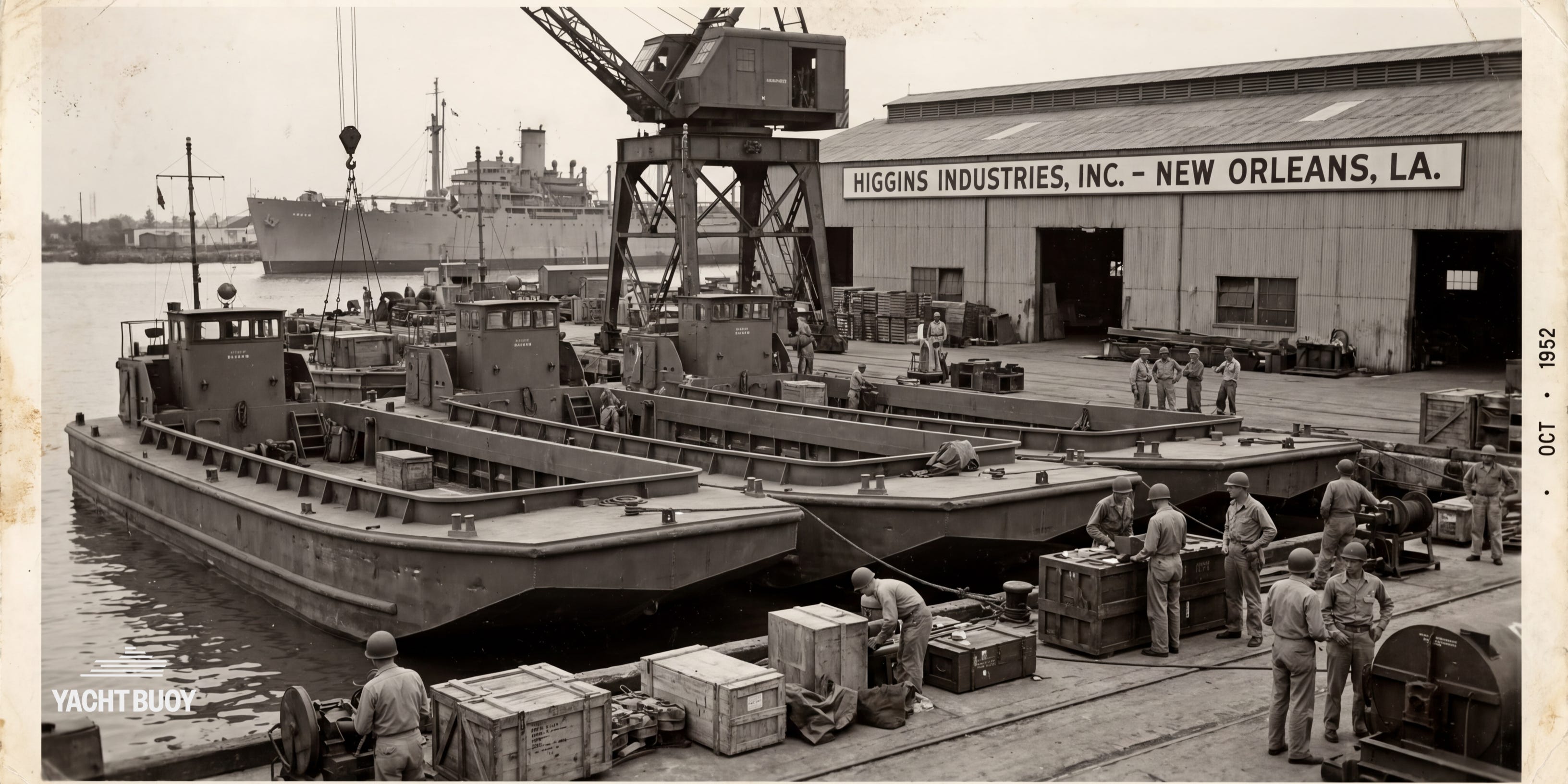
Her name is Thunderbird. She is 65 feet of welded mild steel, built in 1953 by Higgins Industries in New Orleans, designed by the naval architects Eldridge and McInnes for the US Army Corps of Engineers. She was intended to run inner-island freight for the Army Transportation Service during the Korean War. She never made it there.
Instead, she sat in a military depot in Charleston for the better part of 20 years, waiting. That turns out to be the beginning of a story that gets considerably more interesting…..
The Class She Belongs To
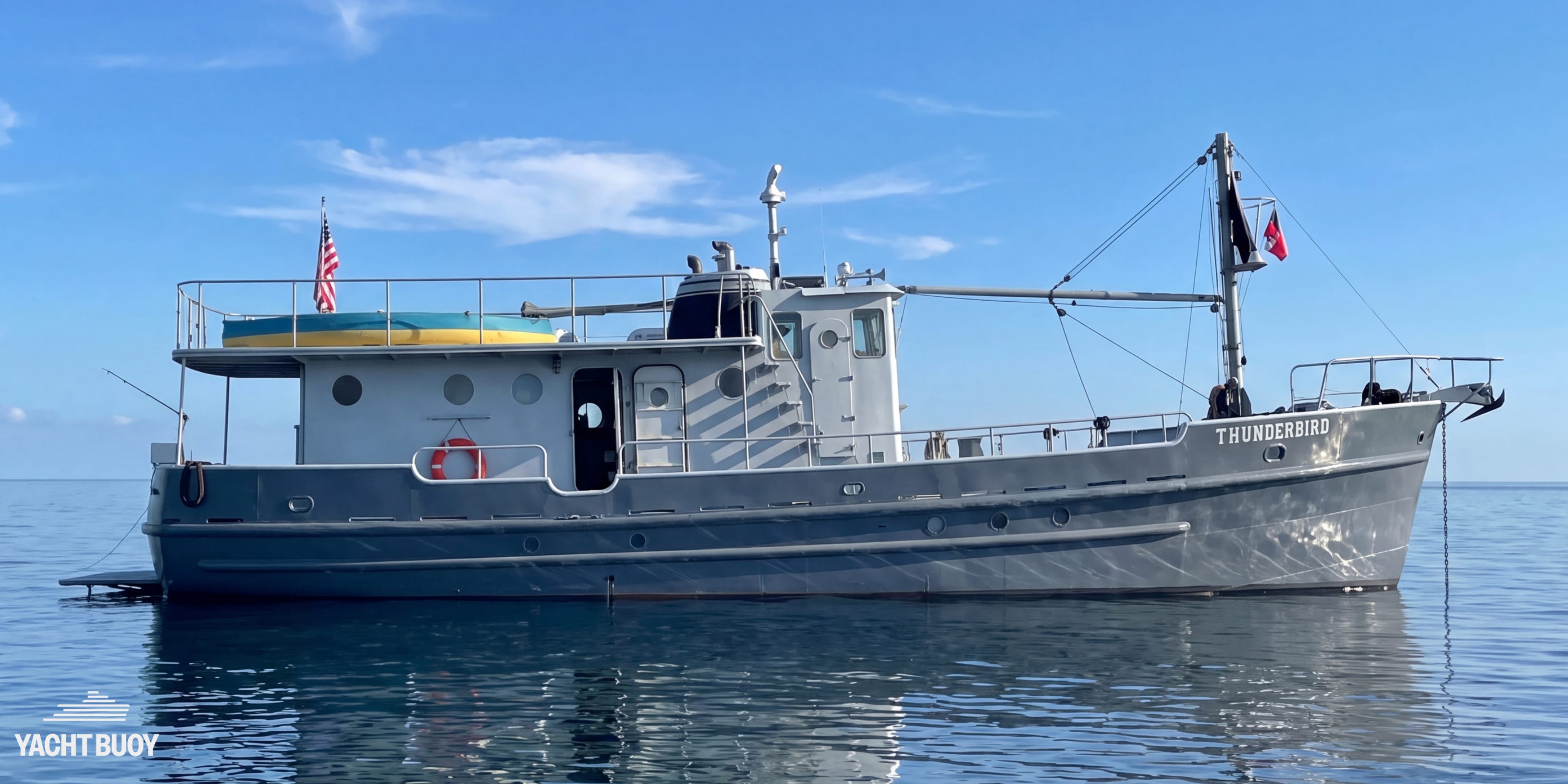
To understand Thunderbird, you need to understand the T-boat programme.
In the early 1950s, with the Korean War demanding military logistics capability, the US Army ordered and built 84 new T-class vessels. They were workboats in the truest sense: shallow-drafted, wide-beamed, built from quarter-inch mild steel, and designed to keep running regardless of conditions. The Higgins 65-footer was a proven design. Higgins Industries had built landing craft and assault vessels throughout the Second World War. They knew how to build steel that lasted.
What happened next was almost comic in a military logistics sense. The 84 boats were built, most of the war’s need evaporated, and a significant number were declared surplus before ever seeing active service. A handful did serve. Thunderbird’s sister ship, T-494, was one of them. She saw military service and today operates as the research vessel Neeskay for UW-Milwaukee in Wisconsin.
Thunderbird, hull number T-493, went a different way entirely.
She sat. She waited. And eventually, in the early 1970s, the Sea Scouts found her.
The Sea Scouts
This is the chapter that gives the boat her name.
Around 1972/73, Sea Explorership Thunderbird, a Sea Scouts programme, was given the old Army tug. On July 14th ‘74, she was formally christened Thunderbird. She became vessel number 44 in the national Sea Scout fleet. Budding sailors learned seamanship on her decks. The cargo hold, once intended for military freight, was fitted with 17 bunks. A forward section housed 6 more berths. She became a youth training ship, sailing out of the American east coast, doing what working boats do best: teaching people things they cannot learn anywhere else.
The Sea Scouts eventually couldn’t sustain two vessels. They had another boat, the Sea Dart II, which still operates today. Thunderbird was sold.
She passed through several private owners through the 1980s and 1990s, eventually ending up with a man in Bradenton, Florida, whose plans to take her to South America for cargo work never materialised. His children inherited the situation and, needing to move on, put her online.
That is where Joel, her current owner, found her in 2017.
The Man Who Saw Her Potential
Joel is a licensed captain and engineer. He has worked on yachts across the world, which means he has seen what good engineering looks like and what neglect looks like, and he can read a vessel’s bones without needing a surveyor to spell it out for him.
He found Thunderbird for $65,000. The asking price was right. The condition was not.
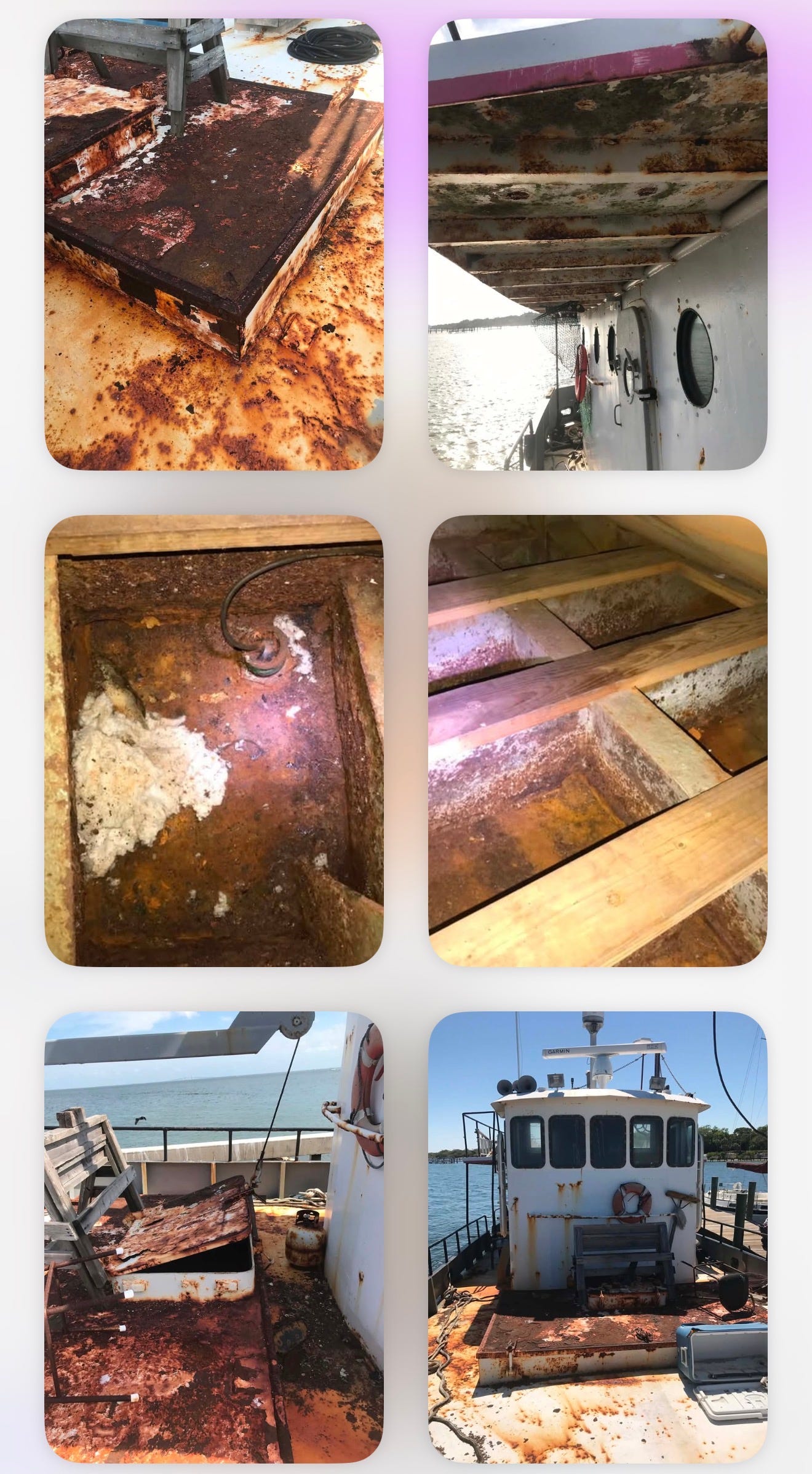
Rats. Rust in the bilges. Rust in the framing. Plate work that had been sitting without attention for long enough that you could see the steel letting go in places. No power. Interior in a state that Joel describes, charitably, as rough. He made an offer of $48,000. The broker pushed back. He paid more.
He saw something worth seeing. He bought her anyway.
What followed was a five-year haul-out at Apex Marine in Pompano Beach, beginning in the summer of 2018 and running through to 2023. Joel was working captain contracts abroad during much of this period, which gave him the time and the relationship with the yard to do the work properly, without rushing.
His investment in materials alone for the initial haul-out was around $85,000. His total investment in the vessel since 2017 he puts at approximately $350,000.
The result is a boat that is fundamentally sound in ways that matter, with significant cosmetic and interior work still remaining. He is not pretending otherwise. But the bones are right.
What Was Done?
When Joel hauled her out, he commissioned an audio gauge, an ultrasonic hull thickness test, on the entire hull. The results drove everything that followed. Pitting in some areas ran to 10 to 15% of original plate thickness. Not catastrophic, but requiring action.
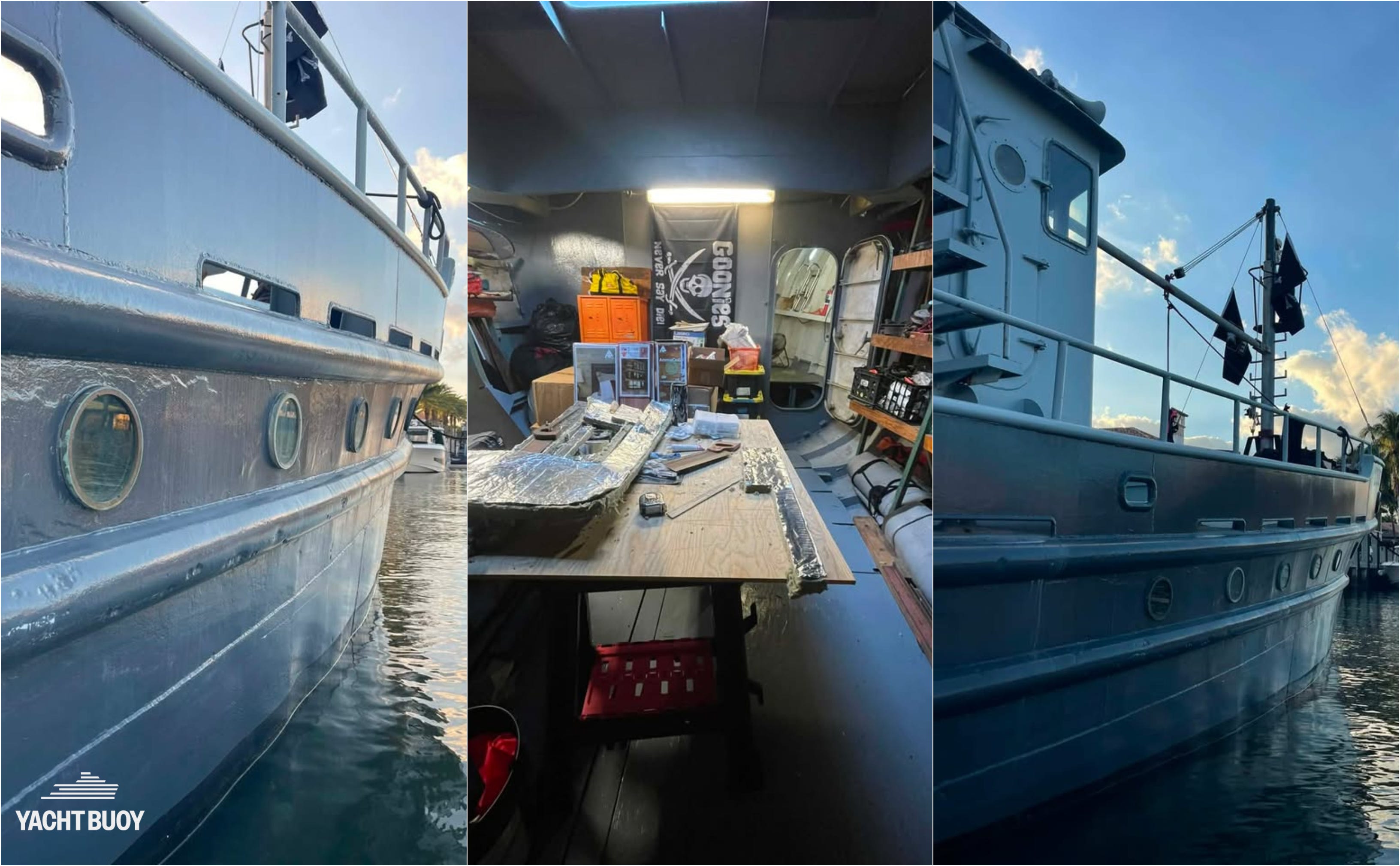
He actioned it. Around 80% of the hull has been replated since he took ownership. Clean steel, no doublers, no patch-over-patch repairs. The bulkhead between the engine room and the cargo hold was replaced. The bulkhead between the engine room and the lazarette was replaced. The plate sections port and starboard of the main propeller shaft, which typically see accelerated wear, were replaced entirely.
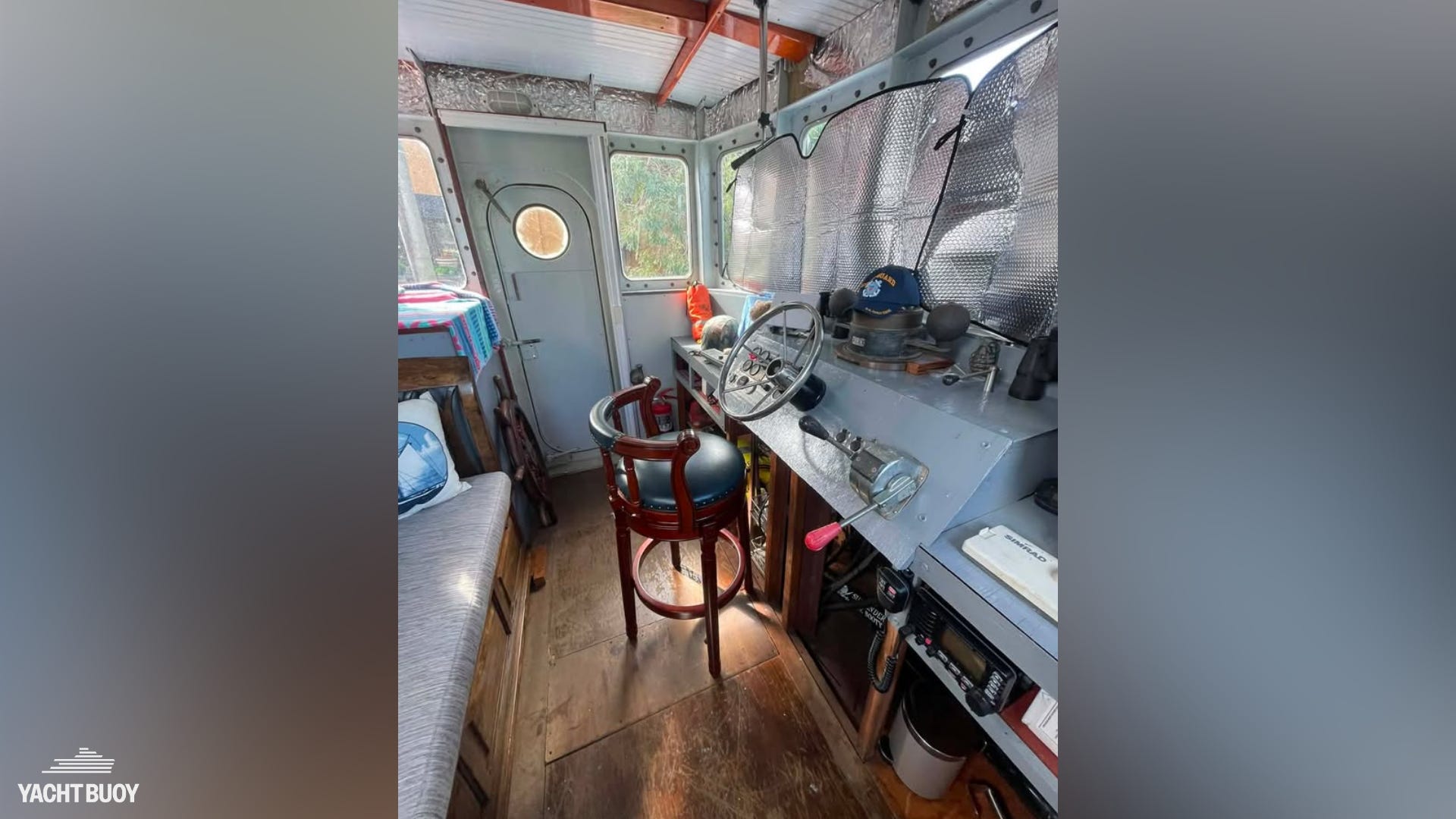
The original hydraulic deck crane was removed. In its place, Joel fitted a crow’s nest and observation platform, which suits the vessel’s emerging character as an expedition platform rather than a working tug. A swim platform was added at the stern, which brings her overall length to 70 feet.
The hydraulic Westmart bow thruster was completely stripped and rebuilt: new seals, new fittings, new oil. The electrical system was overhauled. A hydraulic steering system and autopilot were fitted. Navigation electronics include Furuno radar, Simrad plotter, Garmin plotters, and VHF radios.
She carries 1,000 gallons of fuel in her main tanks. There is an additional 400-gallon tank in the lazarette, a former water tank, that could be pressed into fuel service to extend range. Joel puts range at approximately 1,700 NM on the main tanks at cruise, which at 7 to 8 knots gives her useful coastal and island-hopping capability.
The Northern Lights generator, rated at approximately 15kW, is operational. Hour metre suggests around 3,000 hours, which Joel considers broadly accurate.
The Engine
The Caterpillar D342 sitting in Thunderbird’s engine room is not the engine she was born with.
The original Budd 8-cylinder turbo engine became a parts problem over time. By 2008, when the vessel was undergoing a significant refit in Oyster Bay, New York, the decision was made to replace it. The yard sourced a D342 from a retired ferry. It was a deliberate choice and a sensible one.
The D342 is a naturally aspirated, six-cylinder, mechanical fuel injection diesel. No electronics, no turbocharger, no proprietary computer systems. It was built for heavy commercial service, and it has been running in those environments since the 1950s. The parts ecosystem is global and robust. Any competent diesel mechanic can work on one. Joel, as a captain-engineer, maintains it himself.
When he bought the boat in 2017, he was told the engine had been rebuilt approximately 250 hours prior, with the cylinder liners replaced. He has done major service work during his ownership: head removed, valve covers off, gaskets replaced, regular oil and fuel services. The engine does not smoke. It does not burn oil. It runs cleanly at 1,300 RPM wide open, which gives a top speed of around 9.3 knots. For an expedition or coastal cruising vessel being driven at 1,000 to 1,200 RPM, it is substantially underloaded relative to its design duty. That is very good news for longevity.
There is no hour meter. Joel estimates conservatively; he cannot give with 100% certainty a verified number. That is honest, and it is the kind of honesty that matters more than a precise figure. A compression test and borescope inspection would give any serious buyer confidence in the current state.
Got a boat?
Know of a vessel, for sale, charter, or otherwise, that you would like me to feature in a future dispatch? You can send me a direct message or email me via john@yacht-buoy.com
The 44-Year Coincidence
I mentioned that this story gets more interesting.
When Joel decided to restore the boat’s original identity, he renamed her Thunderbird on July 14th, 2018. He chose that date because he had found documentation showing the Sea Scouts had christened her Thunderbird on July 14th, 1974. 44 years to the day.
He did not know, when he chose that date, that Thunderbird had been Sea Scout vessel number 44.
These things happen on boats sometimes. Sailors have a word for it….
The reunion that followed made the coincidence feel even more fitting. Four of the original Sea Scouts from the 1970s, now in their 50s and 60s, found out Joel had bought the boat through a Facebook alumni group. They came to see her. They stepped back aboard a vessel they had not been on since they were teenagers. Joel gave them the ship back, even if only for an afternoon.
“It was very emotional,” he said. “The old bones were there.”
What She Needs
Joel sold a project, not a finished boat, and was clear about that at the time.
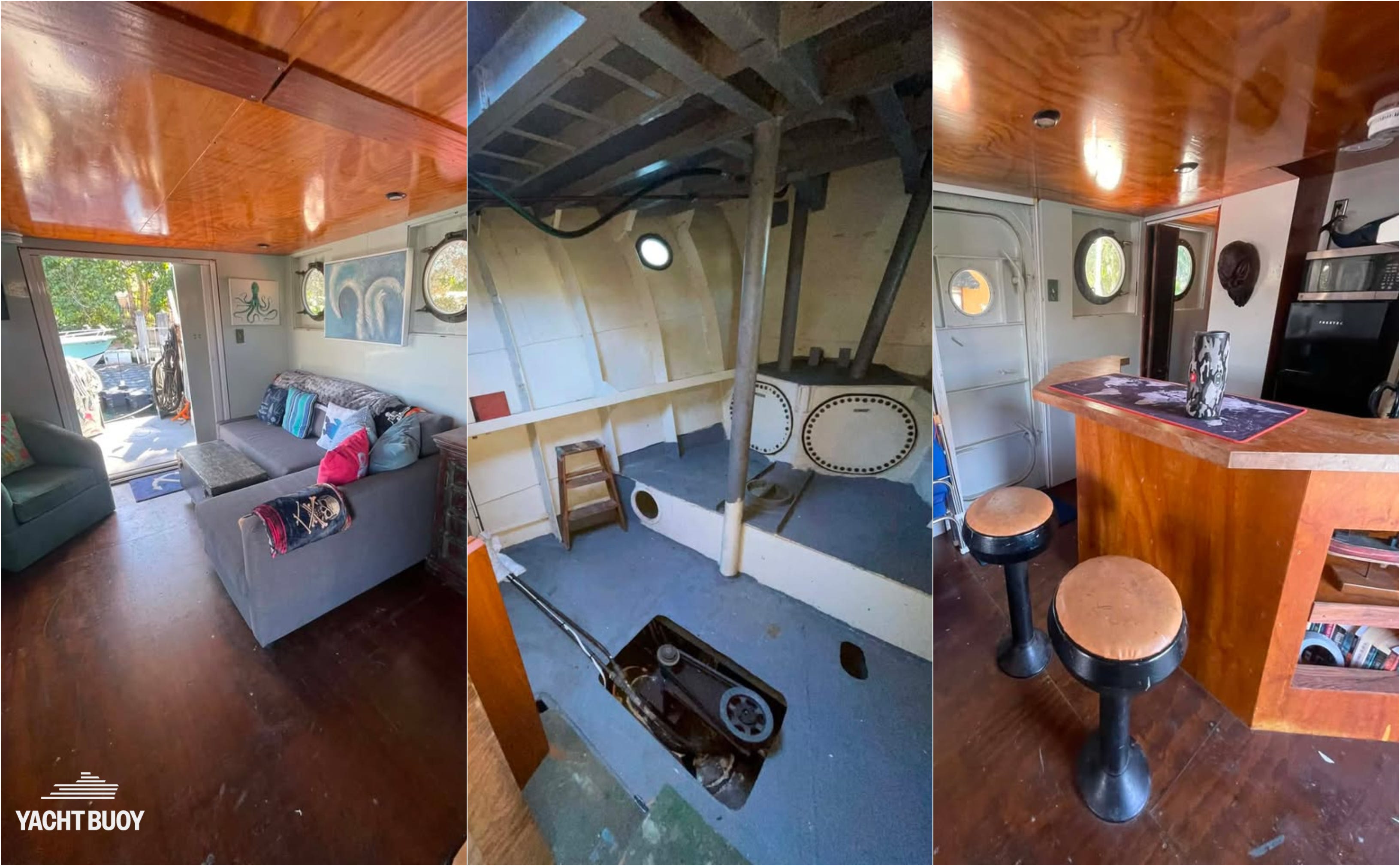
The cargo hold interior has not been completed. Joel stripped out the Sea Scout bunks when he bought her, which were in poor condition. The space is currently being insulated and reworked, but the interior fit-out is not done. There is framing in place for a head, a dry-flush toilet planned to avoid blackwater tankage complexity, but there is no fresh water or grey water tankage currently fitted.
There is no fire suppression system in the engine room. Fire extinguishers are aboard, but a proper fixed suppression system would be an early job for any buyer planning extended offshore passages.
She is not USCG Coast Guard certified for commercial use. Obtaining a Certificate of Inspection would be a significant project. For private use, this is not an issue. For charter or commercial operation, it is a material consideration.
She was probably due for a haul-out within a year or two of the sale. At the time, Joel had not ruled out doing it before selling her, but had not committed to it either.
What She Comes With
When Joel says she comes with a “shit ton of spares,” he means it in a literal rather than figurative sense.
Tools. Bench grinders. Oils. Lubricants. Hardware. Building materials. Bolts. Joel took some of this with him. He left most of it behind. Whoever bought Thunderbird in her sold state inherited a working ecosystem, not just a hull.
At the time of sale, she was berthed behind a friend’s property in Fort Lauderdale. Joel was paying somewhere between $1,500 and $2,000 a month for that arrangement, which was considerably below the $3,000-plus a Fort Lauderdale marina would charge for a vessel of this size. Any new owner would need to factor realistic berthing costs into their operational budget early.
The Number on the Tin
Joel found his buyer, and Thunderbird sold for $195,000.
For a 65-foot steel vessel with a documented hull replating programme, a rebuilt bow thruster, a known-good mechanical engine, and 70 years of history that you could not invent, that is a number that rewards serious investigation.
My research found comparable T-boats recently listed in the $135,000 to $195,000 range. Thunderbird sat at the top of that bracket, and Joel was open about that. He wanted her to go to the right owner.
She is a blank canvas with excellent bones and a story that no new build will ever replicate.
Running Costs
The asking price is the “easy” number. The harder question is what she could cost to own, and that is what we will work through here, based on my own estimations and research for someone like me, who has no deep understanding of marine engineering.
Berthing (article continues below)
