

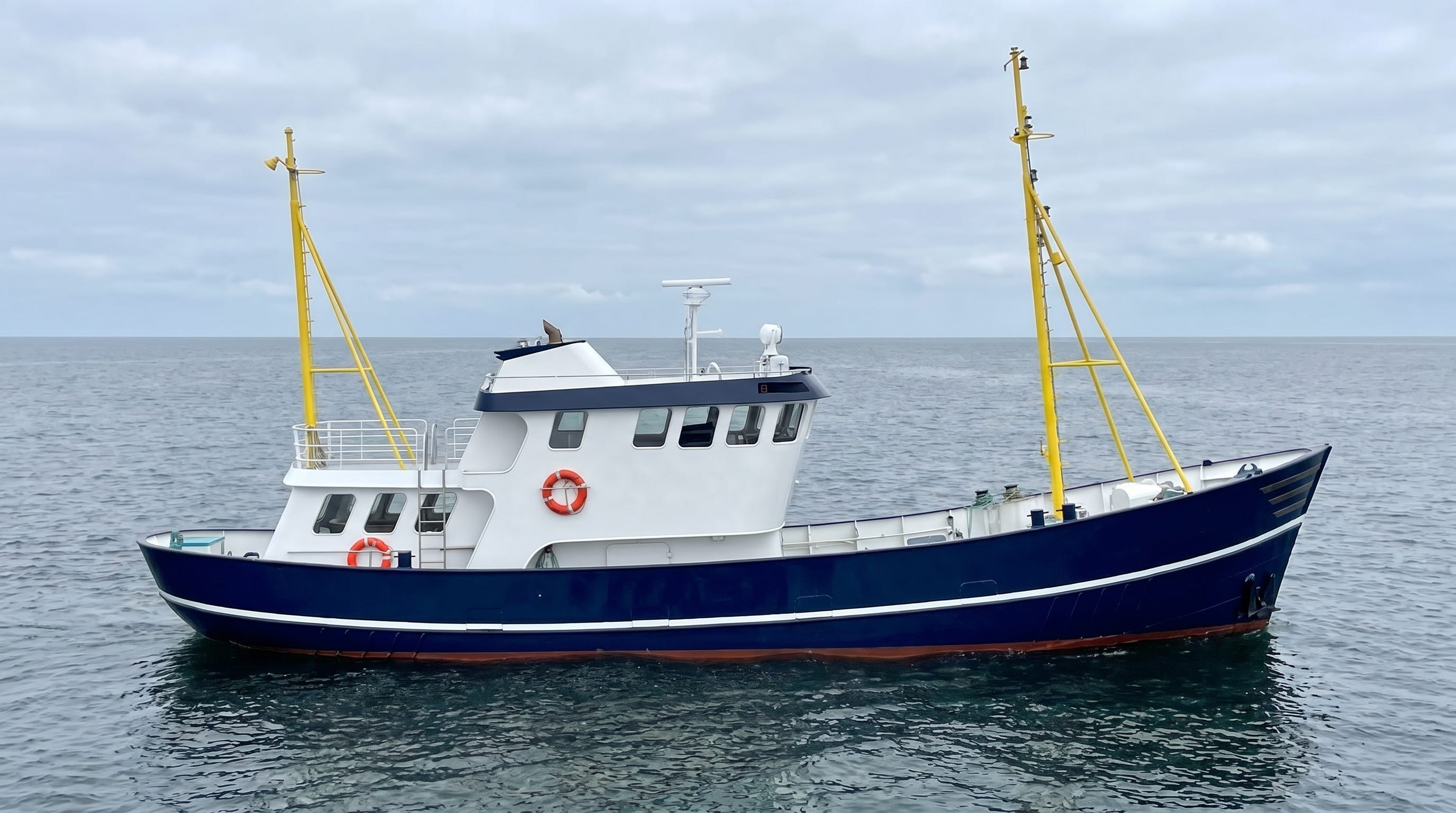
Most boats on the brokerage market have a story. But few have a rich commercial history.
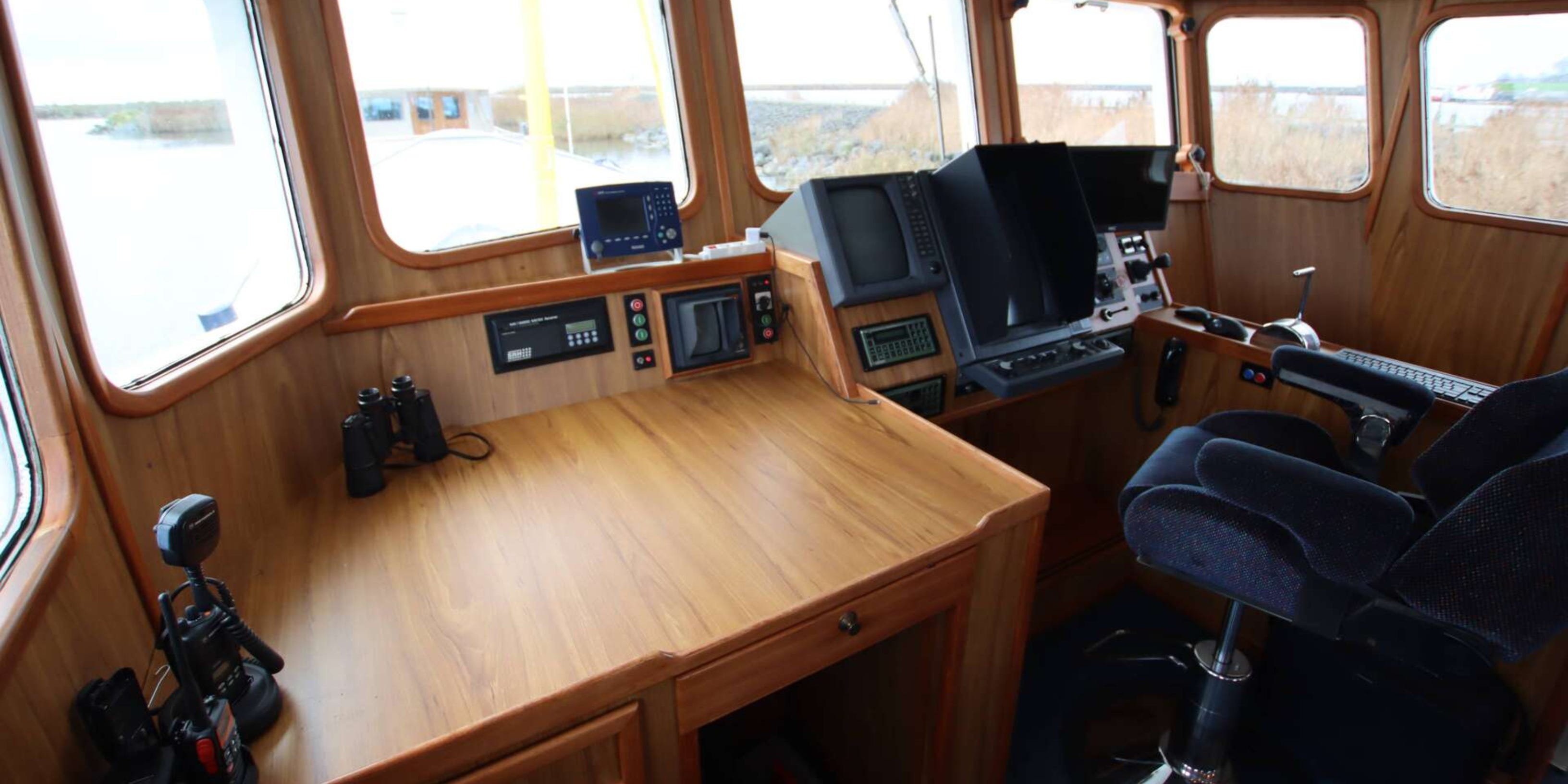
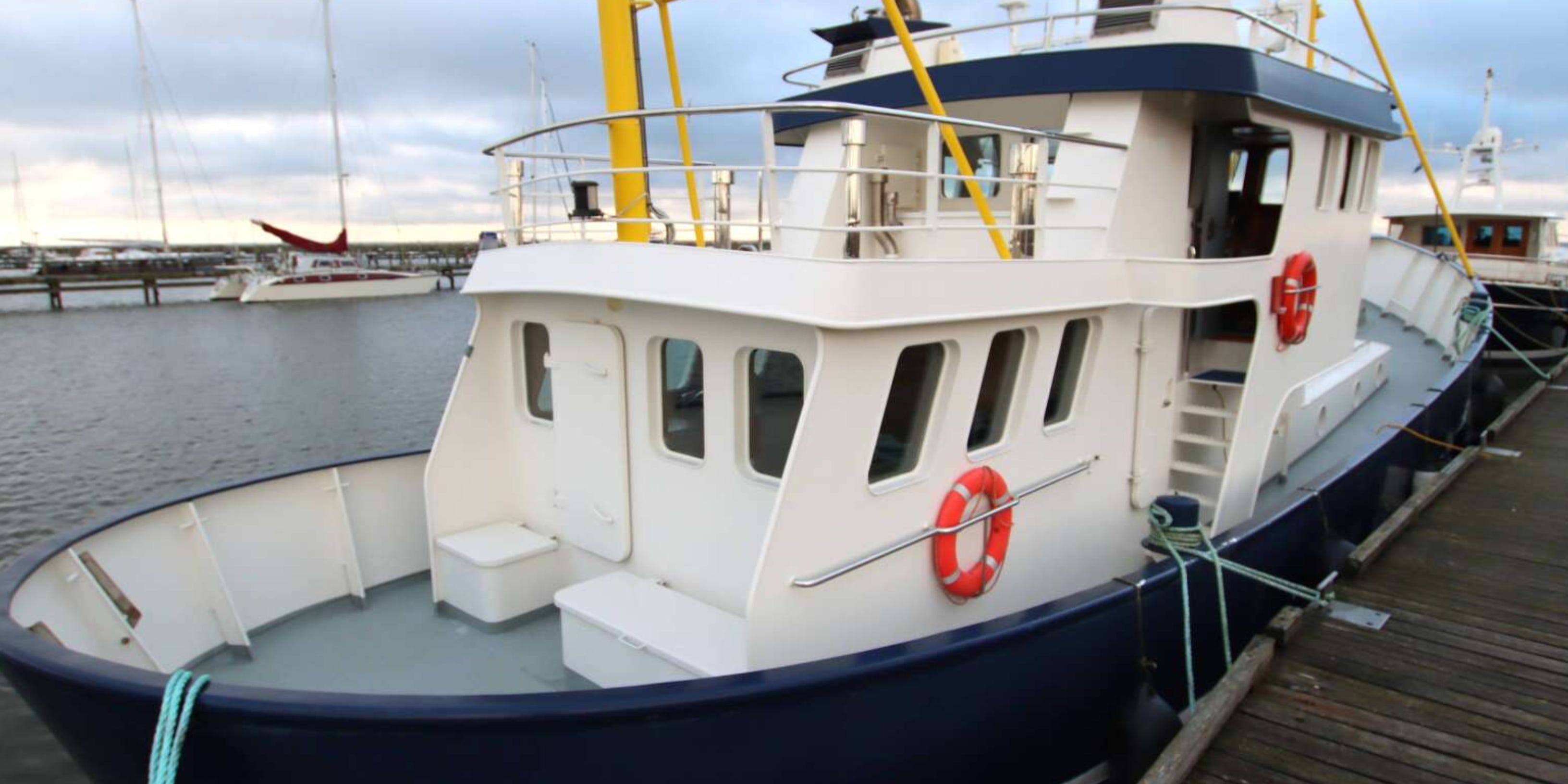
You have already watched the walkthrough video. You have seen the blue hull riding low and purposeful at the dock, the wheelhouse with its practical windows looking forward across a long foredeck, the engine room that would not embarrass a commercial yard. You will have noticed that she does not look like a yacht. She does not try to. She looks like what she is: a working vessel that has earned every weld and every coat of paint over 67 years of hard service.
What the camera did not show you is where she came from, what she was built for, and what the 2003 rebuild actually means for the person thinking about writing a €675,000 cheque today.
That is what we are going to cover here.
From the Zuiderzee to the North Sea…
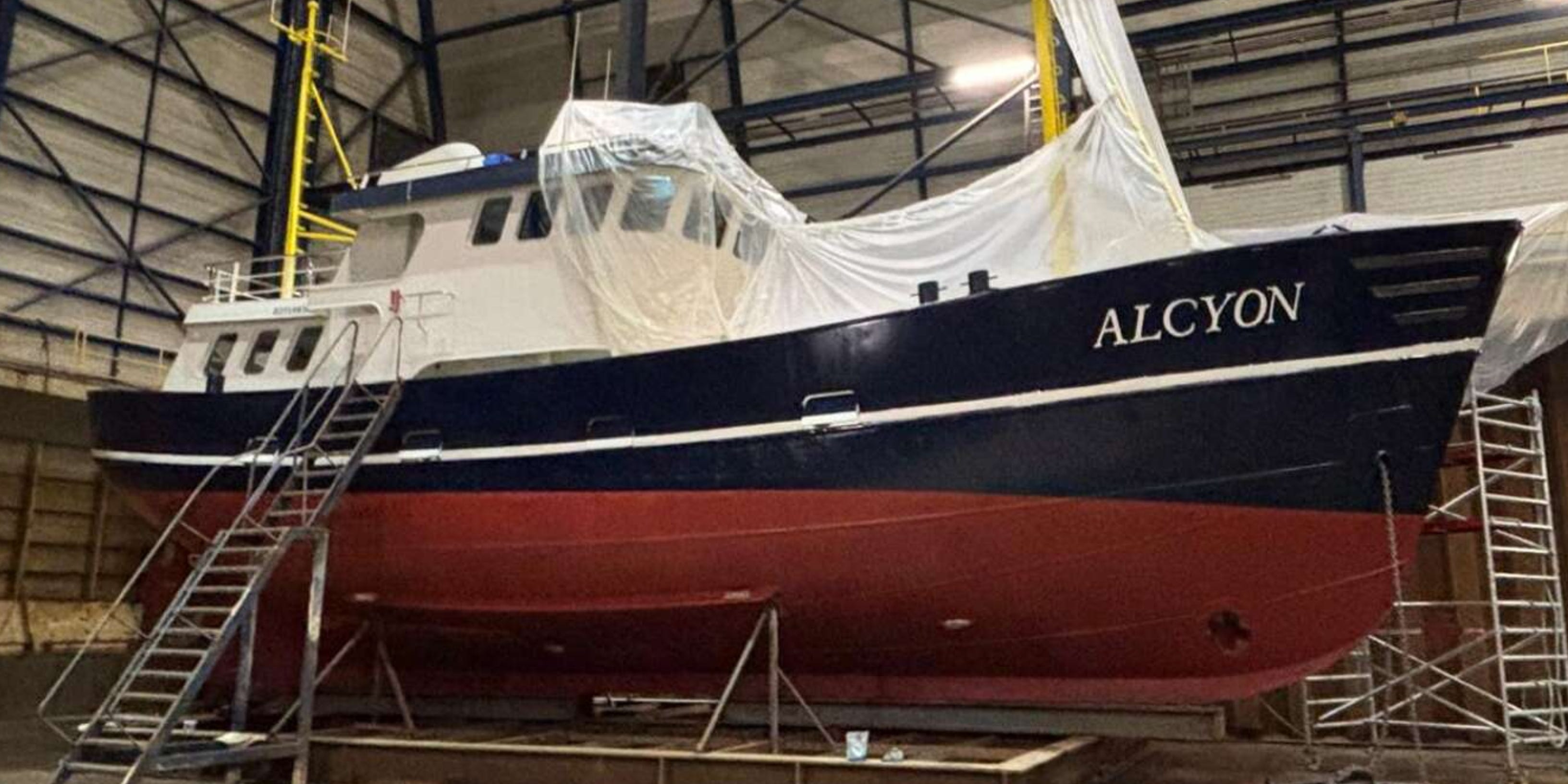
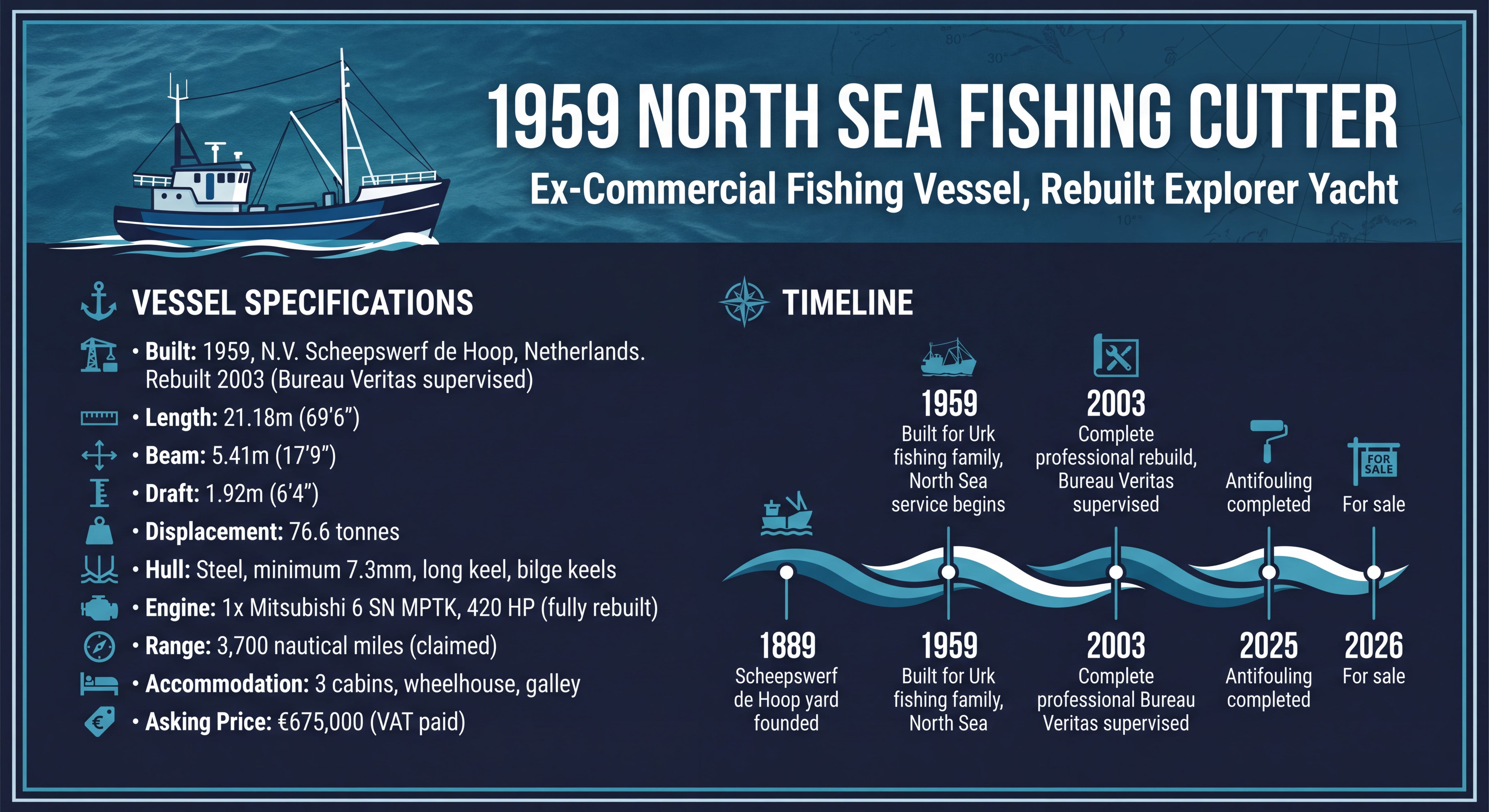
The vessel was built in 1959 by N.V. Scheepswerf de Hoop; a yard with roots going back to 1889 and a reputation built on commercial fishing vessels and work boats for the Dutch professional fleet. De Hoop did not build yachts. They built tough working boats that had to survive, regardless of what mother nature threw at their crews. Their clients were fishermen, not leisure explorers, and the construction standards reflected that entirely. A vessel leaving the De Hoop yard in 1959 was overbuilt by leisure yacht standards, because it had to be. The North Sea has a way of identifying anything less.
The original owner was what the De Valk listing describes as “a well-known Urk fishing family.” That is not incidental detail. Urk matters.
Until 1939, Urk was an island, completely isolated in the Zuiderzee, cut off from the Dutch mainland, its community shaped entirely by the sea. When land reclamation connected it to the modern Netherlands, the fishing culture remained intact. Urk grew to host the largest fishing fleet in the Netherlands, with a fish auction that dominated the market and families who had worked the same waters for generations. Vessels built for prominent Urk families were not built to a budget. They were built to last, because the family’s livelihood, and the lives of the crew, depended on it.
This cutter worked the North Sea for 44 years. When her commercial life ended, she was not scrapped. She was rebuilt.
Got a boat?
Know of a vessel, for sale, charter, or otherwise, that you would like me to feature in a future dispatch? You can send me a direct message or email me via john@yacht-buoy.com
The 2003 Rebuild: What It Actually Means
In 2003, the current owner undertook what the listing describes as a “complete professional rebuild.” The deck and superstructure were entirely renewed. The vessel was converted from working fishing cutter to a comfortable seagoing motor yacht. The rebuild was supervised by Bureau Veritas; not a rubber stamp, but a genuine third-party classification society review that required the work to meet recognised standards.
The result is a vessel that combines a 1959 commercial hull (steel-framed, S-bilged, with clinker/joggled construction and a minimum measured hull thickness of 7.3mm) with a 2003 interior and systems fit-out. The hull is the asset. The superstructure is the comfort layer.
Her current dimensions tell the story clearly:
- LOA: 21.18 metres
- Waterline Length: 18.80 metres
- Beam: 5.41 metres
- Draft: 1.92 metres
- Displacement: 76.6 tonnes
- Ballast: 5 tonnes (lead)
- Air Draft: 12.45 metres
- Hull Thickness: Minimum 7.3mm measured
- Asking Price: €675,000 (VAT paid)
The long keel and bilge keels are original commercial construction. These are not cosmetic features. A long keel provides directional stability at sea that short-keel modern designs simply cannot replicate. Bilge keels allow the vessel to sit upright on a drying berth. Both are standard on North Sea working vessels because they are practical, not because they are fashionable.
The accommodation runs to three separate cabins, an enclosed wheelhouse, a fully equipped galley, and an engine room that the listing describes as beautiful. For a vessel at this price point, the engine room finish alone marks the current owner as someone who took maintenance seriously.
The Engine
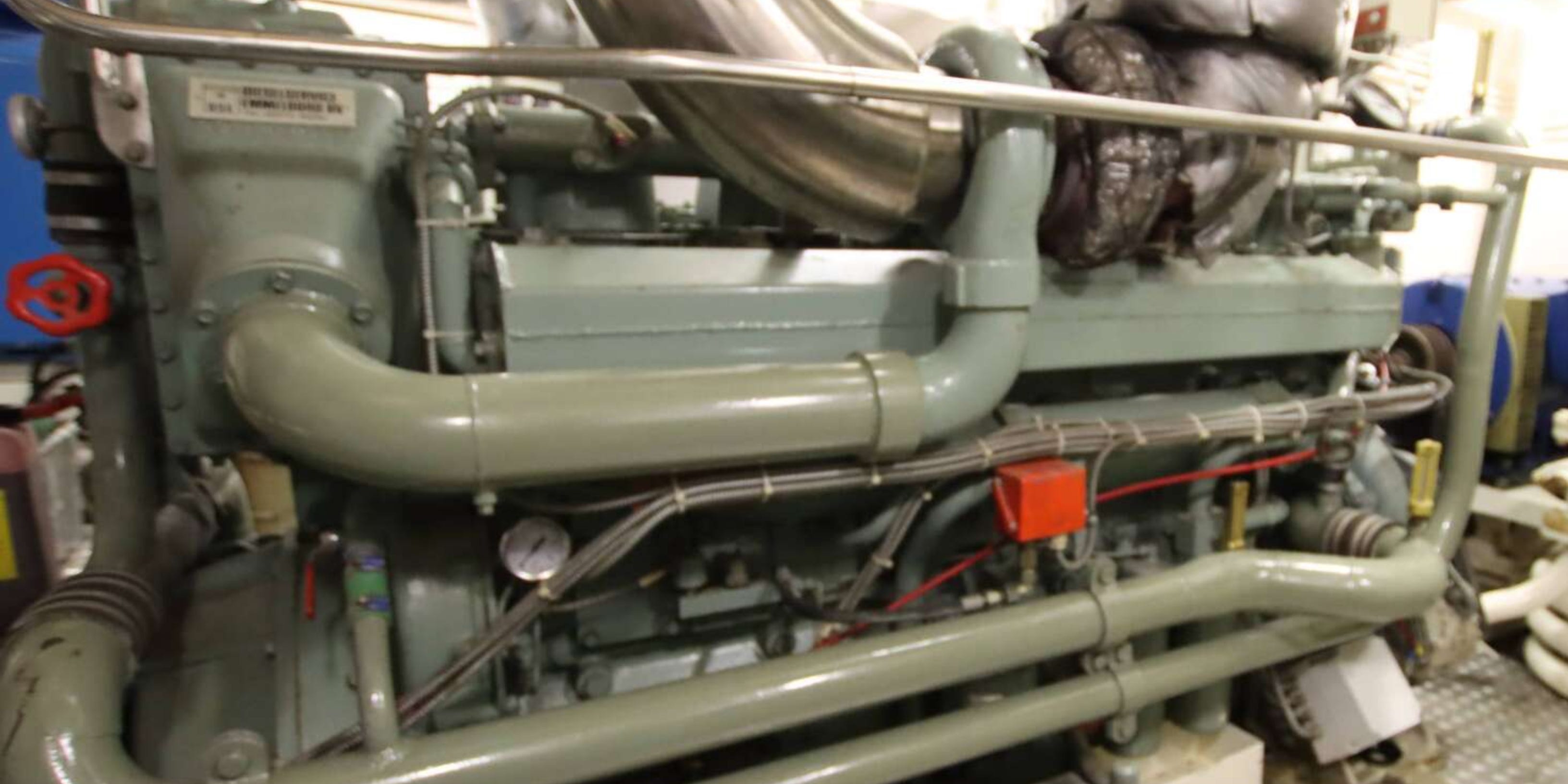
The heart of the vessel is a single Mitsubishi 6 SN MPTK diesel producing 420 hp. Dieselservice Emmeloord, a recognised specialist in commercial marine diesel servicing in the Netherlands, has fully rebuilt it.
The Mitsubishi S-series marine engines carry a well-earned reputation for reliability in commercial service. They are not exotic powerplants, and they are not cheap to run, but they are robust, well-understood by European marine engineers, and parts availability through specialist suppliers is good. A professional rebuild by a recognised specialist is the correct answer to the question of engine condition. This is not a “ran when parked” situation. It is a serviced, tested, working machine.
The engine breathes through a dry exhaust system and is cooled via a closed keel cooling loop…. A sensible arrangement that reduces wear compared to raw-water cooling and is well-suited to extended passages.
Fuel consumption at cruising speed (approximately 8 knots) runs around 30 litres per hour. At that rate, the vessel’s claimed 3,700 nautical mile range is achievable with substantial fuel tankage. However, buyers should confirm the exact fuel capacity directly with De Valk Sneek, as it is not itemised in the listing.
She carries a valid CBB certificate and is described as ready for extended sea trials.
What the CBB Certificate Tells You, And What It Does Not
The CBB (Community Inland Navigation Certificate) is worth understanding before you go further.
The CBB is a Dutch/European inland navigation classification that validates the vessel’s structural and safety compliance for inland waterways and coastal operation. It covers hull integrity, stability, engine room layout, electrical systems, life-saving equipment, and environmental standards. For European coastal cruising - the North Sea, the Channel, the French canals, the Baltic - it is adequate and appropriate.
One further point worth noting: the CBB was discontinued as a new certification in 2020, replaced by the UBC (Union Inland Navigation Certificate). Existing CBBs remain valid until their expiry date but cannot be renewed so the holder must transition to UBC. Buyers should confirm the expiry date on this vessel’s certificate with the broker before proceeding.
None of this diminishes the vessel. It contextualises her. She is a superb coastal and European waterway explorer.
The Owner’s Reality: Running a 21-Metre Steel Explorer
The €675,000 asking price is the beginning of the conversation, not the end of it.
A 21-metre steel explorer yacht operated in Europe carries annual running costs that serious buyers need to understand. Based on current European operating data for vessels of this type and size, a realistic annual budget for a careful owner runs to €45,000–€55,000 per year.
Breaking that down:
