

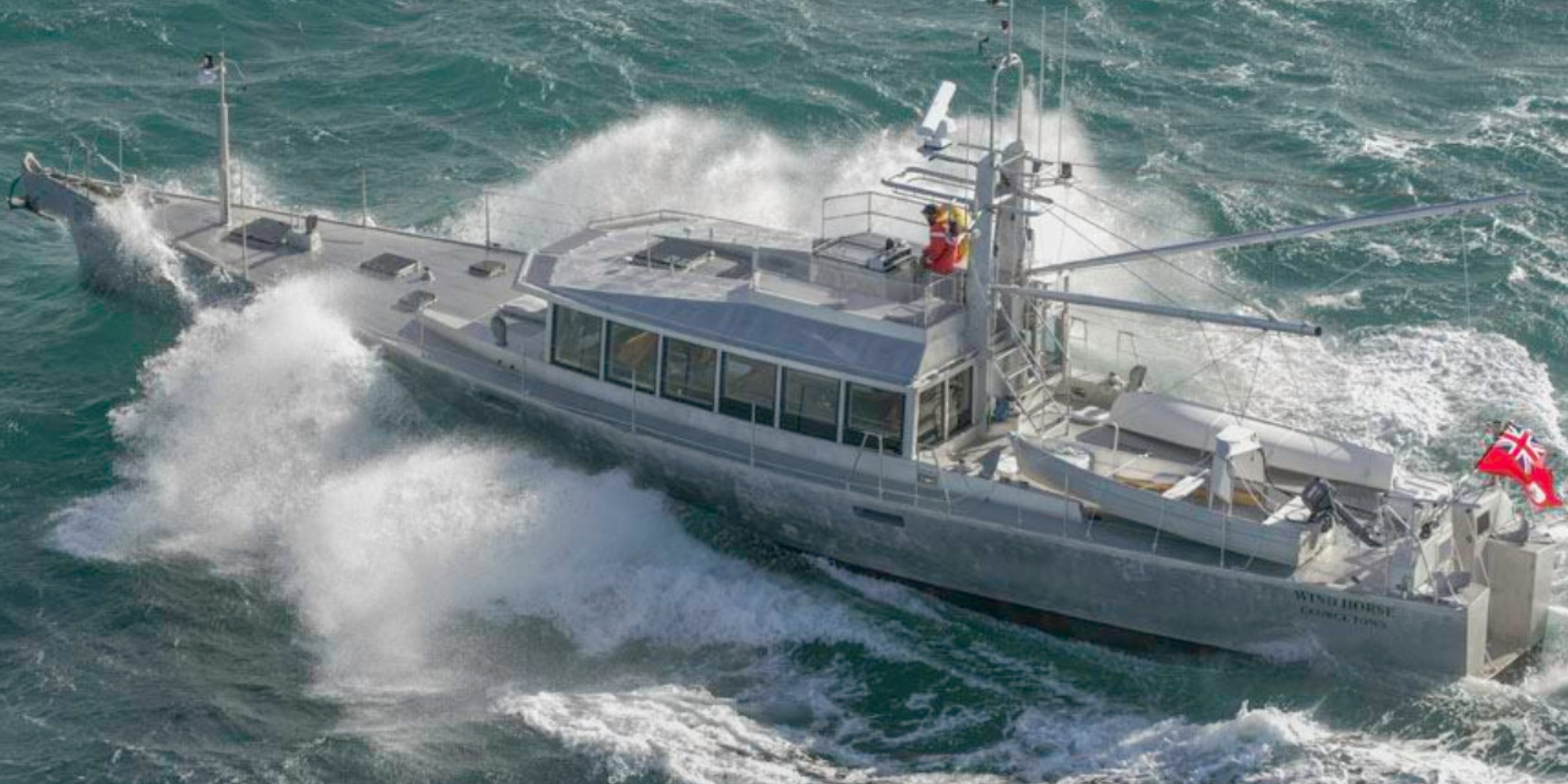
In the current world of serious expedition yachts, a handful of vessels stand apart not because of their styling or marketing, but because they fundamentally changed the way designers approached long-range ocean travel. The original FPB 83, Wind Horse, built for Steve and Linda Dashew, sits firmly at the pinnacle of that category.
Launched in 2005 by Circa Marine in New Zealand, this was not a speculative build intended for a future client. It was the Dashews’ own offshore platform, conceived specifically to answer a single question: How should a vessel be engineered if a couple intends to cross oceans safely and regularly, without professional crew?
Over the years that followed, they provided the most convincing answer possible. Rather than relying on theoretical range claims, they accumulated more than 60,000 nautical miles of real-world passagemaking.
That included extensive high-latitude running and a notable voyage north past 80 degrees into the Arctic ice pack off Svalbard. Very few civilian yachts have ever been subjected to such sustained operational use, and fewer still were designed from the outset to perform exactly that kind of work.
What continues to capture the attention of naval architects and experienced sailors, however, is the engineering paradox at the heart of the boat. This is an 83-foot vessel powered by just two 150hp engines. On paper, those figures appear implausibly small for an explorer yacht of this size, yet the logic behind it is straightforward.
The ultra-efficient, slender displacement hull was developed to slip through the water with minimal resistance, requiring a fraction of the horsepower of a traditional, beamy motor yacht. Operating at a comfortable 10 knots, Wind Horse is capable of a staggering 10,000nm range; endurance figures normally associated with commercial shipping rather than private motor yachts.
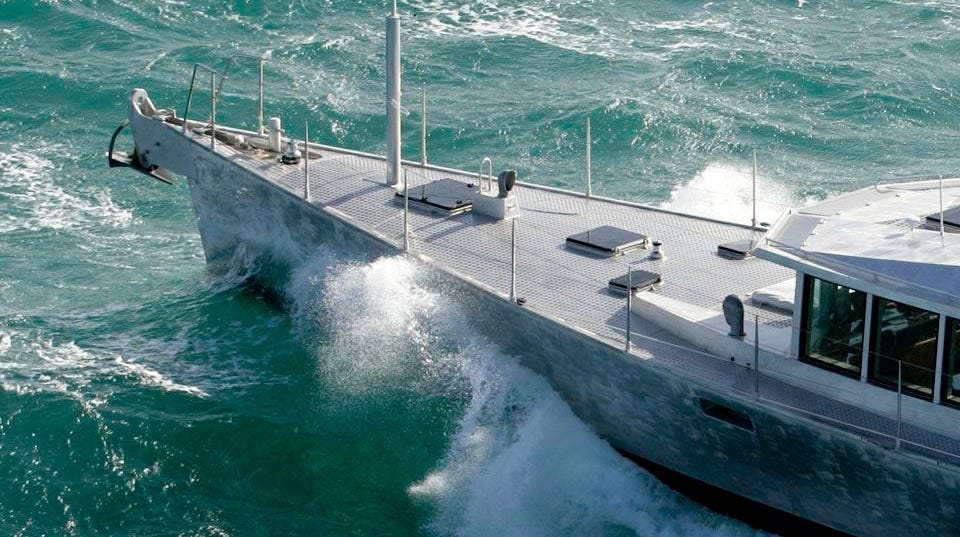
That philosophy of practical, utilitarian marine engineering has influenced a decade of subsequent designs. Now, hull number one has quietly become available on the brokerage market with an asking price of $2,998,900.
Below, I break down my forensic audit of this exact vessel. We will examine the logic of her unpainted 6mm aluminium structure, the commercial-grade redundancy required for two-people to manage an 83-foot yacht, and the reality of exactly what you are getting for a $3m investment. If you are seriously considering an expedition vessel, this is the benchmark against which all could indeed be measured.
