

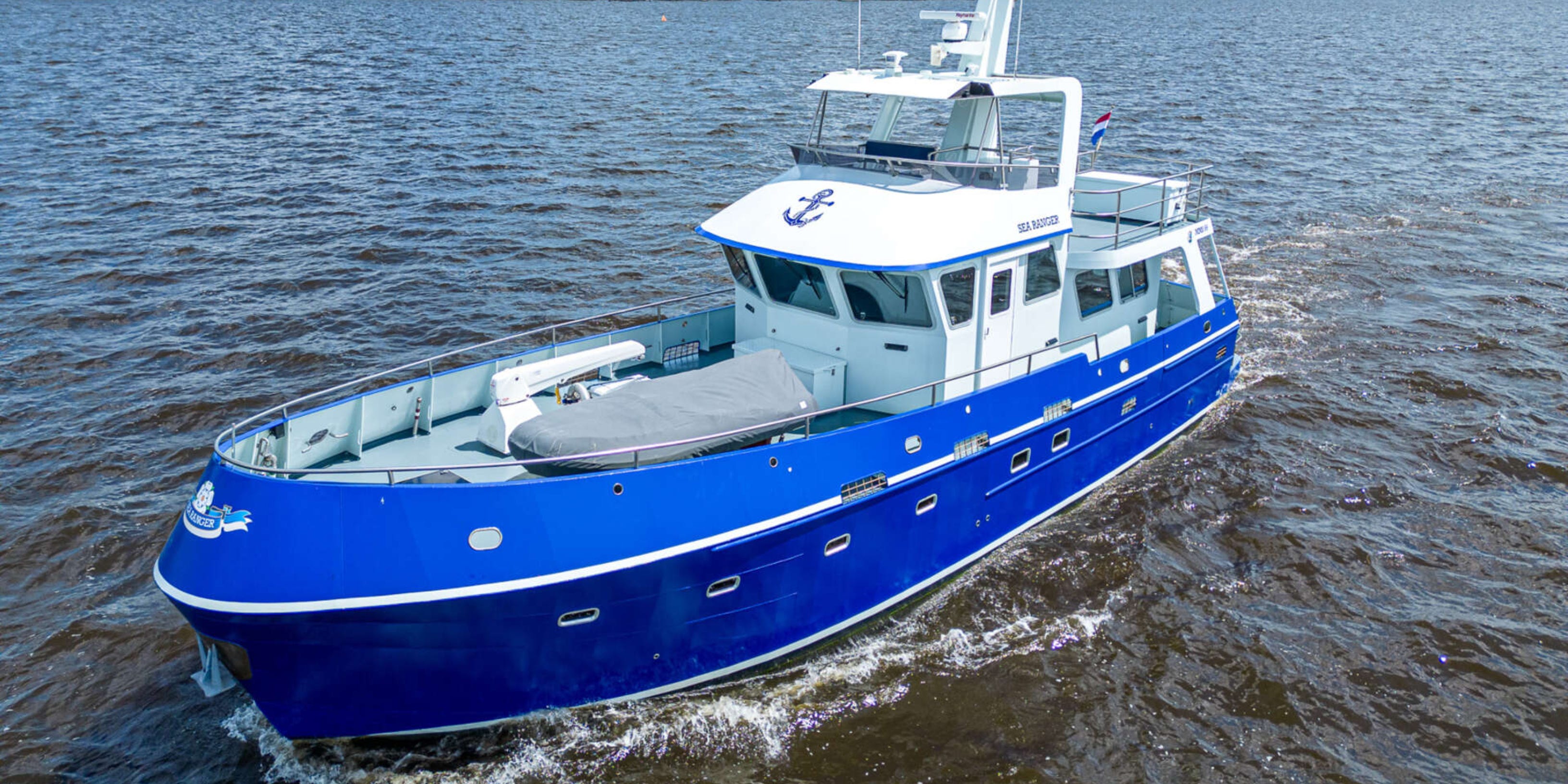
Update: Since this piece was first published, the MMS 55 Sea Ranger has sold. I’m keeping the piece up because the underlying analysis, why a comprehensively filmed, well-built boat can still sit for years, remains a useful case study in the explorer yacht market.
Nearly 2 million views across multiple videos. Comments from hundreds of would-be buyers. Three years on the market. The MMS 55 Sea Ranger sat unsold in the Netherlands for three years, asking €1.075 million, before selling, for what might be the most comprehensively filmed yacht in modern brokerage history.
If you’ve watched the videos, you know what captivated the audience. A 60-foot steel explorer built by a British commercial shipyard with genuine North Sea pedigree. Twin John Deere diesels. CE Category A certification. 7mm hull plating. The kind of construction that makes weekend sailors dream about crossing oceans and seasoned cruisers nod in approval.
What the videos didn’t show is why capable boats sometimes don’t sell. Not because they’re flawed, but because the gap between what YouTube viewers celebrate and what yacht buyers require can be surprisingly specific. And surprisingly fixable.
The Sea Ranger sat on the market for three years because of three problems that rarely make it into walkaround videos: a VAT structure that added €215,000 to the headline price, an interior aesthetic that prioritised function over comfort, and a fuel capacity that delivered regional range rather than ocean-crossing capability. None of these problems was a secret, and all of them were based on the original owner’s requirements. And understanding why they mattered reveals some interesting points about the explorer yacht market.
When Shipyards Survive Bomb Explosions
MMS Ship Repair & Dry Dock operates from Hull in East Yorkshire, at the heart of the Humber estuary where Britain has built commercial vessels for centuries. Founded in 1988, MMS has dry-docked over 1,200 ships across 38 years, everything from Arctic trawlers to offshore supply vessels to chemical tankers. This isn’t a yacht builder that dabbled in commercial work. This is a commercial shipyard that built one yacht.
The difference matters because commercial yards prioritise different things than yacht builders. A superyacht yard worries about Italian marble and ambient lighting. A commercial yard worries about whether the vessel will survive when something goes catastrophically wrong. Like, for instance, hauling up a 250-kilogram World War II bomb.
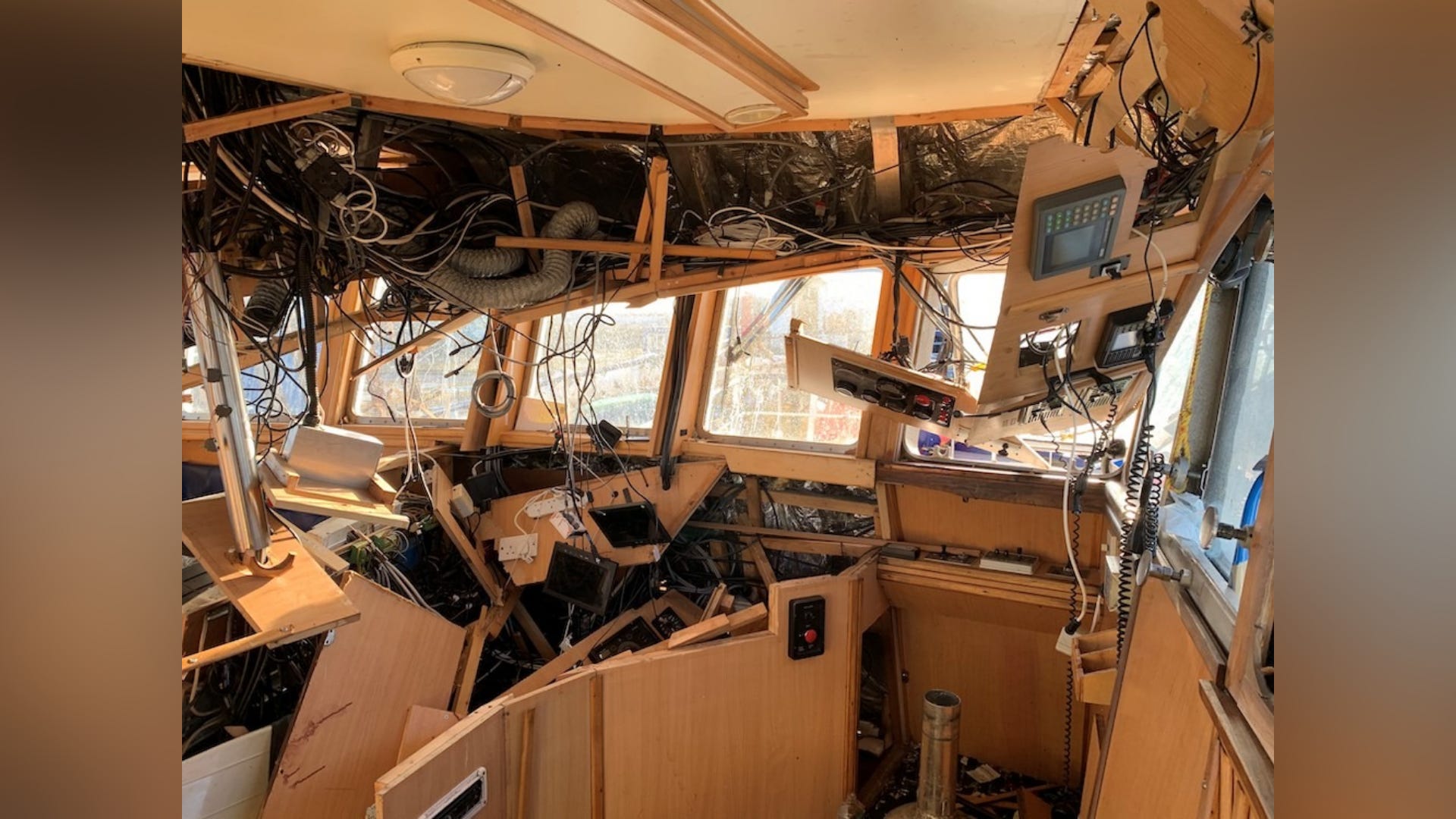
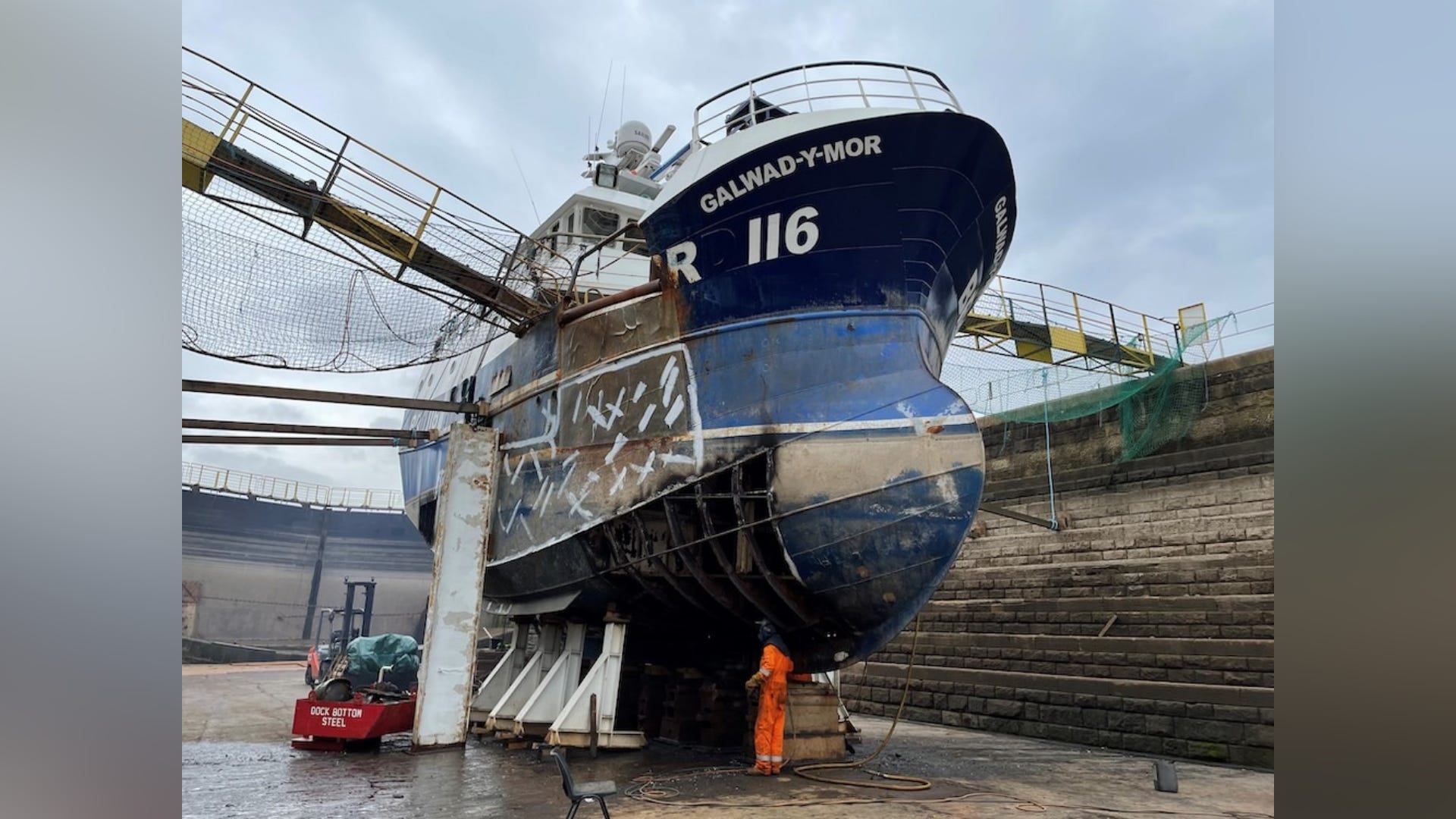
In 2020, a fishing trawler called Galwad-Y-Mor was working north of Cromer when her gear snagged something on the seabed. The bomb exploded directly underneath the vessel, dropping her 20 feet before throwing her upwards on the shock wave. Several crew members were severely injured. The hull was catastrophically damaged and flooding. A lesser-built vessel would have sunk immediately.
The Galwad-Y-Mor stayed afloat.
Why that matters: The UK’s Marine Accident Investigation Branch conducted a formal investigation and concluded that the vessel remained afloat specifically because of MMS’s high-strength steel construction and superior design quality. This wasn’t marketing speak or owner testimony. This was a government accident investigation report stating on the record that MMS’s build quality saved lives.
The vessel MMS had built in 2007 used six-millimetre hull plating and robust framing designed for commercial fishing in the North Sea. When a 250-kilogram bomb detonated directly beneath her, that construction held together long enough for rescue. MMS then spent the next year completely rebuilding her, replacing 14 tonnes of shaped steel, re-wiring everything, upgrading the accommodation, and putting her back into commercial service. The fishing company brought their bomb-damaged vessel back to the same yard for rebuilding. That tells you everything about reputation.
That story defines what MMS brings to boat building. Rob Langdon, the yard’s managing director, spent nearly four decades building and repairing working vessels before deciding to apply that expertise to the Sea Ranger. The result is a motor yacht that carries the DNA of vessels built to survive North Sea conditions, not entertain guests in Mediterranean marinas. An official accident investigation validated that DNA. Which brings us to why it took three years to find a buyer.
The Specification That Captivated YouTube
The Sea Ranger’s published specifications read like an advertisement for serious offshore capability. At 18.44 metres overall length with a 5.36-metre beam, she provides great volume without becoming unwieldy. The steel hull measures seven millimetres thick at the waterline, tapering to four-millimetre superstructure plating. The aluminium superstructure keeps weight high whilst maintaining strength. Displacement totals 58 tonnes, producing a displacement-to-length ratio that favours fuel efficiency over raw speed.
Twin John Deere 4045AFM8 diesels produce 180 horsepower each, for 360 horsepower combined. These are commercial-grade engines rated for up to 5,000 hours annual operation rather than the typical 1,000 to 1,500 hours that recreational yacht engines see. Fuel capacity totals 5,000 litres across two 2,500-litre tanks. The 1.8-metre draft opens access to shallow harbours whilst the 9-metre air draft under bridges allows inland European cruising.
CE Category A certification confirms the vessel meets offshore standards, designed to withstand wind forces to Force 8 and significant wave heights exceeding four metres. Insurance underwriters treat Category A certification seriously, offering better terms and broader coverage than vessels built to lower standards. Resale values typically hold better as well, because serious cruisers specifically seek Category A platforms.
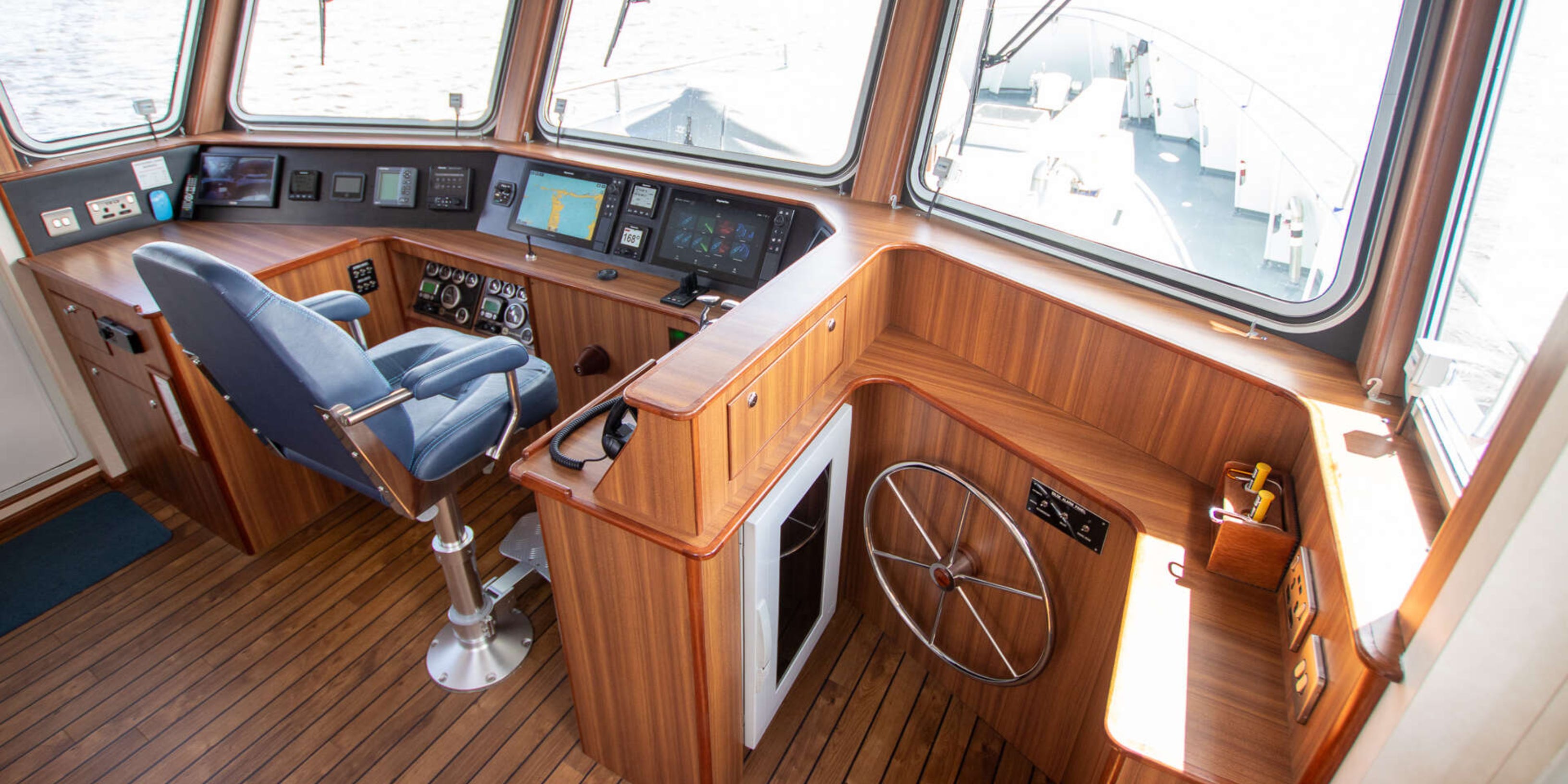
The accommodation layout reflects expedition priorities. Three cabins provide sleeping for six, with the owner’s cabin positioned midships for better motion characteristics. The pilot house combines navigation, steering, and socialising spaces in one elevated position with excellent visibility through wraparound windows. The galley sits below deck with stainless steel countertops, induction cooking, and decent refrigeration. Central heating runs from an electric system rather than relying on continuous engine operation.
On paper, and in video walkarounds, the Sea Ranger presents as exactly what the market claims to want: a robust, seaworthy explorer yacht built without compromise by people who understand what makes vessels actually work offshore. So why did it take three years and millions of views before someone finally bought her?
The listing showed €1,075,000. The fine print adds three words that change everything: VAT not paid.
In the European Union, importing a vessel or operating her in EU waters triggers VAT liability at rates ranging from 19% to 21% depending on jurisdiction; for the Sea Ranger, that translates to between €204,250 in Germany and €225,750 in the Netherlands. Split the difference and call it €215,000.
This matters because buyer psychology doesn't work in percentages. When someone starts researching a €1,075,000 yacht, they're mentally preparing to spend just over a million — accounting for surveys, delivery, and contingencies, perhaps €1.15 million all in. When they discover the actual cost is closer to €1.29 million, that's not a rounding error. That's €215,000 they don't have, weren't planning to spend, or will have to borrow at current interest rates. Of course, if you purchase the vessel through a company, then, well, that is a different story altogether.
The alternative is purchasing a VAT-paid vessel where the price listed is the price paid. Nordhavn 60s trade in the €2 million to €2.2 million range, fully VAT-paid. Bering 60s ask similar figures. Once you add the VAT, the Sea Ranger at roughly €1.29 million still sits well below those benchmarks — but the gap narrows considerably once you factor in the survey, any remediation work, and the cost of bringing a commercial-heritage vessel up to the standard a private owner will require. The question shifts from "how much cheaper is she?" to "cheap enough to justify the difference in provenance, support network, and resale liquidity?"
The VAT situation doesn't just increase the price. It reframes the entire buying decision.
Problem Two: Why Commercial Interiors Don’t Convert Sales
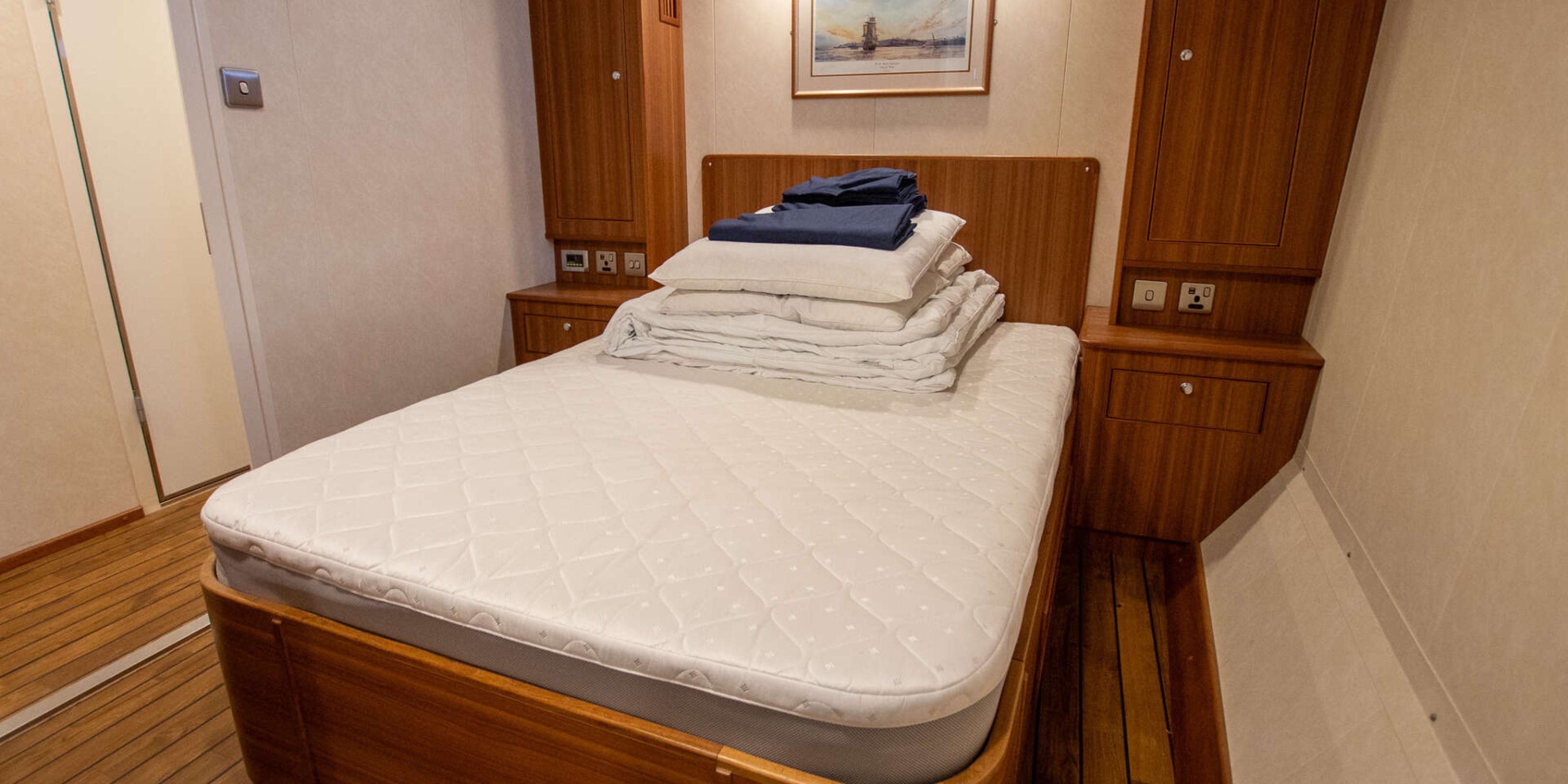
YouTube viewers loved the Sea Ranger’s functional aesthetic and her beautiful trawleresque lines. Exposed steel beams. Minimal joinery. Practical layouts that prioritise usability over decoration. This reads as honest, capable, ready for serious work. The comment sections filled with praise for avoiding the typical luxury that characterises many explorer yachts at this price point.
The problem is that YouTube viewers are not always the buyers. They’re enthusiasts, dreamers, and people who appreciate capability even if they’ll never write the cheque. The actual buyers at €1.795 million are typically 55 to 70 years old, retired professionals or successful entrepreneurs with moderate to advanced cruising experience. They’ve owned boats before. They understand what seaworthiness requires. They’re absolutely willing to pay for robust construction.
But they also expect comfort comparable to what they’re accustomed to ashore. Teak or hardwood flooring, not industrial epoxy. Ambient LED lighting with dimming controls, not work lights. A galley that functions as the social centerpiece of the boat, not a utilitarian kitchen. Cabins with quality mattresses, proper bedding, and storage solutions that don’t feel like crew quarters. Soft goods, upholstery, and design cohesion that creates a sense of refinement rather than function camp.
The Sea Ranger delivers exactly what her owner specified: an expedition vessel built to commercial standards with professional fit-out. Rob Langdon understood that serious offshore work requires robust systems over decorative touches. The result is a vessel that would work perfectly for scientific expeditions, commercial support roles, or owners who genuinely prioritise capability above all else.
But the market at €1.795 million expects luxury combined with capability. Nordhavn delivers teak and leather alongside ocean-crossing range. Bering provides hotel-grade accommodation with ice-capable hulls. These aren’t frivolous additions. They’re what makes extended cruising comfortable for people who don’t need to prove their toughness by living in military-grade accommodation.
I’ve spoken with several potential buyers who toured the Sea Ranger. The feedback was remarkably consistent. They loved the build quality. They appreciated the engineering. They understood the value of commercial-grade systems. Then they tried to imagine living aboard for months at a time, or convincing their partners that this represents the retirement dream they’d been planning, and the conversation ended.
Problem Three: When Range Defines Reality
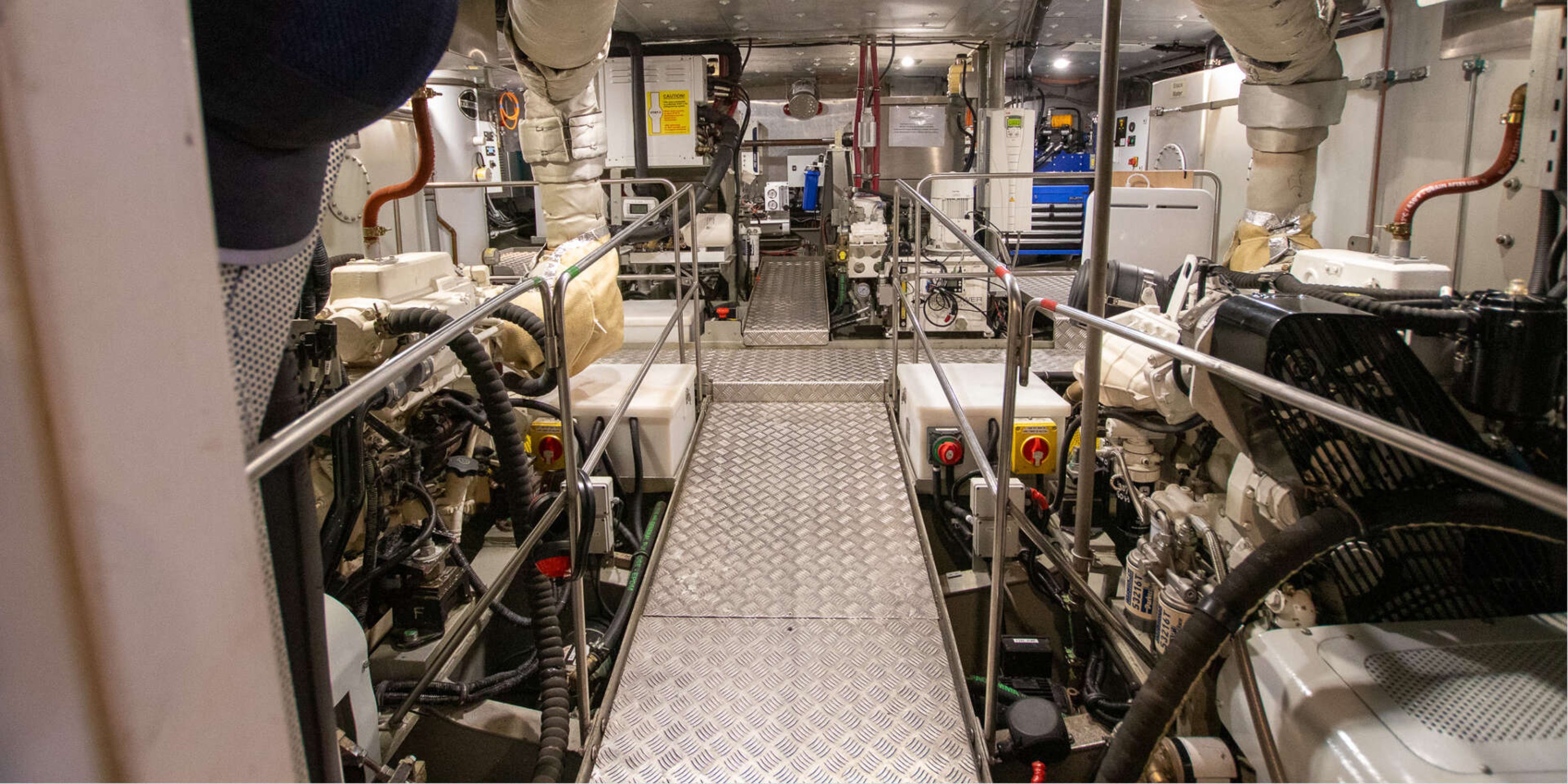
The Sea Ranger’s 5,000-litre fuel capacity sounds substantial until you start planning actual passages. Twin John Deere 4045 diesels consume approximately 40 to 45 litres per hour combined at typical cruising speeds of 8 knots. That’s efficient for twin installations of this size, but it still means 5,000 litres delivers roughly 111 hours of running time.
At eight knots, 111 hours covers 888 nautical miles. Add 10% reserve and you’re looking at an effective range of about 800 nautical miles between refuelling. The builder advertises 1,500 nautical miles, which assumes optimal conditions, conservative speeds, and utilising fuel capacity down to the last drops. Practical cruising range lands somewhere between 1,100 and 1,400 nautical miles depending on conditions and how aggressively you manage fuel.
That’s enough for coastal European cruising. Netherlands to Norway, fine. Mediterranean island hopping, no problem. UK to France to Spain to Portugal, perfectly manageable with planned fuel stops. The issue is that buyers shopping at €1.795 million expect trans-ocean capability, and 1,400 nautical miles doesn’t deliver it.
Bermuda to the Azores: 1,850 nautical miles. Not feasible non-stop. The Atlantic crossing that defines “proper ocean explorer” requires either multiple hops with precise fuel planning or carrying additional fuel in jerry cans. Nordhavn 60s carry 10,000 litres and deliver 3,000+ nautical miles range. Selene 60s manage 2,500 nautical miles. Bering 60s hit 2,800 nautical miles. These aren’t luxury features. They’re the difference between a regional explorer suitable for European waters and a global explorer capable of reaching anywhere.
The owner mentioned during one of our conversations that the 300-litre black water tank could potentially be converted to additional fuel storage, extending capacity to 5,300 litres. In theory, this adds 50 nautical miles range. In practice, it’s barely noticeable and doesn’t solve the fundamental problem. To reach 2,000 nautical miles minimum range, the Sea Ranger would need approximately 11,250 litres total capacity. That’s a 6,000-litre shortfall that can’t be addressed through simple tank conversions. It requires structural modifications like wing tanks, which involve €25,000 to €50,000 in engineering and fabrication costs, plus potential impacts on CE certification.
The Sea Ranger isn’t inadequate. She’s a capable regional explorer perfectly suited for European cruising. But at €1.795 million, buyers compare her against Nordhavn and Bering, and the range disadvantage becomes impossible to ignore.
Now let me show you how €100,000 changes everything about this vessel’s market position.
Welcome to the Wardroom
The Sea Ranger’s sticking points with leisure buyers are solvable. Not through compromises or half-measures, but through targeted investment that transforms the vessel’s market appeal whilst preserving everything that makes her genuinely capable.
