

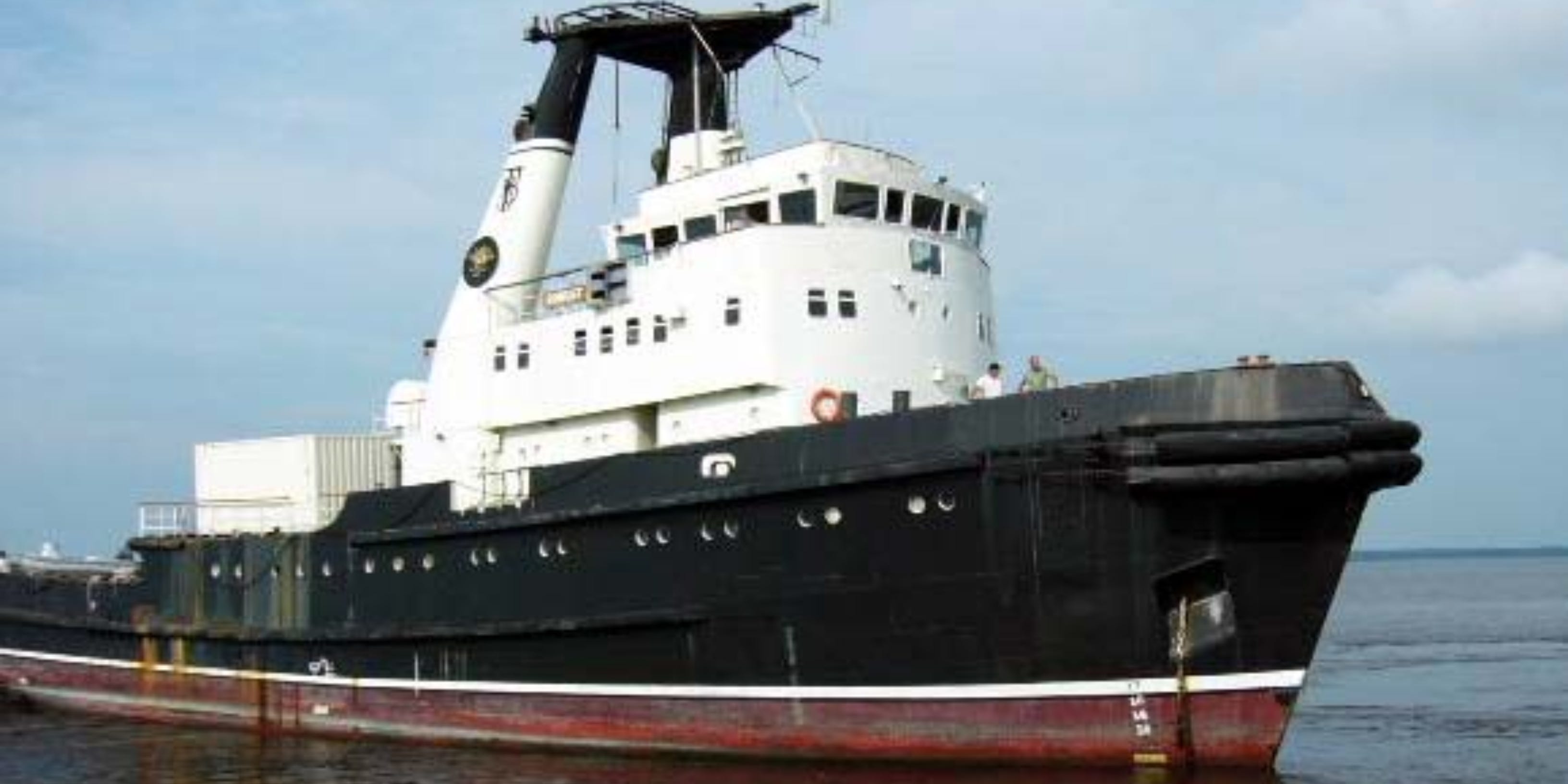
179 feet, 4,500 horsepower, and built for the British Ministry of Defence (Royal Fleet Auxiliary) to tow disabled warships across oceans. She is now sitting in the United States for $360,000, stripped bare and waiting for someone’s grand vision. For me, the question is not whether it can be done. The question is whether you should.
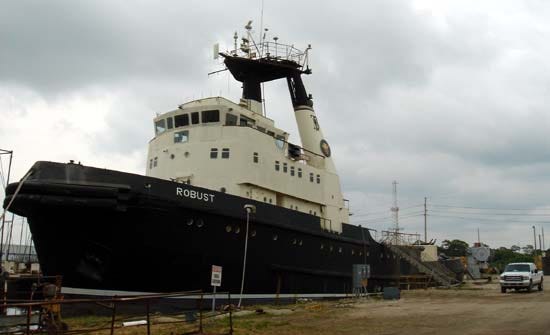
The appeal of a major rebuild project is tempting. For about the price of a suburban house, you get 179 feet of legendary British Navy steel, designed and built for strength above all else. The vessel in question is the ex-RFA salvage tug Robust, one of three sisters built by Charles D. Holmes in Beverley, East Yorkshire, in 1973. She is the largest and most powerful ocean-going tug ever commissioned by the MOD, specially made for long-range salvage operations and heavy-weather towing in the North Atlantic.
That history matters because it shapes the underlying platform. This is not a leisure boat later used for commercial purposes. It is a working vessel built from the keel up to handle the toughest ocean conditions. The hull design, the machinery setup, the structural specifications, and the systems all come from a single goal: stay operational when everything else fails. For the buyer looking for real expedition capability, that base strength is hard to match with simple cosmetic changes to a recreational platform.
The main specifications show just how impressive this vessel is. It is 54.76 metres long and 11.73 metres wide, which means there is a lot of space below deck. It was originally powered by two Mirrlees KMR 6 diesel engines, each producing 2,250 brake horsepower at 525 rpm. With a total of 4,500 horsepower, Robust could take on salvage jobs that smaller ships could not handle. That same power also gives it great range and travel ability for private owners.
To give a sense of what this vessel can do, when I served in the Royal Navy on the aircraft carrier HMS Invincible, this type of ocean-going tug was chosen to rescue us if we ever lost power completely.
The vessel is currently in the United States and can be inspected. It is for sale at $360,000 as-is, where-is. The listing is clear about its condition: the interior has been completely stripped, all asbestos has been removed, the main electrical panel is gone, and there is no bridge equipment. The engines and generators need to be overhauled, so the vessel cannot be sailed in its current state.
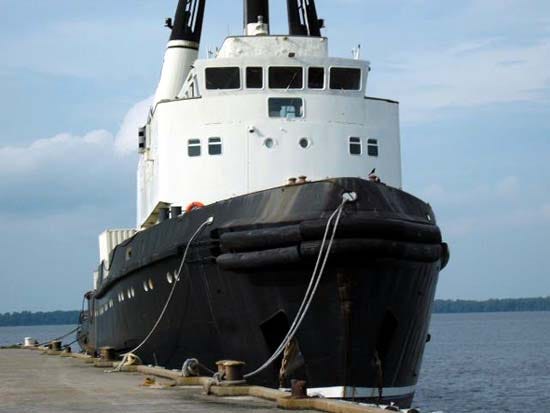
What remains is basically a blank hull. For buyers who see the possibilities, this means creative freedom. There are no old layouts to work around, no outdated systems to remove before adding modern ones, and no previous design choices limiting the space inside. With its 11.73-metre beam, there is plenty of room to work with. This wide beam allows for impressive accommodation for 10 to 12 staterooms, several saloons, large galleys, and storage areas much bigger than what you’d find on a typical yacht of this size. They are far larger than similar.
There are many ways to convert this vessel. It could become an expedition mothership for diving in remote places, or a high-latitude explorer for long trips in the Arctic or Antarctic. It could also serve as a commercial charter platform, liveaboard trips where regular yachts can’t go. Another option is to make it a private long-range cruiser, built exactly to the owner’s needs, without having to meet anyone else’s requirements.
This flexibility is a big part of the appeal. The other is the price. At $360,000, it’s hard to find a better deal per foot. A new expedition yacht of this size would cost between $15 million and $30 million. Even a well-sells for $8 million to $20 million. On paper, Robust appears to offer exceptional value.
A $360,000 purchase is just the starting point. The real question for any conversion project is whether the final cost is worth it. There are successful examples out there. The 193-foot Seawolf, once the Dutch salvage tug Smit Clyde, was rebuilt between 1997 and 2002 and now runs as a luxury charter yacht. The 162-foot Asteria, converted from a Greek rescue tug in 2000, has sailed around the world and is now for sale at $19,900,000. These examples show that converting a vessel can work.
But just because something is possible doesn’t mean it’s a smart financial move. In the subscriber section, I break down the real costs of turning Robust into a liveaboard explorer yacht. This includes what it takes to overhaul the twin Mirrlees diesels, rebuilding the entire electrical system after the main panel is removed, the total conversion budget based on industry standards, and why most projects like this never get finished.
As you might guess, I put a lot of research into this blog. Since there are no ads here, I’ve kept the most detailed information for my paying subscribers.
Welcome to the Wardroom
Let us strip away the romance of the $360,000 price tag and examine the operational reality of Project Robust.
The Machinery Space
What Owning Twin Mirrlees KMR 6 Diesels Actually Looks Like…
