

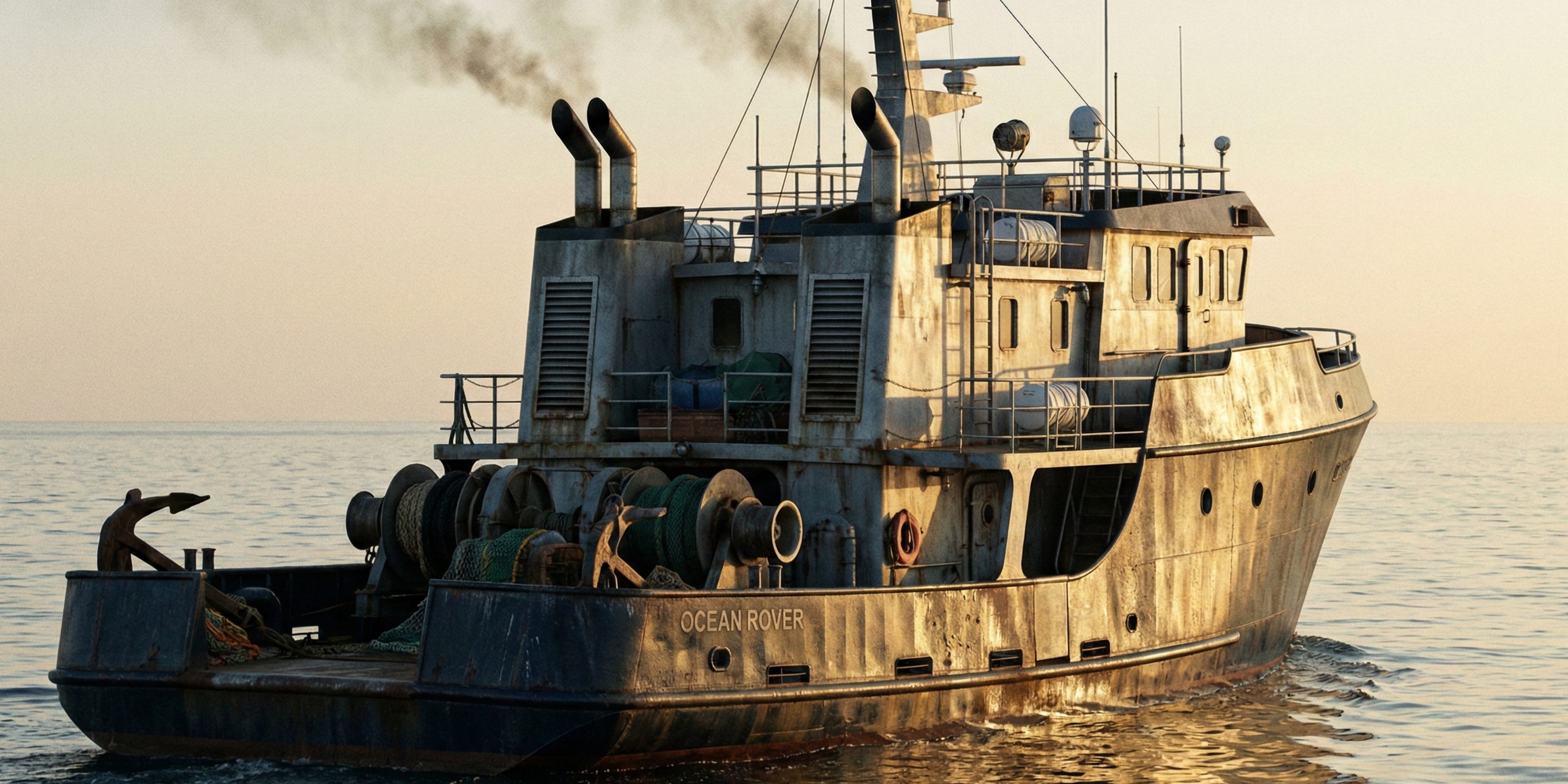
Happy New Year, Shipmates!
One of the comments I see crop up time and again on my YouTube videos is about engine hours. Whether it’s a brokerage tour or a walkthrough of a working boat, someone always points to the hour metre and asks if it’s too high. So I thought I’d sit down on New Year’s Day and write up a quick technical dive…nothing exhaustive, just a few thoughts that might help reframe the way we think about “high hours” and what they actually mean.
If you looked at the spec sheet for Braveheart, the €250k steel trawler I shared last week, you might have spotted something worth your attention. She’s powered by twin John Deere 6068s.
To someone who is perhaps new to boating, that’s just a brand badge. To a salty sea dog, it’s the difference between a boat that lasts 20 years and a boat that lasts 50.
Every week, I hear from potential buyers worried about “high hours.” They’ll see a listing with 3,500 hours and bolt. In car logic, 3,500 hours at 60 mph equals over 200,000 miles. That’s a tired sedan. But boats are not cars. And not all marine diesels are created equal.
Today, we’re breaking down the real difference between light-duty and continuous-duty engines. It’s the technical clarity you need before you negotiate your next offer.
The White vs the Yellow
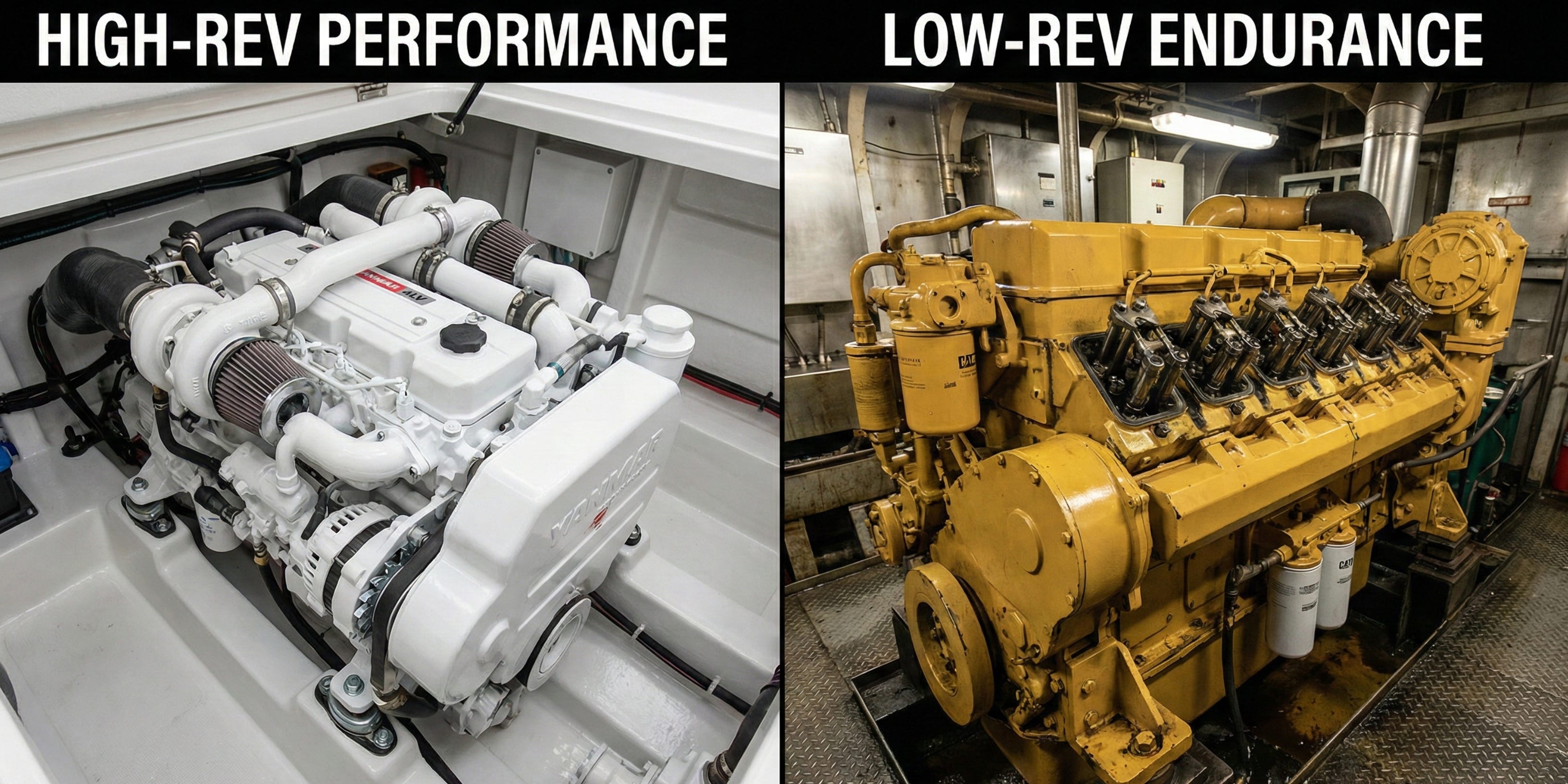
In the marine world, there are two very different diesel philosophies.
The Sprinters (High Speed / Light Duty)
Often painted white (think Volvo or Yanmar) these engines are built to be light, fast, and aggressive. They squeeze big horsepower out of small blocks using turbochargers and high RPMs, typically revving past 3,000.
The Job: Get a fiberglass cruiser on the plane for a weekend dash to the bay.
The Lifespan: Like a sprinter, they move fast but tire quickly. At 2,000 hours, fatigue starts showing. On forums like TrawlerForum, D-series Volvo owners often report overheating or premature rebuilds under 3,000 hours in real-world conditions. In contrast, John Deere fans tend to talk about reliability rather than repairs.
The Marathon Runners (Low Speed / Continuous Duty)
These engines are often painted yellow (Caterpillar, John Deere) or grey (Gardner). They are heavy, slow-turning, and deliberately under-stressed.
The Job: Push a 60-tonne trawler, explorer yacht or fishing vessel 24/7, week in and week out.
The Lifespan: At 5,000 hours, they are just broken in.
The Secret Code: M-Ratings
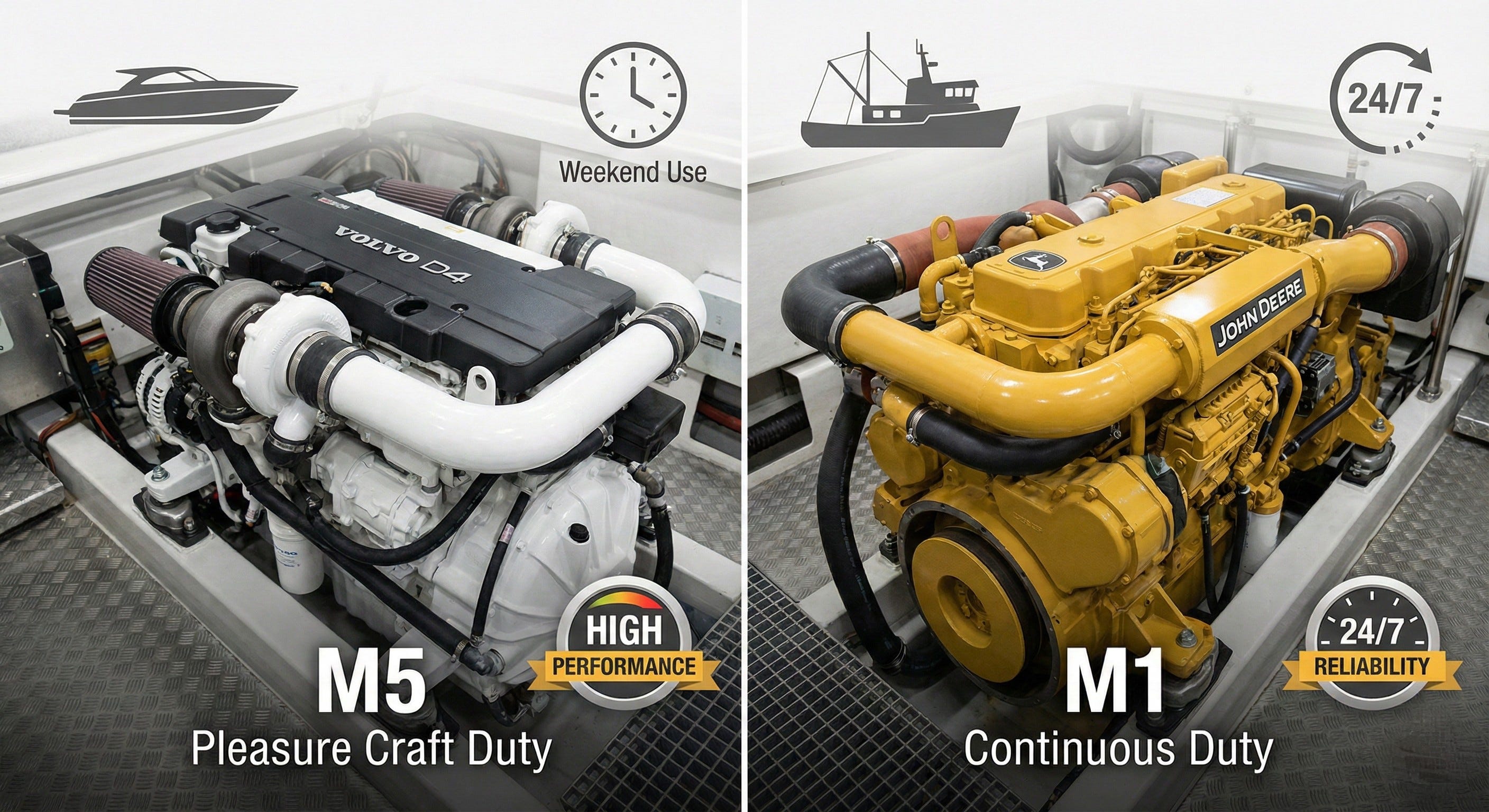
Engine manufacturers don’t just build engines. They rate them for duty cycle. Most buyers never see this, but it’s crucial.
M5 (Pleasure Craft): Full power allowed for 30 minutes in every 8 hours. This is your weekend warrior.
M1 (Continuous Duty): Full power allowed 24/7, year-round. This is your commercial-grade workhorse.
The John Deere 6068 TFM fitted to Braveheart is a known industrial legend. It’s a 6.8-litre engine producing just 225 horsepower. Compare that to a modern Volvo D4, which uses a 3.7-litre block to push out 300 horsepower.
The Volvo is working twice as hard to do the same job. The Deere is barely getting warm.
Why Displacement Wins
In the engine room, there is no replacement for displacement. A large, low-revving engine (max 2,400 RPM) with massive pistons has built-in mechanical advantages:
Lower Heat: Heat kills metal.
Reduced Friction: Slower-moving parts wear slower.
Rebuildability: These engines often feature wet liners. Scar a cylinder? Slide in a new sleeve. No need to replace the block.
The numbers prove it. Horsepower per litre on the JD 6068 is about 33 hp/L. The Volvo D4-300? Over 80 hp/L. That’s more than double. More stress, more heat, faster wear.
The Braveheart Math
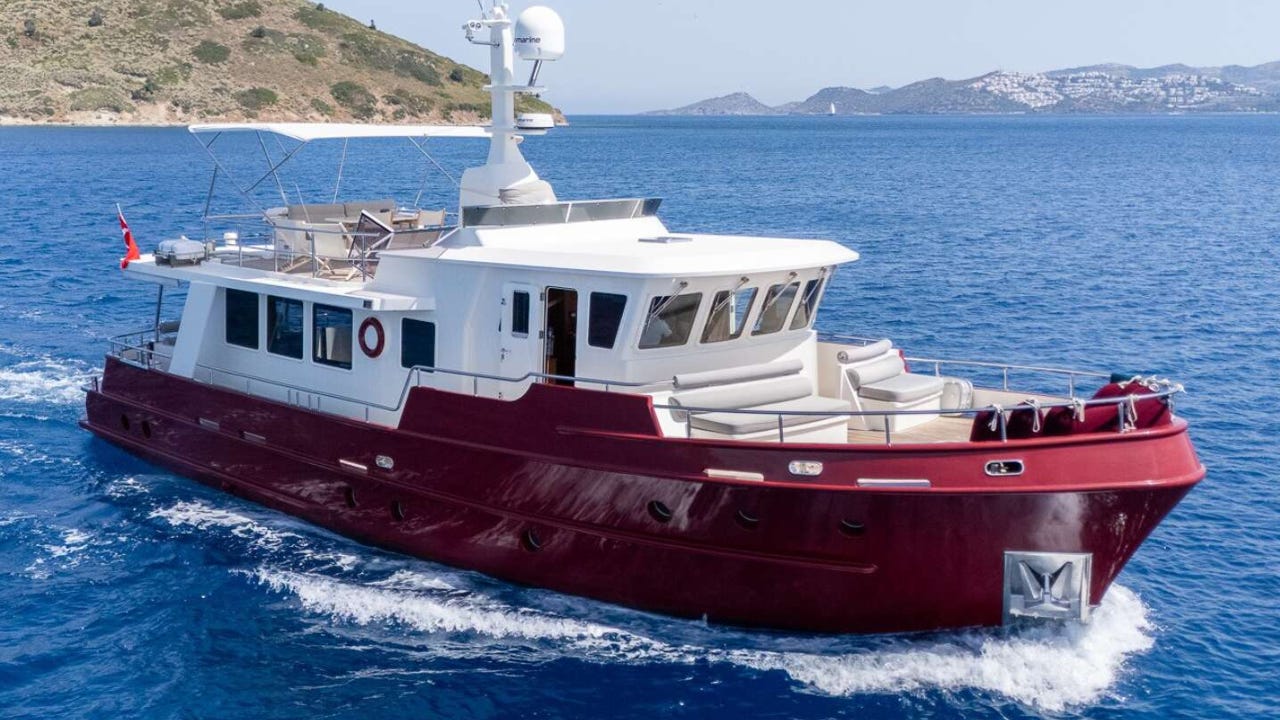
Let’s bring it back to that auction boat. Say the engines show 4,000 hours. Some people might see a red flag. I see a green light.
A well-maintained John Deere 6068 can easily reach 20,000 hours before requiring a major overhaul. Buying one at 4,000 hours is like buying a Toyota Land Cruiser with 40,000 miles. It’s barely warmed up.
Still not convinced? Commercial operators report 40,000 or more hours on these engines with nothing more than regular oil changes and valve adjustments. No head removals. No rebuilds. Just work.
This isn’t a hobby engine. It’s an industrial asset.
The Verdict: What Should You Buy?
If your plan is waterskiing and weekend hops, get the high-revving sprinter. It’s built for speed.
But if you’re looking at trawlers, explorers, or liveaboard passagemakers, boats designed to go far and carry weight, then forget the engine hours clock. Look at the paint.
Don’t fear the hours.
Fear the lack of maintenance.
Always check the engine rating.
Enough theory. Check the oil, fire her up, and let the iron do its job.
Join the Conversation
If you enjoy reading these articles and want to take part in what happens behind them, consider becoming a Premium Subscriber. It’s the best way to support independent, ad-free marine journalism while also joining a community of like-minded nautical explorers and explorer yacht enthusiasts who live and breathe this world.
Premium Subscribers can comment directly on each article and take part in thoughtful, technical discussions that go beyond the surface. But the real value lies in the Subscriber Chat, an exclusive space where we talk yachts, design, refits, passages, and everything in between. It’s where ideas are shared, opinions are challenged, and real knowledge is exchanged between owners, captains, and serious enthusiasts.
It’s a direct line not only to me, but to a knowledgeable and like-minded community that lives and breathes this world.
If you value independent marine journalism and want to be part of the conversation, I’d love to have you on board as a Premium Subscriber.
