

Update, September 2026: Braveheart 2 has now sold. The piece below stands as written; the designer, the yard, the engineering and the real running costs of an 82-foot Dutch aluminium motor yacht, none of which changed when she found a buyer. If you are looking for something in the same vein, I keep a hand-picked selection of boats for sale here: yacht-buoy.com/yachts-for-sale
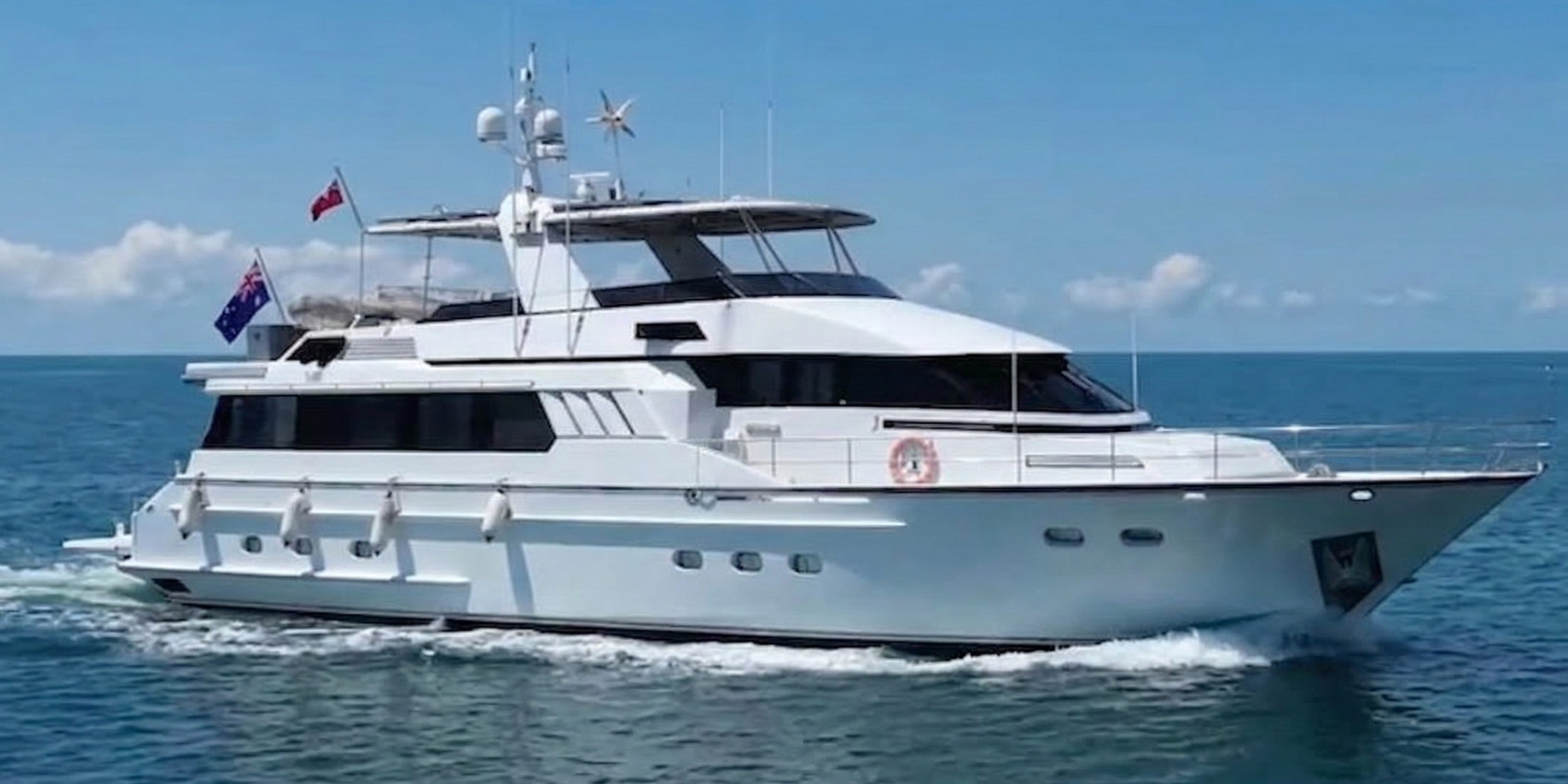
$599,000 for 82 feet of Dutch-built aluminium. A comprehensive $1 million refit completed in 2016 and a proven track record spanning three continents and 15 years of consistent operation. So really, the question is not whether Braveheart 2 represents value for money in today’s market. The question is whether you understand what bringing her home really costs.
The boat in question is a 1987 Lowland 80 Motor Yacht, designed by Pieter Beeldsnijder and constructed by Neth Ships Lowland Yachts BV in Holland. For readers who are familiar with Dutch yacht building, that pedigree carries considerable weight. Lowland Yachts built a reputation on all-welded aluminium construction, single-hull platforms with double-bottom reinforcement and a design philosophy that prioritised structural integrity and seaworthiness over interior volume maximisation. These were not recreational cruisers built to occasional fair-weather use specifications.
They were ocean-going platforms designed for extended passages in open water and Pieter Beeldsnijder’s involvement reinforces that intent.
His designs typically favoured practical accommodation layouts, sensible deck circulation and machinery installations that could be serviced without disassembling half the boat. The Lowland 80 reflected those priorities and at 82 feet LOA with a beam of 16 feet 5 inches, the hull form produces a displacement of approximately 70 tonnes.
The relatively modest beam-to-length ratio highlights a hull optimised for passage-making efficiency rather than maximum interior volume. That trade-off becomes relevant once the vessel moves beyond coastal cruising into extended offshore work.
The machinery installation centres on twin Caterpillar diesels driving fixed-pitch propellers through reduction gearing. Caterpillar engines in this application are generally regarded as serviceable and reliable, with parts availability remaining reasonable through the global CAT dealer network. Maximum speed is listed at 16 knots, with a cruising speed of 10 knots producing a fuel consumption rate of approximately 57 litres per hour combined for both main engines and generators. With fuel capacity of 10,900 litres, that translates to a theoretical range of around 2,000 nautical miles at cruising speed. For owners planning extended passages between fuel stops, those numbers represent workable autonomy.
Stabilisation comes from Wesmar hydraulic fin stabilisers, which operate underway to dampen roll motion. A SidePower bow thruster provides manoeuvring assistance in close quarters. Draft measures 1.65 metres, which is notably shallow for a vessel of this size and displacement.
That characteristic becomes operationally significant in cruising grounds where depth becomes restrictive. The Bahamas, for example, remains accessible. Shallow Pacific atolls become viable. Coastal anchorages throughout the Caribbean and Mediterranean open up. For owners seeking genuine cruising flexibility, a 1.65-metre draft represents a tangible advantage over deeper displacement platforms.
The operational history of Braveheart 2 provides useful context. She was originally launched for the United States market and spent her early years navigating the Intracoastal Waterway along the East Coast. That environment imposes specific demands. Tidal currents, shallow passages, frequent bridge transits and close-quarters manoeuvring all test a vessel’s handling characteristics and systems reliability. The fact that Braveheart 2 operated successfully in that role for years suggests a platform that functions as intended.
In 2013, the current owners acquired the vessel and relocated her to New Zealand. That transit itself represents a non-trivial passage. They subsequently sailed her across the Tasman Sea to Australia, ensuring she met Category 1 safety equipment standards in the process. Category 1 certification in Australia requires offshore-capable safety equipment, life rafts, EPIRB, navigation systems and structural compliance sufficient for extended ocean passages beyond 200 nautical miles from shore. Meeting that standard is not automatic. It requires inspection, equipment installation and verification that the vessel’s condition supports offshore operation.
Following the Tasman crossing, Braveheart 2 entered a comprehensive refit at Boat Works in Coomera, Queensland in 2016. The scope of that work totalled over AUD $1 million and included stripping the hull to bare aluminium, replacing grey and black water structural tanks, converting the electrical system from 110VAC to 230VAC, rebuilding the port main engine, installing new propeller shafts, fitting new generators and adding a custom hydraulic platform on the transom to support a larger tender. That level of investment suggests owners who understood the difference between cosmetic refreshment and structural preservation.
Since completion of the refit, Braveheart 2 has cruised extensively throughout Northeast Queensland, across the northern coast of Australia and into Southeast Asia, including Thailand, Malaysia and Singapore. She currently lies at Nongsa Point Marina in Batam, Indonesia, a short ferry crossing from Singapore. That location matters because it defines the logistical reality any prospective buyer must address.
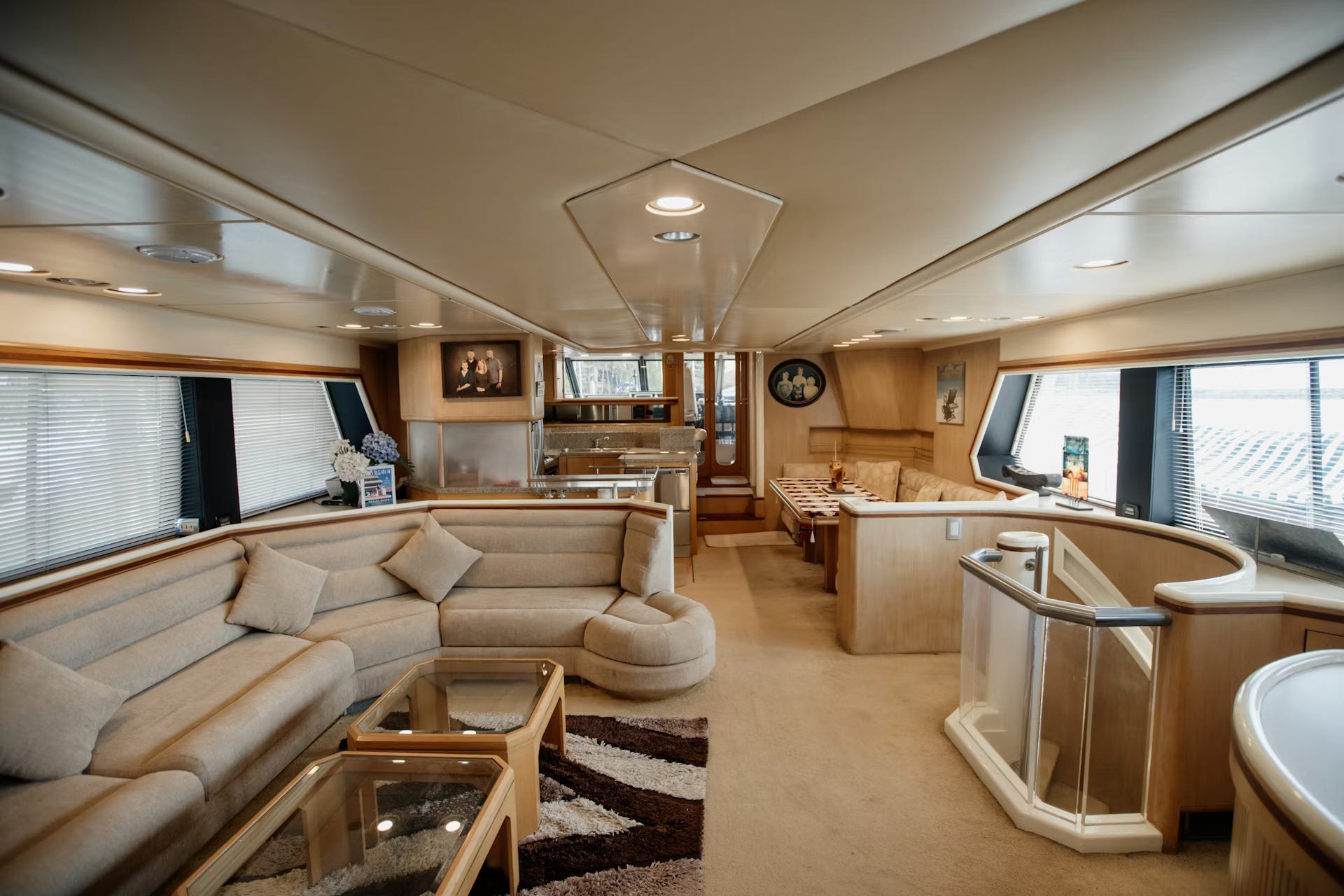
The accommodation layout reflects the design priorities typical of late-1980s Dutch motor yachts. The interior features light beech wood joinery with darker timber trim throughout, fully carpeted in the saloon and guest cabins. The main deck galley opens into the saloon, equipped with granite countertops, a breakfast bar and modern appliances installed during the refit. The saloon itself includes a bar area, a large C-shaped sofa and a dining area with bench seating for six. Access to the aft cockpit occurs through sliding glass doors, creating continuity between interior and exterior spaces.
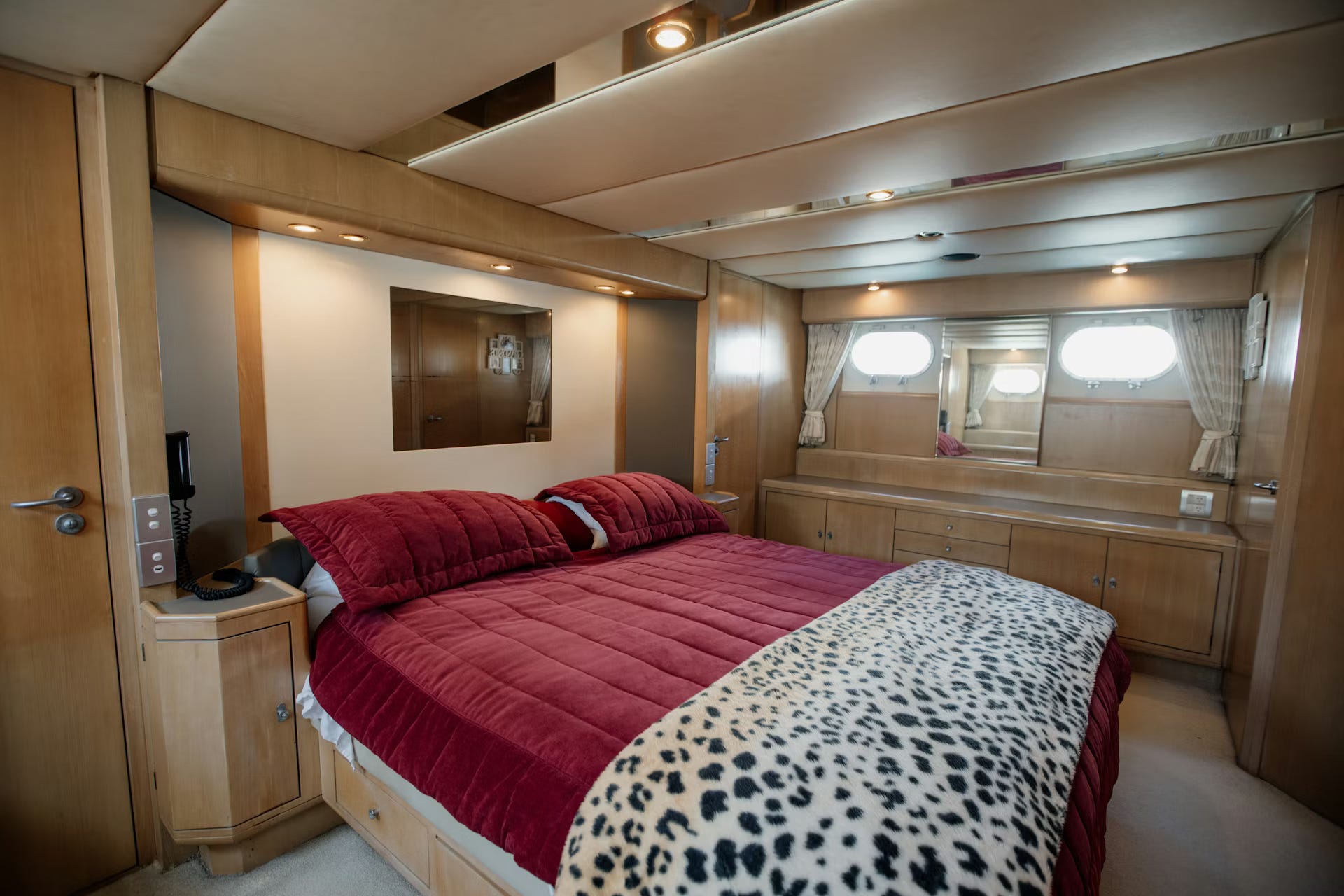
Four guest cabins accommodate up to ten people. The full-beam master cabin occupies the midships section, accessed via a dedicated companionway that provides privacy from the main saloon traffic flow. The cabin includes a queen-sized bed, substantial storage and his-and-hers bathrooms flanking a central shower stall. That configuration is relatively uncommon and represents a luxury allocation of space in a vessel of this size. The forward VIP cabin provides a queen bed with en-suite head. Port and starboard twin cabins each contain single berths with Pullman beds and individual en-suite facilities.
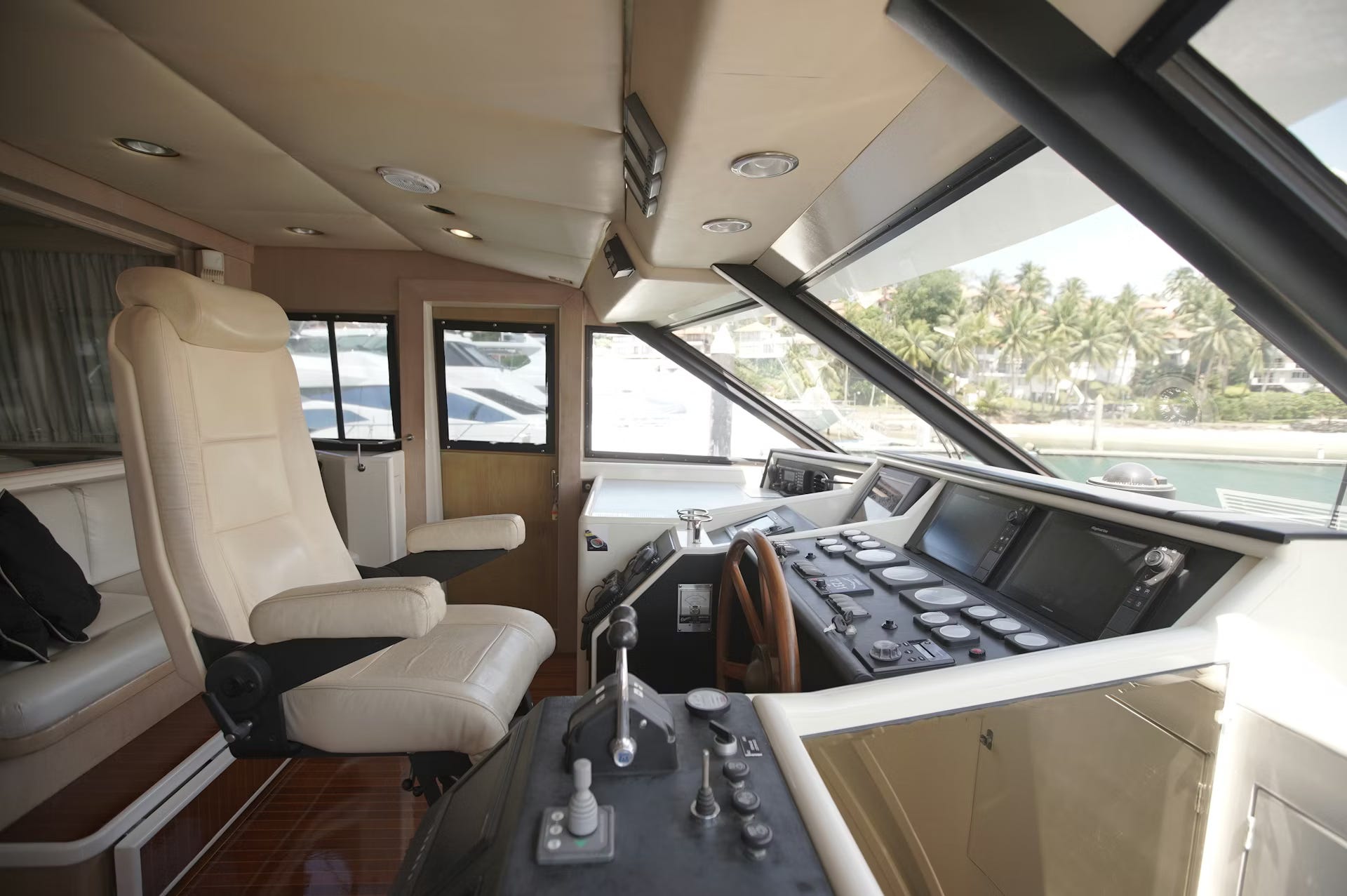
The wheelhouse sits at the forward end of the main deck, offering excellent visibility through wraparound glazing and access to the side decks through sliding doors. The flybridge, reached via an interior staircase, provides a secondary helm position with guest seating and space for additional safety equipment and tenders. The aft deck includes a teak cockpit, a large lazarette for storage and a sheltered mezzanine level with outdoor seating. The foredeck, accessible from the wheelhouse, includes a sunpad and anchor windlass.
At $599,000, the asking price positions Braveheart 2 at approximately $7,300 per foot. For comparison, a new-build explorer yacht of comparable size typically commands $2 million to $4 million depending on specification and builder. Even well-maintained used motor yachts in the 80-foot range generally ask $1 million to $2 million. On paper, the value proposition appears compelling. A comprehensively refitted Dutch-built platform with proven offshore capability, shallow draft flexibility and current operational status for roughly one-third the cost of comparable vessels.
However, the $599,000 acquisition price represents only the first chapter of the ownership calculation. The vessel currently lies in Batam, Indonesia. For buyers based in the United States, Europe or the United Kingdom, that geography introduces logistical complexity and cost that fundamentally alter the financial reality. Below the paywall, I examine what bringing Braveheart 2 home actually entails, including international shipping costs, VAT implications for European buyers, the aluminium maintenance considerations that differ from steel platforms, and the total ownership budget required to operate an 82-foot motor yacht responsibly over the long term.
Looking for Something Like Her?
Braveheart 2 is sold, but she was never a one-off. Over on the Yacht Buoy site I keep a hand-picked selection of boats currently for sale. Every one has been personally inspected, filmed or reviewed by me, and nothing goes on that list unless I genuinely rate it on build quality, value and engineering.

