

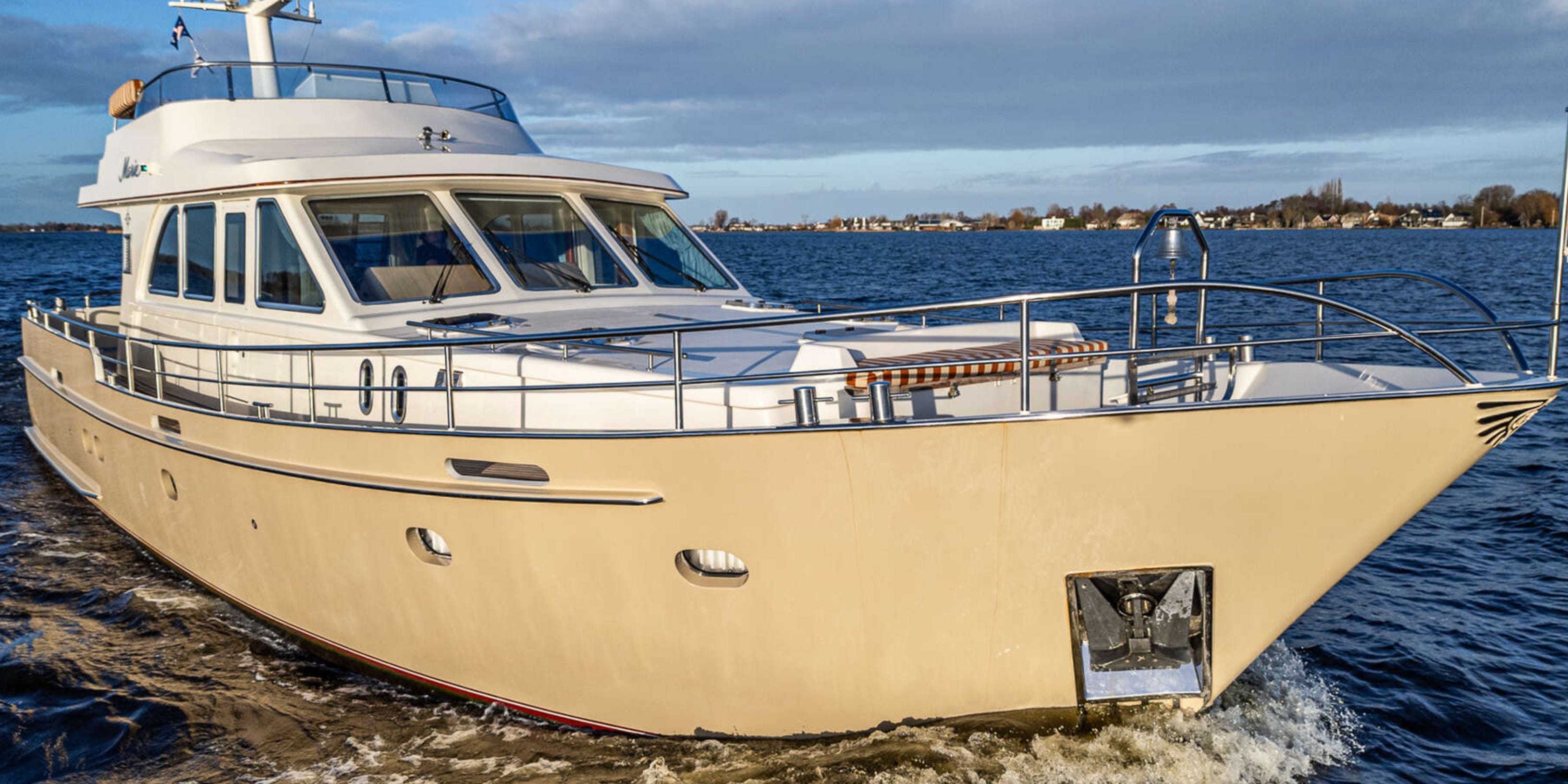
She is 18 metres of Belgian steel, sitting quietly in a covered De Valk marina in Sneek, the Netherlands, currently priced at €795,000 VAT paid. On paper she looks like dozens of other European trawler yachts. Twin Caterpillars, flybridge, cherry wood interior, reverse cycle air conditioning. Comfortable. Well-equipped. Thoroughly modern.
But if you watched the video and found yourself thinking, “hold on; who actually built this thing?” then you are asking exactly the right question.
Jachtwerf Vennekens is not a name that appears regularly in brokerage listings. They are a Belgian yard founded in 1952 in Willebroek, and they are still building custom steel yachts today, now operating from Boom, Belgium. They have been at it for over 70 years. They built this vessel in 2010 to a standard that rewards closer inspection. The more you read the spec sheet, the more the picture changes.
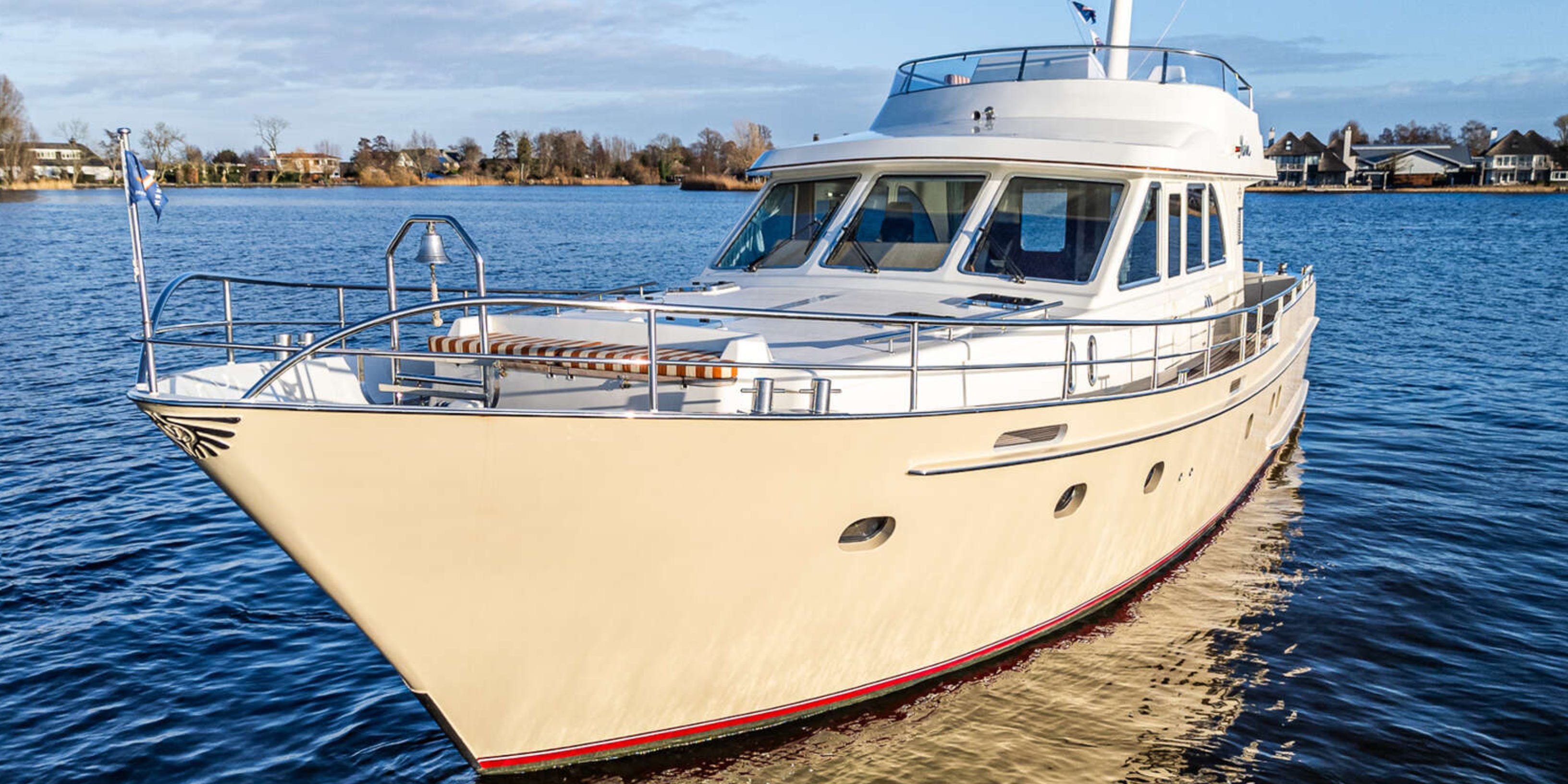
The Yard Behind the Boat
Jachtwerf Vennekens started in 1952 building commercial and working vessels. Over the following decades they moved into custom pleasure craft, developing a reputation for steel and aluminium construction with the kind of attention to specification that shows up in the machinery list rather than the marketing brochure. They are not a volume production yard. They are not a brand name you will see plastered across marina pontoons. They build to order.
What makes this relevant to a buyer is the aftermarket reality. Vennekens is still actively building, which means refit enquiries go back to the original yard, parts can be sourced from the people who designed the vessel, and any future owner can pick up the phone and speak to someone who knows the build. That is not something you can say for a lot of brokerage boats.
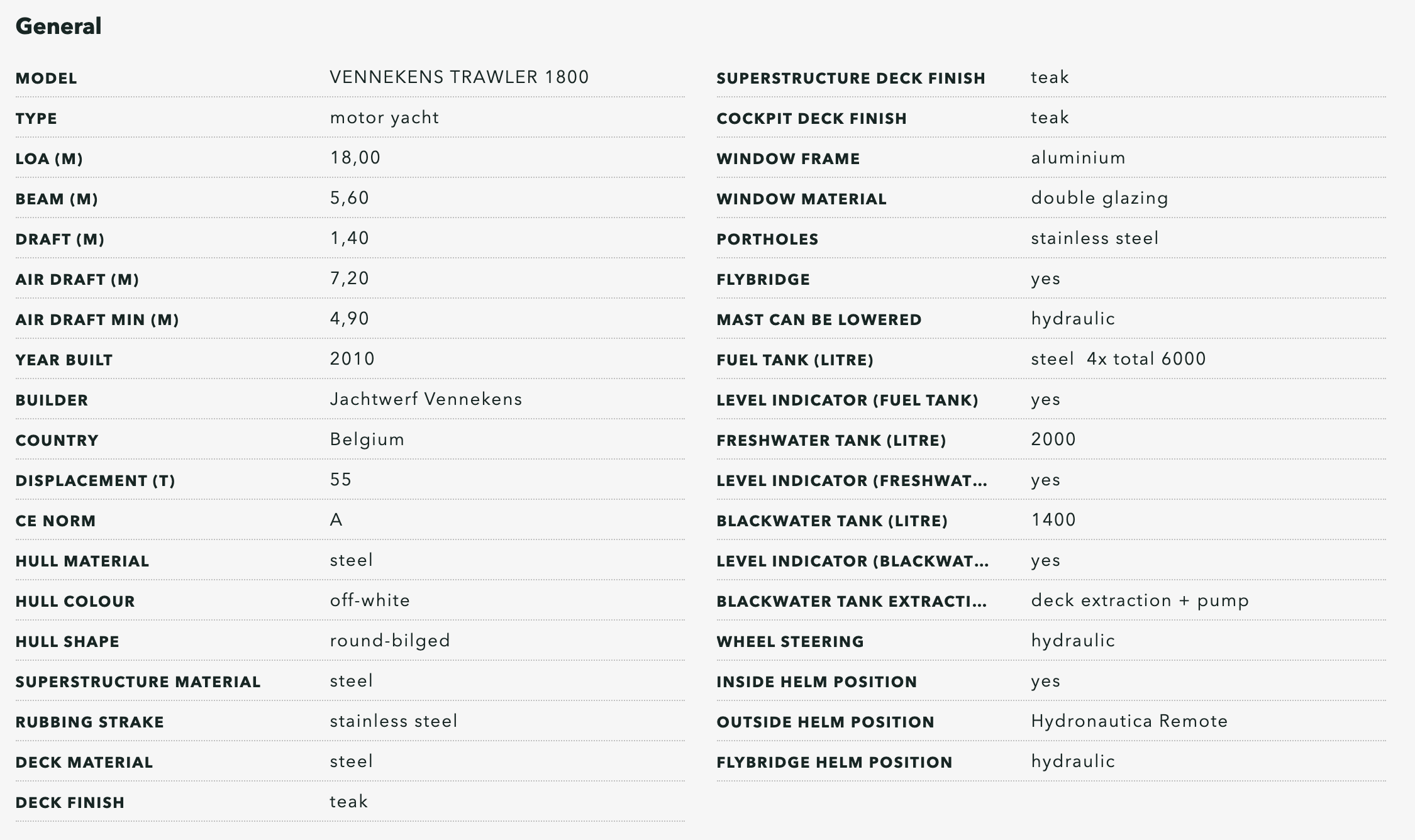
The Trawler 1800 is a CE Category A vessel. That is ocean-going certification, the highest available classification for recreational craft. Not coastal. Not inland. Ocean. She was built, from the outset, to go offshore.
At 18 metres LOA with a 5.60 metre beam and a round-bilged steel hull, she has the proportions of a serious working vessel. Fifty-five tonnes displacement. The shallow 1.40 metre draft opens up inland waterways that deeper-keeled expedition yachts cannot touch, while the 7.20 metre air draft (reducible to 4.90 metres via hydraulic mast) means she can actually use those waterways and pass under bridges that would stop other boats cold.
This is a vessel designed for range. 6,000 litres of diesel across four tanks. 2,000 litres of freshwater. She is not built for weekend trips. She is built for passages.
The Engineering Question Everyone Has
If you watched the video, the question you are probably sitting with is this: those Caterpillar C7s have 2,307 hours on them. Is that a problem?
The short answer is no…. and here is why.
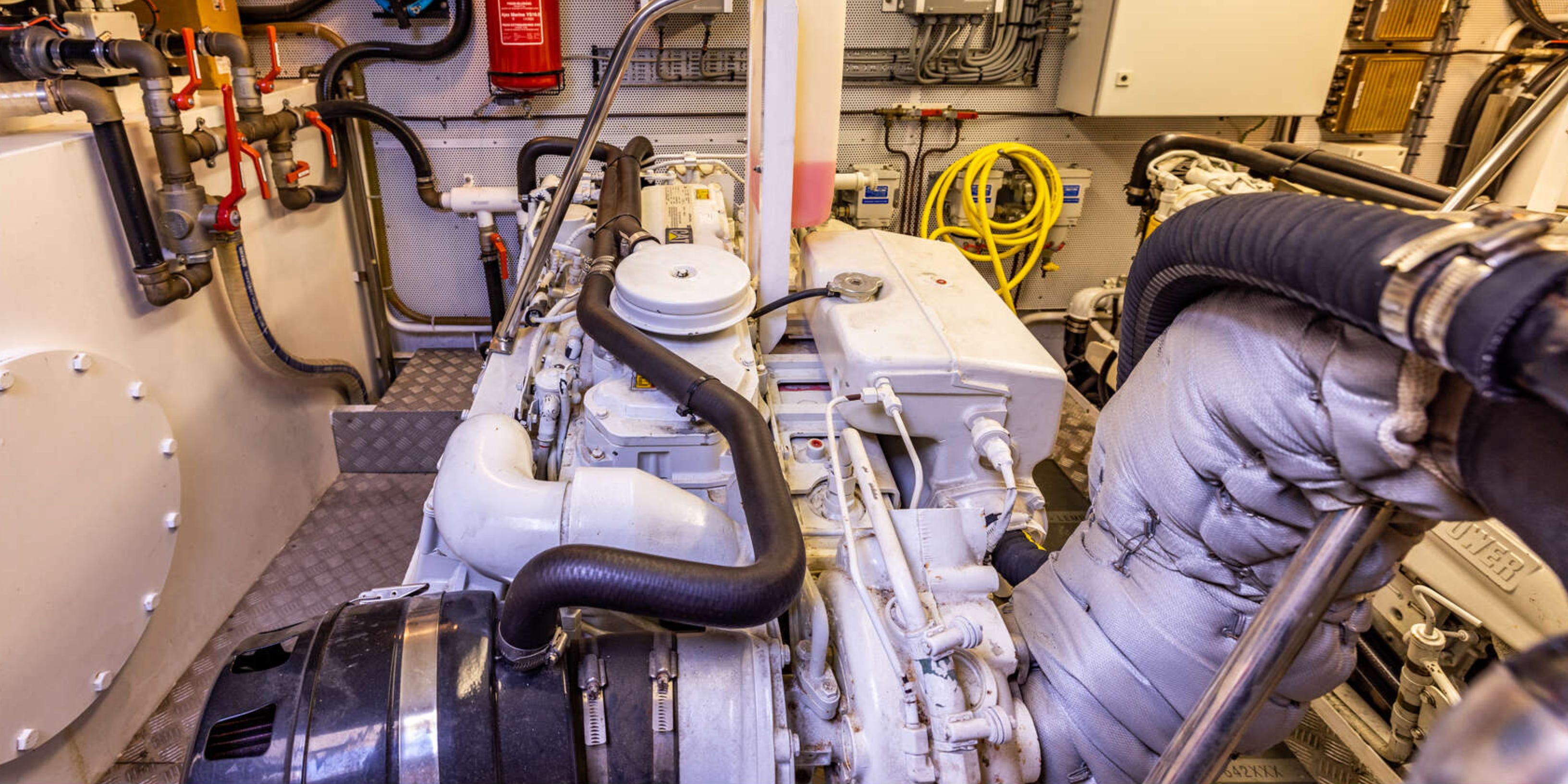
The Caterpillar C7DI is a 7.2-litre inline-six marine diesel, turbocharged with ACERT electronic fuel management. It is rated at 255hp in this application and it has a very good reputation in commercial and recreational marine use. At 2,307 hours, these engines are not even close to halfway through their serviceable life. A well-maintained C7 in a pleasure craft application will typically run to 10,000 to 15,000 hours before a major overhaul is warranted, some documented examples reach beyond 20,000 hours with consistent maintenance. Most used trawler yachts of this age are presented with significantly higher hour counts than this.
2,307 hours also tells you something important: this boat has actually been used. Engines that sit unused deteriorate faster than engines that run regularly. Seals dry out, fuel systems gum up, cooling passages corrode. A vessel with 2,307 hours has had its machinery exercised, which is exactly what you want in a 15-year-old boat.
The ACERT technology is worth understanding. Unlike older mechanical injection engines, the C7DI uses a common rail electronic fuel system with an engine control unit governing fuel timing, boost pressure and combustion. At the cruise RPMs a trawler of this weight typically runs - around 1,400 to 1,600 revolutions per minute - the electronic management system keeps fuel consumption well below what an equivalent mechanical engine would burn. These engines are working at roughly 25 to 30% of their rated power at cruise speed. They are not stressed.
The twin installation is the other detail worth noting. Two C7s giving 510hp combined, driving through Twin Disc hydraulic gearboxes at 2.8:1 reduction. This is a well-specified twin-screw installation, not a compromise. Both hydraulic bow and stern thrusters are fitted. She will handle in a marina like a vessel a third her size.
The generator is a Mastervolt Whisper 16kVA — a serious, quiet unit. The electrical system is built around Mastervolt components throughout: Mass 24/100 battery charger, Mass Sine 24/5000 inverter, Mass GI 7.0 insulation transformer. This is not a budget fit-out. Mastervolt is the preferred choice for long-range passage makers who cannot afford electrical gremlins at sea.
Fin stabilisers from Najad Marine complete the picture. Running stabilisers on a trawler of this displacement make a meaningful difference to life aboard at sea. Not a luxury — a practical quality-of-life system that will define how comfortable the passages actually are.
Life Aboard
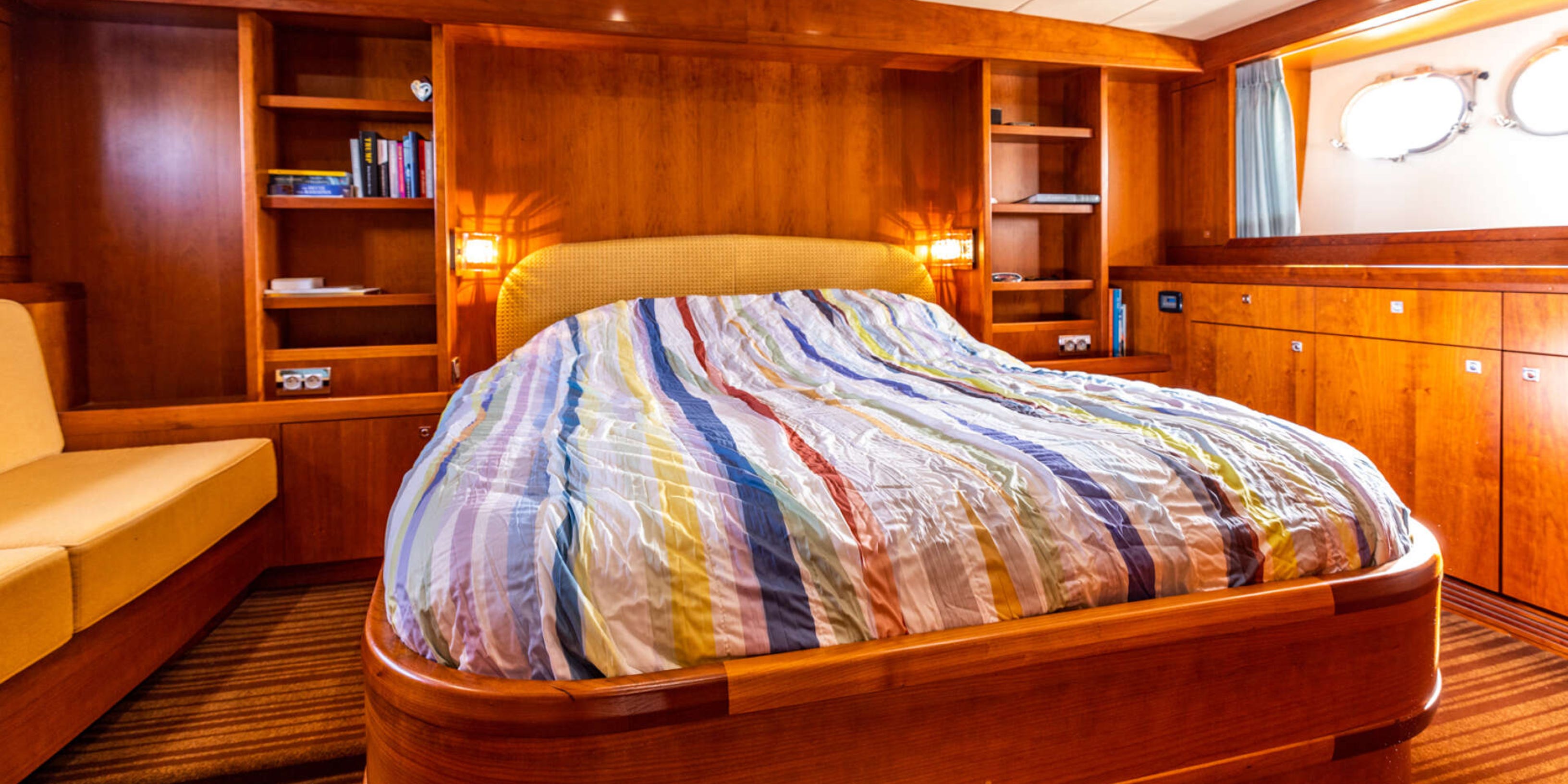
Three cabins, six berths. The owner’s cabin has a full French bed — not a V-berth compromise. Guest cabin one has a V-berth with en suite head and shower. Guest cabin two has bunks. There is also a washing machine and dryer (Whirlpool), which sounds unremarkable until you have been three weeks without one.
The interior is cherry wood throughout. The galley has a ceramic hob, AEG combination microwave and oven, AEG dishwasher, double stainless steel sink and Corian countertops. This is a serious cooking space, not a coastal cruiser galley.
Heating is central — Maritime Booster system — with reverse cycle air conditioning throughout. Double glazing on all windows. She is set up to be comfortable in a North Sea winter and a Mediterranean summer without changing a thing.
The flybridge gives you the high vantage point for coastal and river work. The inside helm is there for when the weather turns. The outside helm position runs via Hydronautica remote so great for berthing without a crew member shouting across the pontoon at you. Pantograph side doors on both port and starboard sides for easy access.
The Bose surround sound system is the kind of detail that suggests whoever specified this vessel knew exactly what they wanted from her.
The rest of this piece is for Wardroom members, because this is where the useful numbers live.
What does €795,000 actually get you in annual running costs? What does the finance really look like; deposit requirements, monthly repayments, and what lenders typically require for a 16-year-old steel hull? What would I be checking on this specific vessel before signing anything?
That is what the Wardroom is for.
The Real Numbers
I have done some extensive research, so let us work through the finances.
