

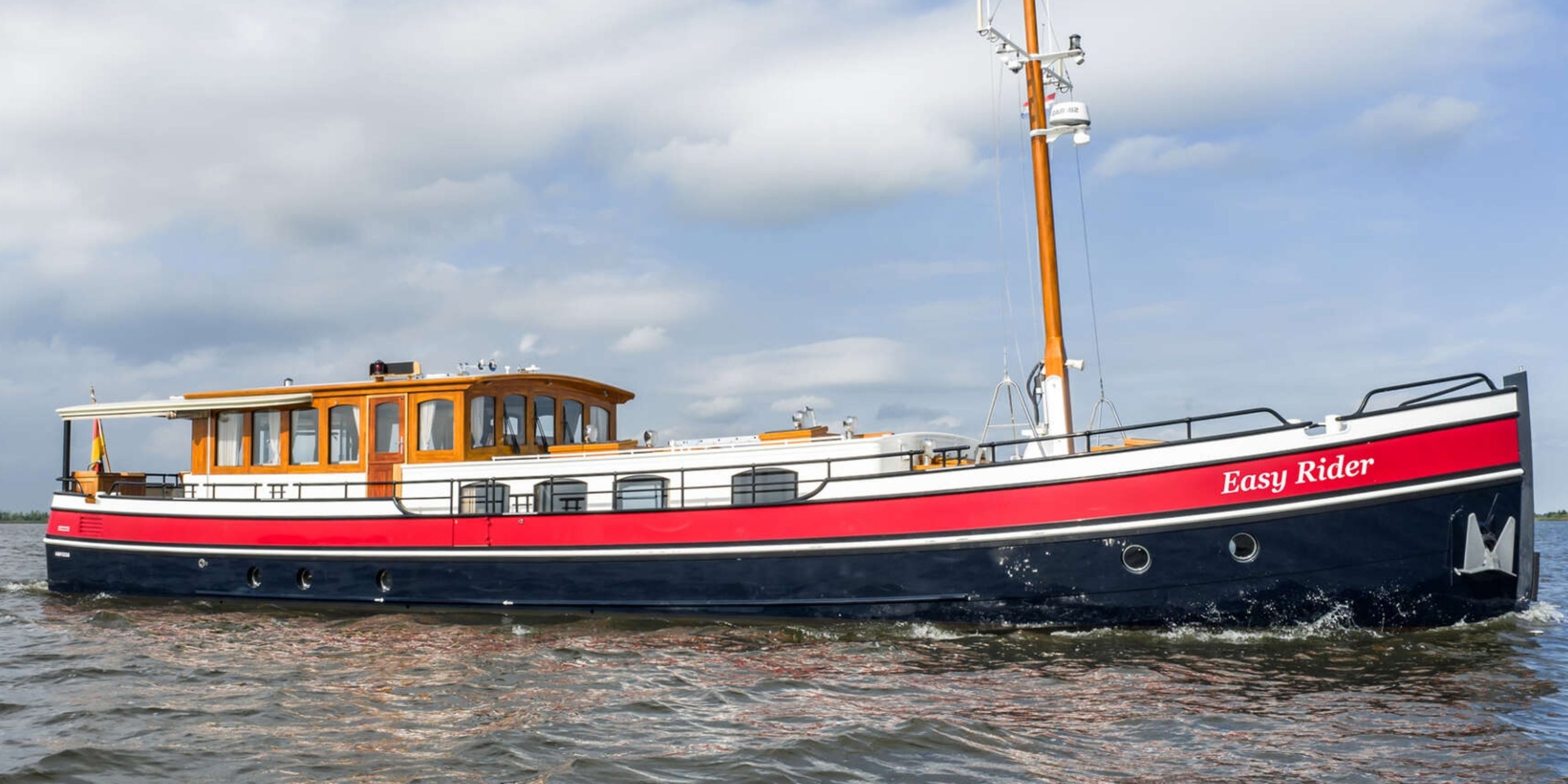
If you have watched my video about a Luxe Motor (565,000 views and counting), you already know why these vessels capture the imagination. A steel yacht with classic lines, serious displacement, and the kind of fit-out that makes serious cruisers stop scrolling. That vessel was a different boat, but the same type of genre, and it clearly resonated. Today I want to introduce you to M/Y ‘Easy Rider’, a 2018 example of the same type currently lying at De Valk in Sneek. What makes her genuinely special comes down to one set of very important numbers: 3.45 metres.
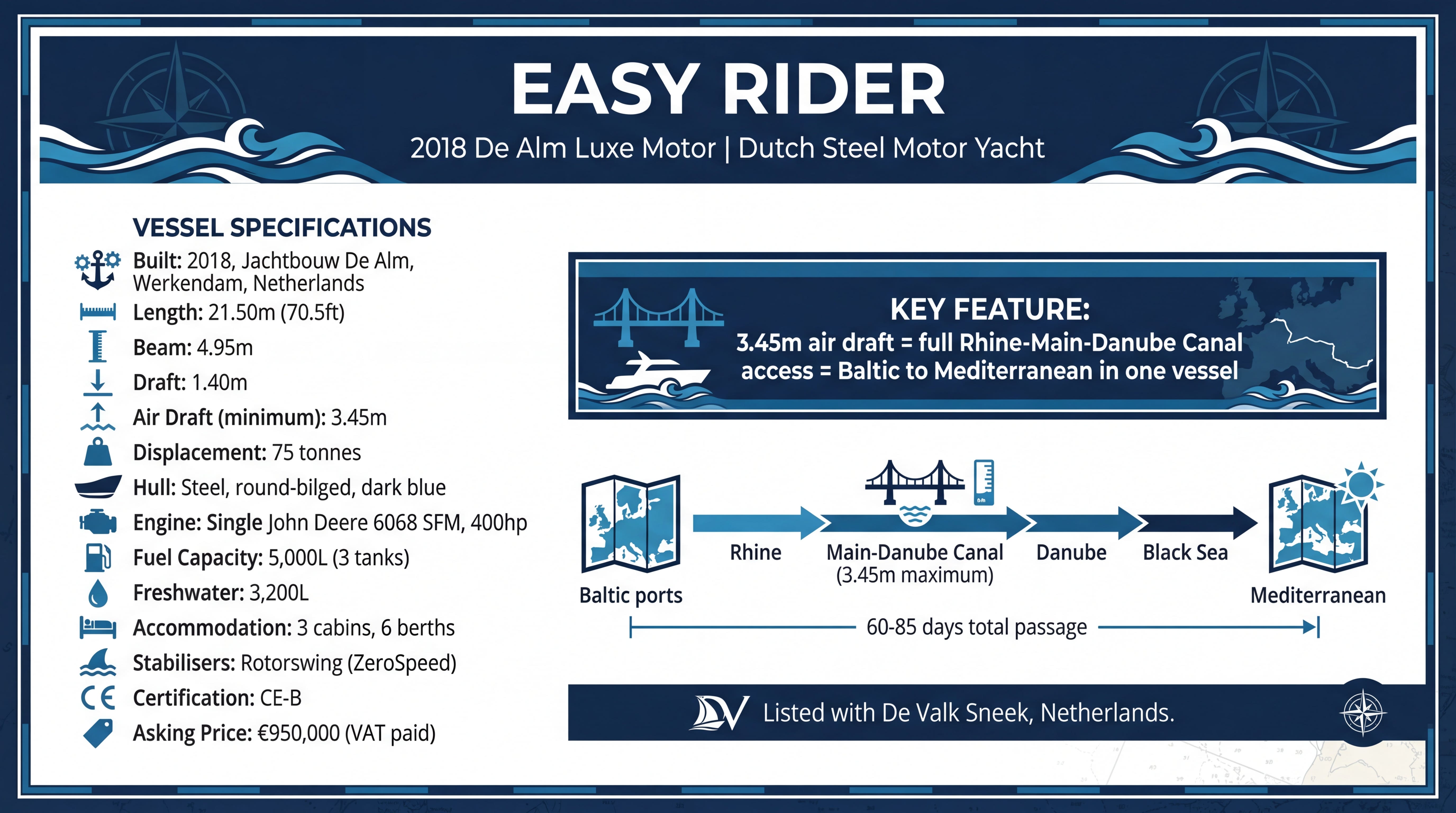
That is the minimum air draft. And it is the exact specification that unlocks the Main-Danube Canal…
Why 3.45 Metres Matters
Most European motor yachts cannot cross the continent. A typical hard-top motor yacht with a flybridge stands 5.5 to 6.5 metres above the waterline. The Main-Danube Canal, the 171-kilometre waterway that connects the Rhine to the Danube via Bavaria, has bridges and locks with a maximum clearance of 3.45 metres. Above that figure, you stop. You turn around. You take a different route that doesn’t actually exist.
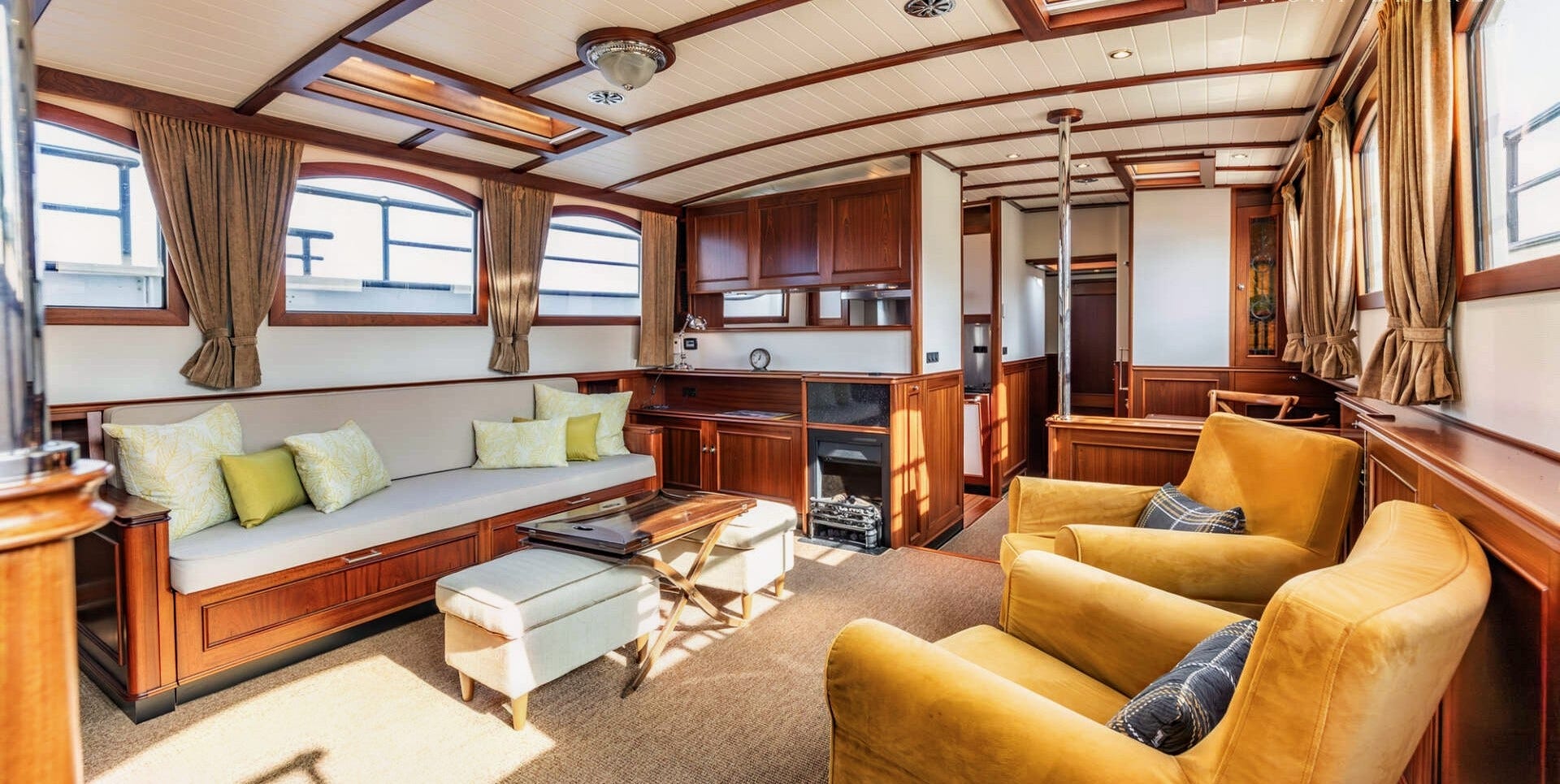
Easy Rider’s mast lowers electrically. Her profile, at minimum, clears 3.45 metres with enough margin to proceed. This single characteristic transforms her from a comfortable Dutch motor yacht into a vessel capable of the most ambitious inland passage in Europe: Baltic to Mediterranean, without once being stopped by a bridge.
The route is not a fantasy. From the North Sea ports, up the Rhine, through the Main-Danube Canal into Bavaria, down the Danube through Vienna, Budapest, and the Balkans to the Black Sea, then through the Turkish Straits and across the Aegean to the Mediterranean. Approximately 2,500 nautical miles of combined inland and coastal passage. Sixty to eighty-five days elapsed time on a generous itinerary. The entire route is achievable in a single summer season.
Easy Rider is one of a small number of modern motor yachts built to 3.45 metres that can do it in genuine comfort.
The Yard Behind the Boat
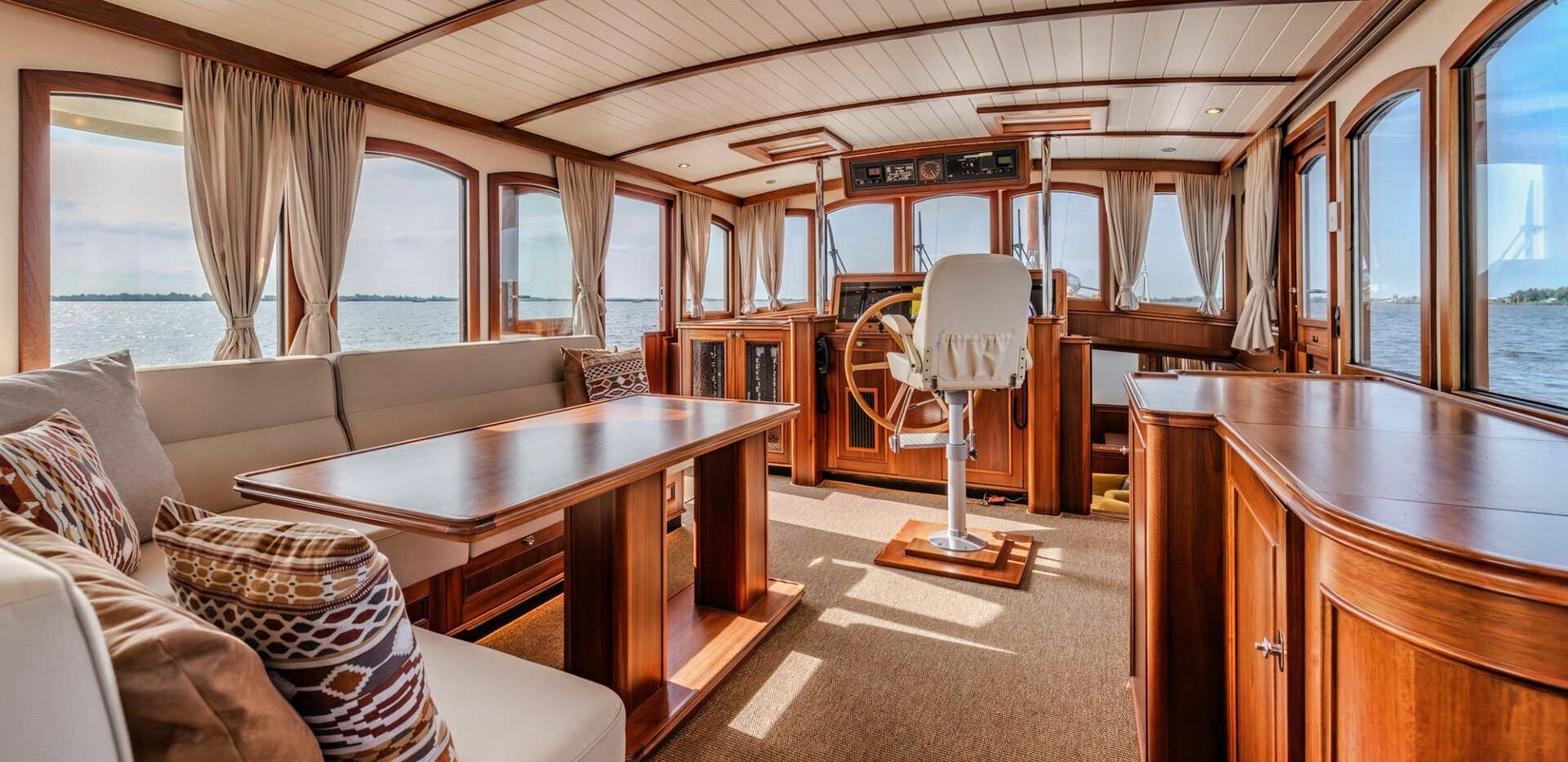
De Alm Jachtbouw has been building Dutch steel motor yachts for 45 years from their yard in Werkendam. This is not a production line operation. Each vessel is bespoke, specified by the owner, built to order. The yard’s reputation rests on craftsmanship and honesty: no hidden compromises, no shortcuts dressed up as features.
The ALM Luxe Motor is De Alm’s modern dual-purpose design, deliberately bridging the gap between classical Dutch barge heritage and contemporary coastal capability. The lines reference the traditional schippersjacht, the “skipper’s yacht” that evolved from working canal barges into luxury private vessels over the past 30 years. But the systems are thoroughly modern: hydraulic steering, electric anchor windlass, reverse-cycle air conditioning, and the Rotorswing stabiliser system that gives Easy Rider her sea legs.
A comparable new-build De Alm Grand Voyager today starts at €1.4 to €1.8 million and involves an 18 to 24-month wait. Easy Rider, built in 2018 and available now at €950,000 with VAT paid, represents a 47% discount against that benchmark. For a vessel in excellent condition with modern systems, that gap is the entire value proposition.
Rotorswing: The Technology That Makes Her Coastal
A 75-tonne steel vessel with a displacement hull is not a rough-weather machine. She is designed for comfortable, economical progress in the conditions where European cruising actually happens. The Rotorswing stabiliser system extends that comfort envelope considerably.
Rotorswing is a Dutch invention. Where conventional fin stabilisers extend from the hull underwater and create drag at all times, Rotorswing uses electrically-powered rotating discs that are fully retracted when not needed. Deployed, they generate gyroscopic forces that counteract roll motion across the full cruising speed range (of most vessels) of 3 to 25 knots. The system operates on pure electric power with no hydraulic fluid, simpler maintenance than fin alternatives, and no hull penetrations.
Spotted a boat that you would like me to feature in my blog?
The 2018 installation on Easy Rider includes the ZeroSpeed version, which provides roll damping even at anchor. In coastal anchorages where a passing ferry creates an uncomfortable beam swell, the stabilisers continue working. In locks and marina berths where the system is retracted, there is no drag penalty.CE-B certification means Easy Rider is designed for wind to Force 8 and waves to four metres, up to 200 nautical miles from shelter.
That covers the coastal segments of the Baltic-to-Med route with appropriate weather windows: North Sea crossings, Channel passages, Biscay to northern Spain if well-timed, and the open Aegean approaches. None of these are routes to attempt in winter or in developing weather, but for an experienced owner with patience and good forecasting, CE-B is a sensible and realistic specification for this style of cruising.
The Engine
A 400-horsepower John Deere 6068 drives a 75-tonne displacement hull at 8 to 10 knots with the quiet efficiency of a low-RPM diesel doing exactly what it was designed to do. The 6068 is a six-cylinder, 6.8-litre turbocharged diesel used across marine, construction, and agricultural applications worldwide. Independent cruising data from vessels that have run the engine to 10,000 hours notes excellent injector longevity and consistent reliability in remote locations with limited service infrastructure.
Fuel consumption at 8 to 10 knots runs to approximately 18 to 25 litres per hour. Over a 150 to 200-hour season, that is 2,700 to 5,000 litres, costing roughly €2,400 to €4,800 at current European marine diesel prices. For a vessel of this size and specification, those figures are genuinely efficient.
Service intervals are straightforward: oil and filters at 500 to 750 running hours, full inspection annually.
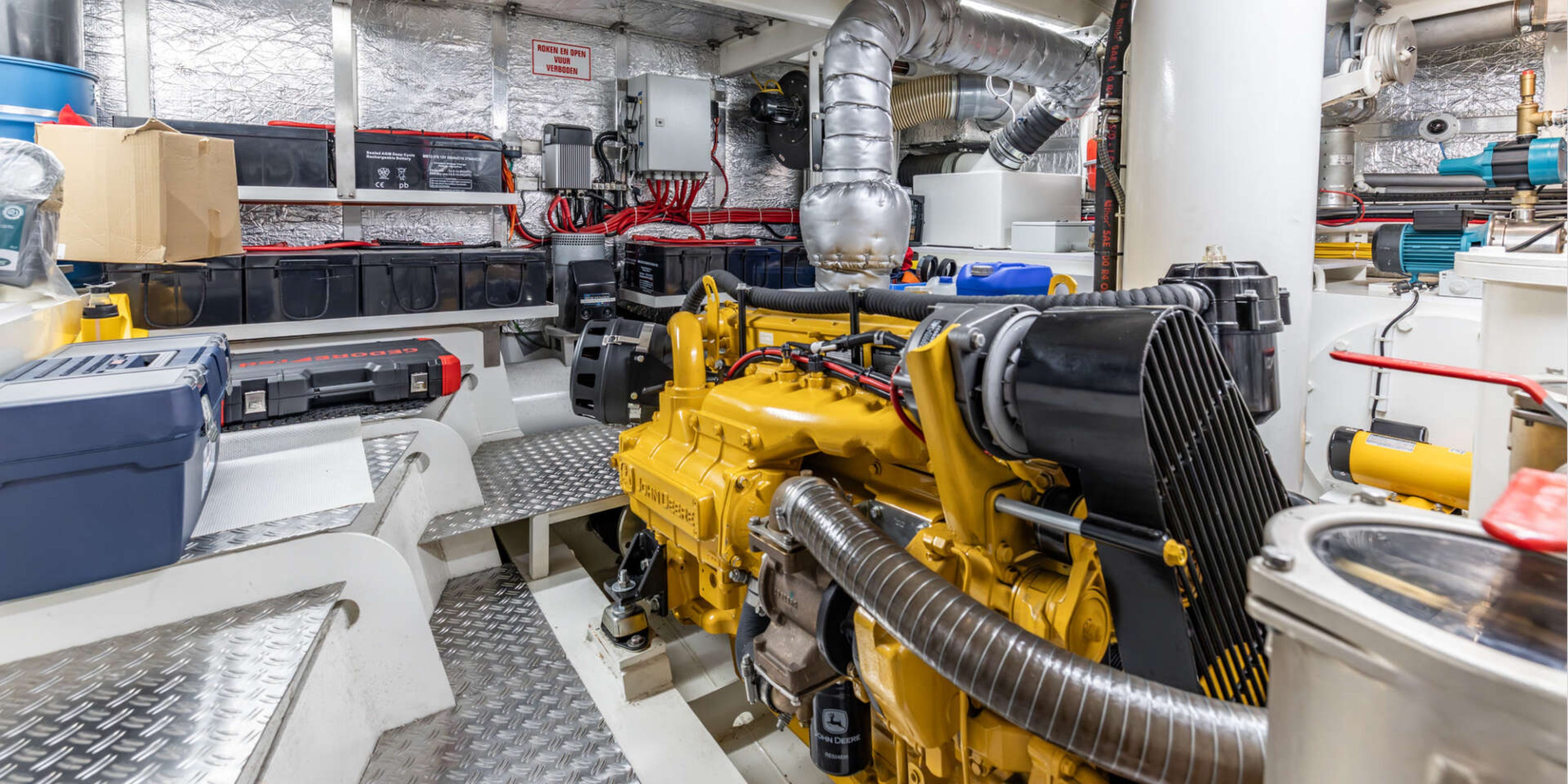
Total annual engine maintenance for moderate use runs to €1,050 to €1,650. Parts are available from John Deere dealers throughout Europe, and any competent marine diesel engineer can service the engine without specialist knowledge or imported components.
The 5,000-litre fuel capacity across three tanks provides a range of approximately 2000 nautical miles at cruise speed. For inland waterway cruising where fuel is available at regular intervals, that capacity is more than adequate. For coastal passages, it accommodates the longer legs without requiring precise fuel management.
Easy Rider is currently lying at De Valk in Sneek, and I am planning to head over there in the next couple of weeks to film her in person. If you are a premium subscriber and would like me to include her on my filming list, send me a DM via Substack and I will make sure she gets proper attention on camera. Your questions, your priorities, your footage.
What Ownership Actually Costs
Easy Rider is a modern, well-equipped Dutch motor yacht. She is not a project. The ownership costs reflect that.
Annual running costs for a 21.5-metre steel motor yacht of this specification, based on 150 to 200 operating hours per year and a primary berth in the Netherlands or northern France, break down as follows.
