

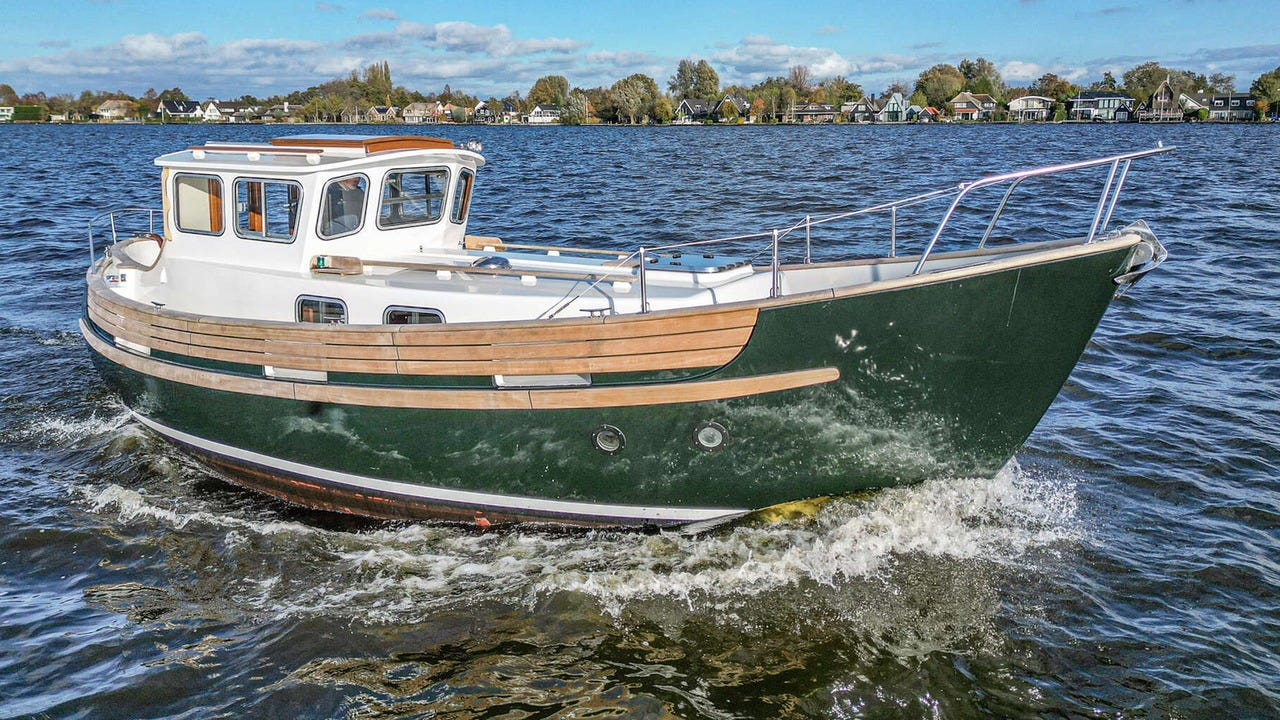
The response to my tour of the Fisher 30 Pilothouse has been something else. Nearly 855,000 views and counting since the video was uploaded to my channel, which tells me something I already suspected: there is a very large number of people out there who dream about a compact pilothouse trawler, and the Fisher 30 speaks to that dream in a very direct way….
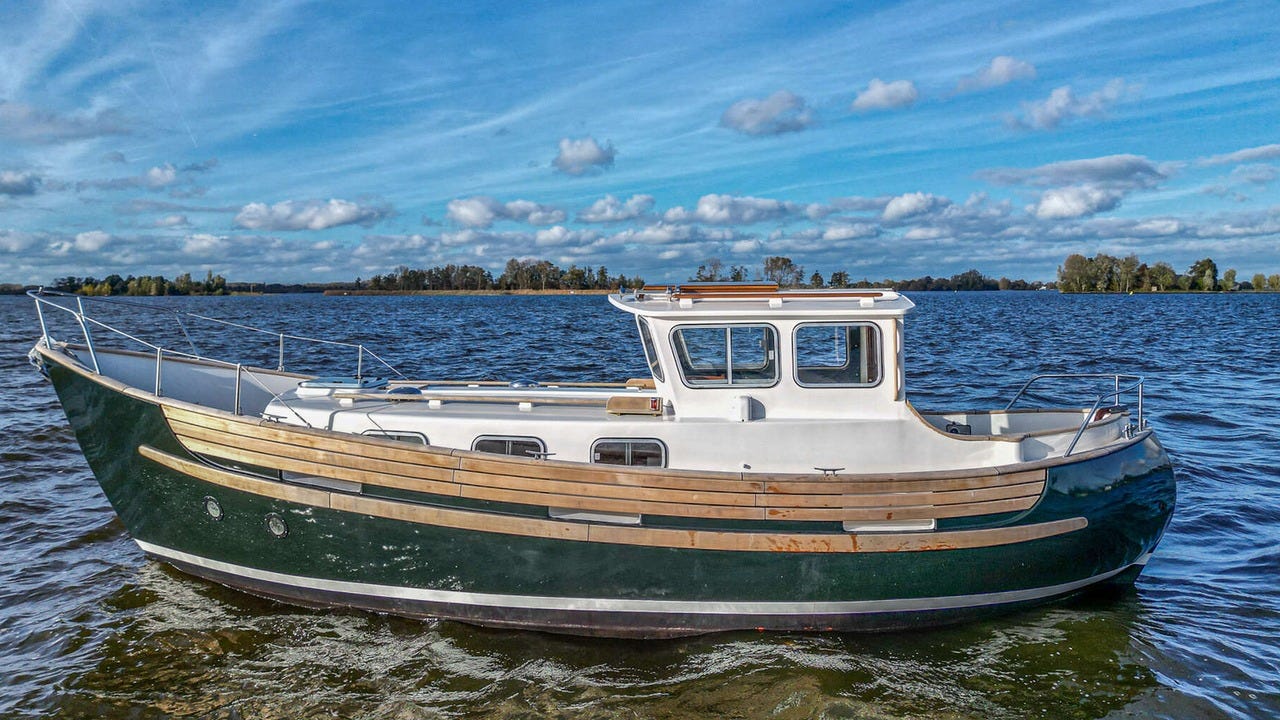
It is not hard to understand why. She is chunky, honest, and purposeful. A full-keel displacement hull with a decent pilothouse and a deep cockpit, built in 1975 by one of Britain’s most respected small yacht builders, and she carries herself like she knows it.
But filming five boats in a single day means trade-offs, and a few important details did not make it onto camera. The comment section has been very specific about what it wants to know, so here we are.
1. The Mast Question
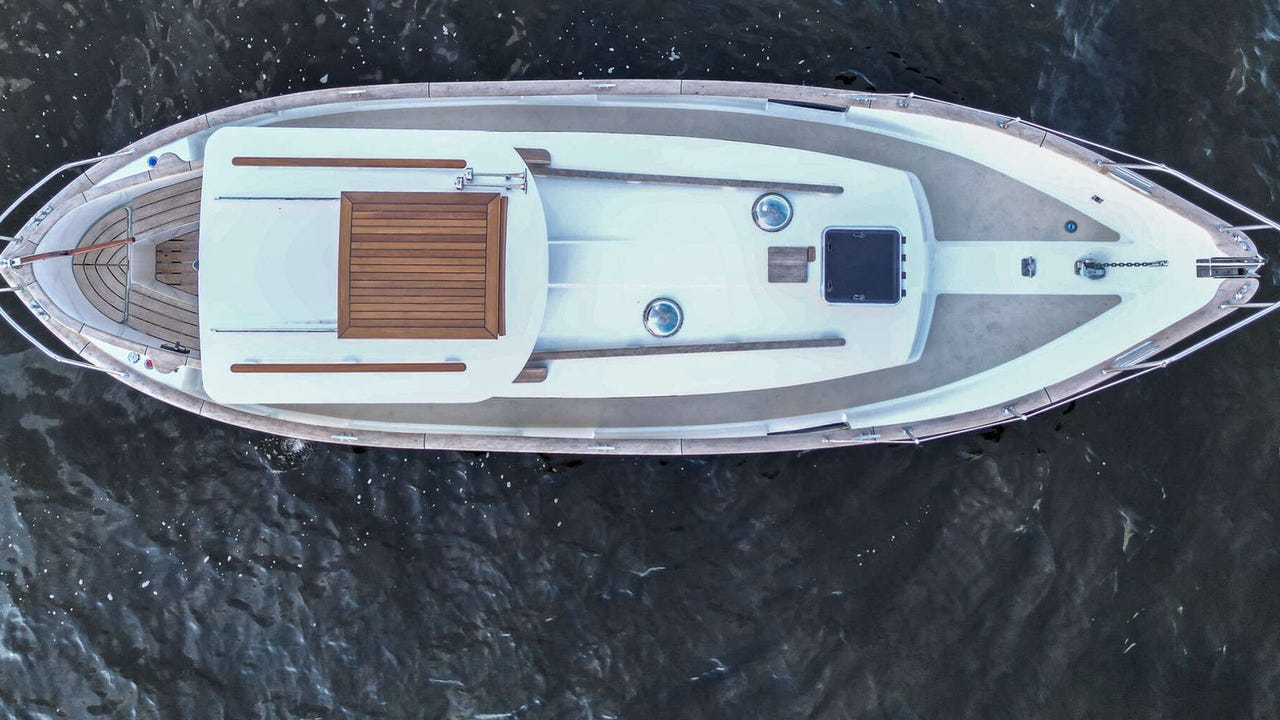
chrishamilton2527 was far from alone in asking about the mast, and I completely understand why. Looking at the footage, it is not immediately obvious what the mast situation is (other than it is not there!).
The Fisher 30 was originally designed by Wyatt and Freeman as a motorsailer, with most 1970s hulls leaving the yard as ketch-rigged boats carrying a small main and mizzen. The rig was never about performance sailing. It was about balance, about giving a single-hander something to lean on in a cross-sea and reduce roll under power. For the passage-making cruiser of that era, it made a great deal of sense.
This particular hull has been de-masted entirely. That was a deliberate decision, not a hasty one, and it actually makes a great deal of sense for how most buyers at this end of the market will use her.
Without a mast, this boat loses the roll-damping benefit a mast with a sail provides in a cross-sea, and she loses the option of auxiliary sail if the engine fails. Those are real trade-offs. But what she gains is arguably more valuable for modern coastal and inland cruising. No fixed rig means unrestricted air draft.
She can pass under fixed bridges throughout the Dutch canal network, the French inland waterways, and the canal systems of Belgium and Germany that would be completely off-limits to a standing rig. No spars also means no halyards, no chainplates working loose in a GRP hull, no standing rigging to inspect and replace on a 10-year cycle, no leaking deck fittings around mast partners. On a 1975 hull, eliminating those maintenance categories is a meaningful saving.
For anyone buying this boat with an eye on coastal passages rather than off-shore sailing, the de-masting is not a loss. It is a simplification that suits the platform well.
2. The Systems Reality
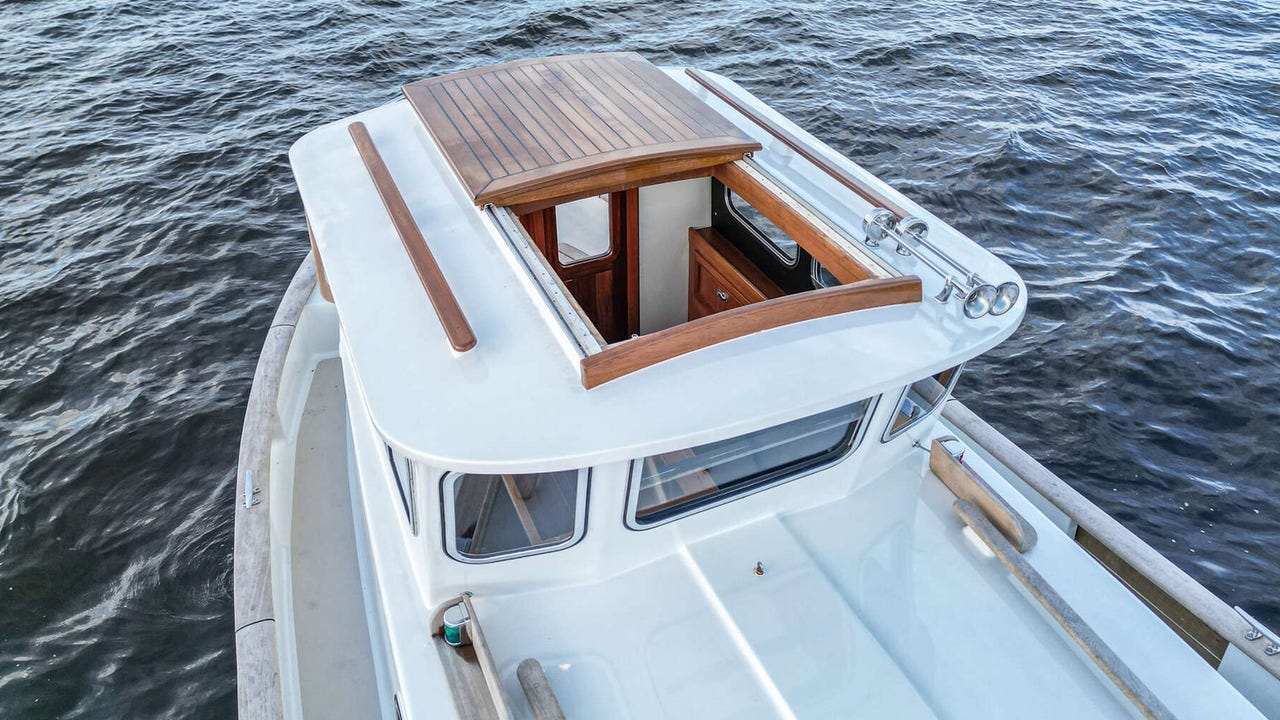
dougmorley2850 made some sharp observations about what this boat lacks, and he is not wrong. There is no radar dome, no large chart plotter visible, and the documentation does not list a cooker or hot water system.
But here is the important context: this is not a tired boat that has been picked clean. She is a boat ready for new adventures, and the engine hours support that.
On the freshwater side, the spec sheet lists a freshwater tank without specifying capacity. Based on the hull size and the accommodation layout, the tankage for a 9.14-metre boat of this vintage would typically sit in the 100-150 litre range, adequate for a long weekend with two people aboard but not a liveaboard proposition without marina access. There is a heads compartment, which is a genuine comfort advantage on a 30-foot boat.
The aforementioned are not necessarily problems, because it means you are not inheriting someone else’s corroded gas locker or failed LPG lines. You are starting with a clean slate, and the choices are genuinely interesting at this price point.
For marina-based weekending, a portable induction hob and a kettle will serve you adequately while you plan a proper galley fit. For coastal passages and anchorages, a compact Wallas diesel stove is the tidy solution: no gas bottles, no regulator, and it doubles as cabin heating in the shoulder seasons. Force 10 remains the classic alternative if LPG is your preference and you want to keep things simple.
The nav gear situation is similar. Yes, this boat needs a plotter and a VHF at minimum, and radar would be strongly advisable for North Sea or Channel passages. But these are commodity items now. A decent chart plotter with AIS integration, a fixed VHF, and a handheld backup are not the financial obstacle they once were, and fitting them gives you the opportunity to specify exactly what you want rather than inheriting a mix of gear installed by someone else at different times with no particular system logic behind it.
3. The Engine: Why 20 Hours Matters
This is the number that jumped out to me.
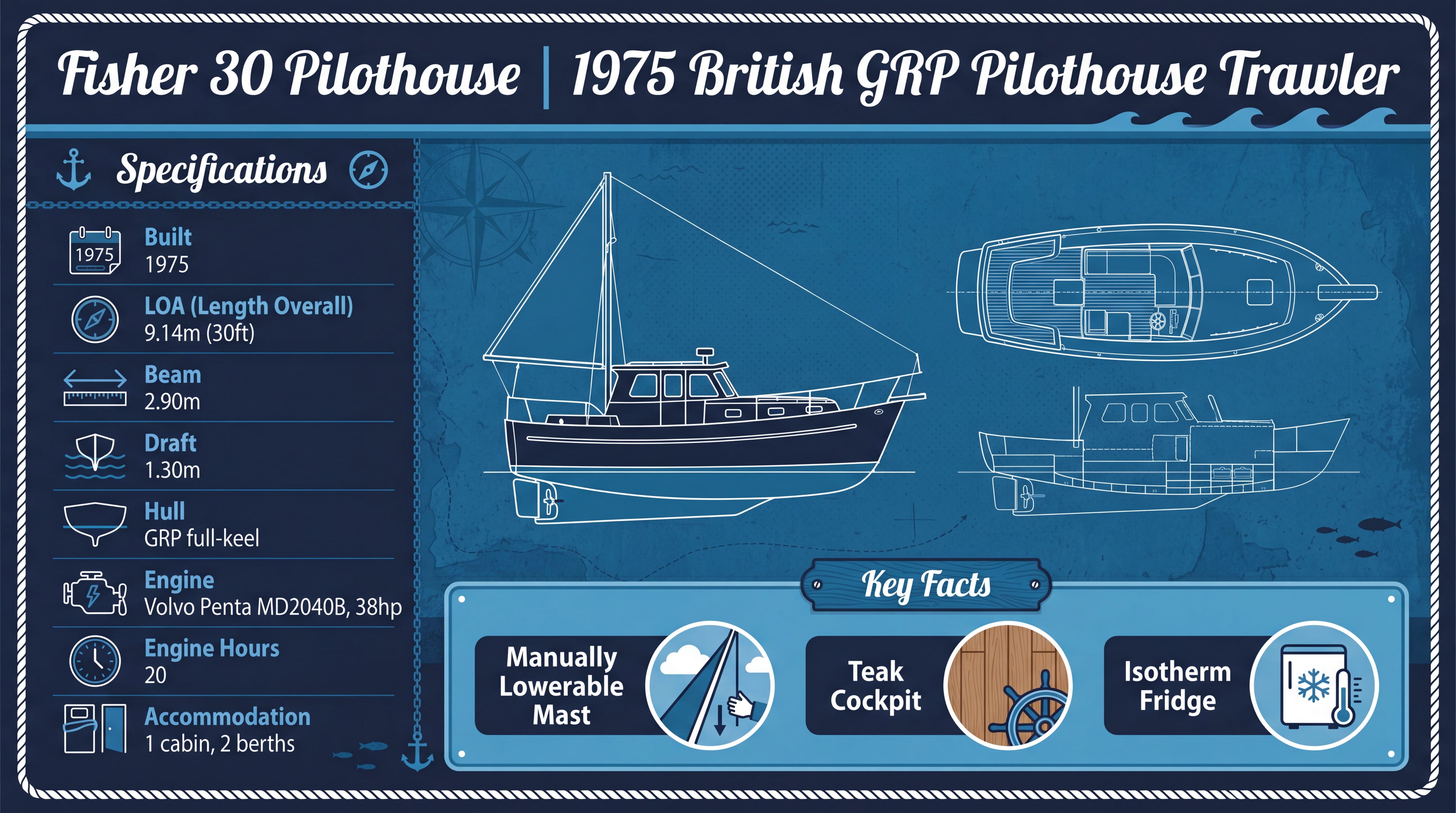
The Volvo Penta MD2040B installed in this hull is logged at 20 engine hours. 20. Not 2,000. Twenty…..
The MD2040B is a compact, modern marine diesel producing 38 hp (27.97 kW) driving a single shaft via a hydraulic gearbox with electric throttle controls. It is part of Volvo’s newer-era compact marine diesel family, with excellent parts availability across Europe and a service network that stretches from the Baltic to the Iberian Peninsula. When you compare it to what this hull would originally have been fitted with in 1975 (a Perkins 4.108 or an early Volvo MD series), the difference in service support, emissions compliance, and parts accessibility is substantial.
20 hours on a new engine in a 1975 hull means an owner has put real money into the mechanical heart of this boat and then parted with her before ever really using it.
It also changes the ownership mathematics considerably....The boat is listed for sale with Mark Hesselmans at De Valk Loosdrecht. If you want to enquire directly, then here is the link to the listing.
Below the paywall, I go through what 20 hours on a new engine actually means for the ownership timeline, what a realistic running cost looks like for this class of boat, and, most importantly, what is actually happening with the price.
Because the asking price figure that has been circulating in the comments is not what this boat is being offered at. The real number is considerably more interesting than that, and it changes how you should think about her entirely.
You will also get access to The Wardroom, where paid subscribers can discuss this vessel and others directly with me, anonymously if you prefer. Join us below.
