

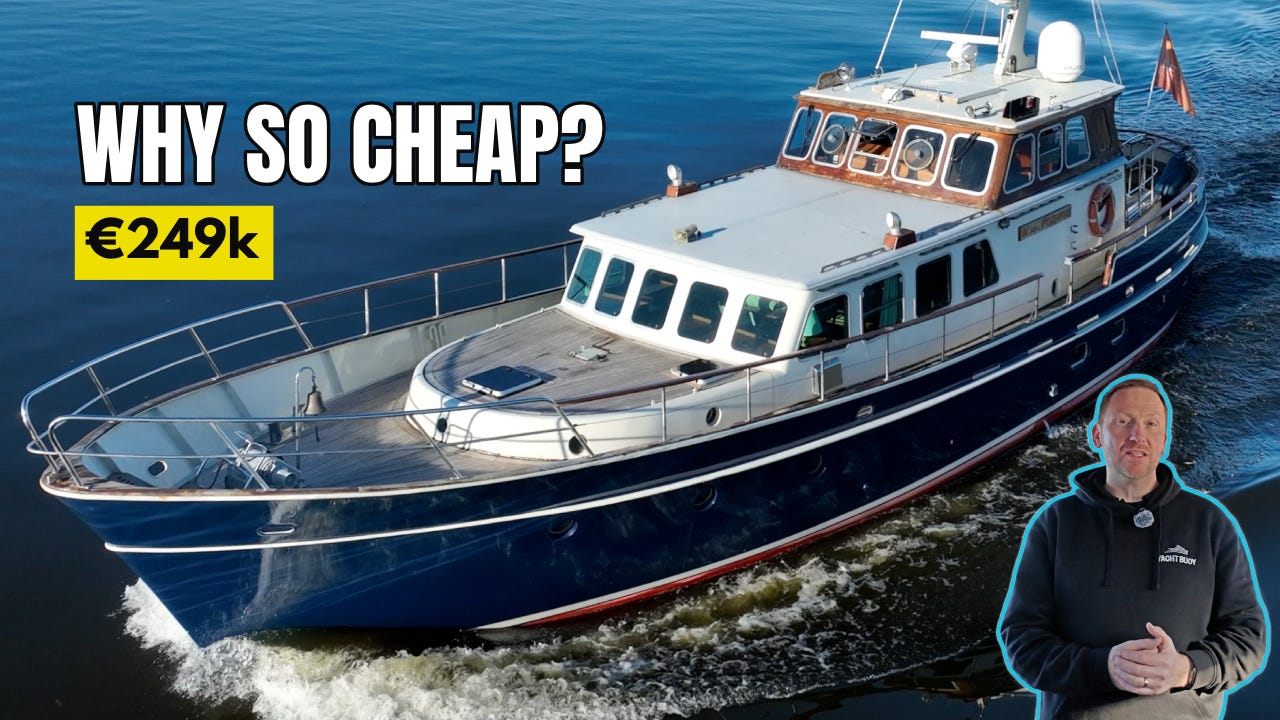
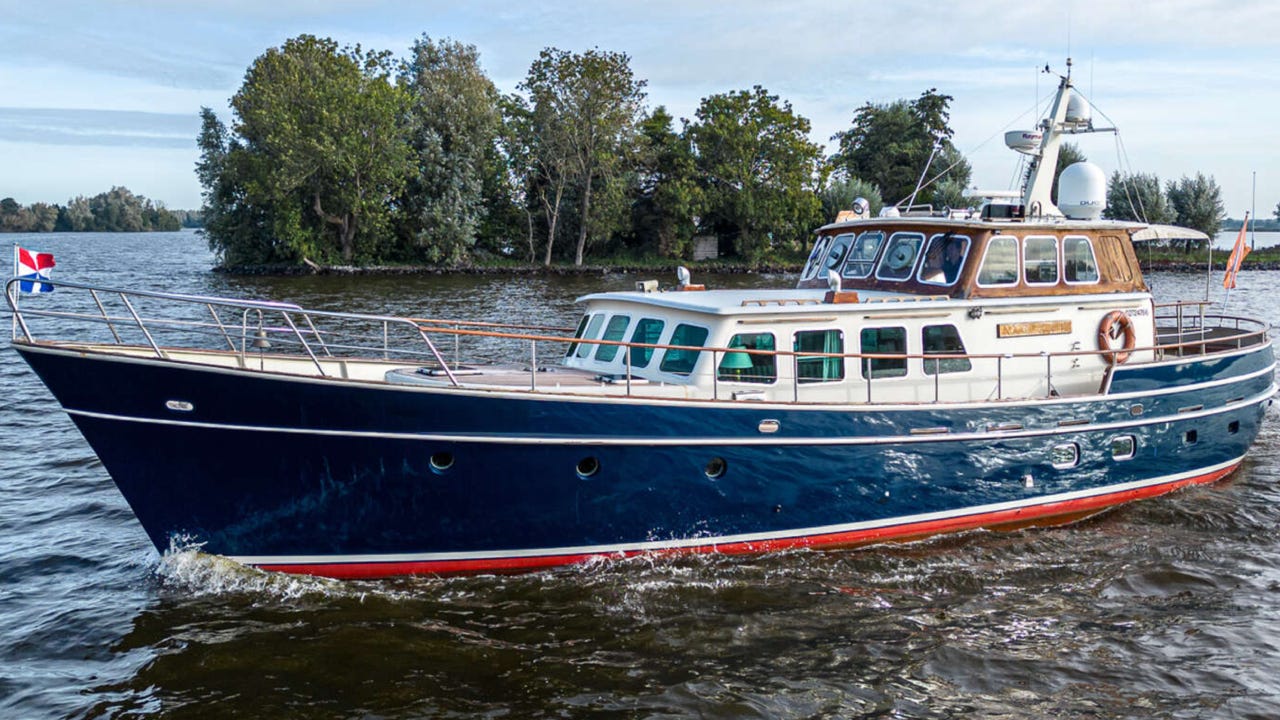
If you have just come from my YouTube tour of Noorderlicht, you have seen the romance. The classic lines, the sheer volume of an 18-metre explorer yacht for the price of a one-bedroom apartment.
It’s a compelling first impression. But the purpose of this blog isn’t to romanticise a classic. It’s to take a technical look at what ownership is all about: the systems, the structure, and the realities of bringing a vessel like this back into active long-range service.
So grab a coffee and join me on this ‘deep dive’….
The Iron Heart: Volvo Penta MD 100B in Context
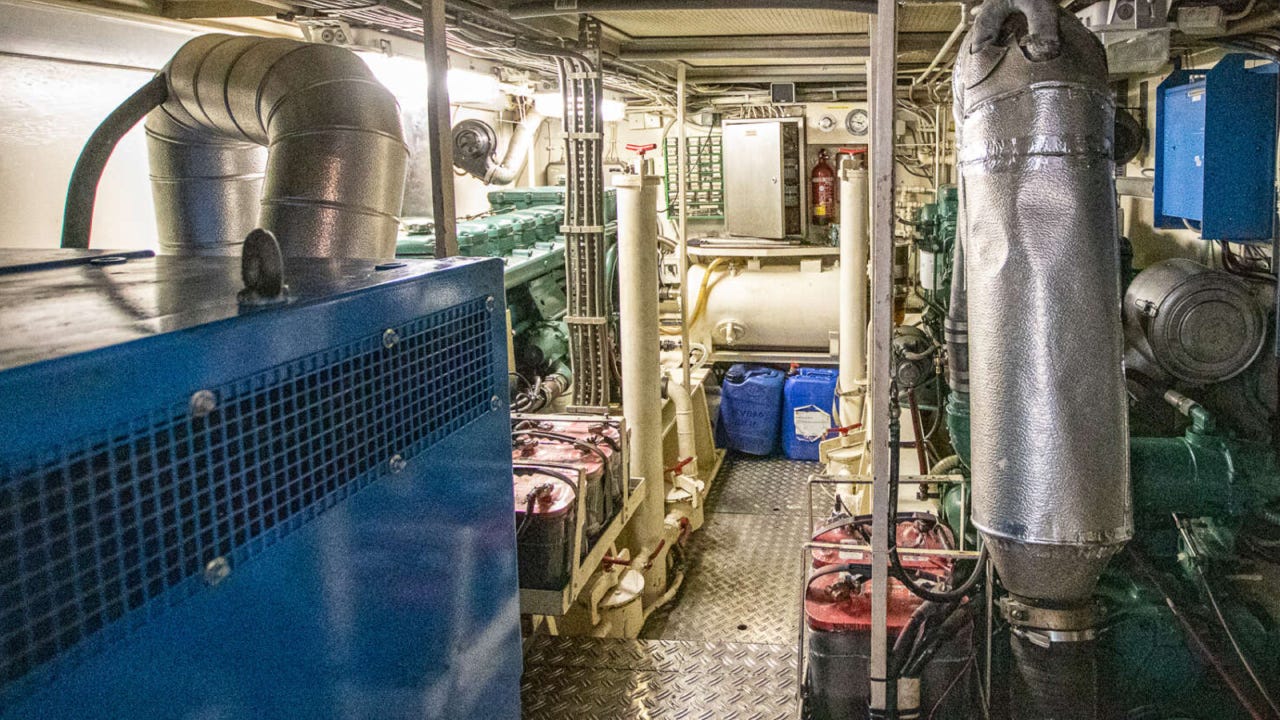
Noorderlicht is powered by a pair of Volvo Penta MD 100B diesels. These are naturally aspirated 6-cylinder blocks, each delivering 150 hp from 9.6 litres of displacement. They are known for their simplicity, torque delivery, and very long service life.
Strengths:
These engines are designed to run at low RPMs, producing steady power without excessive strain. In layman’s terms, they don’t work as hard or spin as fast as modern high-revving diesels. That means they generate the torque needed to push a heavy full displacement steel hull through the water while placing less stress on internal components. The benefit is longevity and reliability, so long as they are maintained properly, they can keep running for decades (as, indeed, they have!).
Freshwater heat exchanger cooling keeps salt out of the block, reducing corrosion risk over time. This system uses a closed loop of freshwater coolant that absorbs heat from the engine and passes it through a heat exchanger, where it’s cooled by seawater on the outside of the exchanger tube.
The seawater never touches the internal engine components. From a practical standpoint, this extends the engine’s lifespan considerably by protecting critical metal surfaces from salt-induced corrosion and scale buildup. It also simplifies maintenance, as you’re not constantly dealing with raw water passing through vulnerable parts like the water pump or cooling passages.
Unlock the full Structural & Financial analysis below.
Insider Tip: Subscribe using [THIS LINK] (rather than through the app) to avoid the 30% surcharge that Apple and Google often add to in-app purchases. It keeps the cost down for you and ensures your support goes directly to the mission!
Considerations:
Production for the MD100B series dates back to the 1970s. While parts can still be sourced through specialist marine diesel suppliers or second-hand sources, availability is limited and continues to diminish with time. For critical components like injector pumps, cylinder heads, or even water pump housings, replacement may require refurbishment, custom machining, or locating compatible equivalents from other industrial engine lines. A potential buyer should be prepared to build a relationship with a vintage diesel mechanic and possibly maintain a spares inventory on board. This level of self-sufficiency is part of the trade-off when operating heritage engines, but it also allows a degree of mechanical independence not always possible with modern electronic powerplants.
Mechanical controls via Bowden cables offer tactile response and a direct connection to the machinery, which many experienced skippers value. Unlike modern electronic throttles, there’s no latency or uncertainty about gear engagement; you feel the detent and know when the gearbox is engaged. However, these cables are subject to friction and wear over time.
Without regular lubrication and alignment checks, they can become stiff, increasing the effort required to manoeuvre the boat at slow speeds. On a vessel of this scale (45 tonnes with long keel momentum) precise throttle and gear control is essential, especially in tight marinas or when operating single-handed. In well-maintained condition, the system is simple, reliable, and intuitive.
Summary: These are robust, sturdy and mechanically simple engines. But as with any legacy system, ownership demands good familiarity with traditional diesel principles and access to old-school expertise.
