

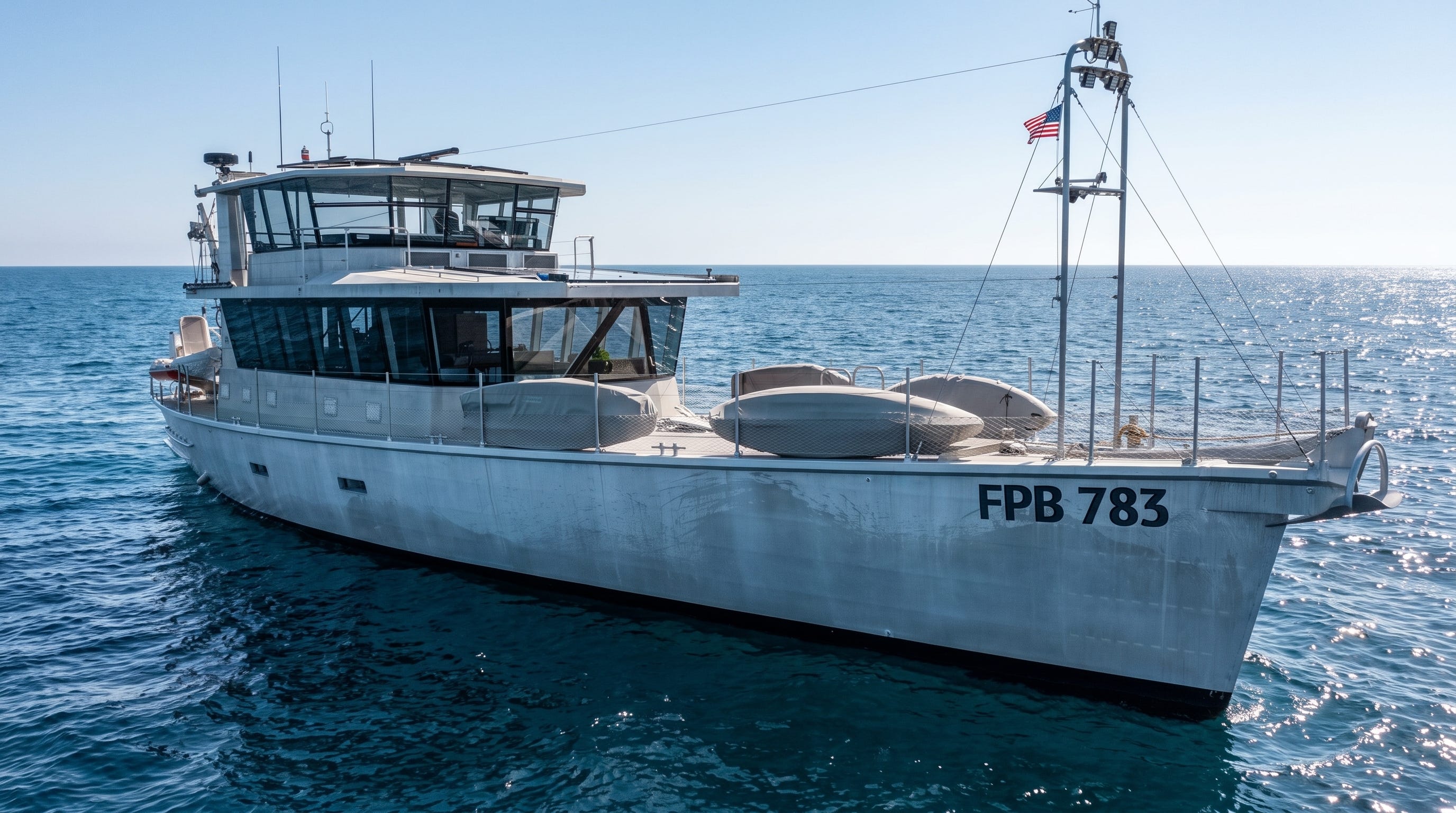
I have covered a lot of expedition yachts over the years, but every so often one crosses my desk that makes me stop and put the kettle on before I even open the brochure. Ugly Betty is one of those.
Some people might say that she is not pretty in the conventional sense. But what they do not realise, is that she was never meant to be. Ugly Betty is an FPB 78, one of only three ever built, designed by Steve Dashew, the man who spent decades as one of the world’s most respected offshore sailors before deciding the future of serious ocean passage-making was not under sail at all. She is the last of her line. When Dashew retired, the FPB programme closed with her, and nobody will ever build another.
She has just come to market with Fraser Yachts for USD $4,950,000, and if that number makes you wince, stay with me. By the end of this piece you will understand exactly what that figure buys, and why a Dashew-designed FPB commands a premium price that a superficially similar-sized motor yacht simply cannot ask for.
Who is Steve Dashew, and why does his name carry this much weight in the passage-making world? Before the FPB series, Dashew and his wife Linda spent a lifetime designing and sailing serious offshore sailing yachts, culminating in Beowulf, an 80-foot explorer they sailed extensively before selling her.
What came next was, by their own account, a genuine rethink…Before we continue, lets have a look around Ugly Betty
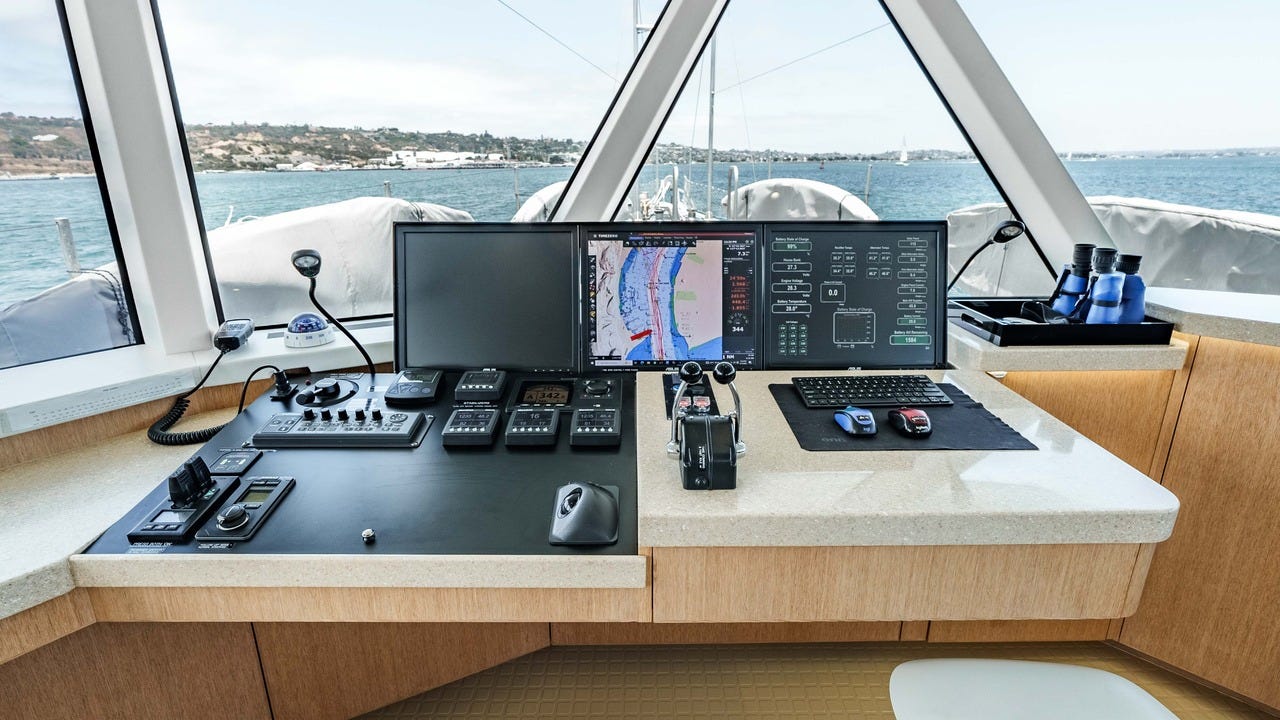
Having logged tens of thousands of nautical miles at sea, the Dashews concluded that a purpose-built motor yacht, engineered with the same rigour as a serious ocean-going sailboat but without a rig to manage, could deliver comparable range, comparable seakeeping and vastly more comfort and simplicity for a couple cruising the highest latitudes on earth. They called it the “un-sailboat.” The first hull, FPB 83 Wind Horse, launched in 2005 and became their home for 7 years and over 60,000 nautical miles. Everything that followed, including the boat you are reading about now, traces its DNA directly back to that one prototype.
The FPB family eventually grew to 18 hulls in total: 11 of the smaller FPB 64, 2 of the FPB 70, 3 of the FPB 78, one FPB 83 (the Wind Horse prototype) and one FPB 97, the largest and fastest of the fleet.
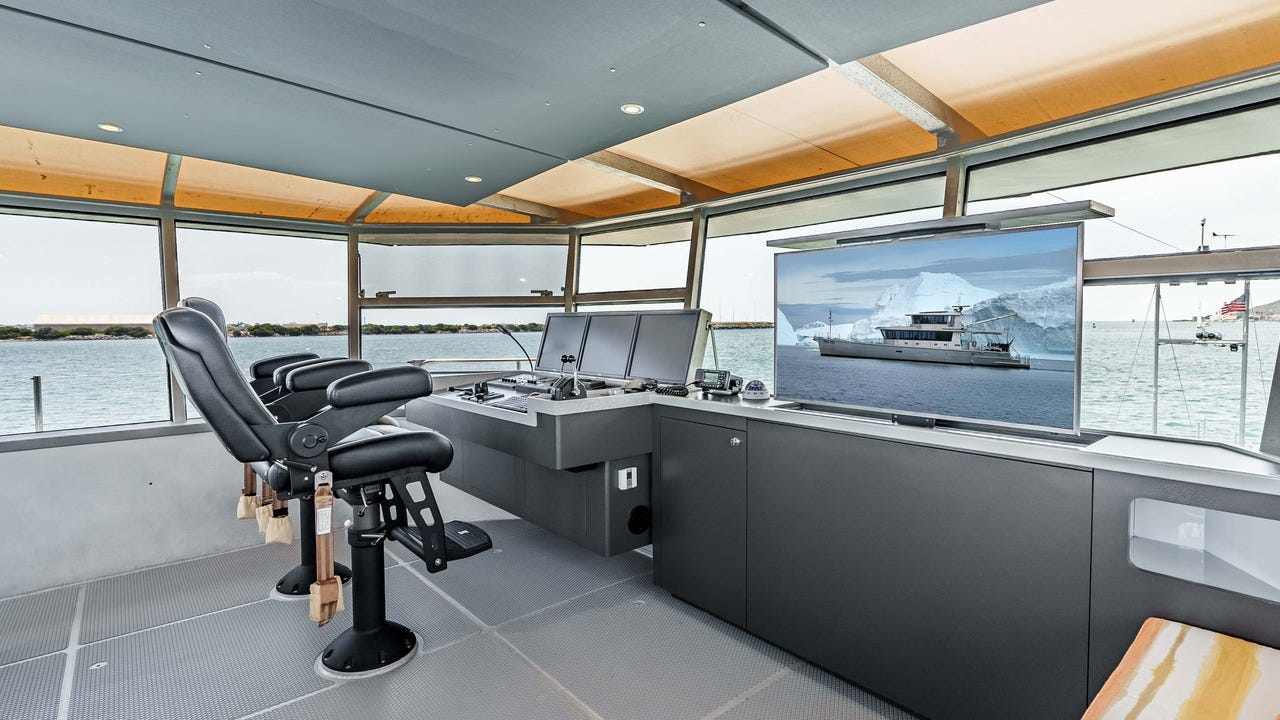
Every single one was built by Circa Marine in Whangarei, New Zealand, a family-run yard with more than 40 years in aluminium fabrication and marine engineering, and the only builder ever licensed to construct an FPB. When Steve and Linda Dashew retired, the programme closed with them. There will be no more...which is a real shame, especially as the explorer yacht might has become incredibly popular.
More and more people, want a vessel that has long range, has the ability to take on gnarly weather and has the safety and redundancy needed for remote and autonomous passagemaking.
The FPB 78 sits near the top of that family tree, one step below the flagship FPB 97. Three hulls were built: Cochise, which the Dashews kept as their own final FPB; Grey Wolf II, an MCA Category 0 certified vessel that has cruised the Pacific, Antarctic, Norway and the Northwest Passage; and Ugly Betty, the boat in front of us today, the last FPB 78 ever built and, by any measure, one of the most well-travelled.
Got a boat?
Know of a vessel, for sale, charter, or otherwise, that you would like me to feature in a future dispatch? You can send me a direct message or email me via john@yacht-buoy.com
Originally launched as Iron Lady II, she changed hands in 2022 and was renamed Ugly Betty by her current owners, Bruce and Nora, who had spent years offshore aboard high-performance Gunboat catamarans before deciding, in their words, to go over to the dark side. Since then, Ugly Betty has been about as far from a marina ornament as a yacht can get.
She has cruised Greenland, the Canadian Arctic, the Northwest Passage, Antarctica, Alaska, Patagonia and the Pacific. The official Scott Polar Research Institute transit database, which tracks every documented Northwest Passage crossing on record, confirms her passage in 2023. That is not a marketing aspiration. That is an entry in the same register that tracks polar transits going back to Amundsen.
So what is she actually like as an engineering proposition, and why does a boat that looks, frankly, a bit like a workboat cost the same as a much flashier 30-metre flybridge cruiser?
Start with the hull. Ugly Betty is built from bare, unpainted aluminium, and that is a deliberate choice rather than an unfinished one. A bare hull means any corrosion, any crevicing, any impact damage becomes visible the moment it happens, to the owner and to a surveyor, rather than hiding under gel coat or topside paint until it becomes a genuine structural problem.
Aluminium of this quality is also lighter than steel for equivalent strength, and Dashew’s approach was never to chase the weight saving for its own sake. It was to spend that saved weight on reinforcement exactly where an ocean would eventually test it.
The proportions matter too. At 25.4 metres on the waterline and just 6.1 metres of beam, the FPB 78 is a genuinely narrow hull for her length, narrower than almost anything else in her size class. That is not an accident and it is not an efficiency compromise. A narrower hull sits lower, rolls less violently, and behaves very differently in the short, steep seas that build in high latitudes compared with the long rolling swells of the tropics.
The FPB 78’s range of positive stability runs to 140 degrees, roughly double what a typical motor yacht of this size can claim, which means she can heel further, recover from a genuinely severe knockdown, and come back upright rather than staying over. That number is the entire engineering argument for the shape of this boat, and it is worth sitting with for a moment if you have only ever thought about stability in terms of how steady a boat feels tied up in the marina.
Propulsion is twin John Deere 6068 diesels, rated at 230 horsepower each in their standard continuous specification. That is a modest number by the standards of a modern flybridge motor yacht of this length, and again, that is the point rather than an oversight.
Two smaller engines mean that losing one still leaves you with meaningful forward progress rather than a dead boat, they run at a more efficient partial load at the FPB’s genuine cruising speed of around 10.5 knots, and they are mechanically straightforward diesels that a competent marine engineer almost anywhere in the world will recognise and be able to service. None of that is glamorous. All of it matters enormously if you are somewhere between Nuuk and the top of Baffin Island and something needs fixing.

The range on offer, per Berthon’s official class figures for the FPB 78 series, is 6,500 nautical miles at 10 knots, dropping to 4,500 nautical miles if you push the cruise up to 11 knots. That is the kind of number that lets an owner genuinely plan an ocean crossing or a full Northwest Passage season without spending every waking hour thinking about the next fuel dock.
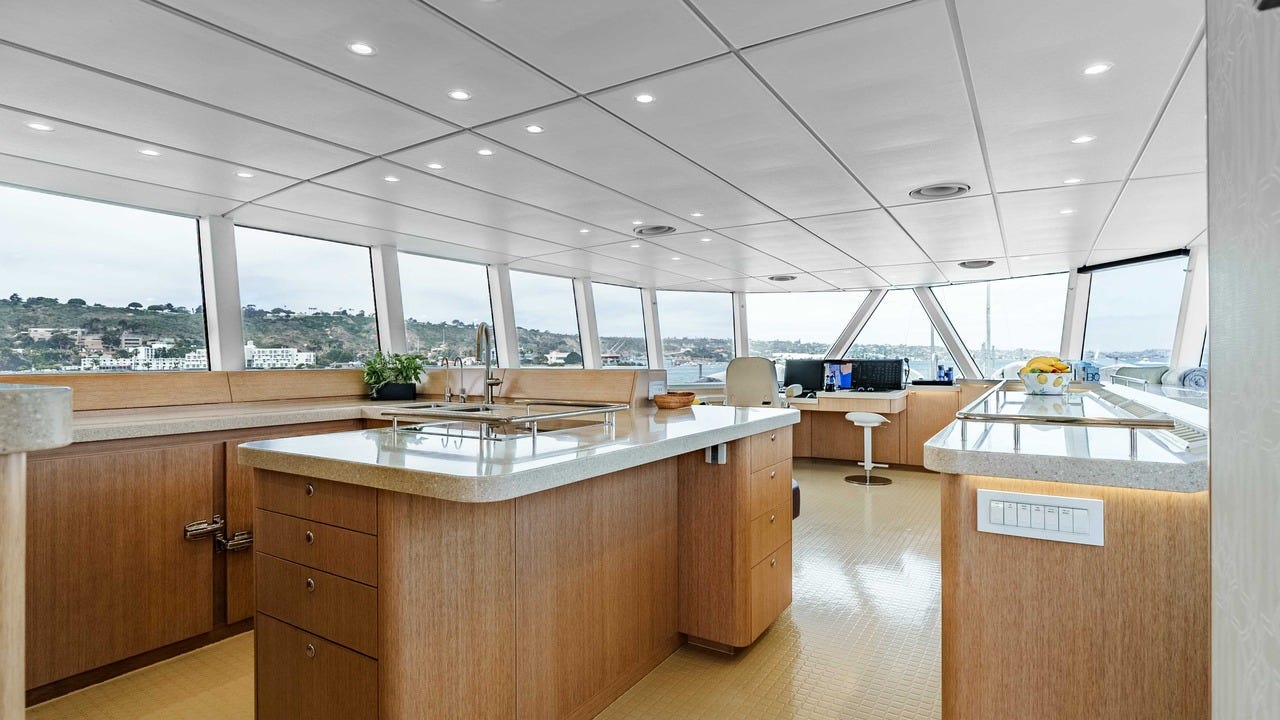
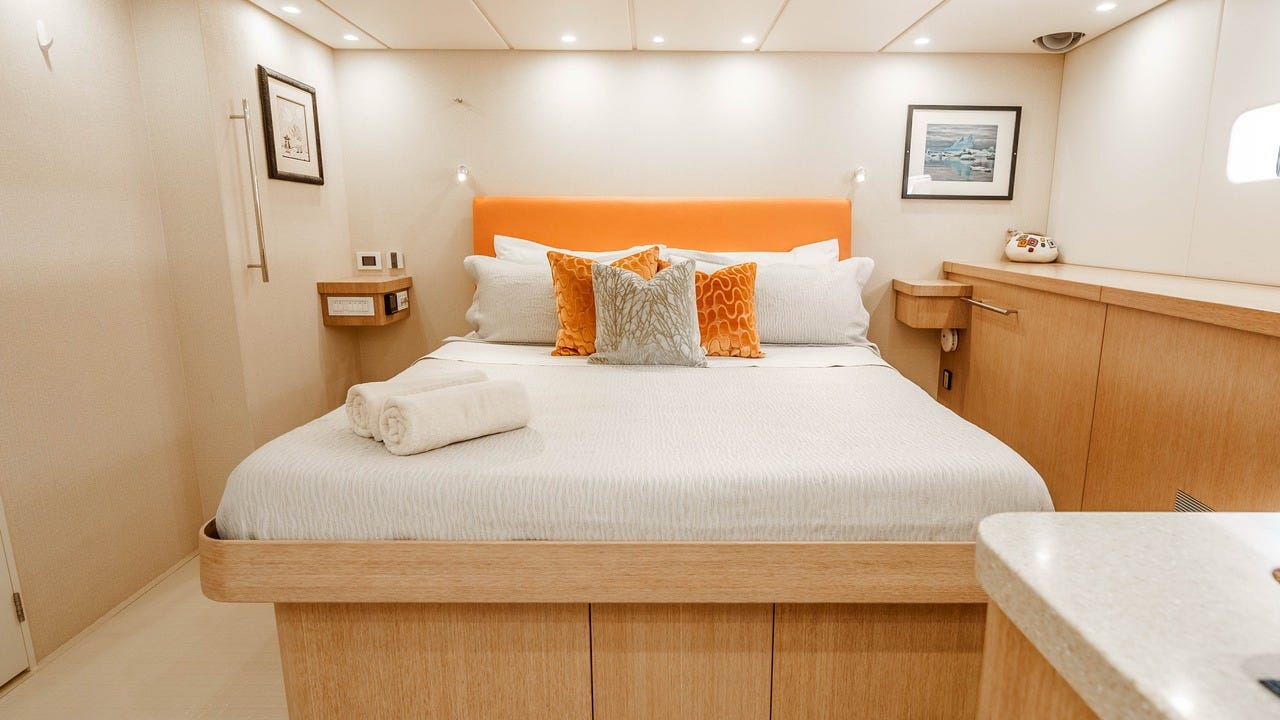
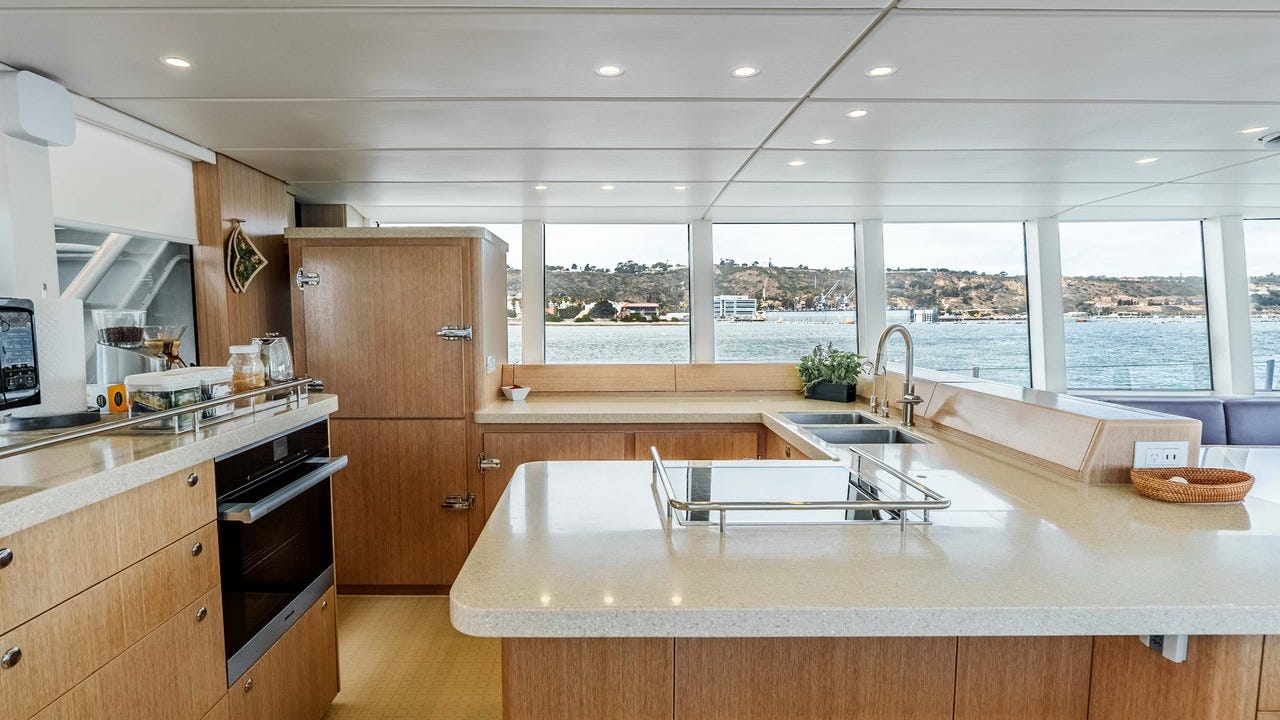
Inside, Ugly Betty accommodates six guests across three staterooms, each with its own en-suite, plus separate crew quarters for two. She carries dual redundant navigation systems, Starlink and Iridium satellite connectivity, a double-bottom hull, five watertight doors, and a comprehensive inventory of spares and tools built up specifically for extended, self-sufficient passages. This is not a yacht that was dressed up for a boat show. Every part of the specification reads like it was chosen by someone who has actually needed it.
This article continues below, in “The Wardroom”
In the premium section, I cover:
- What ownership of a boat like this actually costs: the real annual maintenance reserve for a bare aluminium hull with genuine high-latitude mileage on her, and what a competent survey needs to check first
- The build year discrepancy nobody else is reporting: two independent sources say 2015, two say 2017, and I explain what that actually tells you about how this vessel was built and delivered
- The engine spec almost every other write-up on this boat has got wrong: what she is really powered by, and why it matters more than you would think
- My honest assessment of the $4,950,000 asking price: how it stacks up against comparable explorer yachts, and who this boat is genuinely right for
