

The Adult in the Room: Cut Through the ‘Fake Explorer’ Nonsense
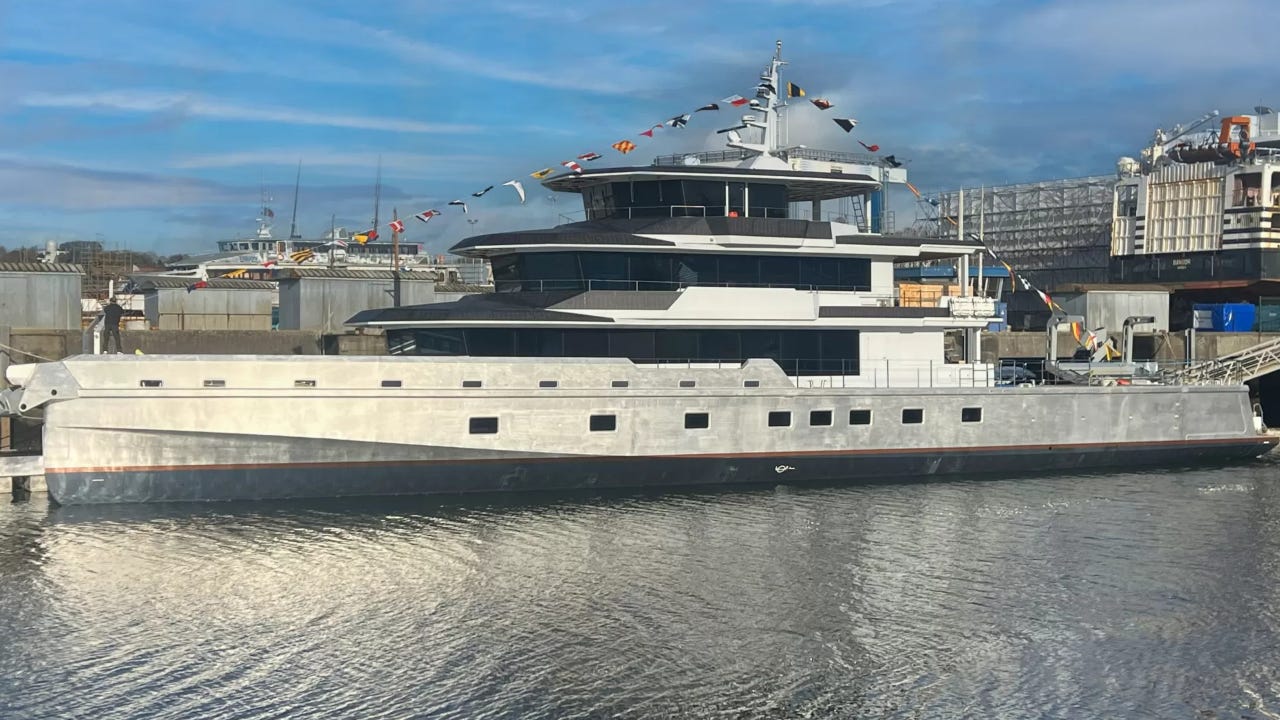
Walk into almost any boat show today and you’ll see what I privately refer to as explorer impostors…. hulls dressed up in expedition livery, chunky bulwarks, Explorer badges slung across them like some kind of fashion accessory, and marketing copy full of awe but short on purpose. These are machines that, at best, look as though they might want to explore. They have the look of readiness but none of the substance. They trade on an aesthetic borrowed from true expedition vessels without ever asking what those vessels actually need to do.
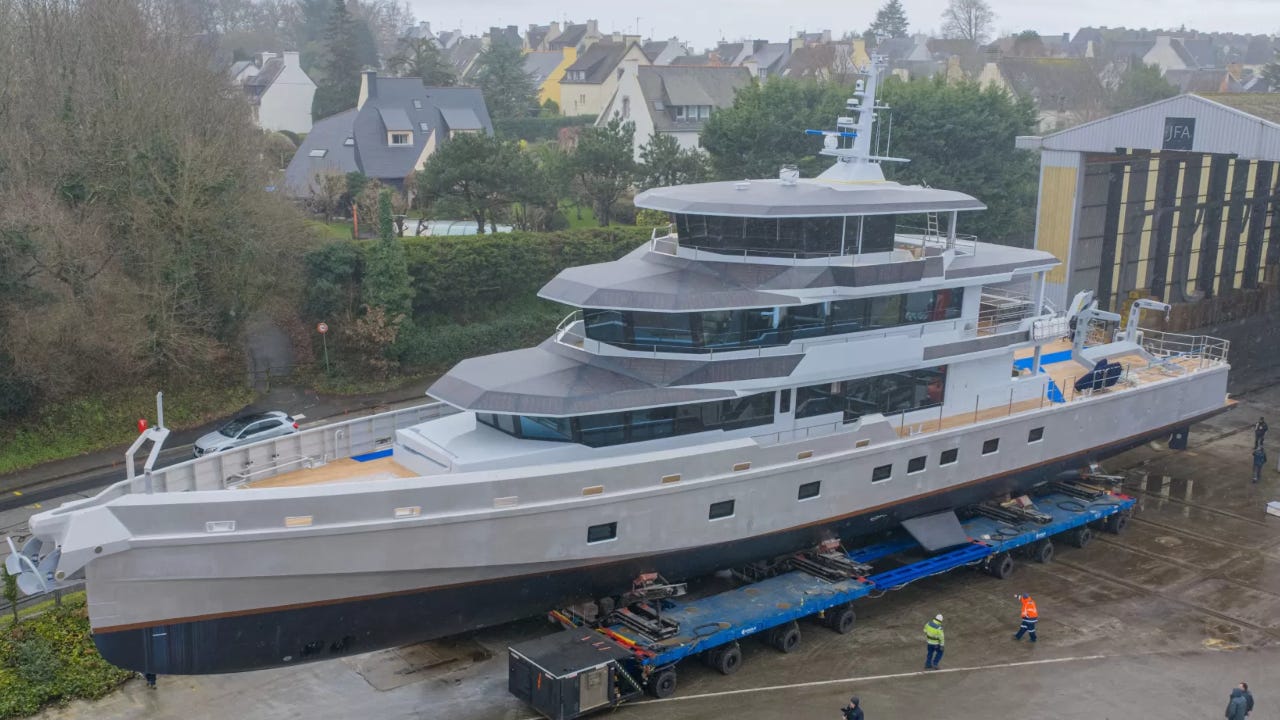
Now meet the Humphreys 50 m Custom Explorer. If the pretenders sit in the shallow end with a mint condition model yacht and a branded cocktail, this 50 metre is standing in the deep water with wet boots on, asking what conditions you think you’re ready for. It is, unapologetically, a tool. And a damn good one at that.
This pressurised role is earned, not declared. The brief from the owner was unambiguous: global cruising, true self sufficiency, and operational independence in remote latitudes. Nothing about parties at anchor, nothing about looks, but everything about performance, seakeeping, crew logistics and reliability. What emerges is not just a pretty boat for pampered runs between Med marinas, but a machine that lives at sea on its own terms.
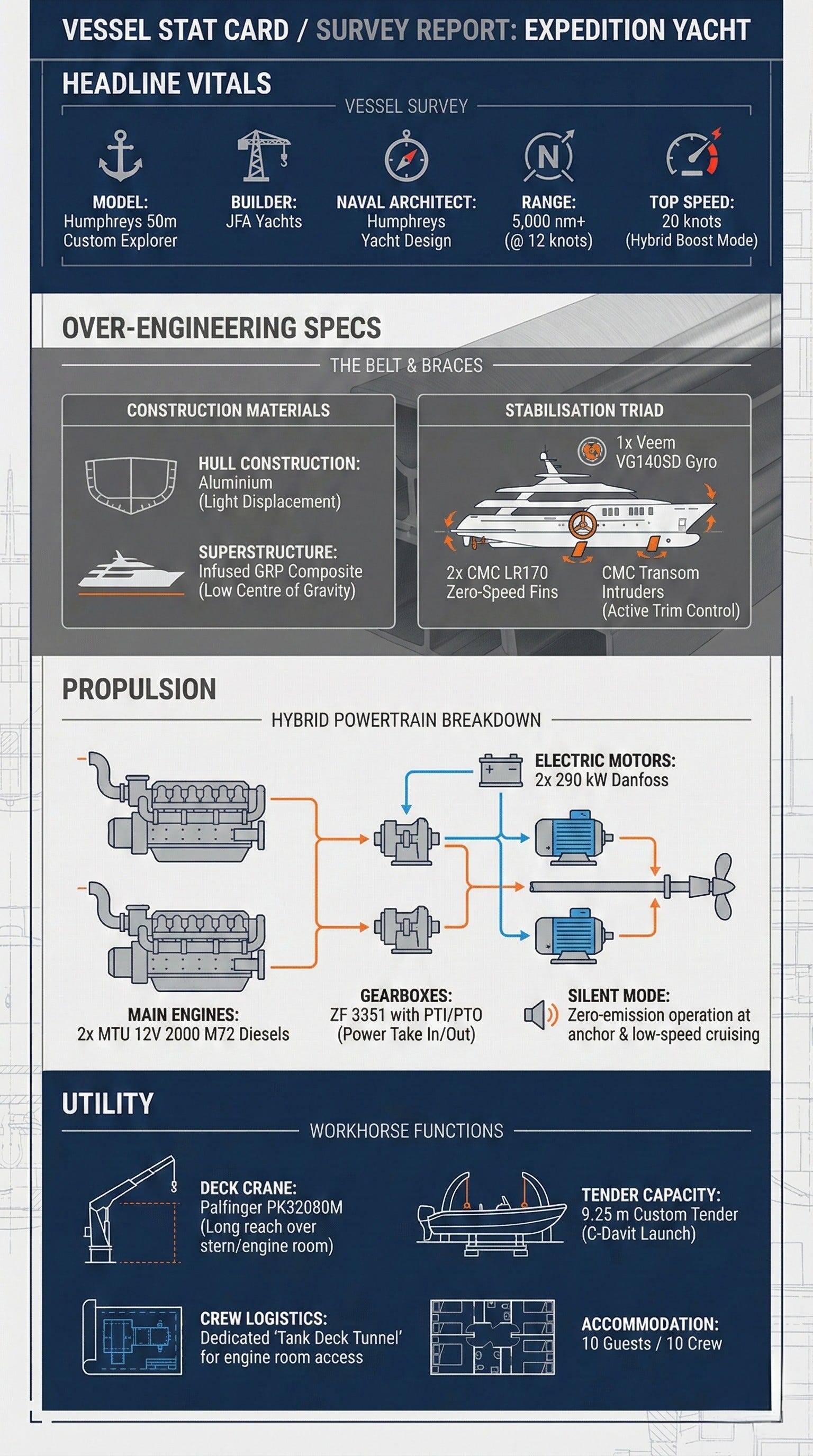
The Stabilisation Triad: Because the Atlantic Doesn’t Care About Your Budget
Most shipyards will give you one form of stabilisation and wish you luck. Maybe a pair of fins. Maybe a gyro if they’re feeling generous. But here’s the truth: no single system covers you in all sea states.
Fins work when you’re moving. They need water flow. Drop speed below eight knots and they lose effectiveness fast. At anchor, they’re about as useful as a handbrake on a kayak.
Gyros step in at zero speed. They’re brilliant in a calm anchorage with residual swell or beam surge, but they don’t scale with speed. In fact, they can fight the boat underway.
Then there are intruders. Most people haven’t even heard of them. Small plates at the transom that adjust trim and suppress pitch… not sexy, not headline-grabbing, but vital when you’re ploughing through an ugly sea at 11 knots and want the foredeck to stay attached.
So why does this 50 metre have all three? Because Humphreys knows what you’re really buying. You’re not buying a toy. You’re buying sleep. You’re buying a crew that doesn’t break things in rough weather. You’re buying the ability to sit at anchor off South Georgia in a surge and still have breakfast without coffee on your lap.
Most builders optimise for marketing. Humphreys optimised for movement. Stabilization keeps your coffee in the cup. But what about your sanity?
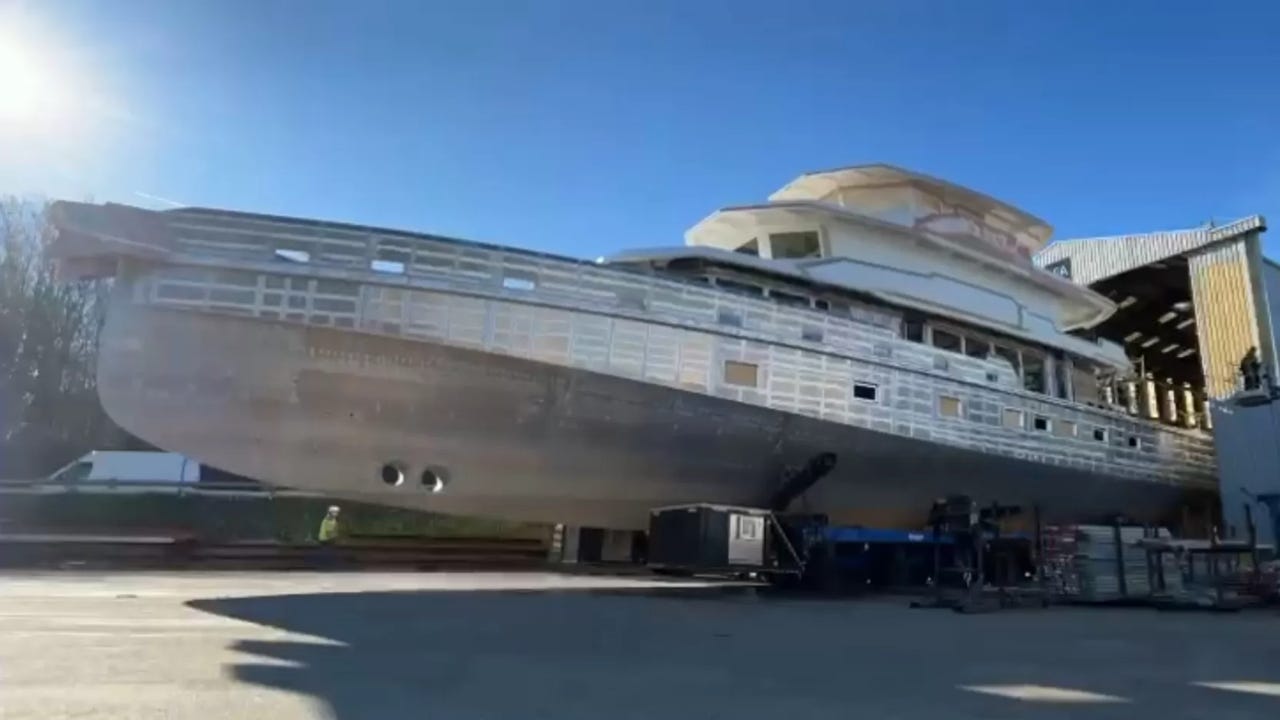
Most 50m yachts fail on two critical fronts: Privacy (crew constantly walking through guest areas) and Silence (generator hum at anchor). The Humphreys 50m solves both, but it required a radical rethink of the ship’s skeleton. Here is how they did it
