

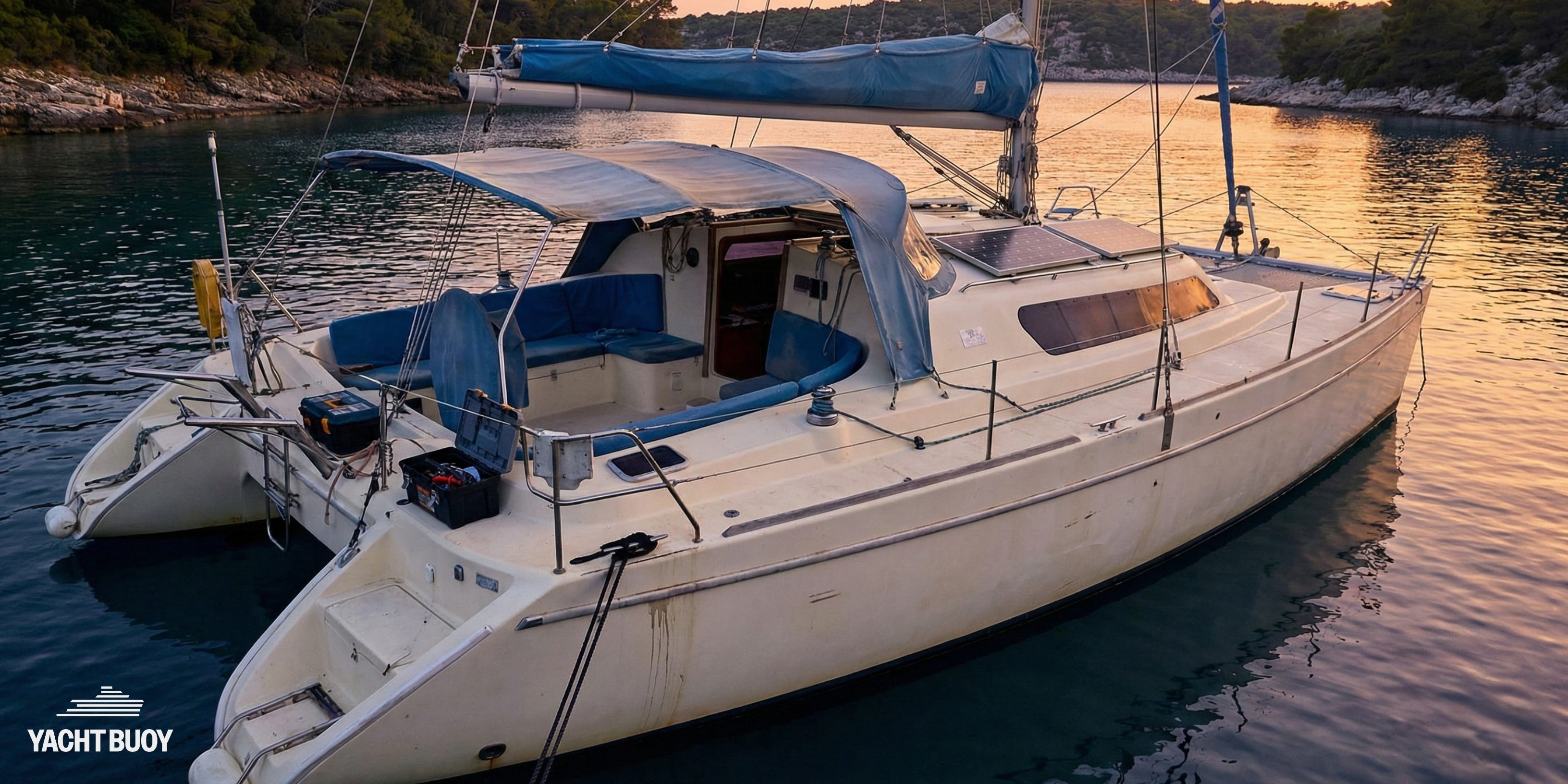
“Never buy a boat that has been used for charter.”
It’s the oldest cliché in the marina bar. The logic seems fairly obvious: Charter boats are the rental cars of the sea, driven by amateurs, beached on sandbars, and repeatedly punished by stag crews. Why would anyone spend serious money on someone else’s wear and tear?
To be honest, I used to agree. But the 2025/26 brokerage data tells a very different and somewhat intriguing story. We’re now in the middle of a supply surge as the major fleets, Moorings, Dream Yacht, Navigare, offload their five-year-old inventory.
This phase-out is flooding the market with hundreds of late-model catamarans, pushing prices down by 15 to 20 percent compared to their privately owned counterparts. On a 2019 Lagoon 42, that’s a six-figure difference.
So the real question becomes: Can you fix the wear for less than what you save? Spoiler: Yes. And in many cases, you’ll end up with a better boat for less money. Here’s why.
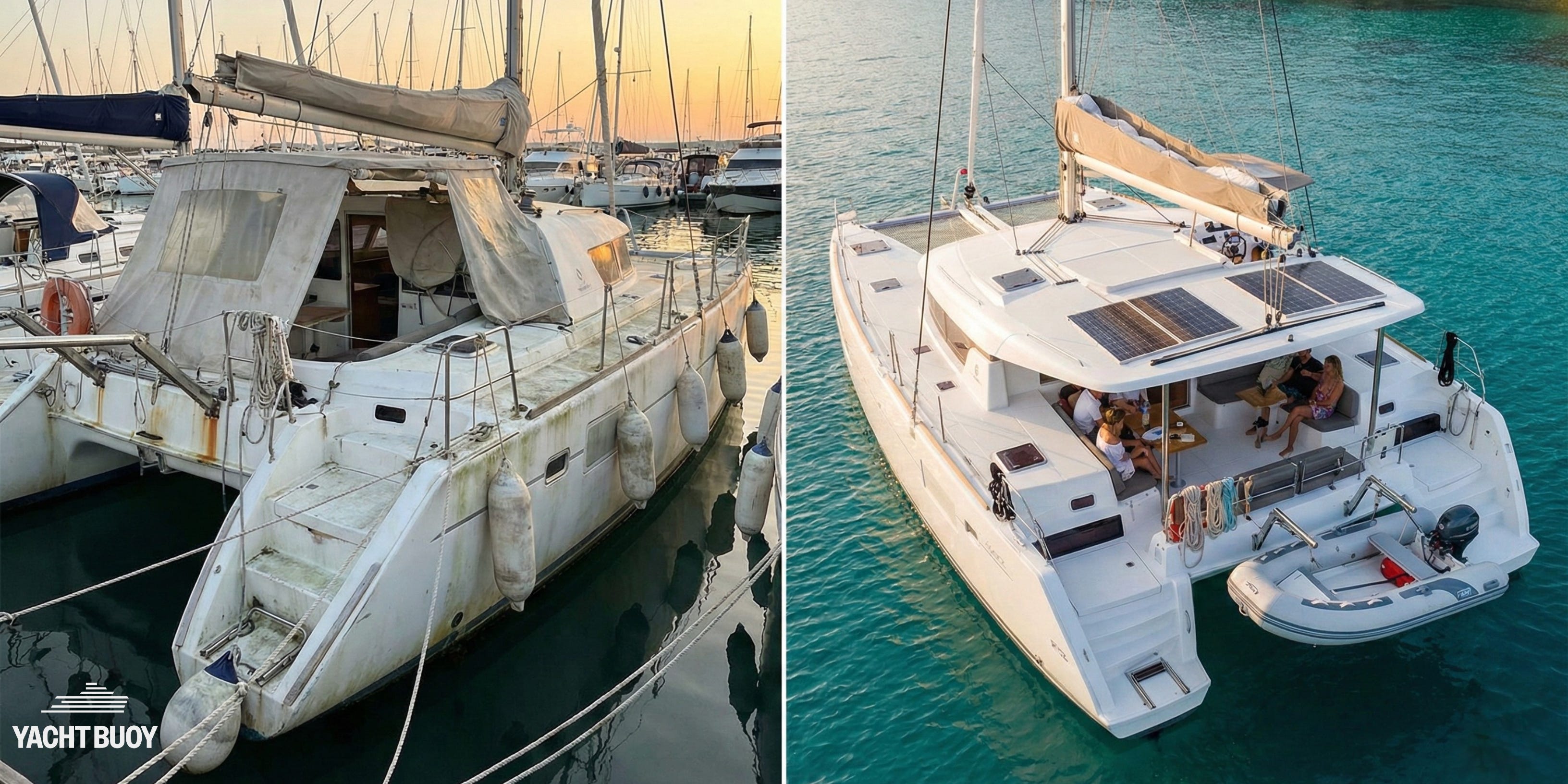
The “Commercial Jet” Comparison
The rental car analogy is completely flawed. A better comparison is a commercial airliner.
Privately owned boats spend most of the year tied up in a marina. Their systems sit idle, unused and untested. Diesel engines glaze over from lack of load. Batteries quietly drain. Watermakers and air conditioners might not be run for months. This kind of low-usage neglect is far worse than steady operation.
Charter boats, by contrast, are in near-constant use. That sounds like a red flag, but it isn’t. It means systems are kept active and regularly maintained. These boats have to work, week after week. To keep generating revenue, they must be functional. Maintenance is proactive. Engines are serviced on schedule. Standing and running rigging are checked before problems arise. And if something breaks, be it a fridge, autopilot, or electric head, it’s repaired immediately. A charter company can’t afford to send out a compromised boat without risking financial penalties or cancelled bookings.
The result is a vessel with high hours, yes, but one whose machinery and systems have been thoroughly exercised, diagnosed, and maintained by professionals. The minor but maddening gremlins that plague many new boats have already been solved. In most cases, you’re looking at a yacht that’s been run hard, but also looked after with operational discipline, more akin to a working aircraft than a neglected family runabout.
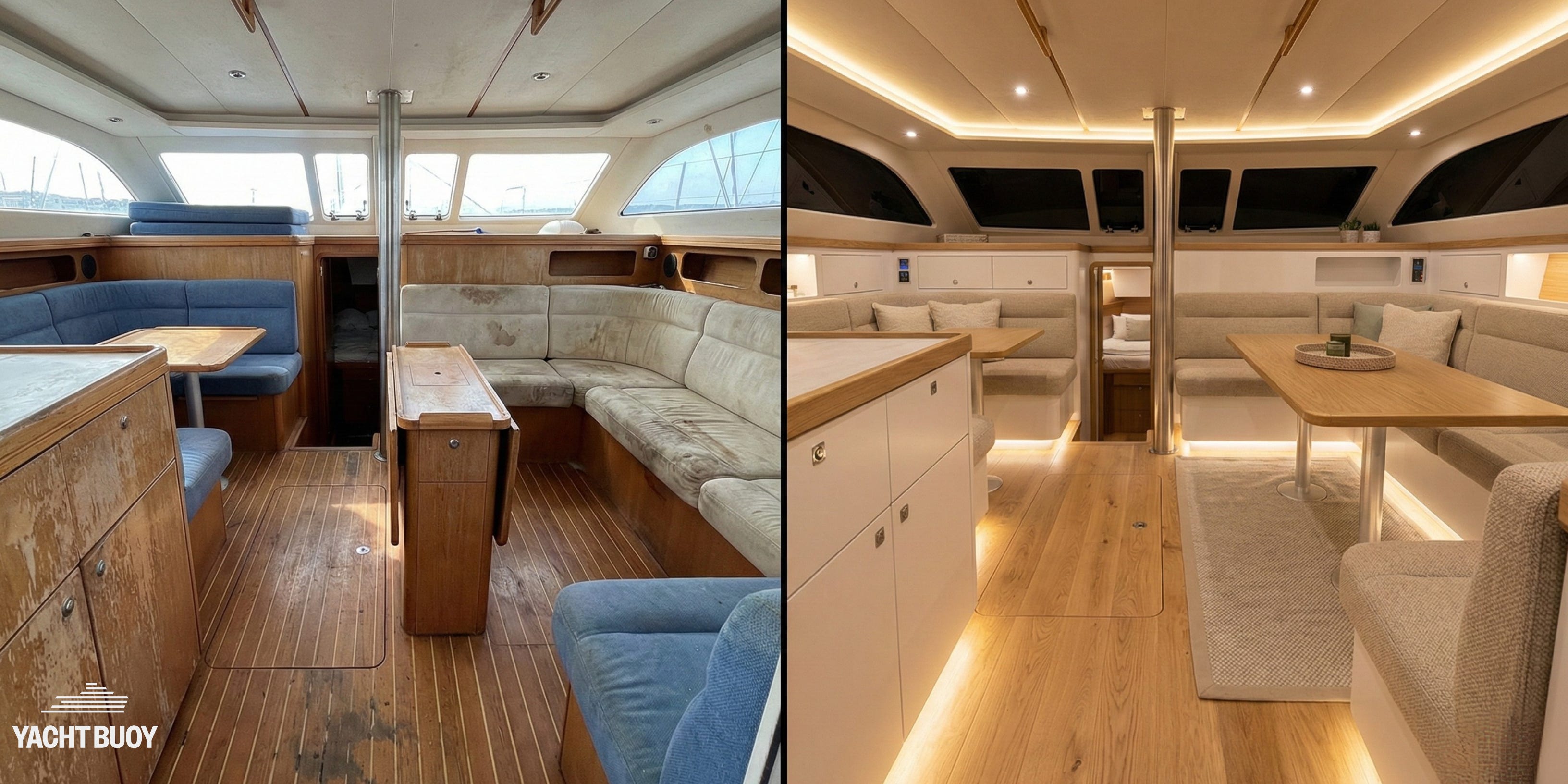
The Cosmetic Discount
Ex-charter cats are easy to spot. The saloon floors are scratched from years of bare feet and sandy shoes. The cushions are sun-faded and flattened from overuse. There’s often dock rash along the sugar scoops, and the topsides may carry the usual dings from frequent Med-moorings. This is where casual buyers walk away. But this is also where experienced cruisers find serious upside.
Cosmetic damage is superficial and relatively inexpensive to correct. For under €20,000, you can give the boat a fresh, clean aesthetic. Re-upholstering the saloon seating, sanding and refinishing floorboards, replacing headliners, upgrading LED lighting, re-laminating cabinetry, and polishing out the gelcoat will transform a tired interior into something that feels entirely new. It’s also the point at which you can make subtle but meaningful upgrades that enhance both comfort and function.
Swapping in denser foam for seat cushions makes a noticeable difference on longer passages. Upgrading to UV-resistant, marine-grade fabrics not only improves the feel but extends the life of the upholstery. Adding indirect or dimmable ambient lighting can transform the saloon from a basic charter layout into a warm, inviting living space. These details might seem small individually, but together they can significantly raise the perceived quality of life aboard and all without breaking the budget.
The arbitrage is clear. If a boat is discounted by €100,000 because it looks worn out, and you spend a fifth of that on the right cosmetic work, you’ve effectively created €80,000 in equity with tools and textiles. Better still, you start your ownership with a boat that looks and feels like your own and not a faded charter shell. And that psychological reset makes all the difference when you step aboard for the first time with your gear and your cruising plans.
The Structural Checklist: What Really Matters
Not every ex-charter cat is a diamond in the rough. Some boats suffer from structural fatigue, botched repairs, or corners cut during their operational years. Separating the well-maintained workhorses from the true liabilities requires a methodical inspection approach, ideally conducted by a surveyor who understands the specific failure points of high-cycle composite catamarans.
Keel Roots
