

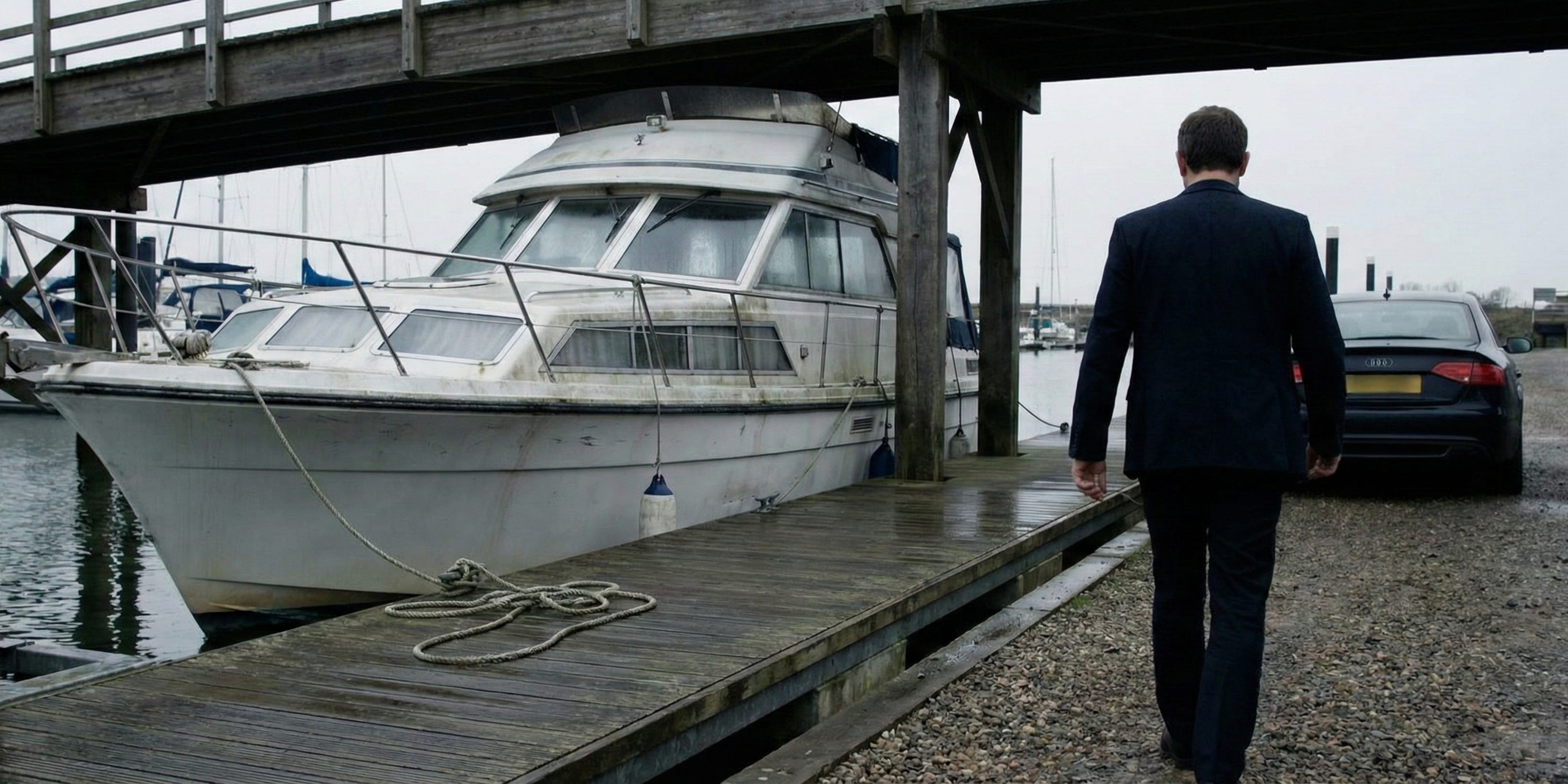
“Enough thinking.”
That is usually my advice when someone finds the right boat.
But sometimes enough thinking means recognising that you are standing on a financial sinkhole and getting off the boat before emotion takes over (something that I wish I had done in the past).
I have viewed hundreds of boats. I have driven four hours to a marina, walked down the pontoon, stepped aboard, and been back in my car five minutes later.
That decision is rarely about cosmetics. Polish can hide gelcoat fatigue and new upholstery can distract from poor layout. What it cannot hide are the fundamentals. You do not need a moisture metre, an oil sample, or a thermal camera to spot a problem boat. In my experience, you just need to pay attention to three things.
1. The Artificial Scent Problem
When I step into a saloon I expect one of two smells.
Nothing at all.
Or a faint mix of diesel, warm machinery, and old timber. The smell of a boat that has been used and aired properly.
If I am hit with heavy perfume, bleach, or plug in air fresheners, my guard goes up immediately.
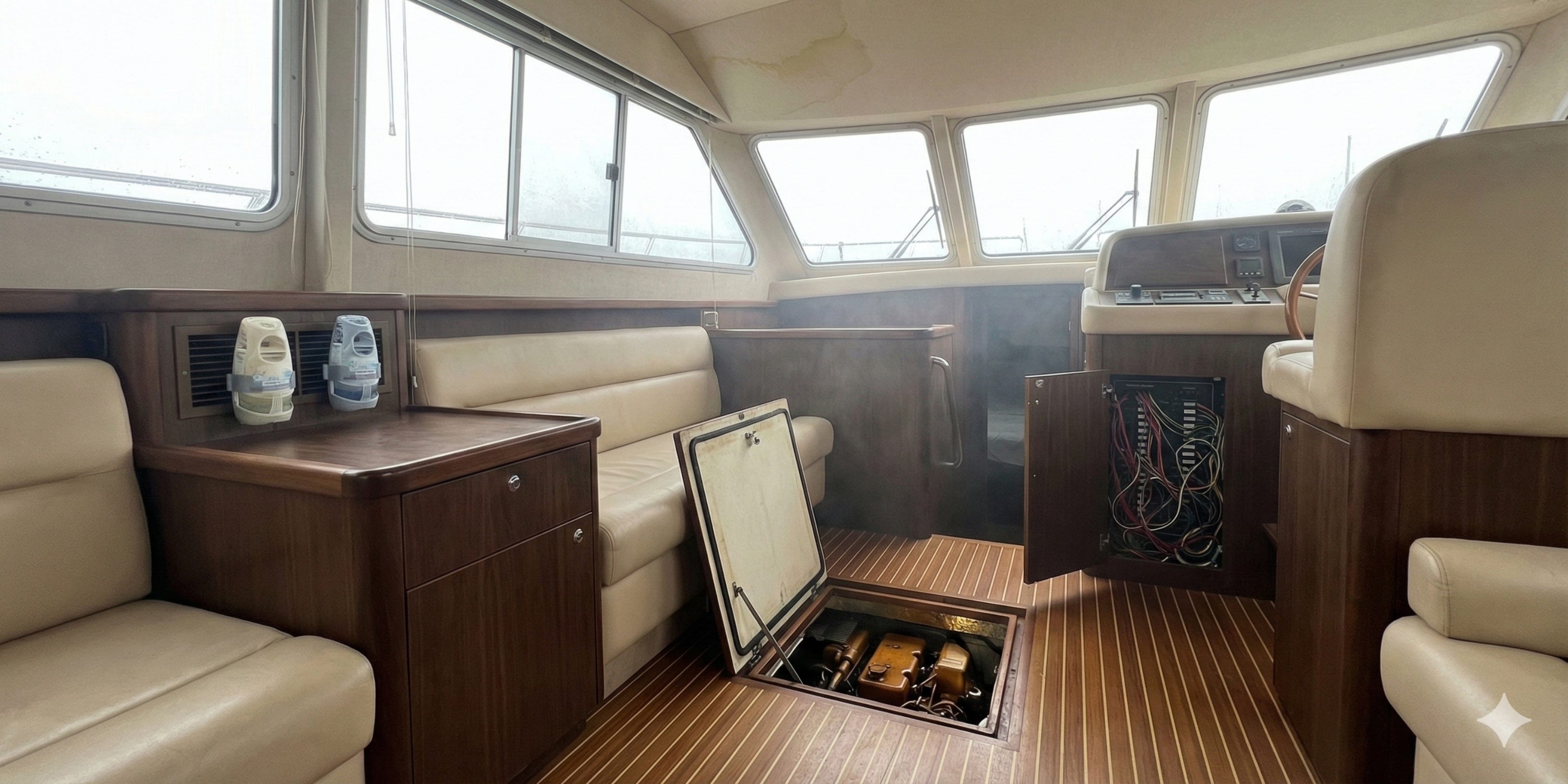
On boats, strong artificial scents are rarely decorative. They are usually corrective. Confined interiors trap odours and owners know this. Ozone generators are commonly used before viewings to neutralise musty smells caused by mould, mildew, stagnant bilge water, or moisture ingress associated with long term leaks or even osmosis related issues. Ozone does not fix anything. It simply suppresses the smell long enough to sell the boat.
I once stayed aboard a superyacht where the en suite air freshener had been turned up to an almost absurd level. The space was saturated with synthetic fragrance, to the point that it overwhelmed everything else.
Out of curiosity I switched it off. The reason became immediately clear. The shower drain was venting the unmistakable smell of black water.
The yacht itself was beautifully run and the crew were exemplary, but that single detail told me everything I needed to know about what was being concealed. I was grateful that my stay lasted only one night.
The test is simple. Open a floorboard. Open a locker. Lift the step into the engine space. Artificial scent never reaches enclosed voids. If the smell underneath shifts from lavender to damp timber or stagnant water, the boat is telling you something important.
Listen to it.
2. The Warm Engine That Should Be Cold
This is an old trick and it is still everywhere.
When I book a viewing I am very clear. Do not start the engines before I arrive. I want a true cold start.
The first thing I do when I step aboard is not admire the joinery or inspect the galley. I go straight to the engine bay and place my hand on the block.
If it is warm, the viewing is already compromised.
I learned this lesson the expensive way. The last boat I owned was a few years ago and I made a mistake that still stands out clearly in hindsight. I arrived for the sea trial and the engine was already running. Something in my gut told me I should stop, come back another day, and be there for a proper cold start. Instead, I did what many buyers do. I assumed good intent. I told myself there was probably a reasonable explanation.
I bought the boat.
From that moment on, the engine was a constant source of grief. Cold start issues, inconsistent running, and escalating repair bills followed. What could have been identified in the first few minutes of ownership became a long and very expensive lesson in why instinct matters. It was entirely avoidable.
A pre run engine is often hiding cold start issues. White smoke on startup is commonly associated with worn valve guide seals, compression loss, or injector problems. These symptoms often fade once the engine reaches operating temperature. Running the engine beforehand clears the smoke, stabilises oil pressure, and disguises reluctance to fire from cold.
If the engine is warm, the seller has removed one of the most revealing moments in any inspection. That tells me more about the transaction than the machinery itself. If I cannot trust the setup, I cannot trust the boat.
