

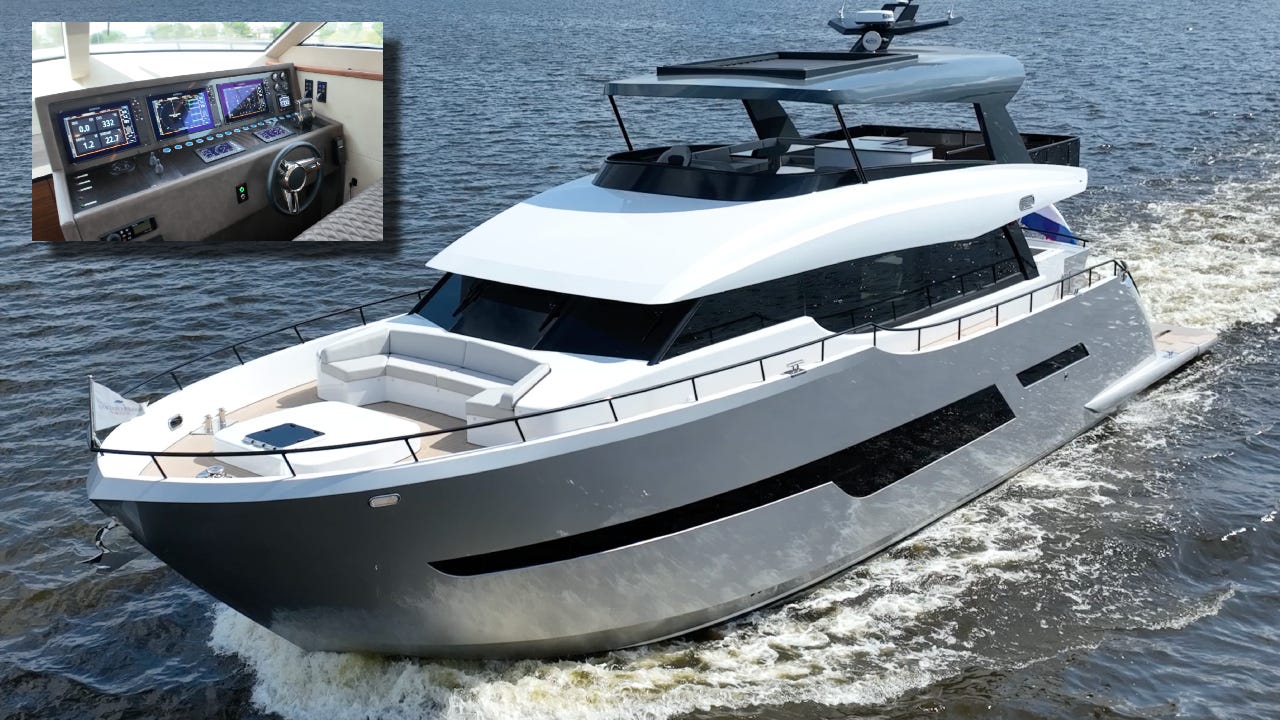
There’s a moment, walking down the dock, when the Phantom 80 asserts itself. She doesn’t shout. She doesn’t need to. With her metallic grey aluminium hull, clean lines, and broad-shouldered presence, this 23.8-metre Dutch build speaks directly to those who understand offshore design. CE Category A certified, she is rated for extended passages in challenging sea states. An honest motor yacht with serious cruising credentials.
This yacht is also the subject of the latest walkthrough video on my channel, where I explore her engineering, layout, and systems in detail. If you’d like to see her underway and take a closer look at the spaces on board, you will find the full video tour linked at the bottom of this blog.
Design and Exterior: Built to Go Places
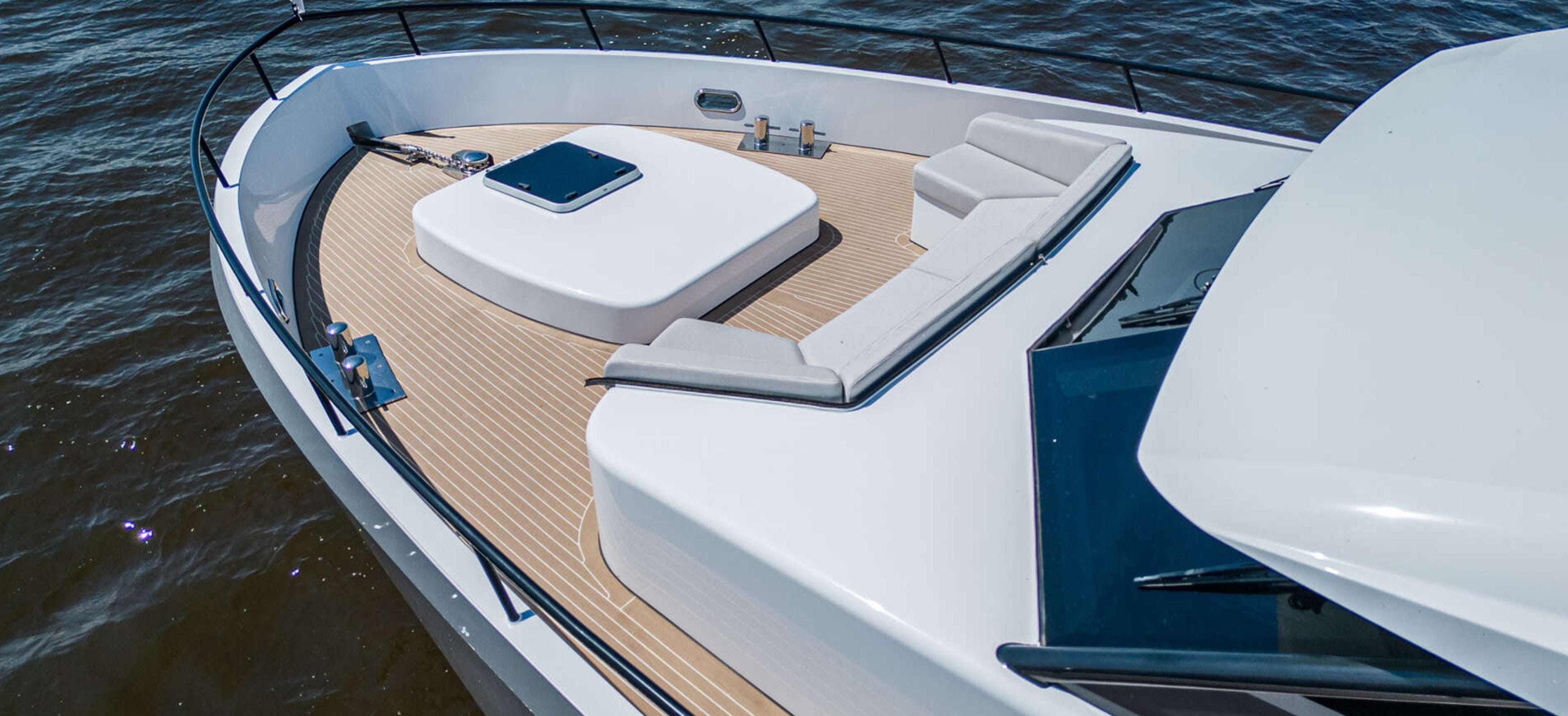
The hull is all aluminium, V-shaped, and capped by a broad 6.00-metre beam that lends stability without resorting to gimmicks. Draft is just 1.3 metres, opening up shallow anchorages and cruising grounds that many displacement boats of this volume simply can’t access. Decking is synthetic teak, with careful integration of systems including capstans, cleats, and a stainless guardrail finished in black.
A hydraulic bathing platform sits at the transom with a 750 kg lift capacity, easily enough for a serious tender or personal watercraft. Drainage gaps and gripped surfaces are cut into the platform to prevent pooling and enhance safety. Forward, anchoring duties fall to a Quick electric windlass, married to a 35 kg anchor and 50 metres of chain—a setup suited to mixed seabeds and easily managed from both helm and deck.
Propulsion and Systems: Reliable, Accessible Power
Below decks, the machinery space is well organised and features robust, carefully selected components. Twin MAN V8 engines (1,200 hp each) are paired with hydraulic ZF gearboxes, delivering reliable power. There’s generous space for engine access, making routine maintenance straightforward.
Running speed is around 22 knots, with a top end of 25 knots under clean hull and light load. Estimated fuel burn at cruise is 300–350 litres per hour combined, offering a real-world range of around 450 nautical miles with appropriate reserve from her 6,000-litre tanks. Take the throttles back and that range will sky rockets.
Stability is handled underway by Rotorswing stabilisers, a low-drag, underway-optimised solution that keeps roll in check across the speed curve. Bow and stern thrusters, also hydraulically driven, are part of the same central system that powers the bathing platform, passerelle, and stabilisers. The pump pack is cleanly installed and plumbed with proper industrial-grade hoses and valves.
Twin Cummins Onan generators (7 kVA and 27 kVA, both wet exhaust) provide hotel load redundancy and efficient energy management. The larger unit takes care of full onboard systems while the smaller can be used for lighter loads or silent nights at anchor. Both units have extremely low hours.
Interior: Real Volume, Year-Round Comfort
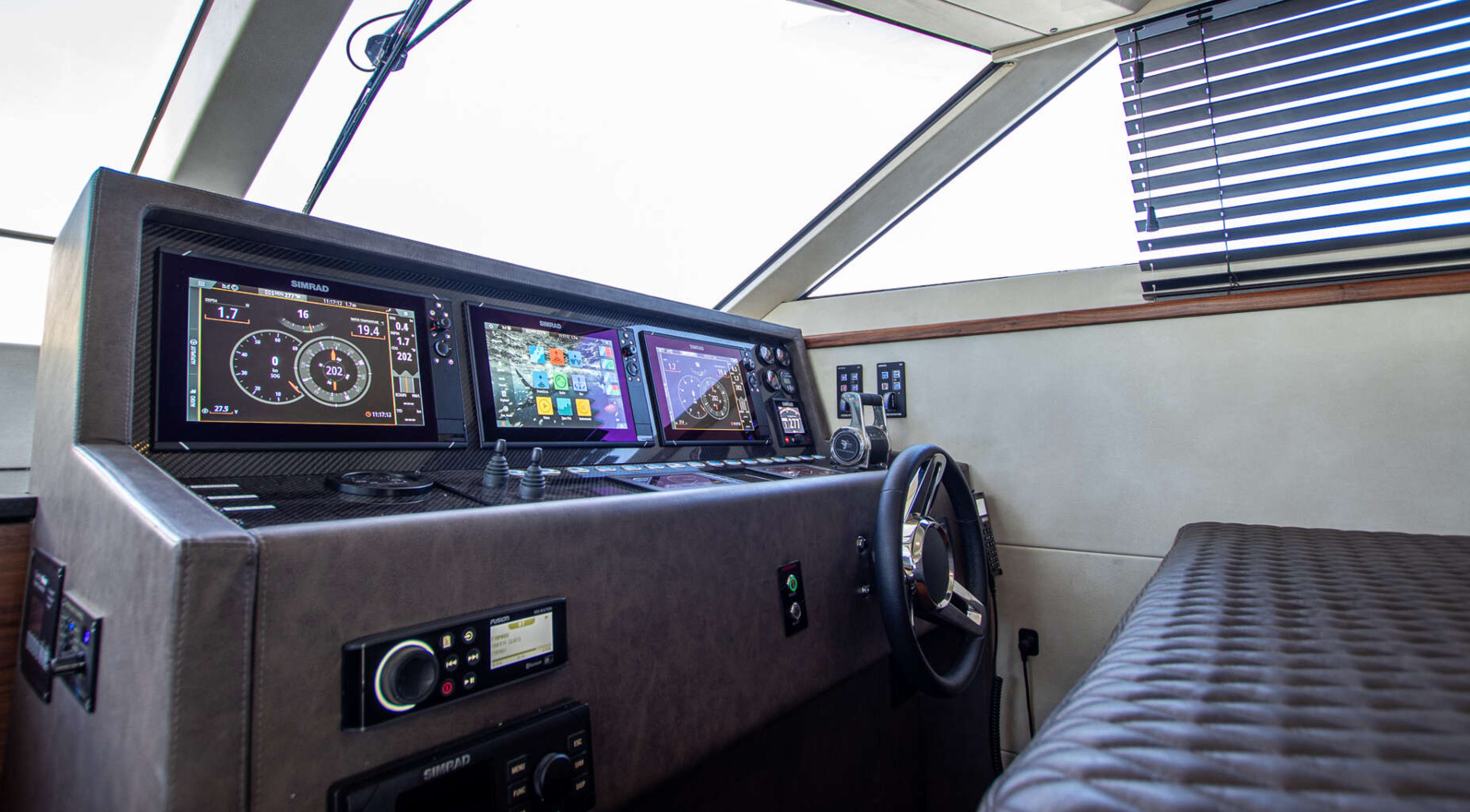
Step inside and the Phantom 80 opens up with volume more often found on a 90-footer. The layout provides four guest cabins—two doubles, a twin, and an L-shaped bunk cabin—plus a separate crew cabin aft. Each cabin is well-appointed, with proper headroom throughout (around 2.02m), and electric toilets with en suite or semi-en suite access.
Interior finish is walnut with wood flooring, and the saloon benefits from nearly 2.05 metres of headroom. Heating is diesel-fired through a Kabola HR500 combi system, providing constant hot water and radiator warmth. This is paired with a Dometic Cruisair reverse-cycle AC system for cooling and climate control across all seasons.
The galley is intelligently laid out with Bosch appliances, Corian worktops, and a proper induction hob—an arrangement designed for real use, not token appearances. A washing machine and dryer are tucked into the crew space aft.
Helm and Navigation: Dual Stations, Full Suite
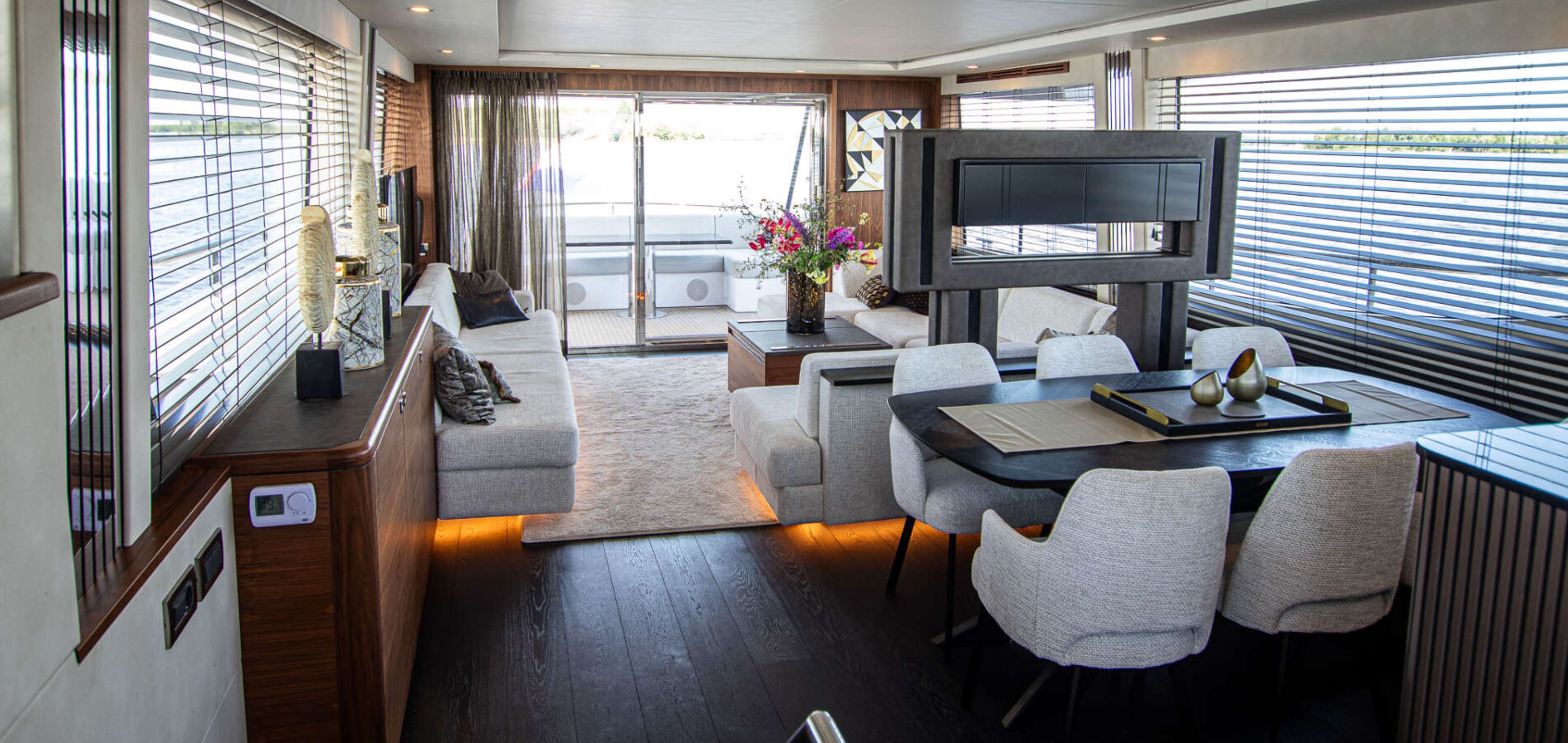
At the main helm station, three Simrad NSS Evo3S displays provide radar, AIS, chart plotting, and engine data. A matching setup with two displays is found on the flybridge, where a second helm station shares space with twin seating areas and a wet bar equipped with fridge and twin-burner electric hob. Steering is power-assisted, and engine/thruster control can also be operated remotely via a Hydronautica control.
Redundancy, accessibility, and real-world practicality are evident across the board—this is a boat that’s meant to be run, not just admired at anchor.
Final Thoughts: A Proper Offshore Yacht With Broad Appeal
The Van der Heijden Phantom 80 is, at heart, a cruising yacht for those who want to go further, stay longer, and do so in comfort without unnecessary complexity. She’s well-proportioned, cleanly engineered, and packed with the kind of systems usually reserved for larger builds. The aluminium construction, CE-A certification, and solid engineering choices make her a genuinely attractive option in the sub-24m category for serious owners.
If you are interested in finding out more about this vessel, you can view the full listing and specifications on the broker’s website here. What do you think of this the Phantom 80? Share your thoughts in the comments