

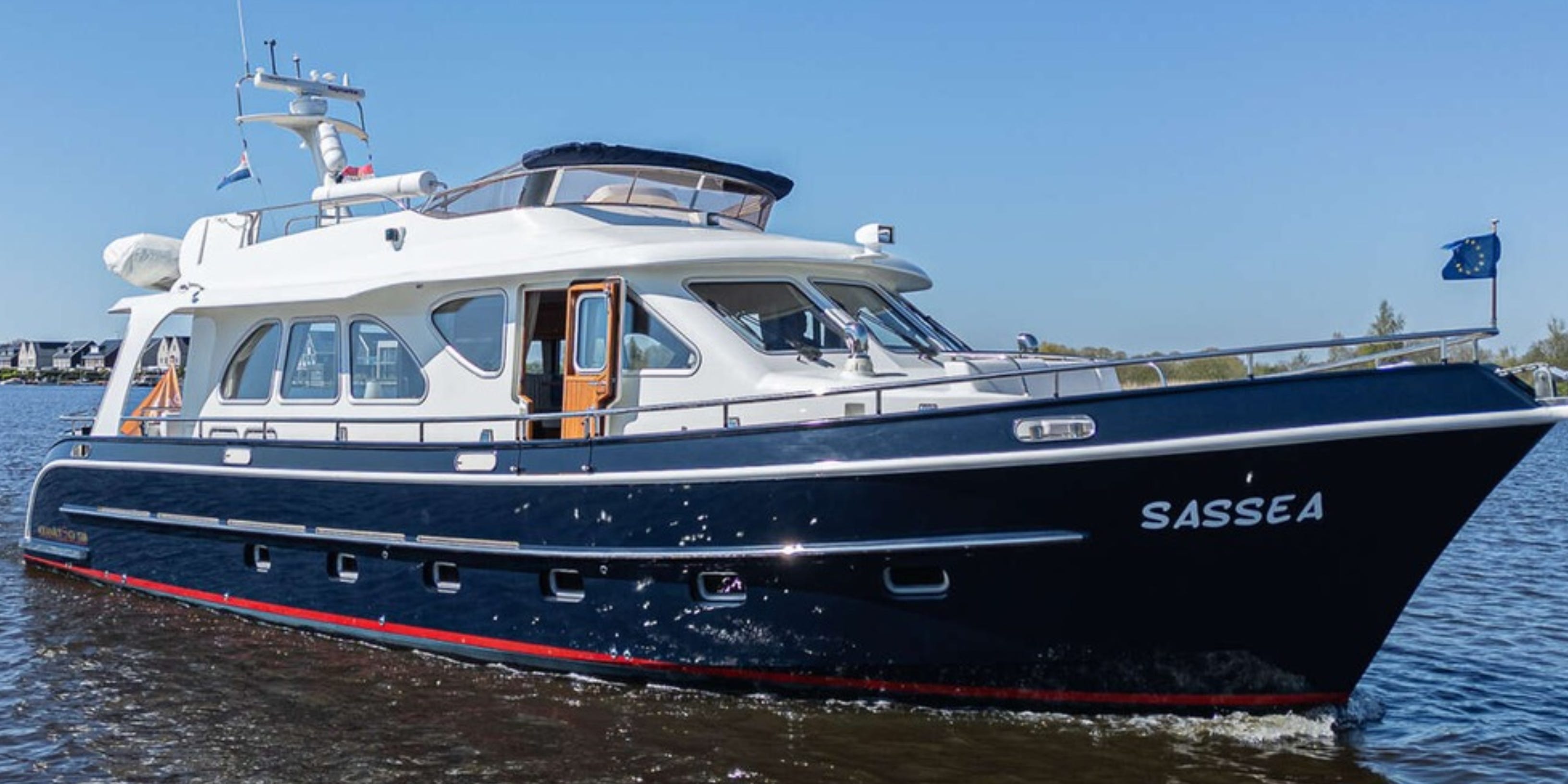
There is something about the word ‘Aquanaut’. I am not sure what, exactly. Maybe it has something to do with the connotations which come with the space version of the same word. Anything ‘Astronaut’-related must be, from an engineering perspective, really impressive.
So, when I saw the Aquanaut Global Voyager 1500 (stabilisation version) sitting unassumingly inside De Valks Sneek-covered mariner (currently listed for sale with Pieter Bosma - link to listing below), my curiosity alone ensured that I went over to this CE Cat A explorer motor yacht to take a closer look.
Before we go into too much detail, let’s take a moment to cover the main specs of this boat. She has an LOA of 14.05 metres, a beam of 4.8 metres and a draft of 1.4 metres. Her max air draft is 6.7 metres and her min air draft is 3.77 metres.
With dimensions like this, if you are thinking of using this boat on Europe’s inland waterways, then you might be wondering where you can, and more importantly, where you cannot go.
Without listing every single waterway in Europe, if you are thinking of staying in the Netherlands, then she can comfortably navigate most of the major canals, rivers, and lakes, including routes through Friesland, the IJsselmeer region, Amsterdam, Zeeland and the main commercial waterways.
If you were thinking of heading south to Belgium, then this boat would also be well suited to the Scheldt, the Ghent-Ternuezen Canal, the Albert Canal and selected routes around Brussels and Wallonia. Although I have driven through Belgium many times, I have yet to explore the country via its inland waterways, so I cannot offer any personal advice on where to go.
If you’ve cruised through Belgium by boat, let us know in the comments where the best places to visit are!
France is a bit more complicated, as its minimum air draft of 3.77 metres excludes much of the smaller canal network. But if the Rivers Oise, Seine, Moselle or Rhone are on your radar, then this boat will serve you well.
But I doubt that a boat as capable as this will spend much of her time pottering around the inland waterways of Europe. This boat was designed to be taken offshore, in the sort of gnarly weather that salty sea dogs like you and me actually enjoy cruising in.
With her steel hull and steel superstructure, you would be hard-pressed to find an offshore sea state (excluding mid-ocean) that this boat would not be able to handle. Most explorers opt for an aluminium superstructure to save weight and fuel.
But this Aquanaut Global Voyager, built in 2010 by Aquanaut Yachting in the Netherlands, is more concerned with its ability to punch through big waves than with saving a few thousand of your local currency on fuel. Exactly my kind of boat!
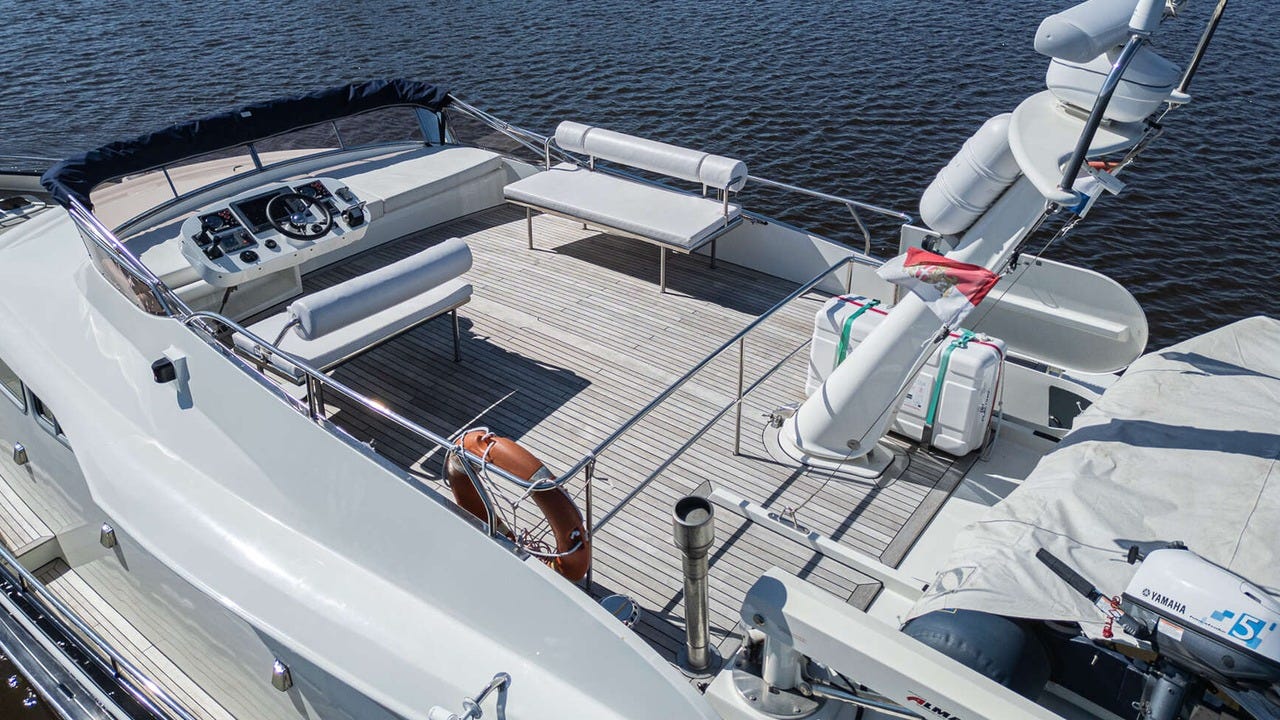
SeaKeeping
Her EU Recreational Craft Directive CE Cat A credentials mean she can handle wind forces above 8 (gale, wind speeds of 34-40 knots) and wave heights above four metres. Your guests on board might not enjoy the ride, but at least they will take comfort in knowing this boat was designed for it.
Her hull features a long keel and a hard chine. The long keel improves directional stability, which is very useful in a following sea or beam wind where a fin-keel or shallow-draft hull would tend to wander. But remember, this long keel also means her props and rudders have additional protection, should you misjudge the tide times.
Meanwhile, her hard chine increases her initial stability, meaning that she resists the first few degrees of a roll more firmly than a round bilge would. The trade-off here is that hard chine hulls can feel a bit quicker, in terms of movement once they do start rolling, compared to the softer, more rounded motion that you would get with a round bilge displacement hull.
Got a boat?
Know of a vessel, for sale, charter, or otherwise, that you would like me to feature in a future dispatch? You can send me a direct message or email me via john@yacht-buoy.com
Her 34 tonnes of displacement for a platform that is 14.95 metres means that, when it does get rough, her frequency of motion will be relatively slower and, combined with the boat’s increased inertia, she will resist being thrown around by short, sharp wave trains.
Considering this boat can carry a maximum of 12 passengers, this high level of sea-keeping and seakindliness is very important should you and 11 of your oppos find yourselves outwitted by a gnarly weather front.
And let’s not forget that this Aquanaut is also fitted with Vetus hydraulic fin stabilisers. These active underwater control surfaces reduce rolling while the boat is moving. Sensors detect the start of a roll, and the hydraulic system adjusts the fins’ angle, generating an opposing force that helps keep the hull level.
They don’t eliminate every movement at sea, and they are primarily a roll-control system rather than a cure for pitching or yawing, but when combined with her hull configuration, they help keep the boat steady when other boats would be rolling all over the place.
Naval Architecture
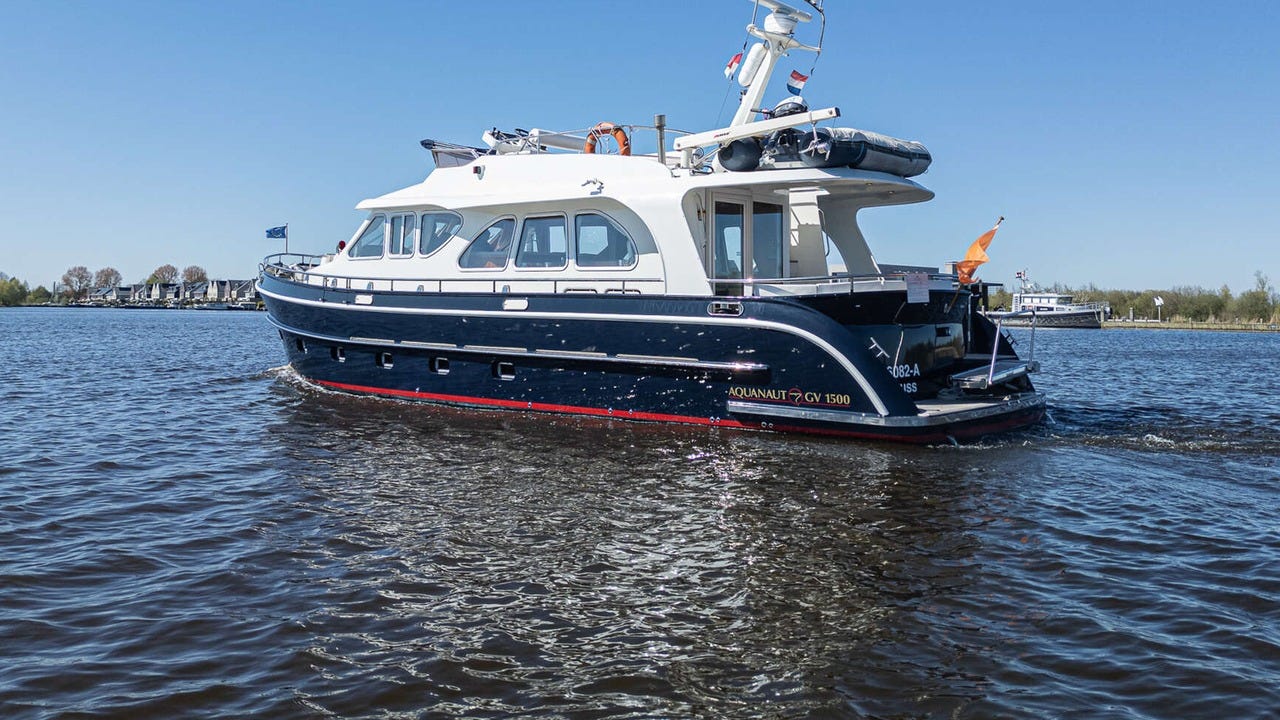
This boat has most of the lines and naval architecture I love in an explorer motor yacht. She has a beautiful sheer that slowly starts to increase as you move towards the bow from midships. The flare on her bow not only reminds me of commercial vessels, but is just enough to ensure that rogue waves from passing tankers will not get the deck too wet.
I also love the proportions of her steel superstructure, with the wheelhouse nestled low to keep her centre of gravity down. You might think that this would mean restricted visibility in the forward sectors of the boat, but overall, visibility was very good.
She reminds me a little bit of the Shannon Class lifeboat operated by the Royal National Lifeboat Institution in the UK (a vessel that I never actually had the chance to work on during my own time in the RNLI). And when a vessel resembles the profile of a SAR vessel, you know it was designed with seakeeping in mind rather than as an afterthought.
Accommodation
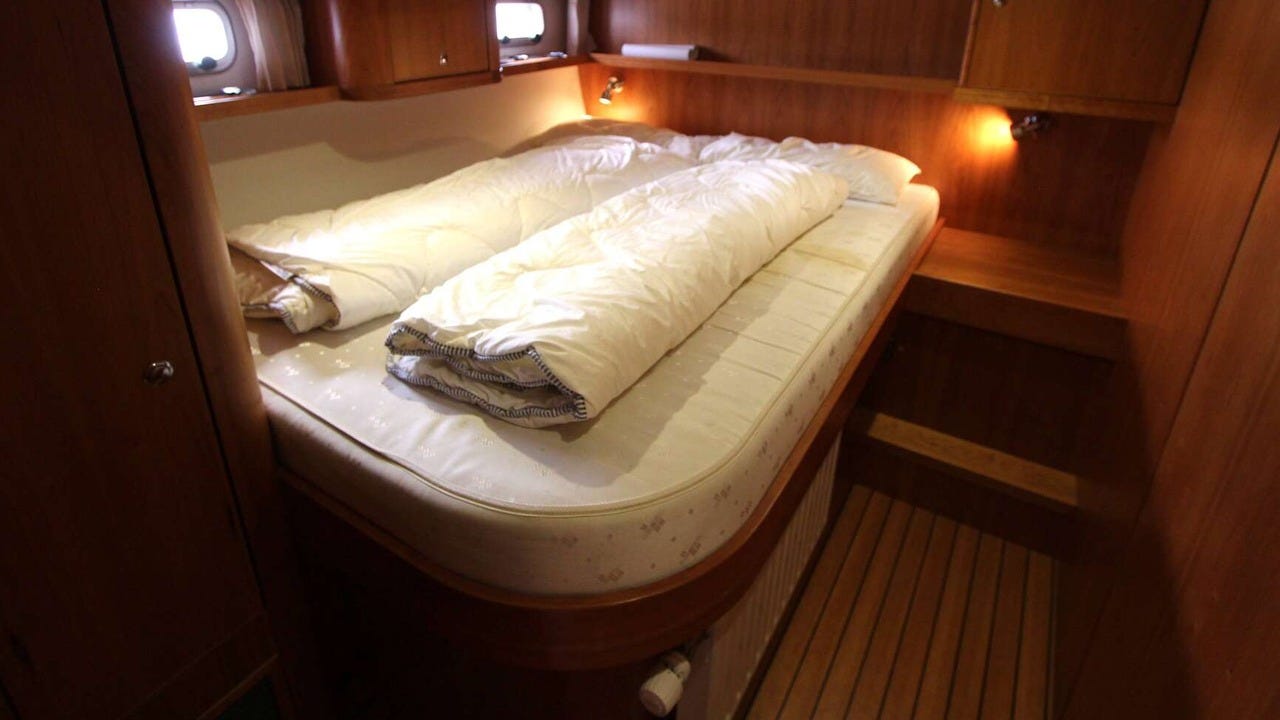
As you no doubt saw in the walkthrough video, she has 8 berths in four cabins. And yes, your guests might have to ‘rough it’ when it comes to sharing a bathroom, but at least they get to stay on board with six of their best mates.
Heating comes from a Kabola 14kW system, and although she isn’t fitted with air conditioning, she has plenty of windows for fresh air. If your guests enjoy long showers, her 800-litre freshwater capacity should be enough, though you can always top up the fresh water tanks thanks to her 60l/hr Robwink watermaker.
The rest of this article continues below in the premium section. After all, it is only thanks to my premium subscribers that I can cover the costs of travelling around and showcasing these boats for you, both on my YouTube channel and here in this newsletter. If you do become a premium subscriber, then thank you! I appreciate the support.
In the premium section below, I talk about the Builder, Aquanaut Yachting; how much it would cost to ship this boat over to North America, Service costs and service intervals on the engines; what I would be looking out for during a sea trial and pre-sea trial inspection; as well as what the boat’s range is, in nautical miles, as this is not covered in the spec sheet, what other Aquanauts are on the market and how they compare and then finally, my honest assessment of this boat including the listing broker’s details.
Aquanaut Yachting
Aquanaut started in 1961, and since then they have not only been building boats but also refitting and maintaining them. This yard knows a lot about motor yachts. It was founded in Sneek by brothers Johan and Wim Bakker. Initially, they concentrated on yachts between 11 and 15 metres…[article continues below]
