

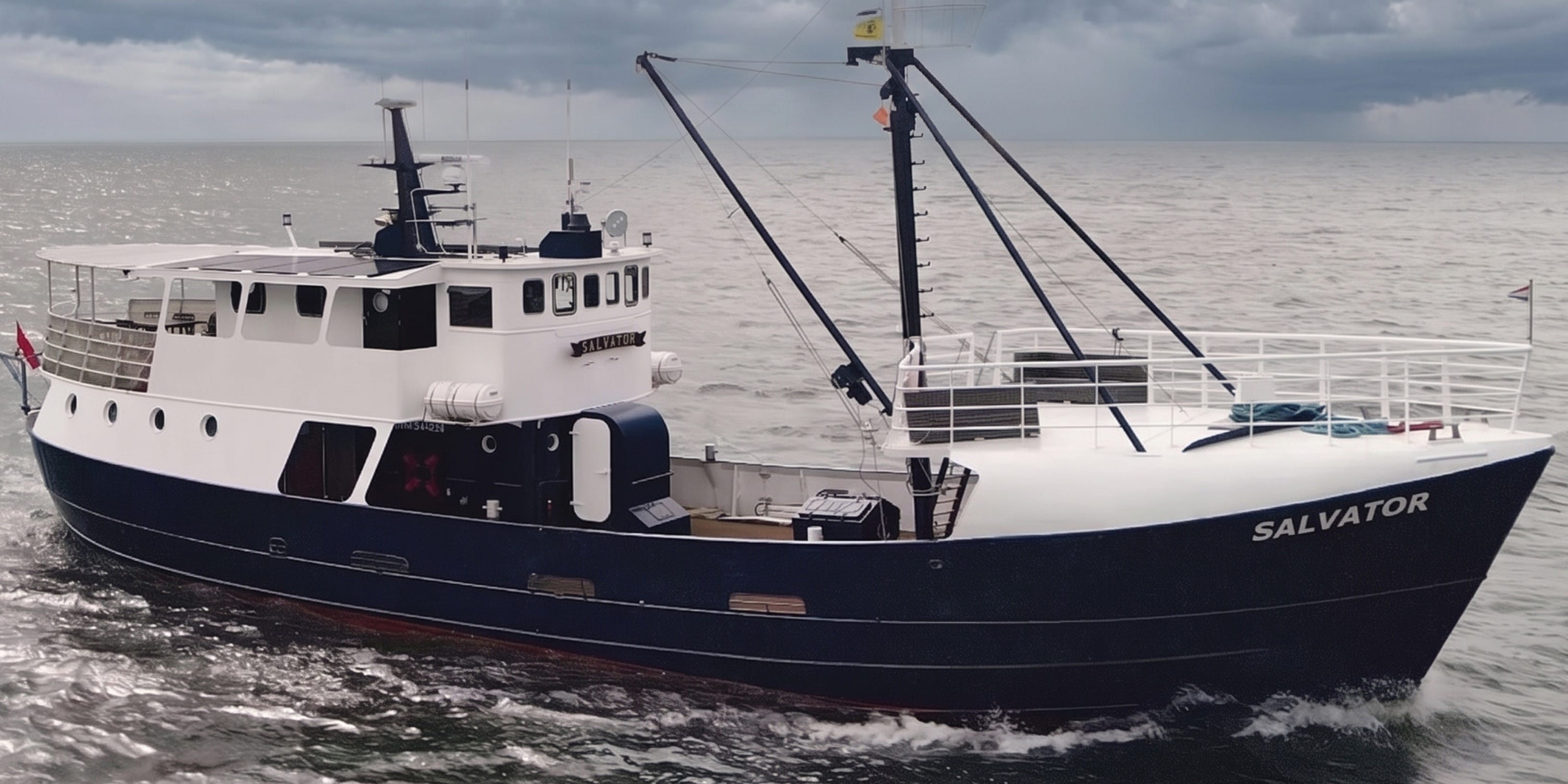
Over the years, I have featured hundreds of explorer and trawler yachts on my YouTube channel. Salvator is one of those boats that make the case for herself the minute you board her.
Westvlaamse Scheepwerven NV built her in 1961 in Oostkamp, Belgium, as a steel fishing trawler. She was designed to take on some of the harshest conditions the unforgiving North Sea could throw at her. Fishermen do not have the luxury of deciding not to go to sea when the storm sets in; their livelihoods depend on capable vessels that can withstand some of the toughest conditions.
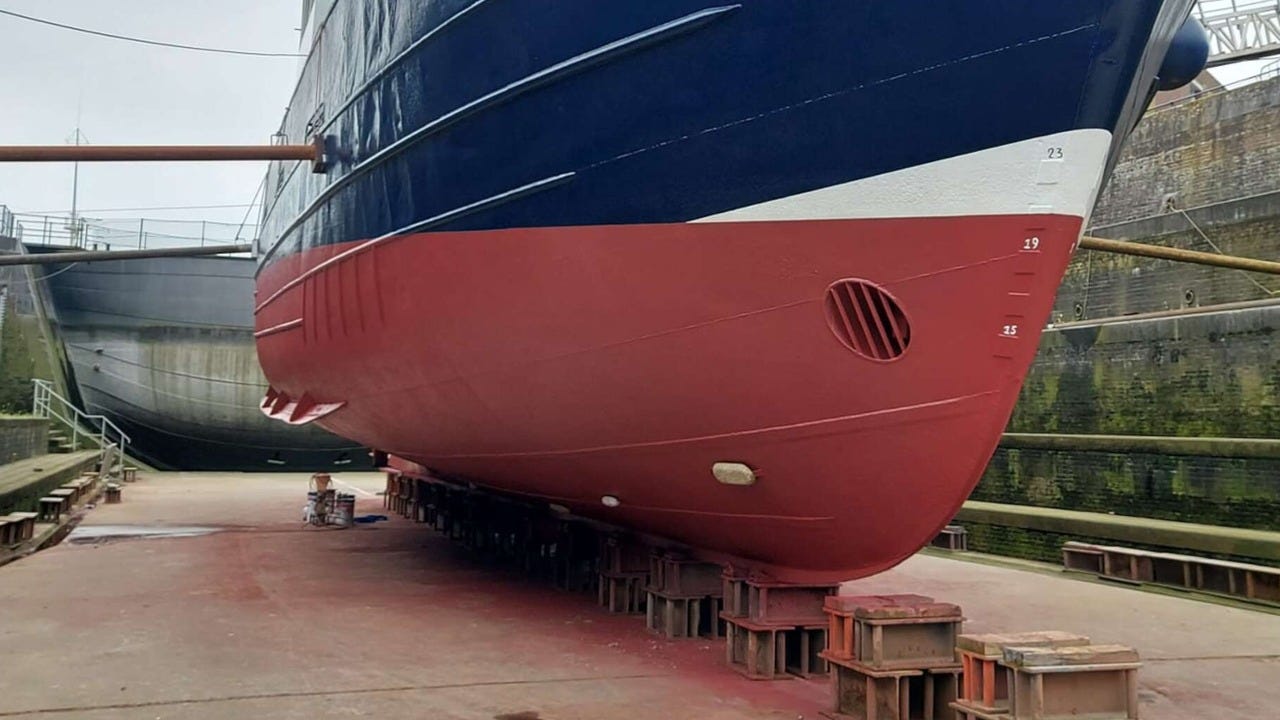
Salvator is just under 25 metres long, displaces 130 tonnes, and has an S-bilged hull with bilge keels below the waterline. She has a steady and predictable motion when battling through big waves. This predictable motion was vital for her former fishing crews, who needed to anticipate what to hold and for how long when a rogue wave found them in the middle of the night during a winter storm.
An S-bilger hull, sometimes called an ‘S-spant’ in European naval architecture or sometimes referred to as the classic wineglass hull, is a displacement hull form that is built around a continuous compound S-curved cross-section
Rather than breaking sharply from the topsides to the bottom at an angular chine, or meeting a separate keel abruptly, the steel hull plating curves convexly around the turn of the bilge and then reverses into a concave, hollow sweep down into a deep, integrated keel.
Before we carry on, if you have not watched my YouTube video yet, then here it is (remember to come back to this article once you have watched the video!):
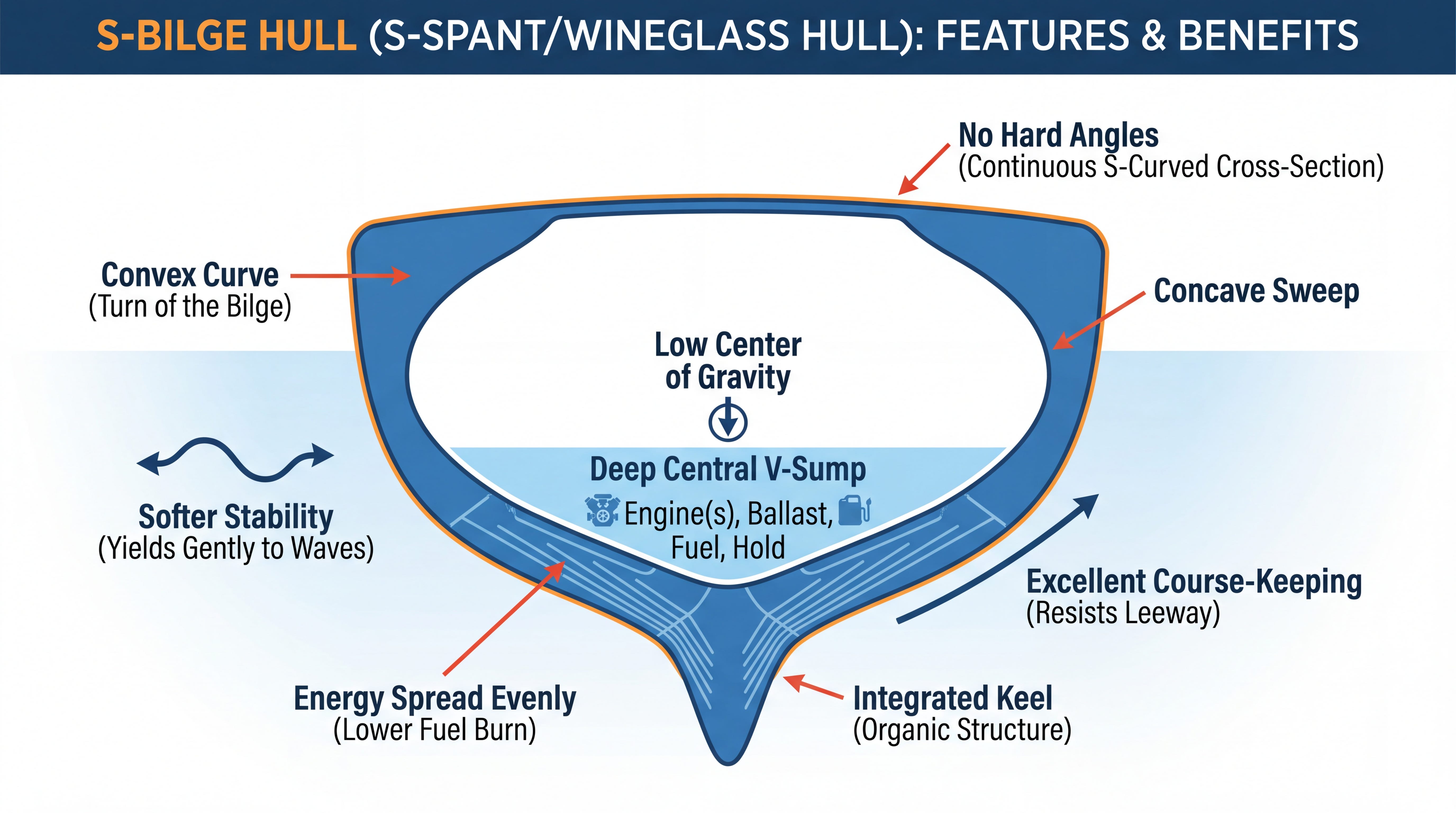
As a result, you get a hull with no hard angles, an organic keel that emerges from the hull structure rather than being welded on, and a deep central V-shaped sump low inside the hull.
Traditional and ocean-going trawlers working the North Sea, North Atlantic and Baltic have long favoured an S-bilge hull for a number of different reasons. The softer stability means the boat tends to yield gently to passing waves rather than snap back like a hard-chine hull might. This helps to prevent fatigue on deck.
The deep hollow section low in the hull allows the engine(s), generators, ballast, fish hold and fuel bunkers to sit very low, which in turn keeps the centre of gravity down, and thus the vessel’s inherent stability is very good in very rough weather.
The long, deep keel also ensures excellent course-keeping under trawling loads, and the boat resists leeway motion when heavy gear is deployed off the stern. The curved surfaces of the hull also allow the energy of the waves to be spread out evenly through the framing of the hull, rather than concentrating the energy on the sharp chines which would, in turn, lead to a more abrupt movement in heavy seas. This also helps keep fuel burn lower on long passages, as the engine does not have to make up for loss of motion.
In comparison, a hard-chine displacement hull has stiffer initial stability, a much sharper and more noticeable snap roll, a wider flat floor with a shallower bridge, and slightly higher resistance at lower speeds. Hard-chine hull boats usually need larger skegs or rudders to match the tracking of a boat that has an S-bilge hull.
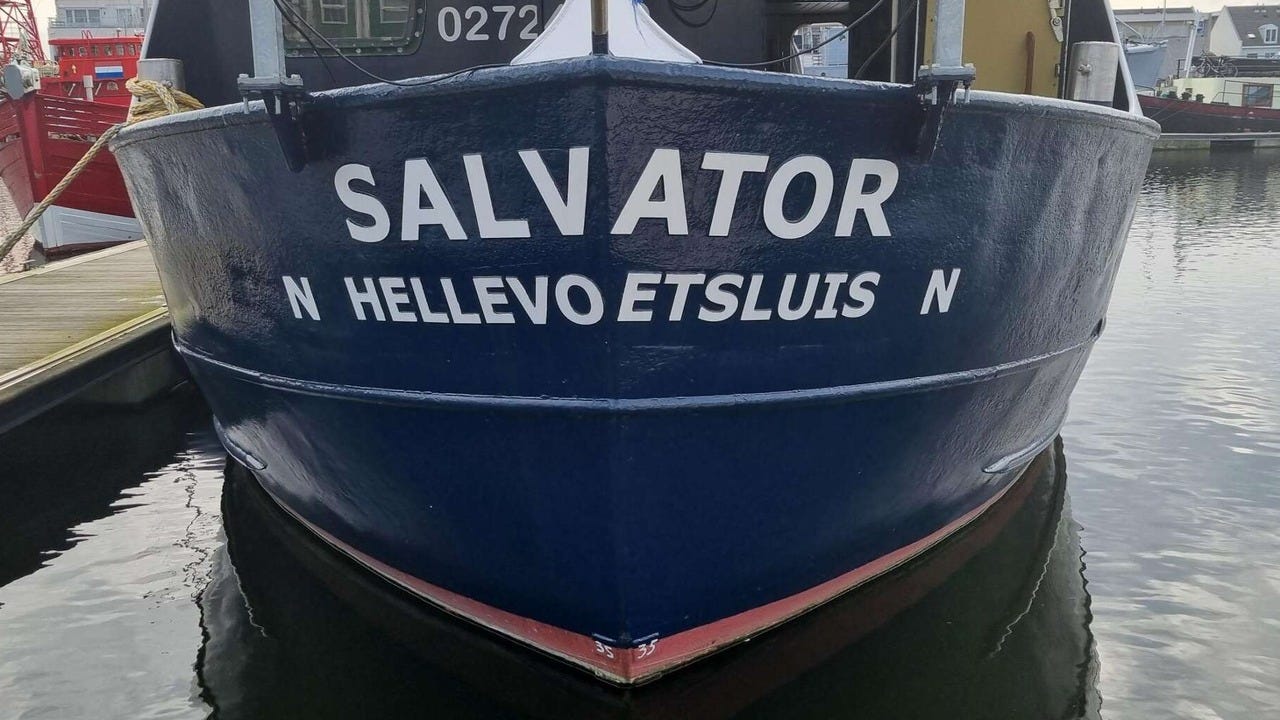
Boats with a hard chine hull are also simpler and cheaper to build because flat-sheet welding or moulding is more straightforward than the compound-curve plate rolling and framing that an S-bilge demands. This is why the ‘wineglass’ hull has stayed a hallmark of serious, purpose-built working boats.
Why trawlers make such good bones for an explorer yacht
In part, the answer lies in the fact that most of the really expensive parts already exist. Commercial trawler hulls were built to a completely different standard to leisure motor yachts of the same era. A builder knew that if their vessels did not keep crews safe, then the tight-knit fishing communities would never forgive them.
Of course, no fishing trawler is unsinkable. But no builder would want to face a scenario in which their boat capsizes in a ‘normal’ sea state. Human error, especially when working 24+ hour shifts, does and can happen. But crews trust their vessels because they trust the designers and builders who put them together.
Owners who take on these projects understand this design-and-build philosophy and trust it to take them and their families to parts of the world few other private motorboats can reach.
Her tank capacity includes 20,000 litres of fuel, plus a 450-litre day tank and around 10,000 litres of fresh water.
At 7 knots, she burns around 25 litres an hour, giving her a range of around 5,000 NM, which, for a boat of her size, is very impressive.
When you head down into the engine room, her machinery sits in a keel-cooled space with a dry exhaust, an installation a commercial surveyor would instantly recognise and appreciate.
The machinery Salvator still carries
Her main engine is an ABC 6MDX, rated at 250hp (184kW), installed in 1961. It drives a large 1,600mm four-bladed prop via a Brevo 3510 hydraulic gearbox and starts on compressed air rather than a conventional start battery.
Anglo Belgian Corporation (ABC) is still trading, and its current spare parts programme confirms that around 99% of certified parts for its DX, DZC and VDZC series are available, with support guaranteed for over 25 years.
Gardec, an authorised ABC Service agent, lists servicing and overhaul work on 6MDX engines as part of its offering. Whether every individual part for Salvator’s engine remains available today is unclear, but a manufacturer still supporting its older families puts a 65-year-old diesel in a very strong position.
Salvator carries twin generators, comprising a 20kVA Stamford unit and a 15kVA Lister Petter Stamford, backed by 1,760Wp of solar through a Victron MPPT controller and Quattro inverter/charger. Heating comes from an ACV/Elco system, supplemented by a pellet stove and four solar panels.
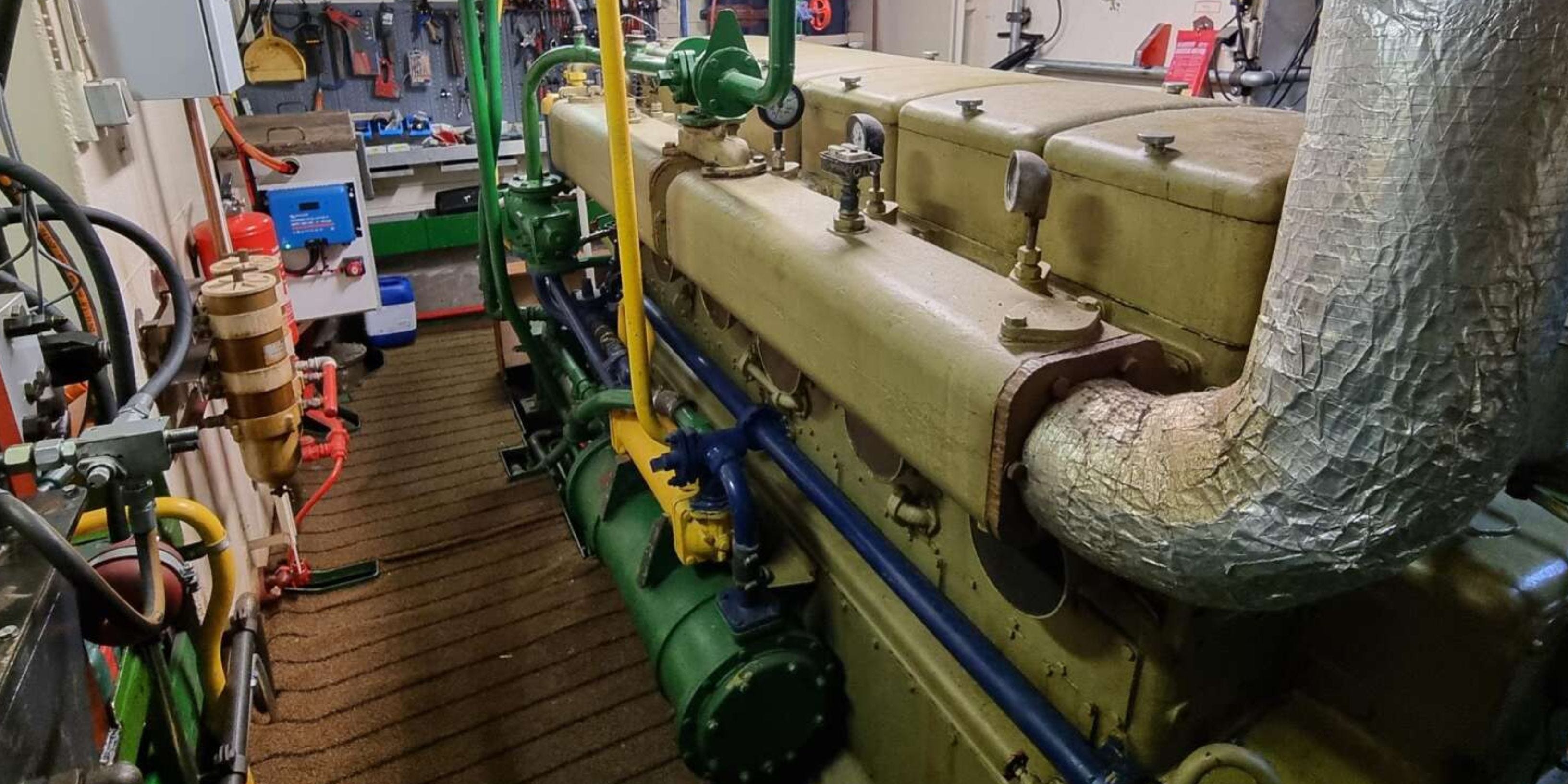
On her deck, she has a hydraulic windlass, capstan, deck crane, and removable davits.
When you combine this extremely reliable main propulsion with her impressive redundant off-grid power generation and heavy-duty deck gear, it is clear that Salvator's systems are not just a nod to her past; they are the solid foundation of her capability as a true go-anywhere explorer.
This article continues below, in “The Wardroom”
Thanks to my premium subscribers, I can self-fund the trips I make to film boats like Salvator. Without them, none of this would be possible, which is why the article continues below. In the premium section, I cover:
- The real cost of keeping her engine in place: what the evidence actually supports about repower costs at this scale, and how to think about the maths of overhaul versus replacement
- What a full conversion budget looks like: editorial planning ranges for taking a hull like Salvator’s from working trawler to a functional or yacht-standard explorer, and where the money mostly goes
- Where to actually find a boat like this: the ports and fleets where sound ex-commercial hulls still surface, and what to check before you buy one
- My honest assessment of why she could be harder to sell than you’d think: the narrow buyer pool for bespoke trawler conversions, and what the current market spread actually shows
Keeping the original engine is one saving among many costs...
Typical benchmarks for repowering a 150 to 300hp diesel come in around the tens of thousands of dollars/euros mark. This normally applies to boats in the 30 to 45 foot range. Salvator is 82 feet, and a comprehensive repower on a vessel her size (replacing the engine, gearbox, shaft line, exhaust and controls would sit well above that figure.
