

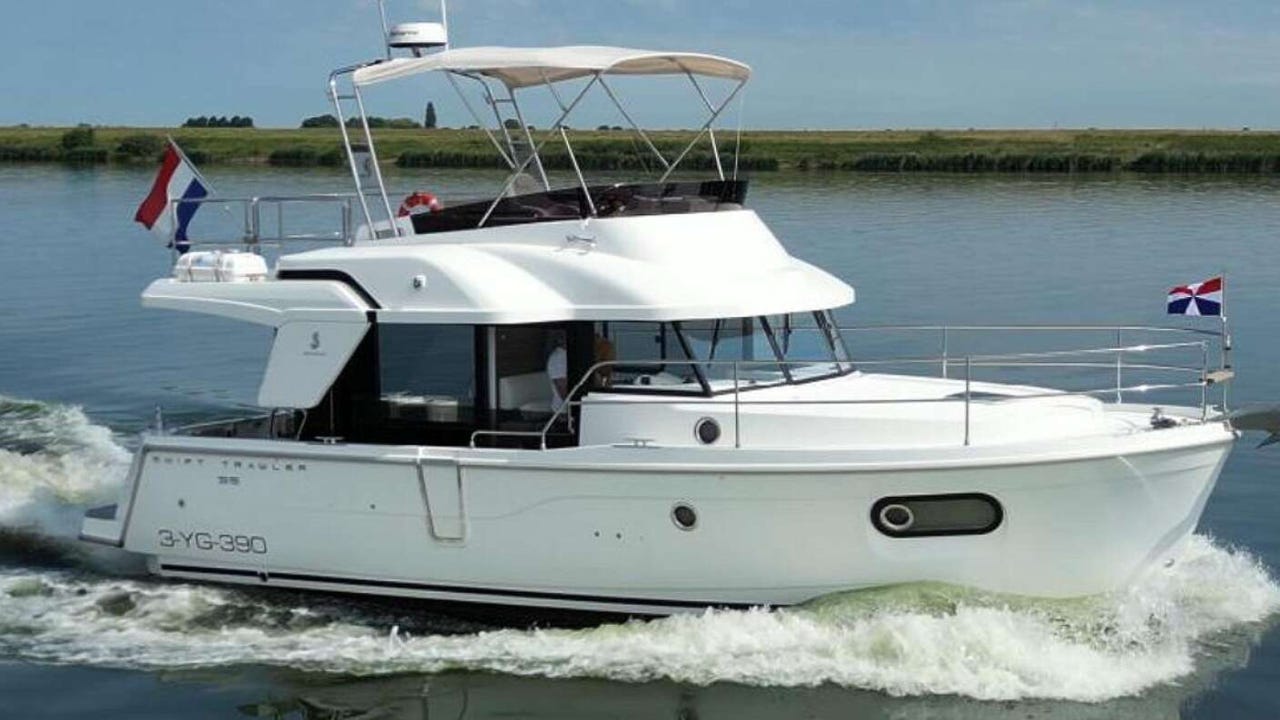
In last week’s walkthrough of the 18-metre Gillissen Kotter, I explored the appeal of steel trawler yachts: volume, presence, and long-distance potential. This week, I spent a day aboard the Beneteau Swift Trawler 35, fully expecting a very different onboard experience (and rightly so, as the boats are very different) to last week’s steel trawler review.
This comparison is written from the perspective of an owner-operator couple looking to cruise independently, without crew or a large family on board. It is aimed at those who value autonomy, simplicity, and practical liveaboard use for two people. If your boating plans involve bringing children, extended family, or regular guests, some of these conclusions may not apply in the same way, but if you’re weighing up the realities of managing a vessel as a couple, this should speak directly to you….
At first glance, the contrast is obvious. One is a heavyweight Dutch steel classic, the other an 11 metre production-built GRP cruiser. My instinct was to question whether the Beneteau could genuinely compete, and more importantly, if I had the budget for either, which one would I actually choose and why?
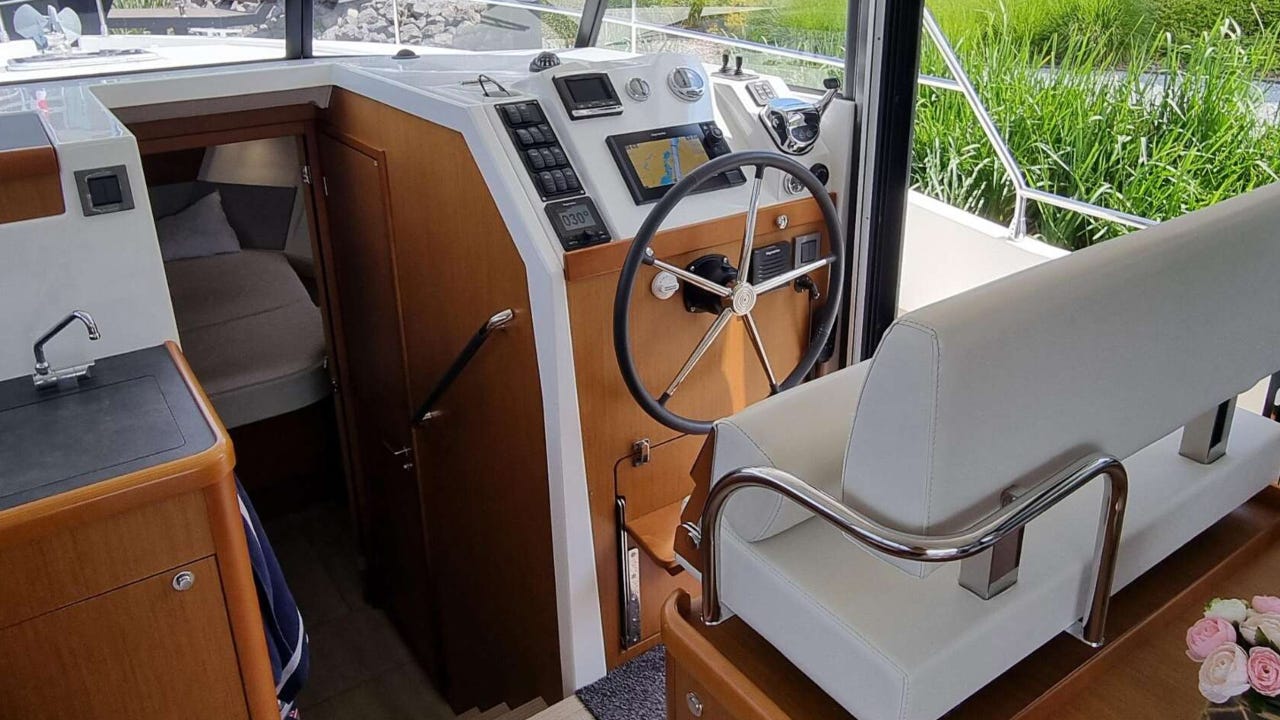
But after just a few hours on board, it became increasingly clear that when you look closely at the engineering choices, the running costs, and how each boat functions in day-to-day use, both yachts offer their own distinct advantages.
We’re comparing two very different yachts:
The Gillissen: 18m steel, full-displacement, vintage Volvo Pentas
The Beneteau Swift Trawler 35: 11.29m GRP, semi-planing, Cummins QSB 6.7 (425 HP)
The price difference? €50,000. But if you had the means to take on a full-scale project like the Gillissen, would you still choose the turnkey simplicity of the Beneteau? That question gets to the heart of my own ownership priorities: time, maintenance appetite, and how you value your cruising hours.
Join as a premium subscriber to access the full blog
Insider Tip: Subscribe using [THIS LINK] (rather than through the app) to avoid the 30% surcharge that Apple and Google often add to in-app purchases. It keeps the cost down for you and ensures your support goes directly to the mission
1. Propulsion: Vintage Reliability vs Global Serviceability
The Gillissen runs on twin Volvo Pentas that have seen several decades of service. While they’re known for reliability, parts availability and maintenance routines are becoming more complex as systems age. That said, with her steel hull and ocean-capable design, she offers the range and integrity for serious offshore work - including transatlantic capability, if properly equipped and crewed.
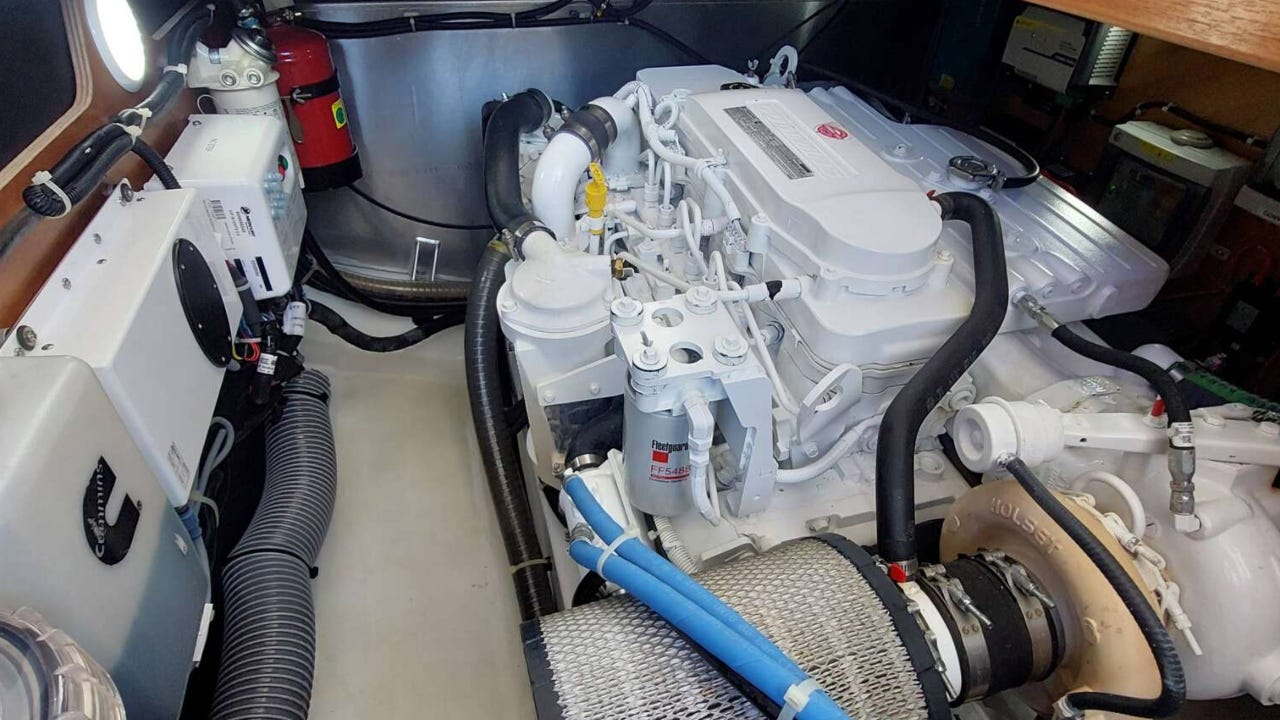
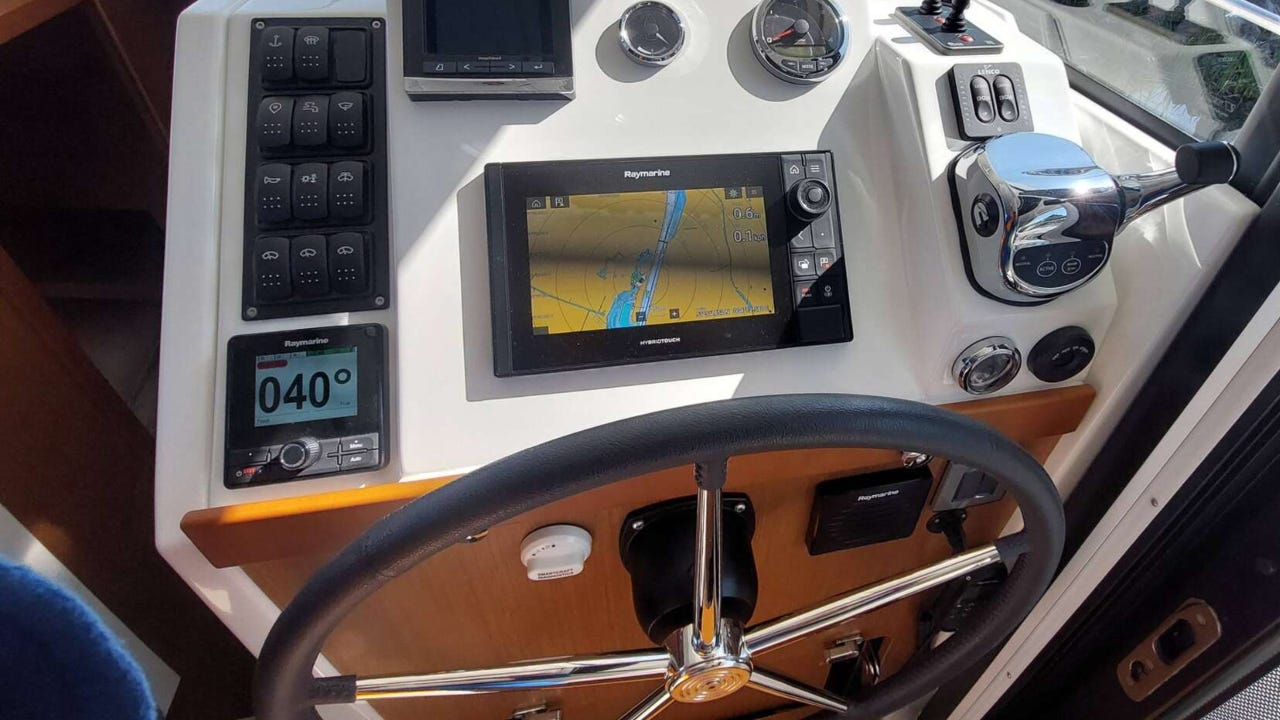
The Beneteau is powered by a single Cummins QSB 6.7, a commercial-grade diesel that’s used globally in trucks, trawlers, and heavy equipment. It’s a high-pressure common-rail unit designed for endurance. This particular boat has just 309 hours on the engine, barely out of break-in.
Diagnostics are modern and digital (Mercury VesselView). Parts are widely available. And performance is on a different tier: a top speed of 19 knots, with efficient cruising at 8 to 12. Compared to the Gillissen’s 10-knot limit, that extra speed is more than convenience. It’s a safety feature in marginal conditions.
Of course, the Swift Trawler 35 is not intended for bluewater crossings. This blog is written with the Mediterranean cruiser in mind, someone focused on autonomy, comfort, and a vessel that can cover coastal ground efficiently.
2. Manoeuvrability and Handling: Classic Trawler vs Single-Handed Cruiser
The Gillissen, with its size and mass, needs planning for every docking situation. In close quarters or a crosswind, it’s a boat that demands two experienced crew.
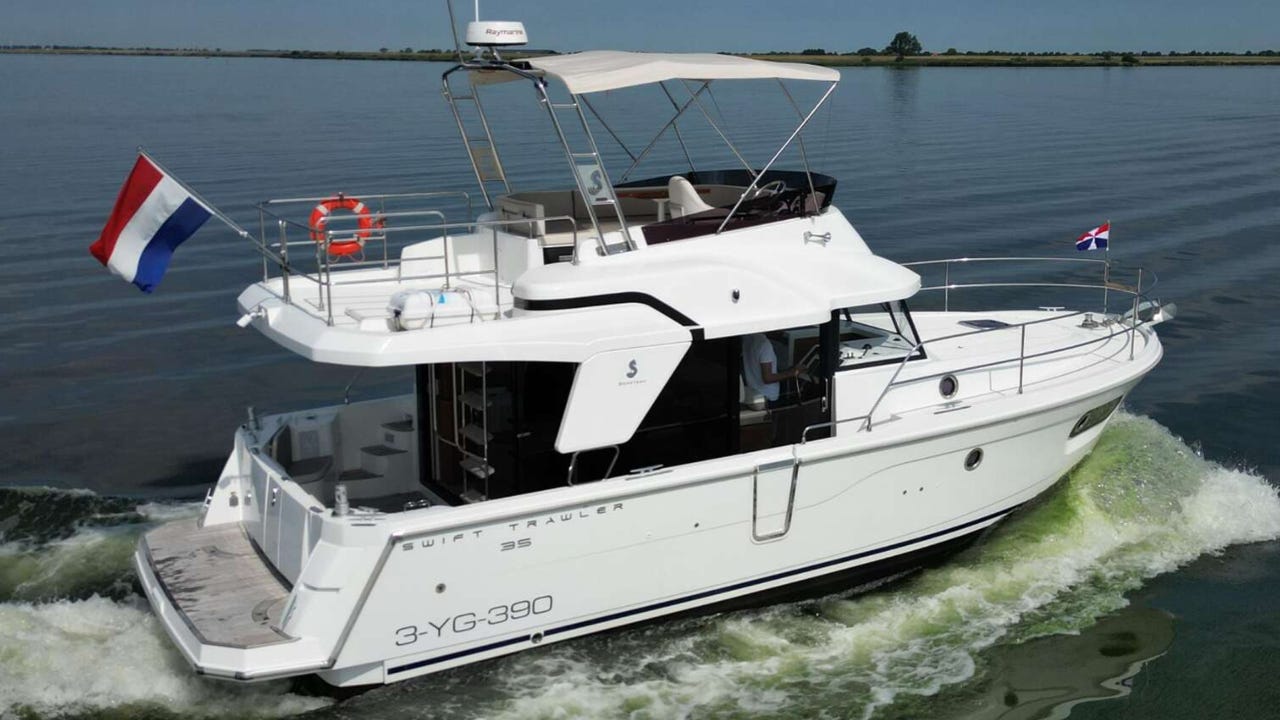
The Swift Trawler 35 is optimised for autonomy. Bow and stern thrusters allow precision control, and with joystick docking, you can position the boat sideways into tight berths without drama.
Add in its compact LOA and air draft of 3.70m, and the Swift Trawler 35 becomes a strong candidate for partial inland cruising. While it may not clear every lock or bridge on the full inland route from the North Sea to the Mediterranean, it opens access to many protected waterways and river systems across Europe. The Gillissen, with her high wheelhouse and deeper draft, remains more limited in this respect.
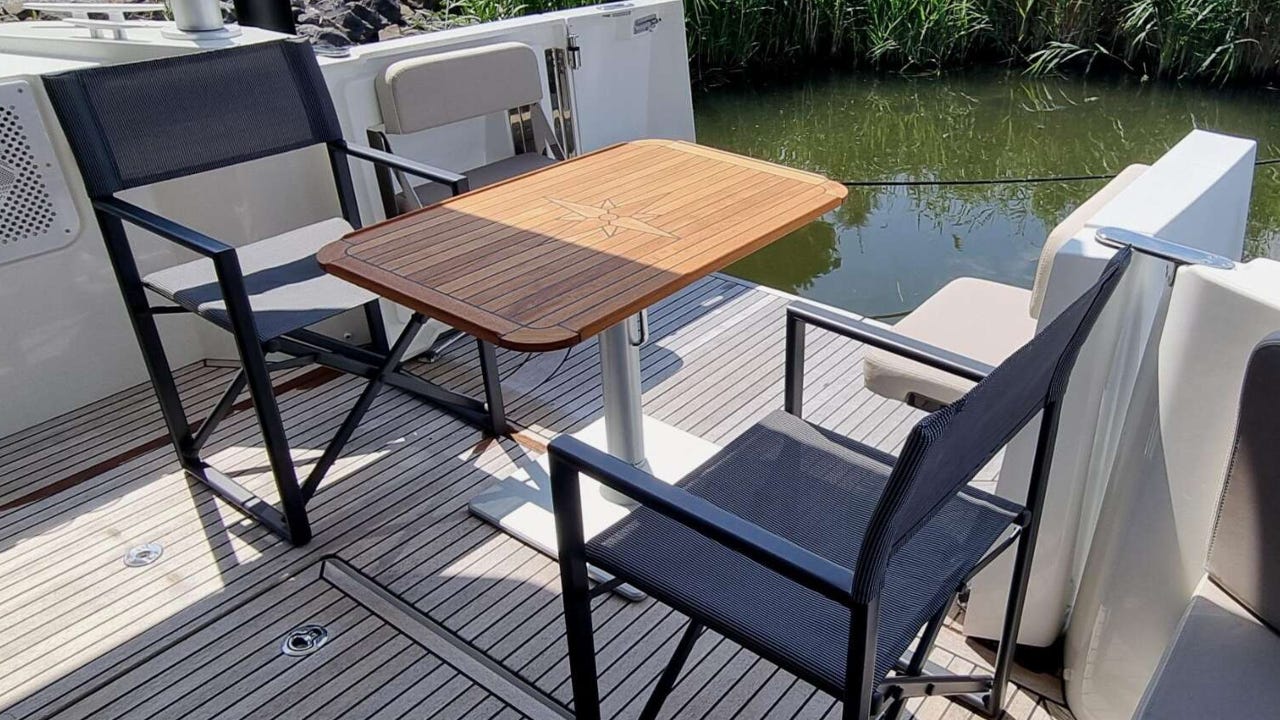
3. Maintenance and Materials: Steel Charm vs GRP Practicality
Here’s where the real divergence begins. Steel boats are honest, robust, and corrosion-prone. A full repaint on a 45ft hull can run to €30,000 every decade. Teak decks over steel? Beautiful, but vulnerable. Water ingress is a long-term enemy.
But there’s another point worth noting: impact resilience. One of the enduring advantages of steel is its strength. If you hit a semi-submerged container that’s broken loose in a storm, you’ll feel the bang - but there’s a good chance you’ll be able to continue sailing. With a GRP hull at 19 knots, that same encounter could be catastrophic. That said, the chances of running into floating debris while coastal cruising are low, and even lower in the relatively well-managed waters of the Mediterranean.
The Swift Trawler’s GRP hull needs no repainting. Annual polish and wax keeps her clean. No rust, no galvanic corrosion concerns. If your weekends are limited, the difference in time and cost is hard to ignore.
4. Liquidity and Resale: Custom vs Commodity
The Gillissen is a one-off. She will appeal to the right kind of buyer - someone who recognises the pedigree, appreciates traditional steel construction, and is looking for something with genuine character. But that market is more specialised, and selling a custom steel trawler can take time. Realistically, you might expect 12–24 months on the market and offers below the asking price, depending on market conditions and how the boat is presented.
The Beneteau Swift Trawler 35, on the other hand, is part of an established production line with global brand recognition and support. That consistency makes it easier to value, insure, and sell. If liquidity matters - if you want or need to exit the market quickly - there is a much larger pool of potential buyers actively searching for this specific model.
The rest of this blog continues under my ‘Radar Room’ feature below

The Radar Room: Late 2025 Market Watch & General Updates
1. The “Pocket Explorer” Boom Continues
At the 2025 Explorer Yachts Summit in Monaco, the 24 to 30 metre range was firmly in the spotlight. These compact expedition yachts, often under 200 GT, are being designed for private docks, easier regulatory pathways, and owner-operator autonomy. Bering’s second hull of the 26.8 metre B88 completed trials earlier this year, showcasing serious ocean range, steel construction, and hybrid capability in a manageable footprint. Arksen’s updated Arksen 85 also drew attention in sea trials for its low-drag efficiency and long-range seakeeping, confirming its place as one of the most refined semi-custom explorers on the market. The message from Monaco was clear: smaller can still mean serious, and this segment will grow fast through 2026.
2. Charter-Driven Layouts in Sub-30m Builds
Charter economics are increasingly shaping how under-30-metre yachts are designed. MCA compliance, crew privacy, and convertible cabin spaces are no longer just features of 50 metre platforms. In 2025, we’ve seen more builders integrate beach clubs, wellness zones, and modular layouts into sub-30 metre explorers, responding to rising client demand for commercial flexibility without compromising private comfort. The Bering 88 and similar models are now being built with seamless transitions between private cruising and full charter mode, supported by layouts that can adapt to either mission.
3. Hybrid Systems Reach Expedition Grade
This year marks a turning point for hybrid tech in the expedition segment. Arksen’s 85 and Bering’s B88 both now feature diesel-electric systems designed specifically for saltwater reliability, quiet operation, and minimal maintenance in remote areas. Solar integration, battery buffering, and parallel propulsion modes now support real autonomy at anchor and underway. These aren’t coastal hybrids rebranded for adventure - they are legitimate expedition systems, tested and proven, allowing owners to reach protected zones or isolated anchorages with minimal impact and maximum independence.
Now let’s bring the focus back to the boats on deck today; the Gillissen Kotter and the Beneteau Swift Trawler 35. We’ve talked about the broader trends shaping the explorer market, but what do the real numbers look like when you compare these two, side by side, over a five-year ownership window?
This section is for Premium Subscribers only. If you’re already subscribed, you’ll also have access to our private chat area on Substack — a place to discuss boats, market moves, and ownership insights with other serious enthusiasts.
