

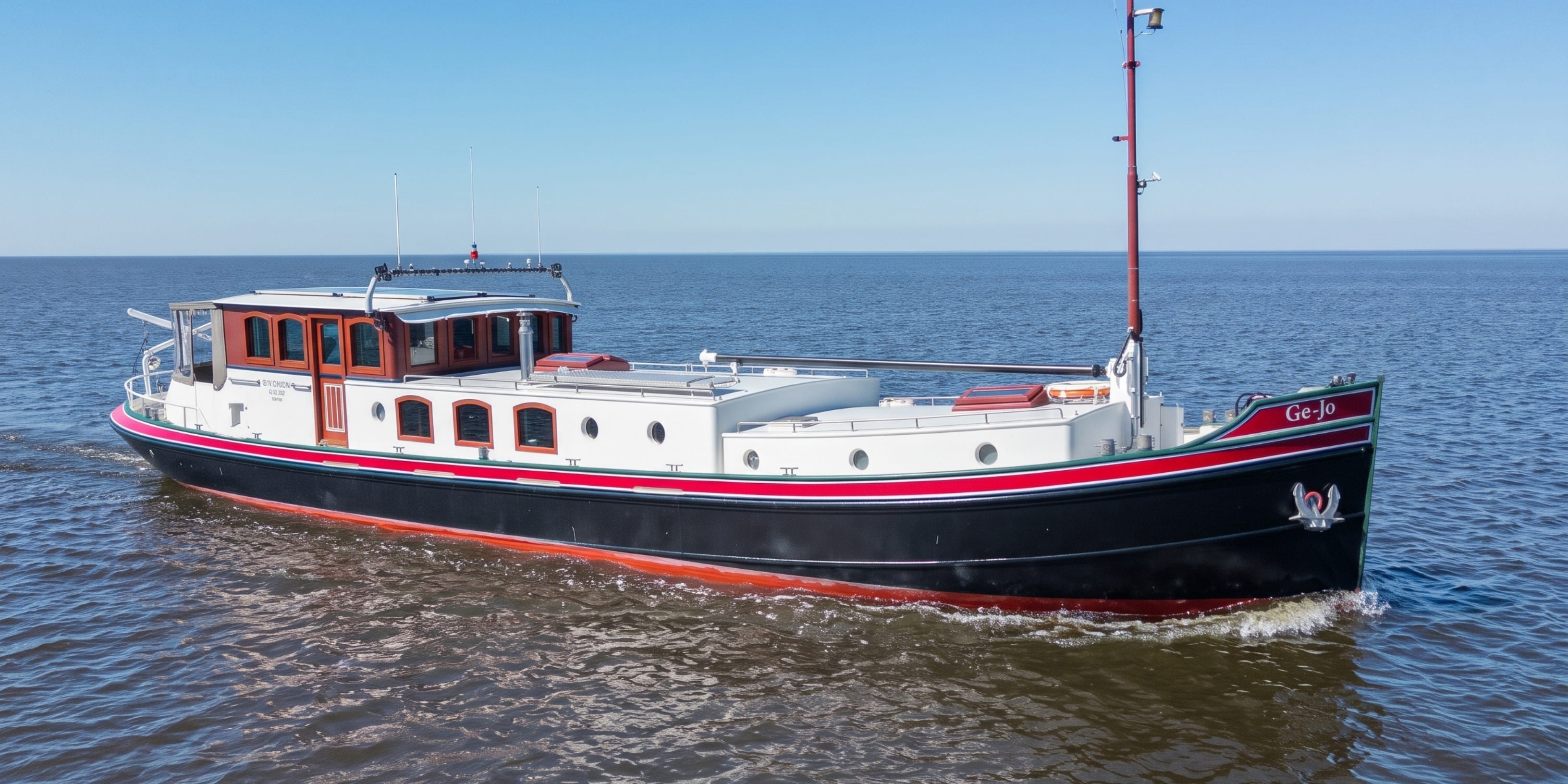
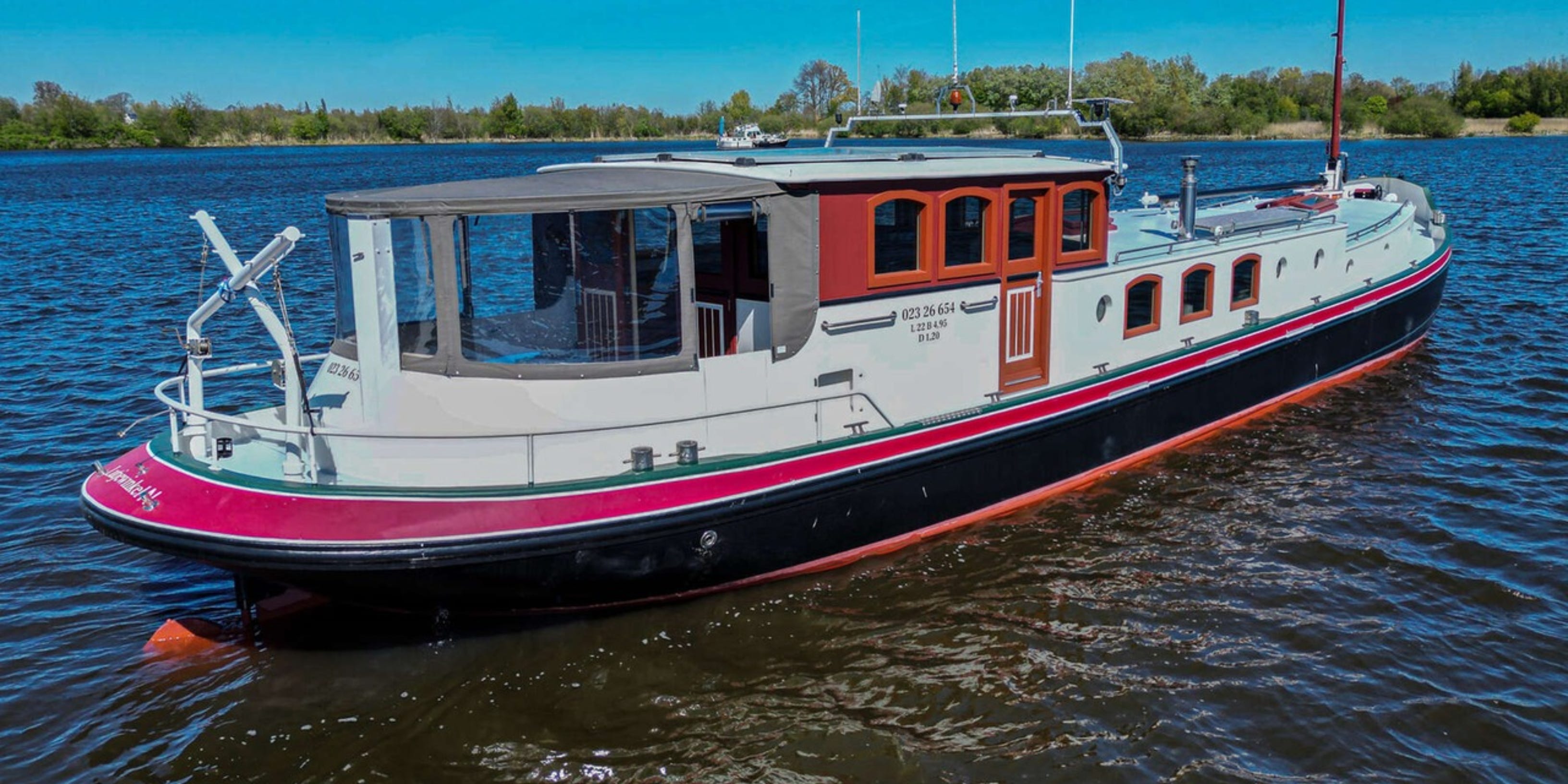
There’s a lot to like about M/Y ‘Ge-Jo’, but three things stood out when I filmed her for the channel. I love her range. I love her no-nonsense layout, which finds a lot of space in a boat her size. And I think she’s ideal for someone who wants to move to life afloat.
She’s a 22m Dutch Luxe Motor, built in steel and listed with De Valk Sneek (link below) at €549,000, VAT paid, which is about £460,000 or US$615,000 at the ECB rate on 22 October 2026. For that you get three cabins, five berths, 5,000 litres of diesel, 3,000 litres of fresh water and a Mercedes V8, fitted in 2006, with 425 hours listed. That’s a lot of liveaboard for the money!
So what does it cost, and what does it take, to live aboard her on Europe’s waterways? Here’s my tour first, with her full spec sheet straight after it.
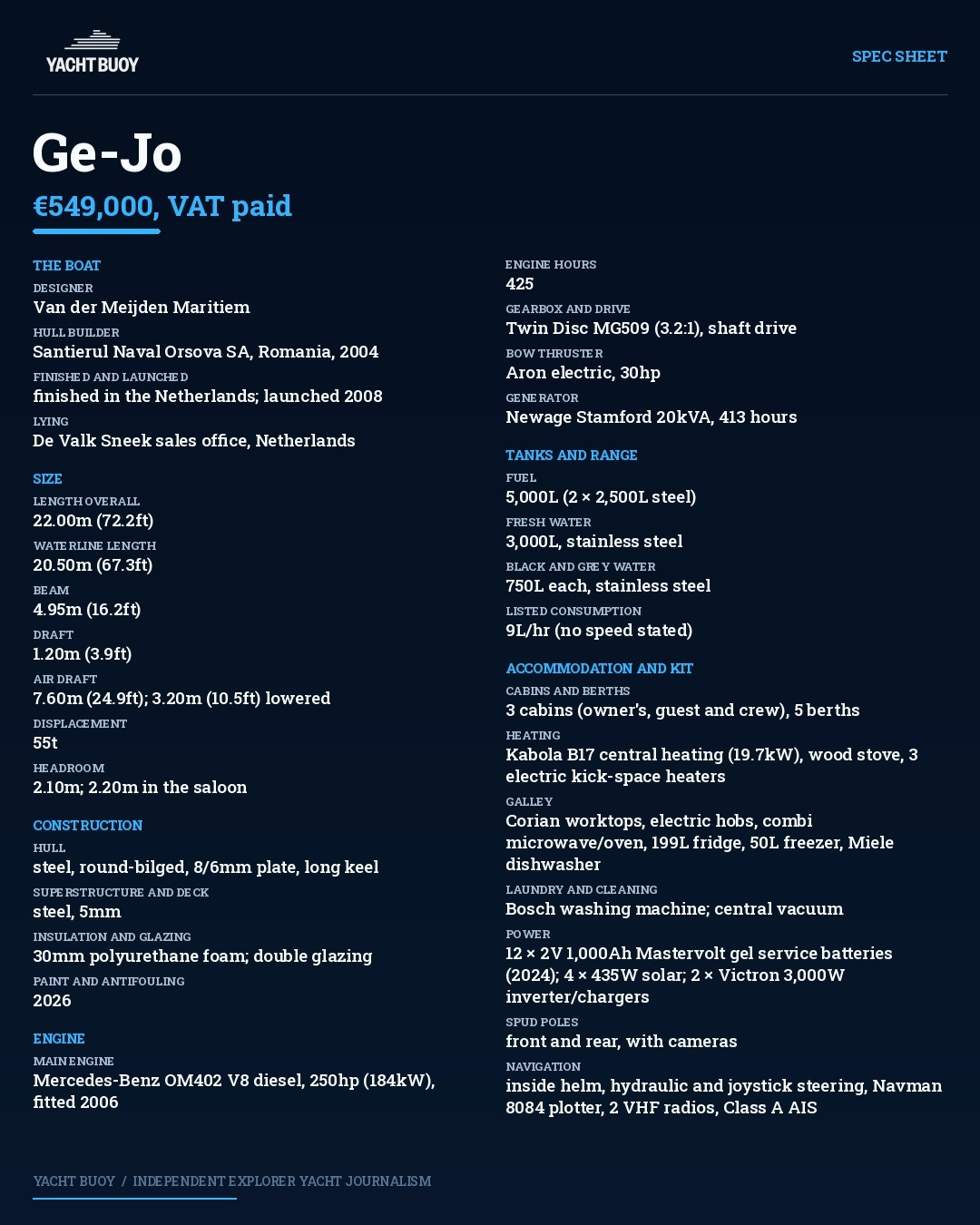
A lot of boat for her size
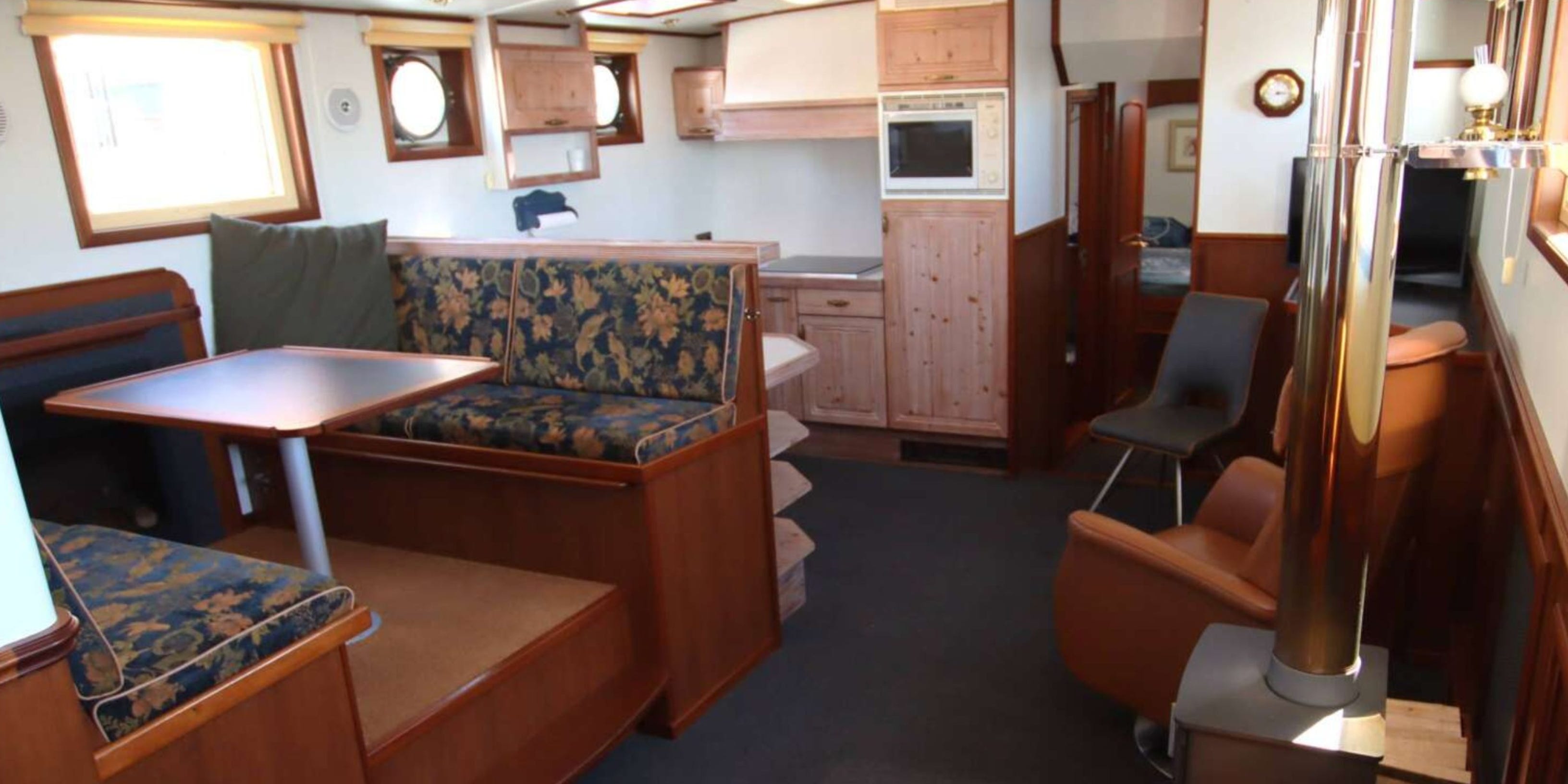
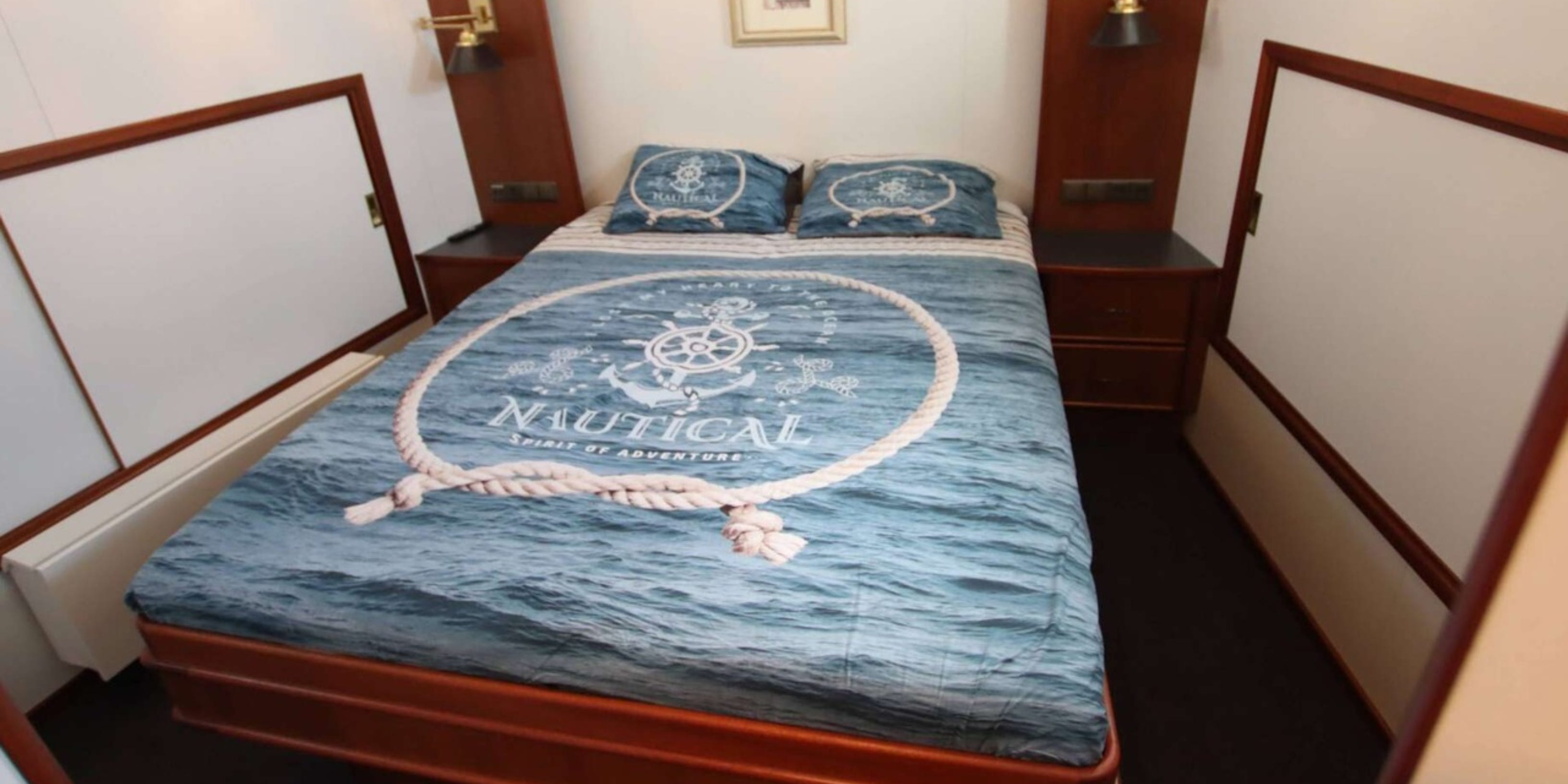
Ge-Jo is 22m by 4.95m, and her layout makes great use of every metre. The saloon is large and open with big windows down both sides, the galley and dining area are open plan with the wood stove close by, and there are three separate cabins: the owner’s with a French bed, a guest cabin with two berths, one above the other, and a single that the listing calls the crew cabin. The dinette converts into an extra berth for when the family descends.
That’s what I mean by no-nonsense. She doesn’t try to be a floating hotel; the space goes to the rooms you live in, and the machinery that makes a home on the water actually work. The trade-off is one shared bathroom, with a shower and a manual head. Headroom is 2.10m, rising to 2.20m in the saloon, and the beds in all three cabins are listed at 2.10m, so taller owners and guests can stand up straight and stretch out. Since it wasn’t listed in the spec sheet, I’ve worked out her range in the premium section below.
Her story
She’s a Luxe Motor 22, also known as the Dutch Traveller 22, designed by Van der Meijden Maritiem. The Santierul Naval Orsova SA shipyard in Romania built her steel hull in 2004, and the finishing work was completed in the Netherlands at the end of 2008. She has the long, low, dark-hulled look of a traditional Luxe Motor, with bright red and white trim, and the insulation and systems of a modern year-round home.
Life aboard
Warmth comes first if you’re living aboard through a Dutch winter, and Ge-Jo has three ways of making it: Kabola central heating, which can also heat the hot water, a wood stove for cosy evenings, and three electric kick-space heaters. All of that sits inside a steel shell lined with 30mm of polyurethane foam and fitted with double glazing, so the heat actually stays in.
Her 3,000 litres of fresh water go a long way too. Schenker, the watermaker company, suggests planning on 30 to 50 litres per person per day; at the upper 50 litres, a full tank lasts about 30 days for two, or 15 days with four aboard. The frequency of showers and laundry decides the real number, but that’s a fortnight or more on a quiet mooring. Black and grey water get separate 750-litre tanks.
The electrics are set up for living rather than weekending. Her 24V, 1,000Ah gel service bank, dated 2024, is roughly 24kWh, though you would rarely use all of a bank’s capacity. Four solar panels add 1.74kW at their rated output, a second alternator charges under way, and the 20kVA generator does the heavy lifting away from shore power. With a washing machine, a Miele dishwasher and a central vacuum on top, she runs like a house rather than a holiday home.
Then there are the spud poles. For readers who haven’t come across them, a spud pole is a long pole lowered straight down into the bottom to hold the boat in position; Kalkman Marine, which supplies them, calls them positioning and securing equipment. Ge-Jo has one at each end, each with a camera, so in shallow water with a suitable bottom you can stop for lunch on a lake, or wait for a bridge, without dropping an anchor or swinging about.
Where she can go
France’s smaller canals are built around the Freycinet gauge, which VNF, the French waterways authority, gives as boats up to 38.5m long and 5.05m wide, with a typical draught of 1.8m to 2.2m and 4m of air draft. Ge-Jo is 22m long, draws 1.20m and needs just 3.20m of air draft with her radar arch and mast lowered, so on paper she sits comfortably inside the length, depth and height limits.
Her beam is the tight one: at 4.95m she’s 10cm inside the nominal 5.05m, or 5cm a side before fenders. That’s the right side of the line, and it opens up a big slice of the small French network, but locks, bridges, water levels and closures vary, so you’d plan route by route with VNF’s online route planner. Dutch and Belgian waters have their own clearances, though her shallow draft and lowering arch and mast help there too.
The engine
425 hours is the number here that really catches the eye of a new owner. Her Mercedes-Benz OM402, a 250hp V8, is listed as fitted in 2006, and her listed 425 hours are low; how she’s been run and looked after is a question for the paperwork, which I come to in the premium section below. She drives a single shaft, and 55 tonnes on one screw asks for some skill alongside, so the 30hp bow thruster and joystick steering are welcome helpers in tight marinas and locks.
How she compares
De Valk has another Luxe Motor on its books. Gino is a 1930 steel Luxe Motor lying in Berlin, asking €347,900, VAT paid (checked 23 October 2026). She’s close in size at 21.33m by 4.85m, but her sales copy describes four cabins for up to eight people, with en-suite bathrooms, and she has an impressive 9.5kW of solar alongside a 160hp Scania.
Neither is the better boat. Gino puts more people under one roof with their own bathrooms, whilst Ge-Jo offers a hull more than 70 years younger, bigger tanks (5,000 litres of fuel to 3,000, and 3,000 of water to 2,000) and a 250hp V8 around a simpler layout. If you’re new to these boats, my Dutch steel liveaboard guide covers the wider picture.
So what does it cost to live aboard her? I’ve priced it in the premium section below, along with a question I’m asked a lot: could a boat like Ge-Jo work as a part-time home for, say, an American who spends 3 or 4 months a year in Europe, and earn her keep on Airbnb for the rest?
This article continues below, in “The Wardroom”
A big thank you to everyone who’s a premium subscriber, whether you’ve been with me for a while or you’ve just joined. Your support keeps both the YouTube channel and this publication going, advert-free, and lets me keep filming and writing about boats like Ge-Jo.
In the premium section, I cover:
- What a year aboard costs: a dated berth rate for 22m in Friesland, the 2026 French waterways toll and diesel priced per engine hour
- The navigation certificate, skipper’s licences and VAT-paid status for a 22m pleasure boat on EU inland waterways
- Her range, worked out from 5,000 litres and 9 litres an hour
- Looking after a 2004 steel hull, her engine, generator and gel batteries
- Could she be a part-time home for an American owner, and let on Airbnb the rest of the year?
- My honest assessment: who she suits and what she asks of an owner
What a year aboard costs
Berths, tolls and fuel for a 22m liveaboard, priced from published 2026 rates. I’ve done the research, so you don’t have to.
