

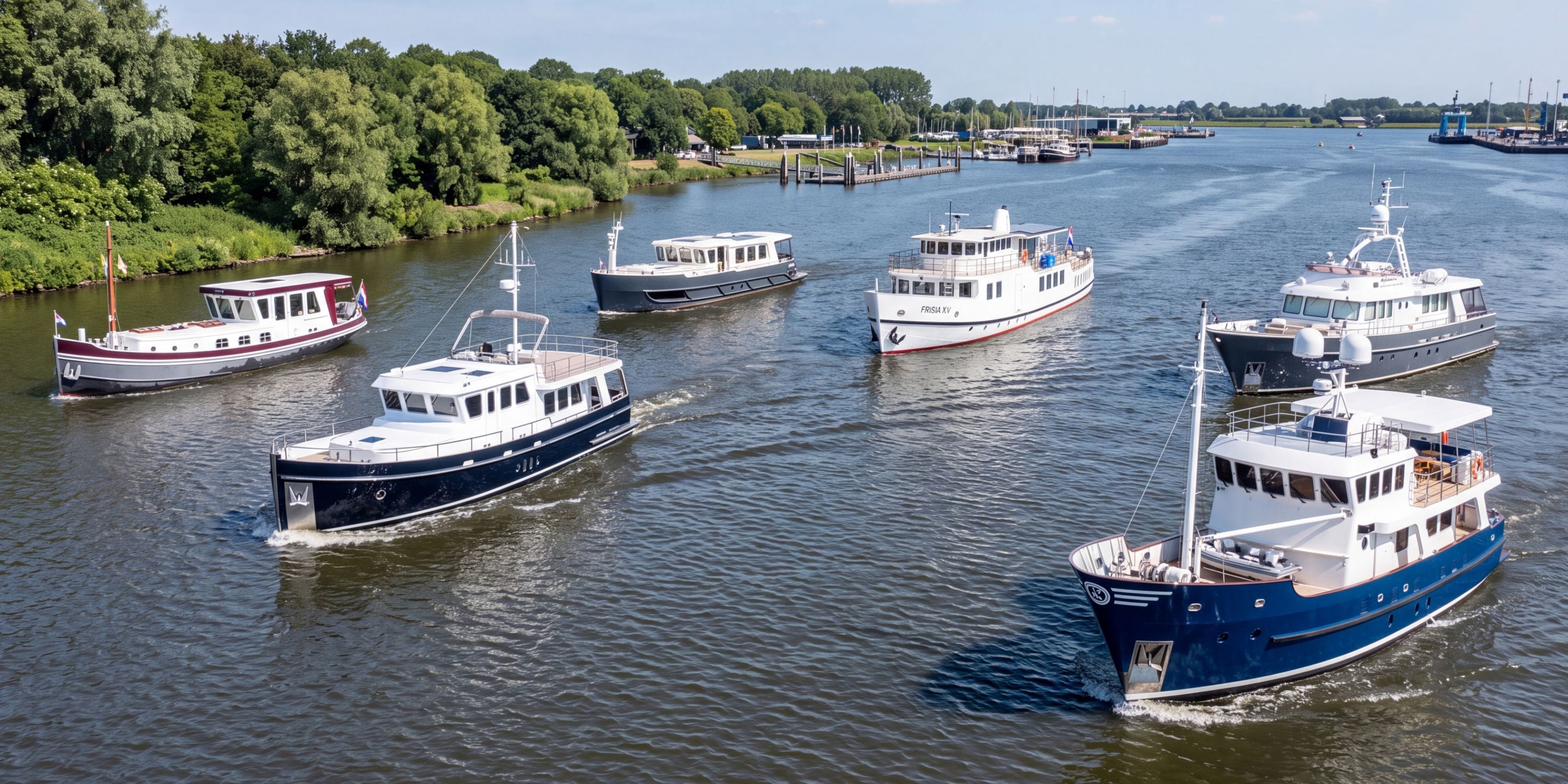
Picture the morning after the house is sold. The kettle is on in a steel wheelhouse, the mooring lines are wet with dew, and the only question on the agenda is whether to potter along a Dutch canal today or wait for a calm day to head out to the coast. For a lot of you, that isn’t idle daydreaming. My £98k Dutch kotter tour has been watched 164,000 times as I write, and the €229,900 Kruiskamp Bakdekker 1400, a 14m steel cruiser I called a tiny home on the water, has 95,000. You aren’t just admiring Dutch steel; plenty of you are quietly working out whether you could sell up and move aboard one.
It’s a lovely dream, and a reasonable one: a well-kept Dutch steel cruiser can be a capable boat and a cosy home, with the European waterways on her doorstep. So I’ve taken the questions a potential owner would normally ask before putting the house on the market and worked through them with official sources and boats I’ve featured. Think of it as my Nordhavn guide for the boats you watch most.
Is a Dutch steel trawler the right boat for this life?
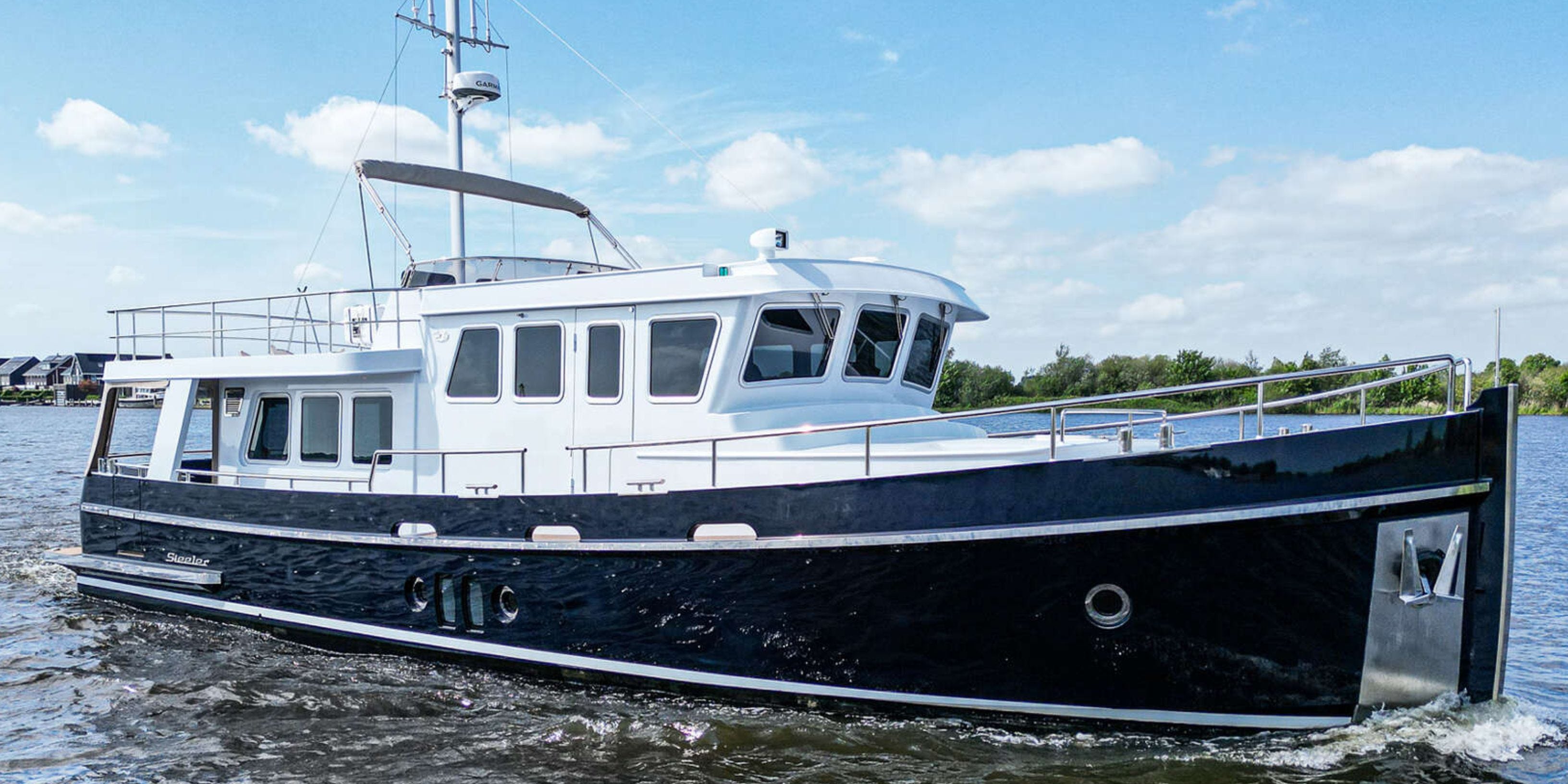
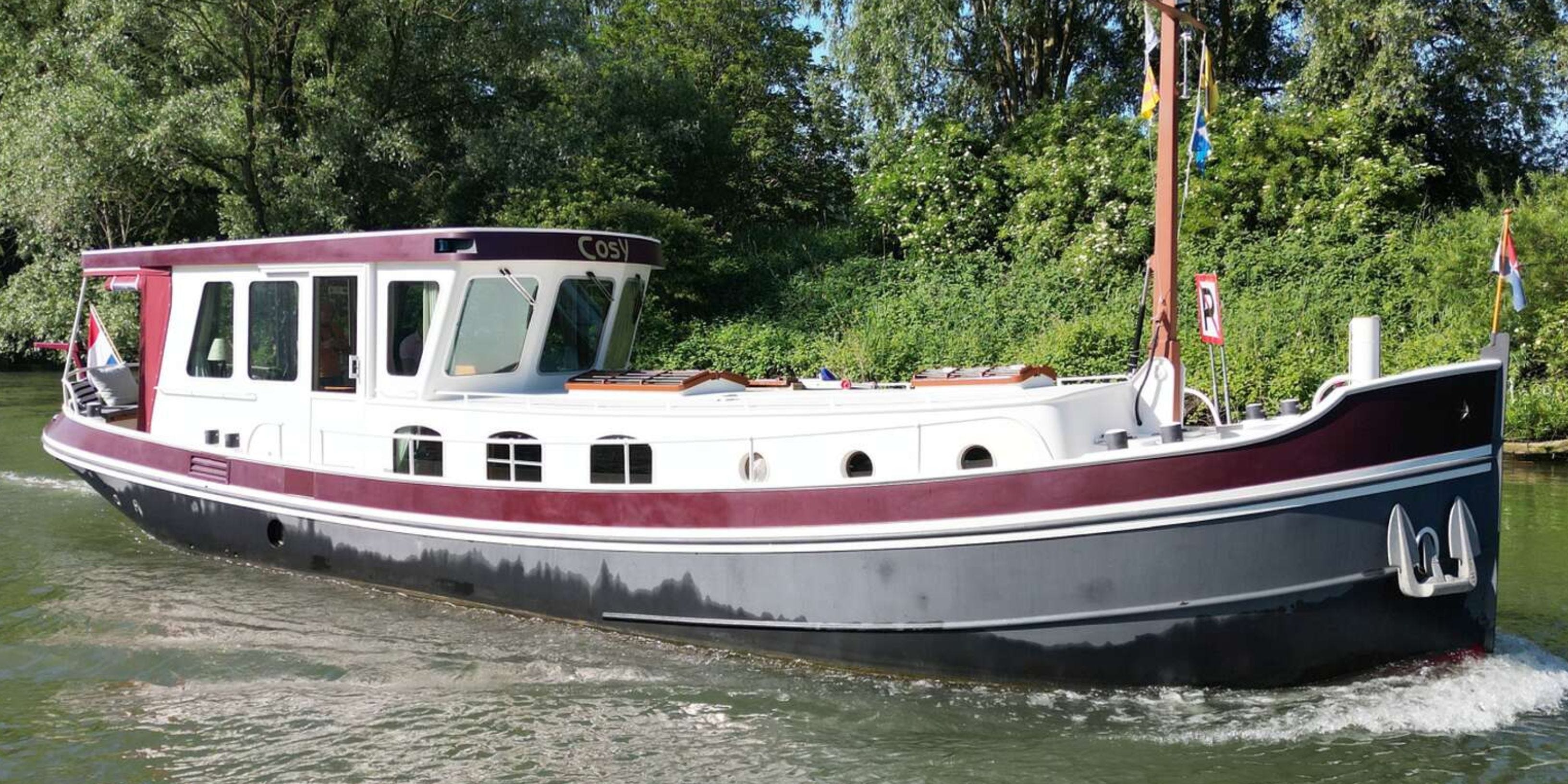
“Dutch steel trawler” is my general shorthand rather than a single boat type. Kotters and spiegelkotters draw on working fishing boats; the spiegelkotter is named for her flat, mirror-like transom, like M/Y ‘Jip’, the Noorderlicht 50 I featured in July. Then there are bakdekkers such as the Kruiskamp, trawler-style motor yachts like the Flevolution 1500 RE and the Vripack-designed Searocco 1500, and luxe motor-style boats named after early motorised Dutch barges. For living aboard, the layout matters much more than the builder’s plate.
Why steel? Well, a welded steel hull is robust, and a qualified welder can repair it. In return, it asks for care and a proactive approach to maintenance. Coatings and anodes keep corrosion at bay, and because steel conducts heat, insulation and ventilation decide whether winter feels snug or damp. That isn’t a negative, just the job that comes with the material, so I’d study a boat’s coating history and insulation as closely as her engines. Many first-time buyers I have met over the years get caught out by this.
Inland, coastal or offshore?
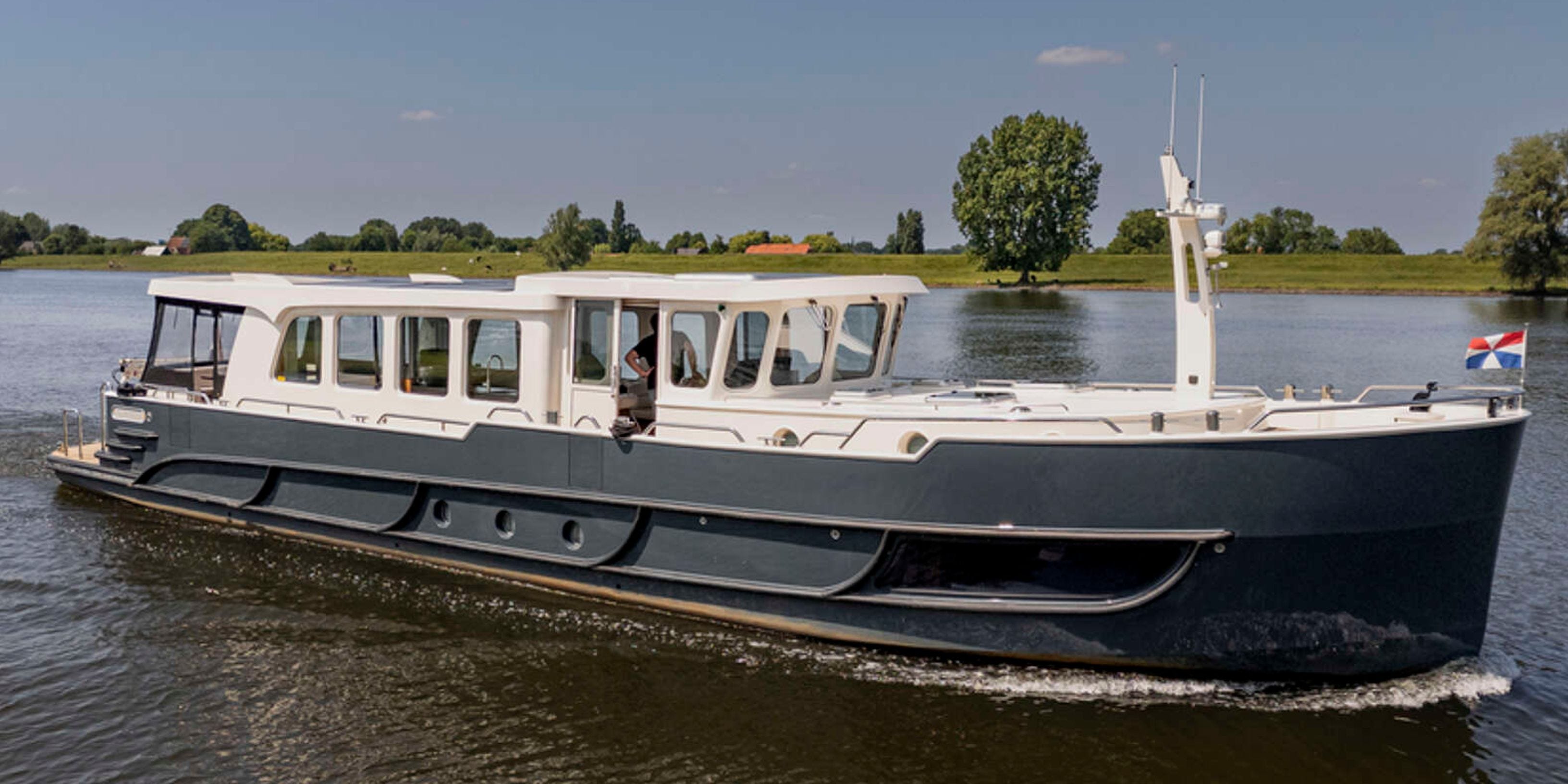
“Explorer” on a name board doesn’t make a boat ocean-going. EU design categories describe the conditions a boat was designed for: A for winds above Beaufort 8 and significant waves above 4m, B up to Beaufort 8 and 4m, C up to Beaufort 6 and 2m, and D for sheltered water. M/Y ‘Aegir’, a Searocco 1500, carries Category A; the Kruiskamp is Category C. Boats built before the rules took effect on 16 June 1998 often have none, which is why the 1991 Moonen 56 I featured is listed as exempt.
Personally, I would be happy to take a CE Cat C vessel across the North Sea, but only with a good weather window. Most of the rescues my former colleagues and I were involved in during my time in the Royal Navy and RNLI came down to new boaters thinking the sea acts like a boating lake. Or that they could call the emergency services with their mobile, despite being 15nm offshore.
On the canals, draft and air draft rule. The Kruiskamp draws 1.20m with a listed minimum air draft of 2.95m once her mast is lowered, while Aegir comes down from 5.50m to 3.60m. Those centimetres decide which bridges are open to you.
How much home do you get?
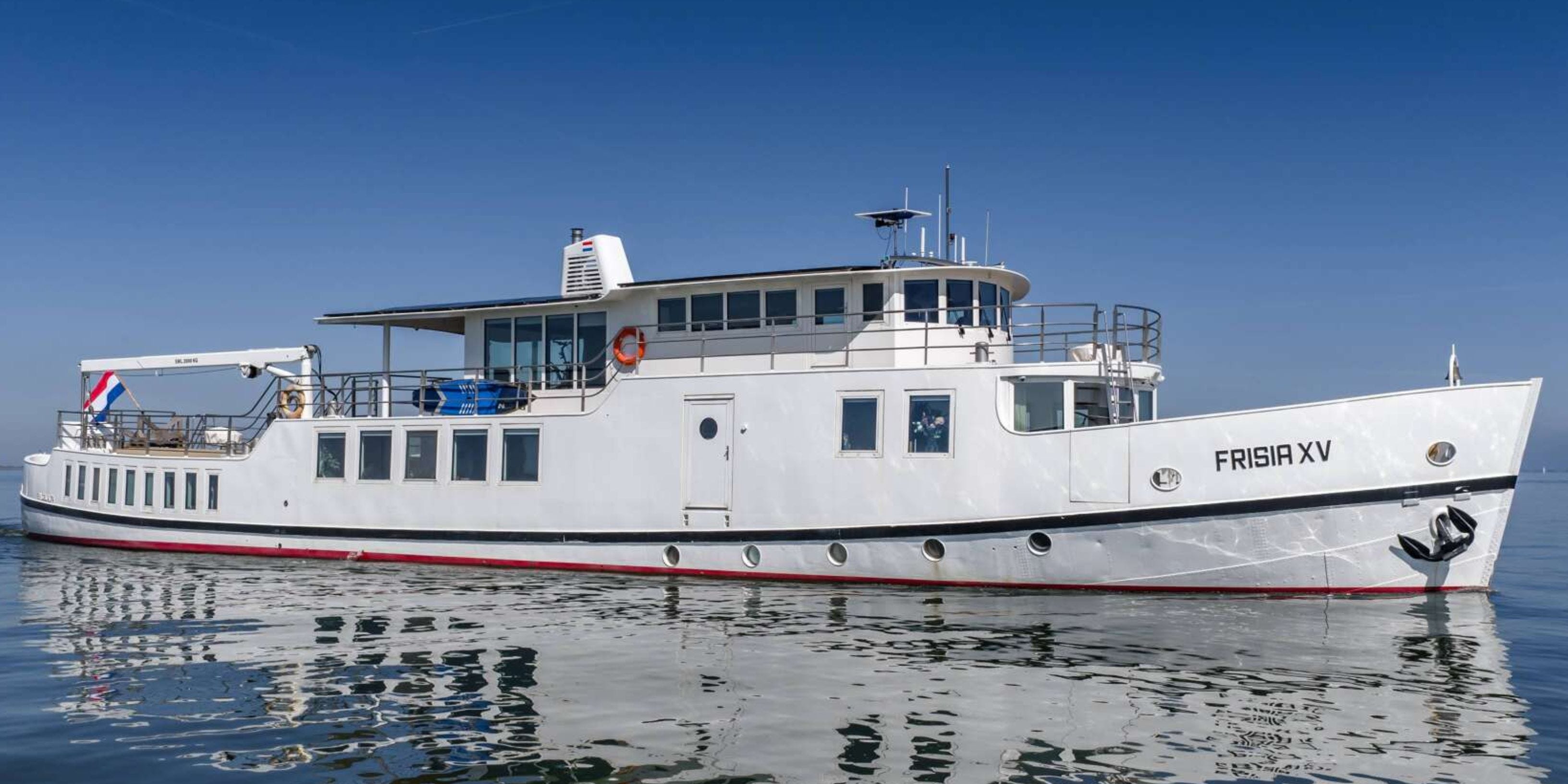
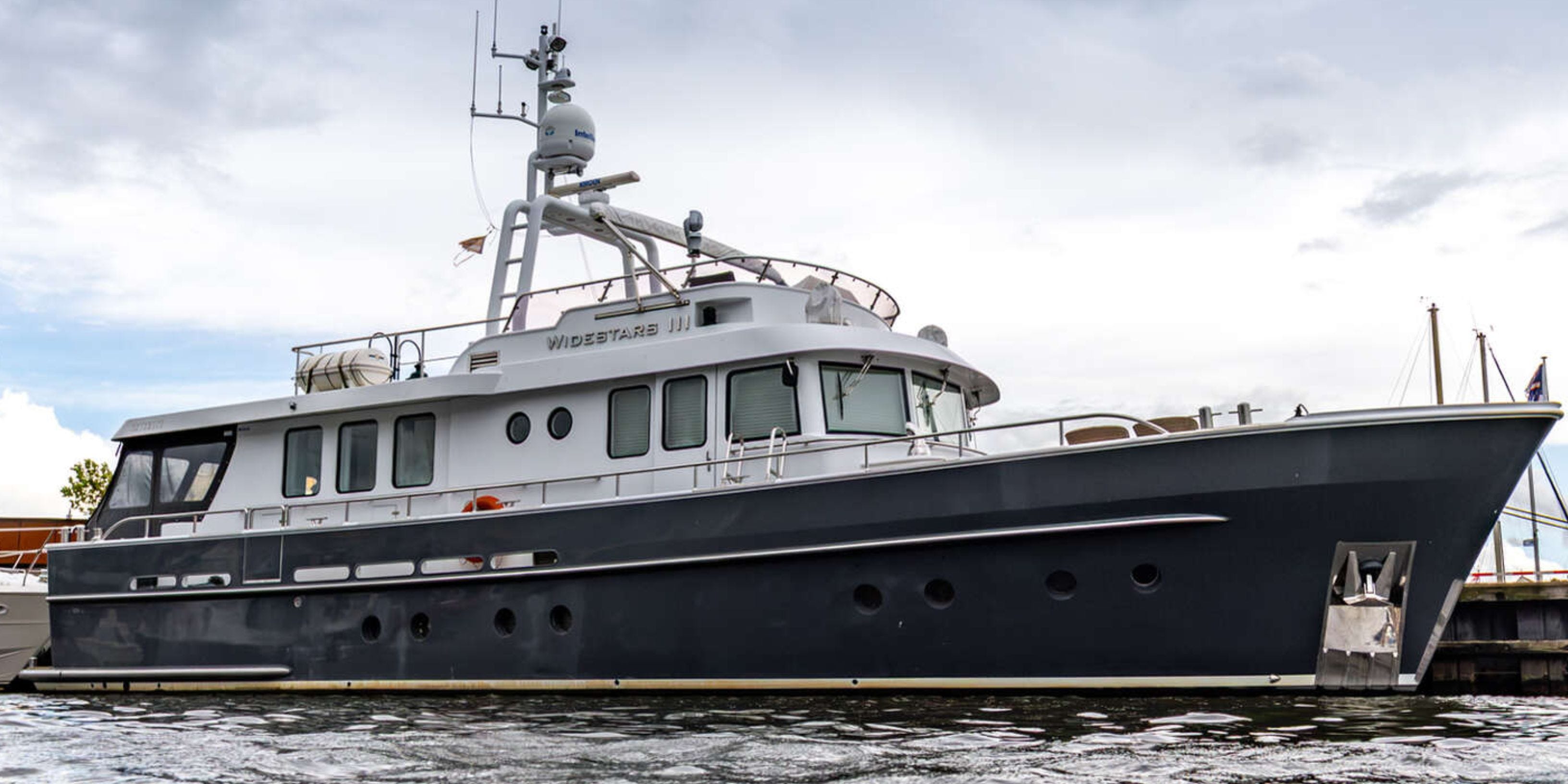
The boats I’ve featured run from 14m to 18m. The Kruiskamp has a domestic fit-out that makes longer stays aboard feasible. Aegir, at 14.97m, has two cabins and four berths. The 16m Flevolution has three cabins, two heads, heating and a washer/dryer, while the 17.80m Moonen, M/Y ‘Contentus III’, adds double glazing, foam insulation, diesel central heating, a washer and a generator. For a couple, a third cabin becomes a study or somewhere for visiting family. As an illustration, at a generous 50 litres each a day and a fully usable tank, two people would get about eight days from Aegir’s 850 litres of fresh water, 10 from Flevolution’s 1,000 and 15 from the Moonen’s 1,500.
What does a good one cost?
These are asking prices when I featured each boat, not current offers. Conversions throughout use the European Central Bank rate for 13 October 2026: €1 = £0.8446 = US$1.1188. I checked all the official guidance in this guide on 14 October 2026.
- About €150,000 to €250,000: Jip (14.99m, owner-completed on a KBS-welded hull) was €235,000 VAT paid in July 2026 (about £198,500 / $262,900). The 2005 Kruiskamp (14.00m) was €229,900 VAT paid in September (£194,200 / $257,200).
- About €250,000 to €500,000: Flevolution (16m) was €299,000 in September (£252,500 / $334,500). Contentus III (17.80m, 1991) was €355,000 VAT paid in October (£299,800 / $397,200). Aegir (14.97m) was €489,000 VAT paid in September (£413,000 / $547,100).
- €500,000 plus: M/Y ‘Valerie’, a Pieter Beeldsnijder PB55 built by T&T Yachting (18.40m, three cabins), was €569,000 in July (£480,600 / $636,600).
Aegir is nearly 3m shorter than Contentus III yet was listed for €134,000 more: design, category, machinery and fit-out set the price, not length.
Before you make an offer
Budget separately for an out-of-water survey with ultrasonic hull-thickness readings (on an older steel boat, the most useful document you’ll get), a sea trial, delivery, registration and insurance from completion. “VAT paid” needs paperwork showing which territory, and EU VAT paid doesn’t make a boat UK VAT paid.
On Dutch waters, the government requires a vaarbewijs (boating licence) for a pleasure craft longer than 15m, or a fast motorboat capable of more than 20km/h. Contentus III at 17.80m is over that line, while Aegir at 14.97m sits just under, so check a borderline boat with the Dutch authorities. The ICC with CEVNI is widely recognised on European inland waterways, but check each country on your route, and Ofcom treats the ship radio licence and your Short Range Certificate separately.
Many people are surprised that, here in the UK, you don’t need a licence to skipper your own pleasure boat. Before I sold my insurance business, I would often meet a fellow entrepreneur who had sold their business, gone out and bought a Princess or Sunseeker as their first boat, and then the boat would get left in a swanky marina as the new owner realised that they had bitten off much more than they could chew.
For registration, the UK Ship Register’s Part 1 takes pleasure vessels and can support a marine mortgage. Part 3, the Small Ships Register, needs the owner to live in the UK at least 185 days a year, which matters if you plan to spend most of it abroad. In the Netherlands, RDW registration applies to fast craft under 20m, so a displacement trawler won’t necessarily need it.
Making her your home
Whether you can live aboard depends on the berth rather than the country. Dutch rules are local; Jachthaven Biesbosch, for example, doesn’t allow permanent residence without the harbourmaster’s permission. In the UK it depends on the berth and navigation authority (where an inland authority applies the Boat Safety Scheme, you’ll need its certificate or an exemption), and a residential mooring can count for rip-off council tax (my UK rent-versus-boat piece goes deeper). In France, the VNF vignette lets you navigate; it isn’t permission to live anywhere.
The bigger surprise is time. UK citizens can spend no more than 90 days in any 180 across the Schengen area without a visa or residence permit. A non-EU-registered boat owned by someone established outside the EU can normally stay 18 months under temporary admission, but that’s the boat’s clock, not yours.
Before the house is sold, I’d get written acceptance of your new address from your bank, insurer and doctor, because a marina address isn’t automatically a residential one. Winter heating, condensation, water supply and ice, shore power, internet, laundry and pets come down to the boat’s equipment and the berth’s terms, so I’d choose the berth almost as carefully as the boat.
Before you call the estate agent: my checklist
- Find the berth first, and get permission to live aboard in writing.
- Know your time limits: 90 days in any 180 across Schengen on a UK passport, and your boat has her own clock.
- Check which licences your boat and your route need.
- Budget for an out-of-water survey with hull-thickness readings.
- Ask for the VAT paperwork, not just the words “VAT paid”.
- Talk to a marine lender about age limits before you fall for a boat.
- Get an insurance quote that says you’ll be living aboard.
- Plan your winter: heating, insulation and condensation.
- Sort your address with your bank, insurer and doctor.
- Know your way back before you need it.
This article continues below, in “The Wardroom” In the premium section below, I cover:
- What it costs to keep her: published berth prices for 12m, 15m and 18m boats in three countries, the French waterways vignette, today’s diesel prices and red diesel
- How to price the rest before you buy, from a buyer’s rep’s point of view
- VAT and Brexit: what “VAT paid” means when an EU boat comes to the UK, plus finance
- What you stop paying when the house goes, and the way back if the life doesn’t work out
- My honest assessment: who this life suits, and who should think again
It’s thanks to my premium subscribers that I can keep both the YouTube channel and this publication going, advert-free, filming and writing about these boats. Whether you’ve just joined or have been with me a while, thank you!
