

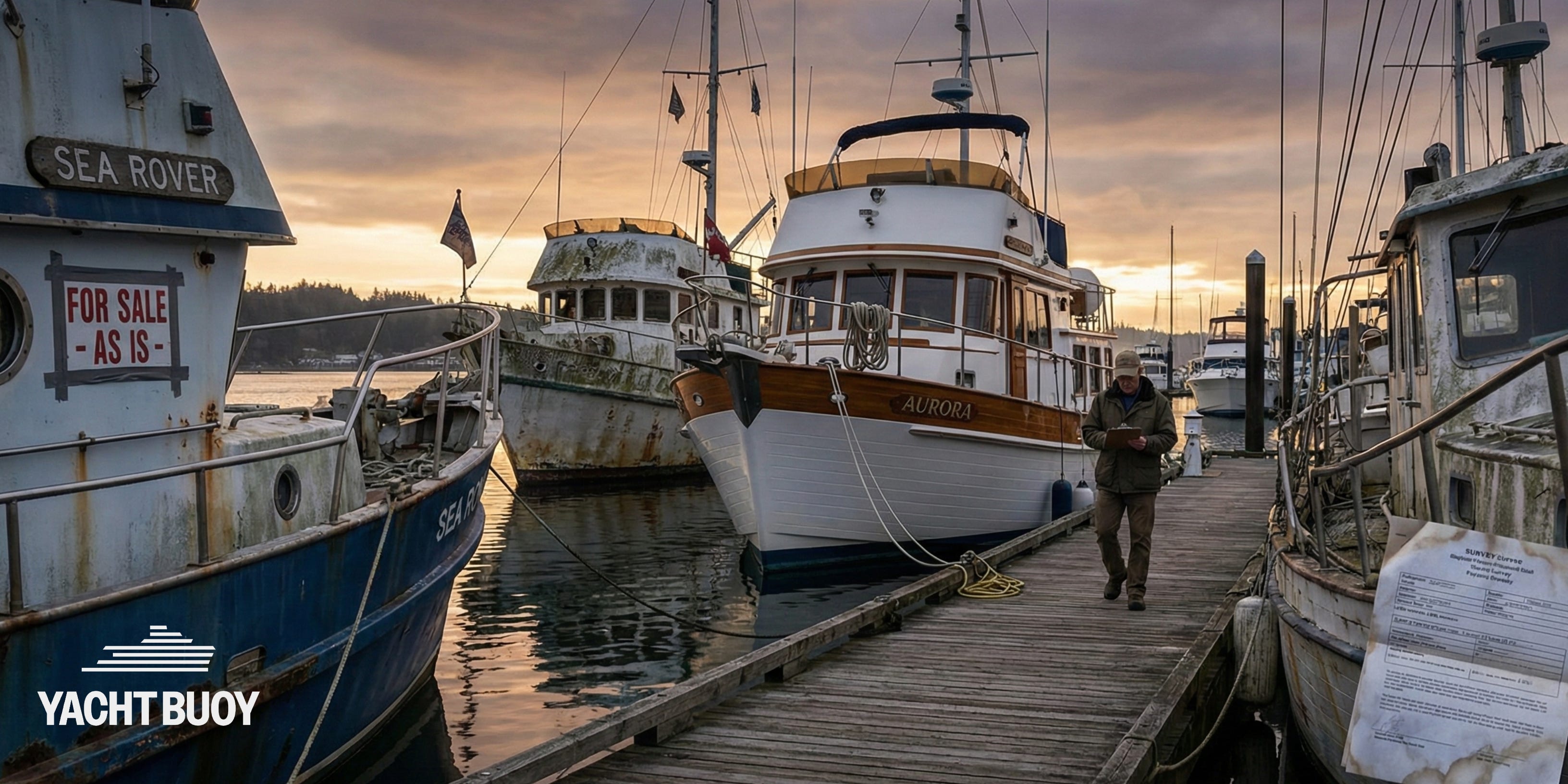
“Enough thinking.” That’s often the advice when you’ve found the right boat. But over the past few years, it was the only way to buy. If you hesitated for 24 hours, the opportunity was gone.
It was a seller’s market...frustrating at best, and risky at worst. Buyers often skipped surveys and made rushed decisions just to secure a hull, especially with limited inventory and rising prices pushing urgency beyond reason.
The question is: Is that phase now behind us?
Since late 2025, the yacht market, especially for long-range trawlers and steel displacement cruisers, has entered a new, more sustainable chapter. This isn’t a crash. It’s a correction, one that even Trident Research, a market analytics project I launched recently, would describe as measured and overdue. Prices are adjusting. Inventory is increasing. And for serious buyers looking for genuine offshore capability, this is a window of opportunity that hasn’t existed for several years.
Understanding the Shift: Who’s Selling and Why
Many of the boats entering the market today are owned by individuals who purchased during Covid between 2020 and 2022, in what was arguably the most intense buying cycle we’ve seen in recent memory. This wave of new ownership was largely driven by the desire for independence, remote living, and adventure in uncertain times. The enthusiasm was real, and many purchases were made with high expectations and top-tier budgets.
But for some, the dream of extended cruising collided with the real-world demands of maintaining a seagoing vessel.
Maintenance Awareness: Boats, especially older displacement cruisers, require constant oversight. They are complex mechanical systems, not plug-and-play condos. From fuel polishing and through-hull checks to scheduled haul-outs and corrosion control, there’s no substitute for hands-on vigilance.
Cost Sensitivity: Rising marina fees, increased insurance scrutiny (especially for older hulls), inflation across parts and labour, and more rigorous survey standards have increased the financial burden for some owners. For a portion of the market, the decision to sell now is driven more by realism than regret.
None of this is cause for alarm. In my humble opinion, what we are seeing is perhaps a normalisation of market dynamics. It’s becoming easier to buy well. There’s more room for proper negotiation, and brokers are now in a position to help bring parties together through informed, professional dialogue.
Key Market Signals and Trends
In several core categories, particularly GRP trawlers between 40 and 50 feet, older steel displacement cruisers, and ex-charter multihulls, asking prices are down anywhere from 10 to 20% compared to the 2023 peak. Some segments are holding firm, but most are experiencing a logical correction.
Used Sales Volume: Market data from late 2025 shows a 12% drop in used boat transactions year-on-year. This is not unexpected. It reflects longer decision cycles, increased due diligence, and the return of strategic buying.
Listing Duration: Many boats are now on the market for four to six months before selling, sometimes longer. This gives buyers more space to revisit a listing, arrange surveys, and gather proper quotes for upgrades or haul-out work.
Seller Positioning: The era of non-negotiable prices is winding down. Owners who are serious about selling are now showing flexibility, and many are adjusting to today’s conditions rather than anchoring to yesterday’s numbers.
All of this creates a healthier environment for transactions and sets the stage for buyers who are prepared, patient, and proactive.
Where to Focus in 2026: Three Segments with Strong Buyer Appeal
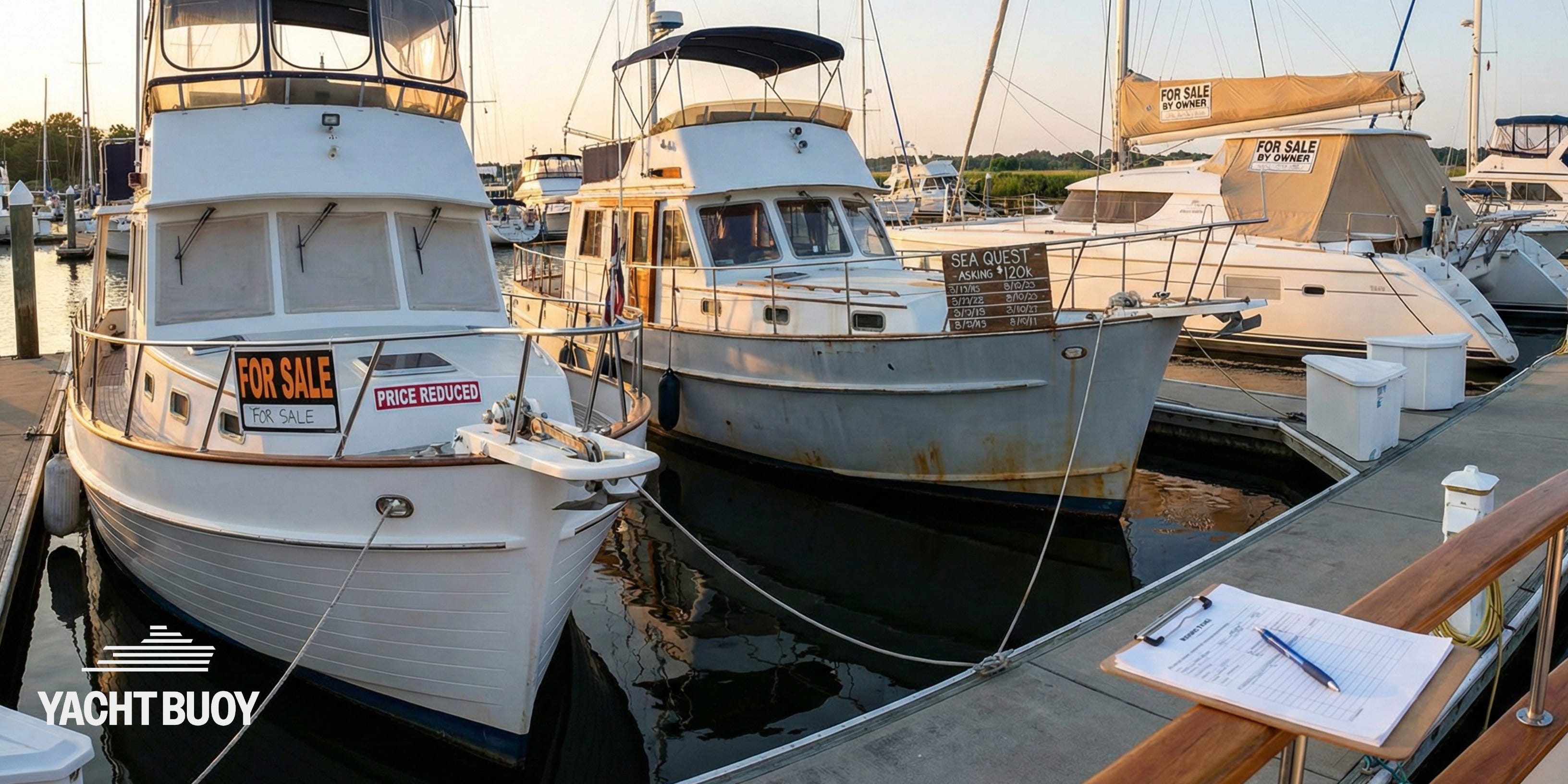
Not every corner of the market is softening equally. Well-maintained, turnkey explorer yachts with recent refits are still commanding strong interest. But there are three specific segments where value is consolidating, and buyers with vision can make a move.
1. Orphaned 42 to 48-Foot GRP Trawlers
Examples: Grand Banks 42, Trader 44, Sabre 42
These semi-displacement cruisers were among the most popular models during the pandemic. They offered comfort, pedigree, and approachable handling. But the volume of listings today has outpaced demand. Some owners are now paying monthly storage and insurance for a boat they no longer use.
Approach: Focus on listings that have been live for 180 days or more. Many of these boats are fundamentally sound and simply need new energy. Polite, well-prepared offers, especially from buyers ready to close, are being taken seriously.
2. Pre-2000 Dutch Steel Explorers
Examples: Linssen, Pedro, and other Dutch-built steel boats from the 1990s
These rugged displacement yachts are admired for their craftsmanship and seakeeping, but insurance companies are tightening requirements for boats over 30 years old. Hull ultrasound surveys are increasingly mandated, and some owners are choosing to exit instead of initiating the process.
Approach: If you’re willing to commission a €800 ultrasound, you’ll often find boats where the steel condition is perfectly acceptable. Sellers are generally cooperative when approached professionally, and deals can be struck at honest market levels.
3. Ex-Charter Catamarans in the Caribbean
Examples: Lagoon 380/400, Fountaine Pajot
Post-COVID, the charter sector experienced both a surge and a hangover. Many of the larger operators are now offloading older fleet boats, particularly 2012–2016 models, that are fully depreciated on their books. This creates opportunity for private buyers who understand what a light refit can do.
Approach: Avoid isolated listings or newly posted boats. Instead, look for blocks of boats from the same fleet. These operators are more interested in turnover than top dollar. With a good marine surveyor, and perhaps a visit to the Caribbean, you could walk away with a viable long-term platform.
(Shipmate’s Note: The specific Buy List and negotiation strategy are for paid subscribers only. If you’re serious about buying in 2026, this section alone could save you £20,000. Paid subscribers also get direct access to me and to a private forum where other yacht owners and buyers share real-time insights, answer questions, and compare vessels. If you want to speak directly with experienced cruisers or ask me something privately, this is where it happens.)
