

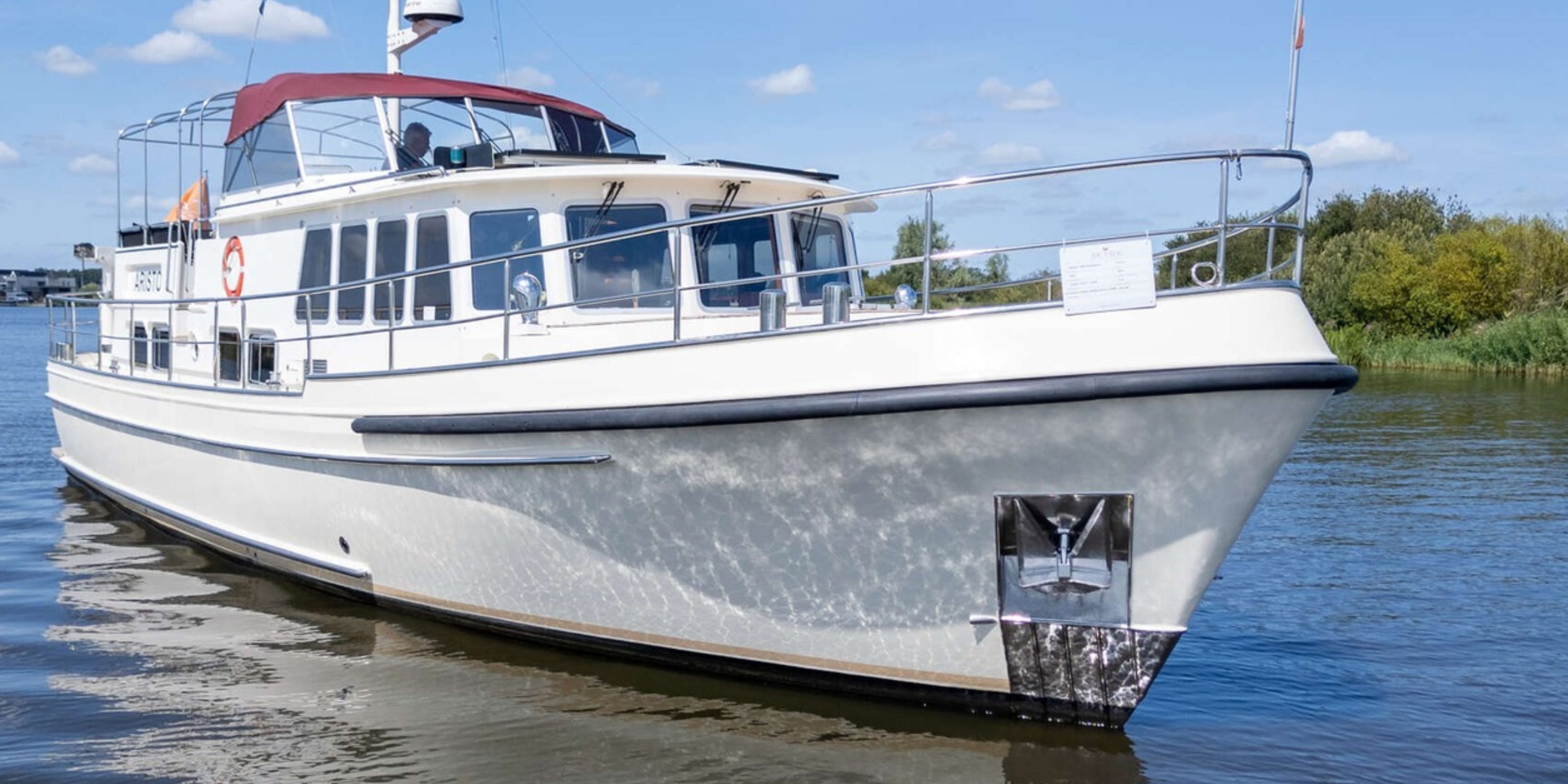
One of my favourite things about M/Y ‘Aristo’ is where her tender lives. Her boat deck sits a level below the aft deck, so the tender can be launched without disturbing anyone sitting out there. Picture an evening at anchor with friends aboard: someone runs ashore for some cheese and wine while everyone else carries on with supper. It’s a small piece of thinking, but it tells you how she was meant to be used.
Aristo is a Stentor 1600, launched in June 2004, designed by Vripack Yacht Design in Sneek and built by Stentor Yachts SRL in Romania. She’s asking €395,000, VAT paid, roughly £334,000 or $443,000 at the European Central Bank’s reference rate on 15 October 2026 (the fuel prices and berth tariffs further down were checked on 16 October).
I’ve filmed her for the YouTube channel, and you can watch the tour here once it’s live:
Her essentials
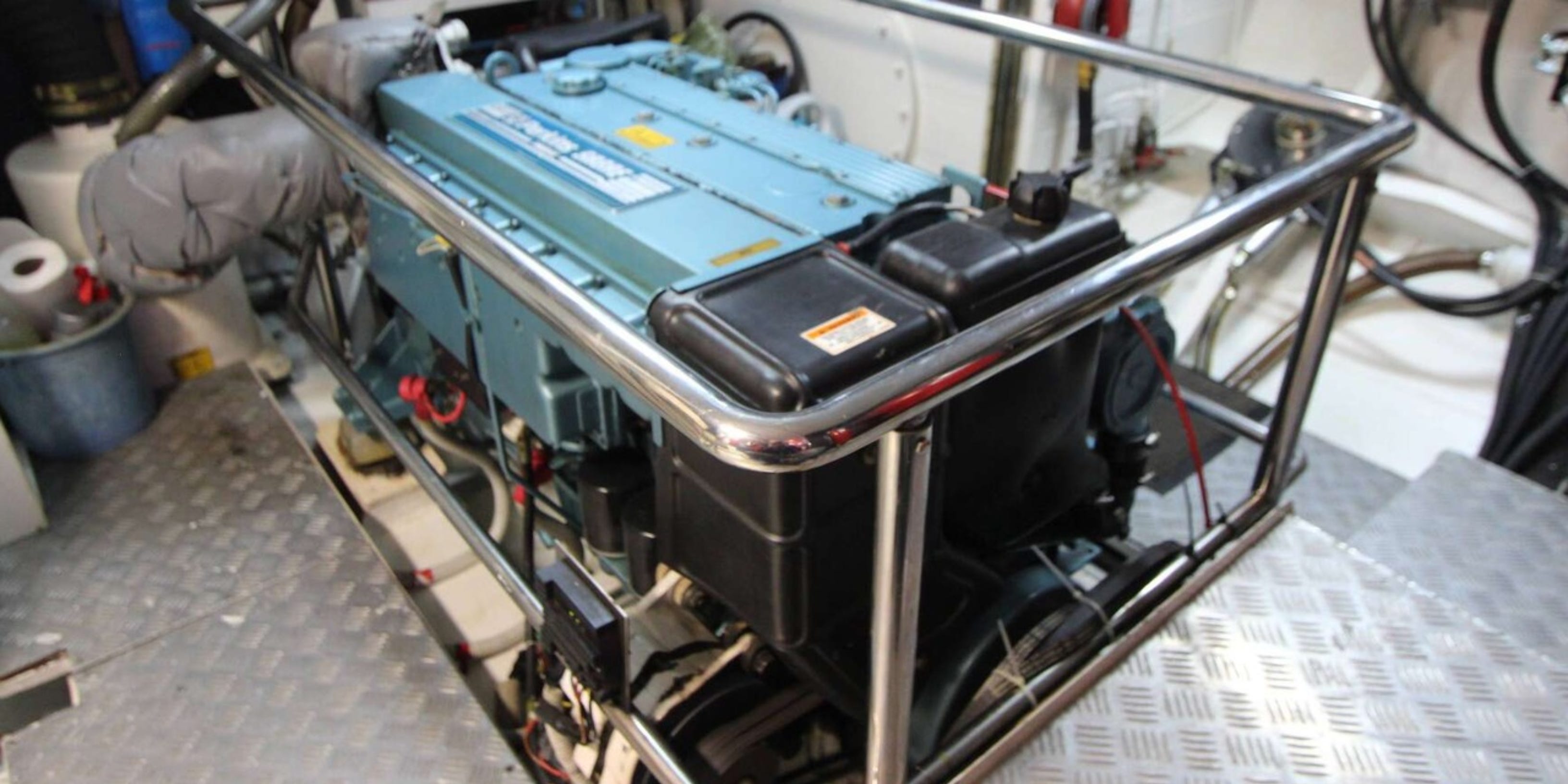
She’s 16.00m overall and 14.95m on the waterline, with a 4.65m beam, a 1.30m draft and a 3.25m air draft once her mast is lowered hydraulically. Her 33-tonne multi hard chine hull is built from 5mm steel plate, with 4mm for the deck and superstructure, and sits on a long keel. A single 185hp Perkins Sabre M185C on a shaft gives her 8 knots cruising and a top speed of 8.5. Her 5,000 litres of diesel, carried in two steel tanks, give a listed range of about 3,750nm at 7.5 knots. She has two cabins, both en suite, and six berths.
Why she caught my eye
Five things drew me to her, starting with the Vripack design. Dick Boon opened the studio in Sneek in 1961, and if you read my piece on the Vripack Searocco 1500 ‘Aegir’, you’ll know how highly I rate their seagoing steel boats.
Then there’s her 5mm steel hull. Steel’s weldability means a qualified yard can repair damaged plate by cutting it out and welding in new, following established practice such as the American Welding Society’s Guide for Steel Hull Welding. On a boat designed to cross open water, that matters. Her original plate thickness also gives a surveyor a clear baseline (more on that below).
I love her flared bow, which pushes choppy water and spray outwards as she meets a wave instead of letting it climb over the foredeck. Pair that with a long keel, which helps a displacement hull like this one to hold her course, and you have the right recipe for long passagemaking days whilst cruising along at a steady 7 or 8 knots.
The aft deck has spacious U-shaped seating on teak, a door straight out from the saloon and a wet bar with its own sink and fridge. On a liveaboard, that’s where breakfast, sundowners and most of the summer happen. Below it sits that boat deck, where her hydraulic crane and davits do their important work.
What Category A means for where she can go
The EU Recreational Craft Directive (2013/53/EU) sets four design categories. Category D covers winds up to force 4 and significant waves up to 0.3m (with occasional waves of 0.5m), C goes up to force 6 and 2m, and B up to force 8 and 4m. Category A, Aristo’s rating, covers winds that may exceed force 8 and significant waves that may exceed 4m, excluding abnormal conditions such as hurricanes.
So she was designed for open-sea passages and not just coastal hops, though the category describes her design rather than a forecast anyone would choose to go out in. Her Vetus fin stabilisers reduce roll for comfort without changing what weather is sensible, and her single engine gives passage planning a little extra weight, which I cover in the premium section below.
Her 1.30m draft and 3.25m air draft also make some shallower, lower inland routes worth investigating, bridge by bridge and lock by lock, so she could cross open water one month and potter along the waterways the next.
When you first lay eyes on her profile, the forward part of the vessel gives confident ‘Bay of Biscay’ vibes, whilst her stern resembles something you would perhaps spot cruising the inland waterways. For me, these dual design characteristics make this boat even more intriguing.
Life aboard, and who I think she suits
This is where Aristo makes her case as a home. Each cabin has a 2.0m French bed, hanging space and drawers, and its own en suite with a shower and electric toilet, so guests get their own space and nobody queues up for the shower in the morning. The dinette converts to a berth, which is how she reaches six. For full-time life, she’s best suited to a couple, with room for family and friends to come and stay on board.
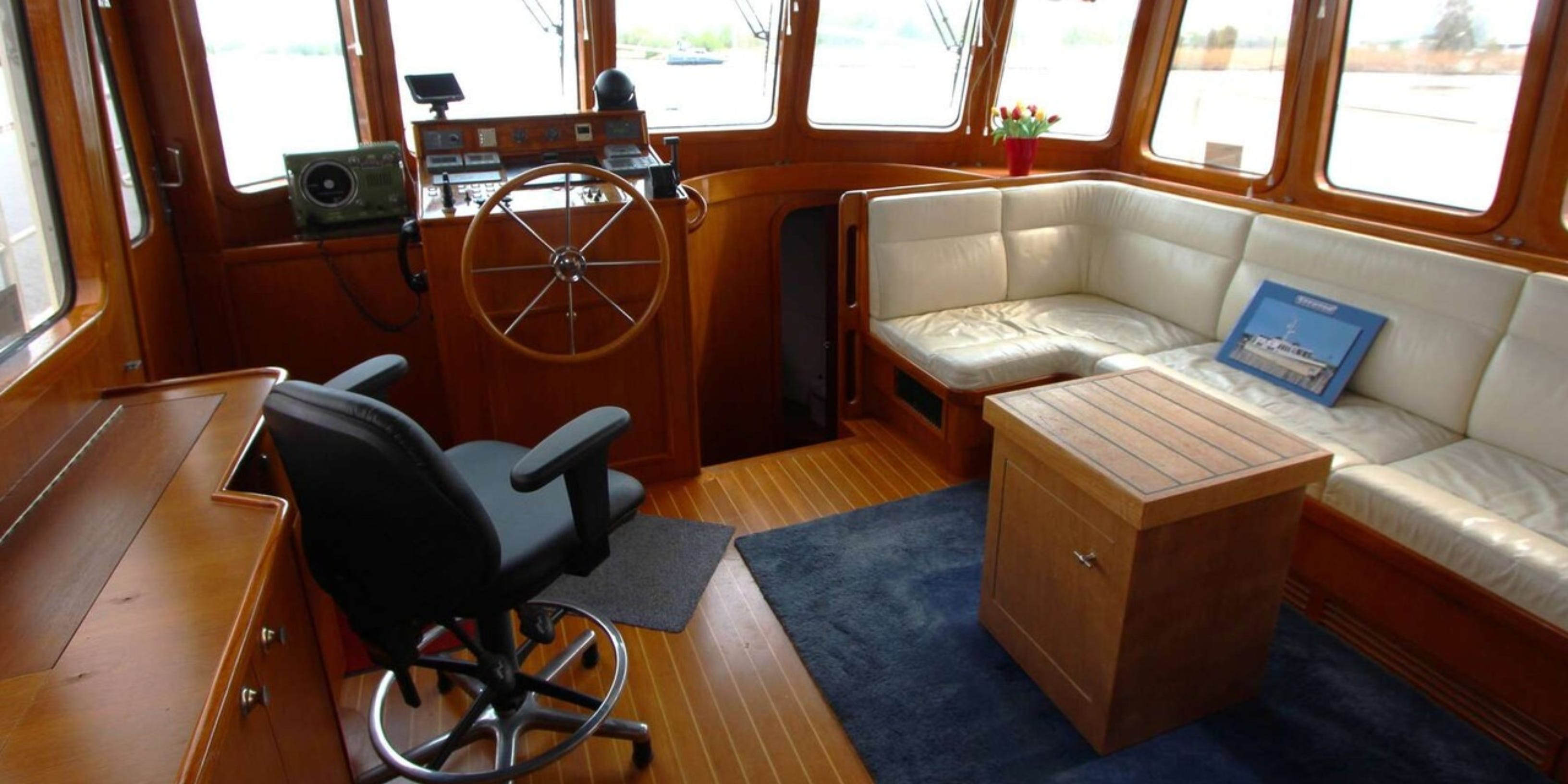
The interior is teak, with teak-and-holly floors and 2.0m headroom in the saloon, which gives her a warm, cosy feel without anyone having to stoop. Her Kabola central heating also supplies the hot water, and with air conditioning throughout, double glazing and foam-plate insulation, she’s set up for the colder months as well as summer.
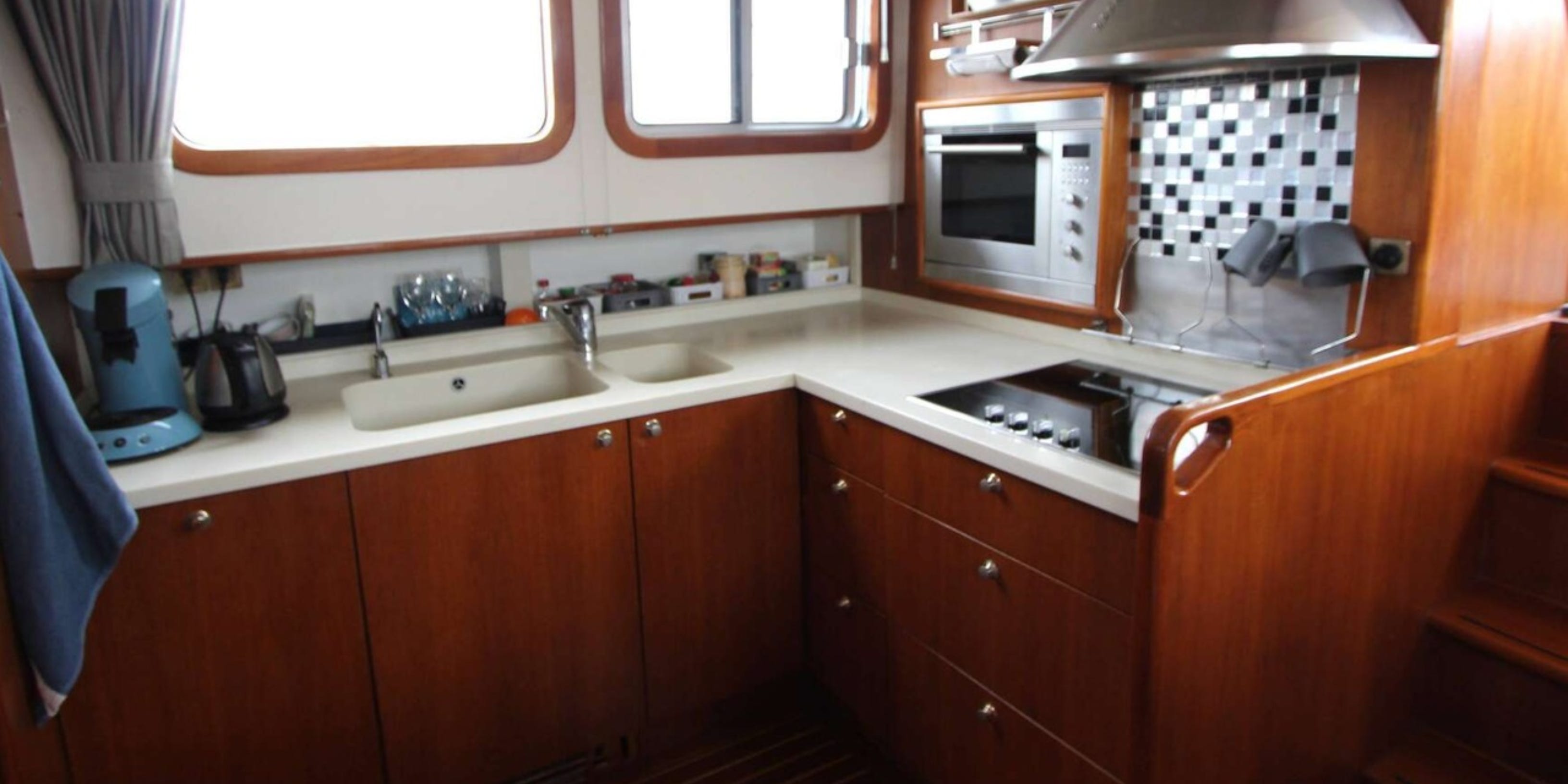
The Corian galley has a double sink, a four-burner Siemens hob, a combination microwave-oven, a dishwasher and a separate fridge and freezer. A Miele washer-dryer and a central vacuum take care of two of the least romantic jobs aboard.
She carries 2,500 litres of fresh water in stainless tanks, plus 325 litres of black water and 430 litres of grey. At The Boat Galley’s figure of around 25 litres per person per day for comfortable cruising, and assuming the whole tank is usable, that’s about 50 days for two people or 25 days for four. Showers and climate will move that, but I think it’s a generous margin.
Her Mastervolt electrics include six 200Ah service batteries, two 2,500W inverters for household kit at anchor, and a 4.5kW isolation transformer, which separates the boat’s electrics from shore power, a sensible thing on a steel hull. An 11kVA Kohler generator handles heavier loads.
The Stentor story
Aristo pairs a Dutch design with a Romanian build. A 2005 report in the Romanian newspaper Jurnalul described the yard, then Stentor Maritime, as founded in 1998 by Dutch entrepreneur Karel Boersma at Oltenița on the Danube. Its administrator said it averaged seven boats a year for western European customers and had orders booked through to 2008. Aristo was launched in June 2004, in the middle of that busy spell.
The family includes the [Stentor 1300](https://newsletter.yacht-buoy.com/p/vripack-stentor-1300-steel-trawler) and the [Vripack Survey 15](https://newsletter.yacht-buoy.com/p/the-399000-vripack-survey-15-why), both of which I’ve written about, as well as the 1500 and the 1600. Set Aristo beside a 2003 Survey 15 OC and the 1600’s character comes through: she’s about a metre longer, with two cabins instead of three, nearly twice the fresh water and more fuel. It’s a layout that puts comfort and autonomy for two ahead of extra berths.
This article continues below, in “The Wardroom”
Thank you to everyone who supports Yacht Buoy as a premium subscriber, whether you’ve been with me for years or joined this week. Your support keeps both the YouTube channel and this publication going, so I can keep writing about and filming boats I choose on their merits, without adverts.
In the premium section, I cover:
- Looking after a 22-year-old steel hull: what thickness readings against her original 5mm and 4mm plate tell an owner, and the three things I’d ask for
- Berths and fuel: two dated 16m berth tariffs in the Netherlands and the UK, dated diesel benchmarks at her listed burn, and what to price yourself
- Where Category A could take her: her listed range with a 10% reserve, and what one engine means for passage planning
- The Stentor family in more depth: how a 1300, a 1500 and a Survey 15 compare with her
- My honest assessment
