

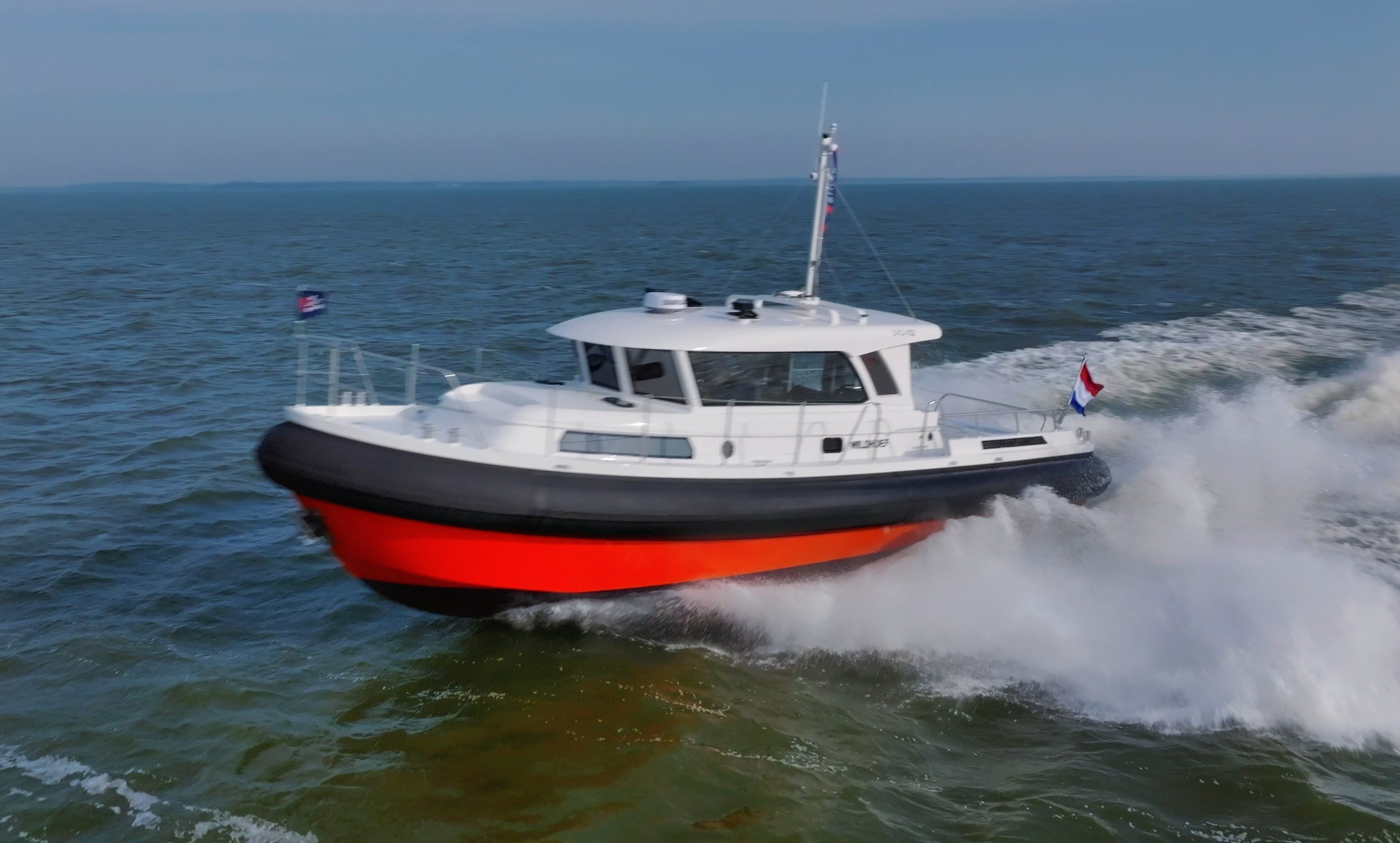
As I mentioned in the video, this is a Yacht Buoy feature with a difference, because I have now filmed the same boat twice: once in the shed during her build, and again after she was handed over to her owner. If you have subscribed to my channel for any length of time, then you will already know that I was the first YouTuber to feature the Arksen 85, Safehaven Marine’s T-2000 Voyager, and later, the Archipelago 45, so you might already know that, from time to time, I do feature brand new hulls on the channel.
Ordinarily, I show you around boats which are already on the market, or that I have ended up on board after an owner’s invitation.
But when I visited No Limit Ships to film two of their 1550s, and they told me about the 13.20, I knew I had to film her during the final stages of her build. I also had a strong feeling my readers and viewers would absolutely love this boat.
Hull number 1 of the 13.20 is now in the water and has been handed over, and stepping aboard the finished boat was well worth the wait. I can only imagine how excited her owner must be to finally have this fast, steel-hulled CE Cat ‘A’ vessel to show off to the explorer yacht community!
In the yacht tour video, I promised to highlight three things in this article: the yard's history, where they sit today as a builder, and what I think stands out on the 13.20. If you have not watched the full tour yet, then here it is:
Who Are No Limit Ships?
No Limit Ships is a Dutch yard based in Groningen, in the north of the Netherlands. Their story started back in 1996, when yacht designer Evert Stel and builder Piet Wierenga were forced to take shelter during a storm and watched in awe as a KNRM lifeboat punched through the rough Wadden Sea.
That is where the idea for a serious, offshore-capable pleasure boat that matched the seakeeping and speed ability of the KNRM lifeboat came from. And when you think about it, the concept makes total sense.
I have often thought that a private motor boat version of the Shannon RNLI lifeboat here in the UK would make a fantastic platform for adventurous explorer yacht enthusiasts who are not put off from boating by the sight of large waves.
As a former RNLI volunteer, I can say first-hand that the design philosophy behind search and rescue vessels is worth its weight in gold. You cannot put a price on peace of mind or safety at sea.
After a few years of trial and error, and a demo model called ‘Meander’that Gasunie tested as a guard vessel and Rijkswaterstaat once called “the last boat to return in bad weather”, the first models were launched in 1999.
Today, Piet’s sons, Peter and Bart, run No Limit Ships and became co-owners in 2024. So, essentially, No Limit Ships is run by a boatbuilding family with a track record of building 28 No Limit yachts and 29 Blauwe Stad commercial vessels, with professional clients including Van Oord dredging and the Port of Rotterdam.
If you browse my channel, you'll see I have covered several of their boats, including Friend Ship, a No Limit 1550 featured back in June, and the No Limit 1640 Odyssey, filmed on the same Groningen trip.
One of the things that connects each of their boats is the same underlying philosophy behind each model and hull number: deep-V hulls, steel below the waterline (unless a client specifically requests aluminium), aluminium above the waterline to help keep weight down, and a build standard that complies with commercial standards, rather than just complying with private motor yacht standards.
Once the handover is complete, the relationship continues. I am yet to meet an owner of a No Limit Ships vessel who does not stay in contact with the yard. Not because they are having issues, but because the yard makes an effort to keep in contact with their clients because, well, they love hearing about the adventures their clients have with their vessels.
Where the 13.20 Sits in the Lineup
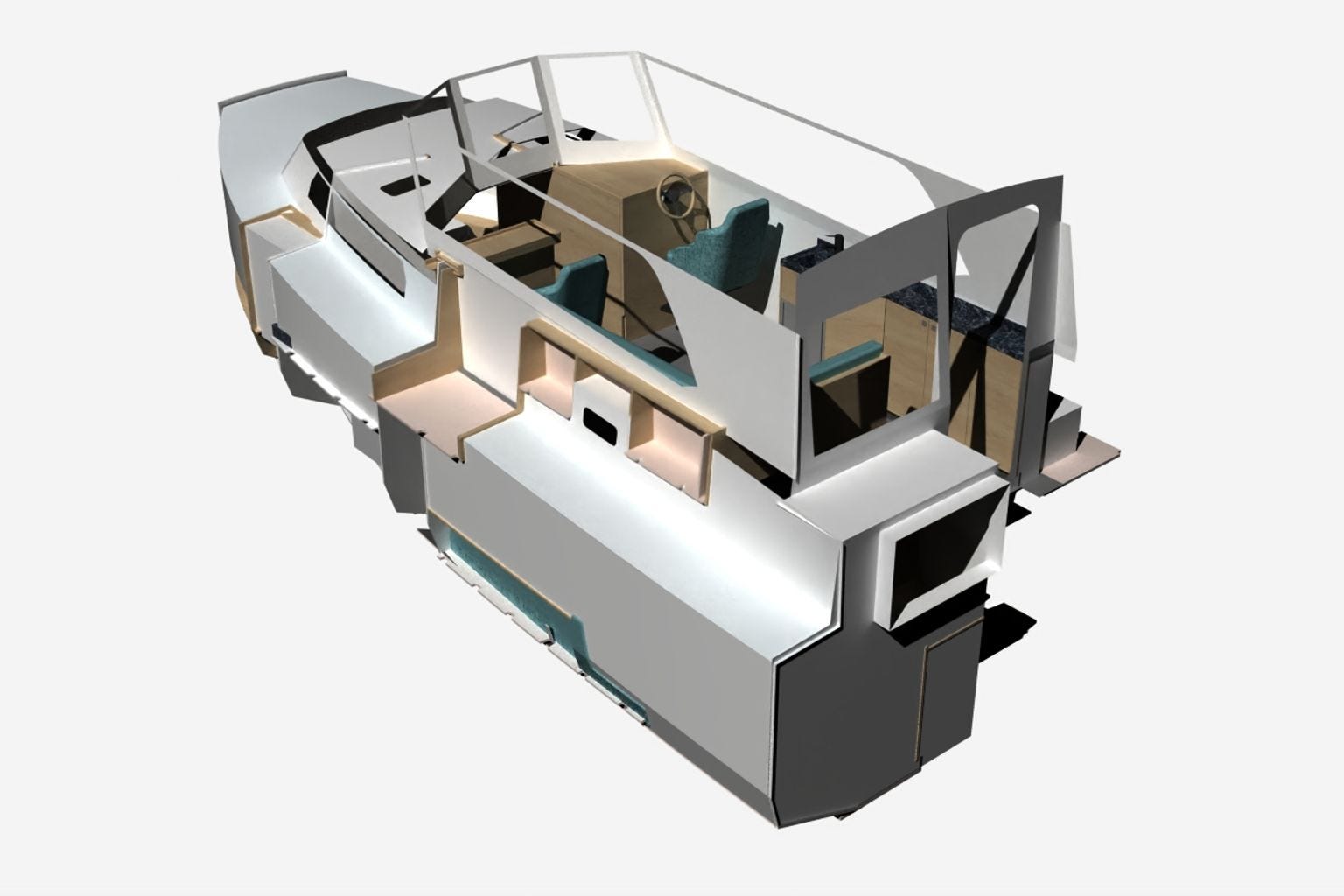
The 13.20 cannot be regarded just as a “smaller No Limit”. By the yard’s own admission, the 13.20 is proof that great things come in small packages and that a smaller LOA does not mean that you have to compromise on seakeeping or long-distance offshore cruising, regardless of what the weather is doing.
The current range of boats on offer comprises three base models.
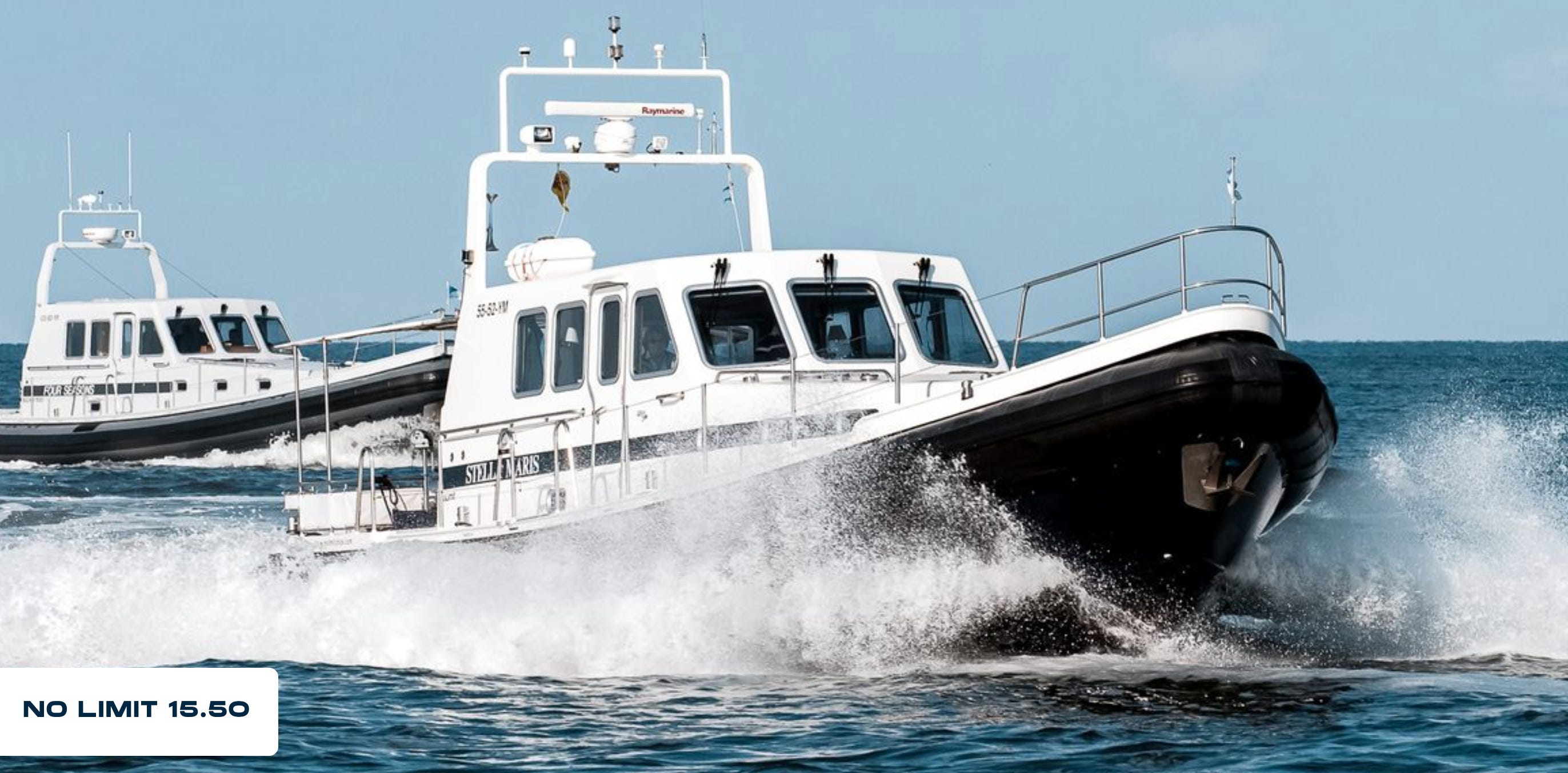
Before the 13.20, the entry point for a No Limit Ship vessel was the 15.50, a 15.5-metre steel-and-aluminium explorer-style motor yacht fitted with twin Volvo D9 engines at 575hp each. She can power all the way up to 25 knots, or she will comfortably motor along at her displacement speed of 9 knots.
The choice is yours, and the range at speed is a massive selling point for clients who want the safety of steel, coupled with the speed of a planing GRP vessel.
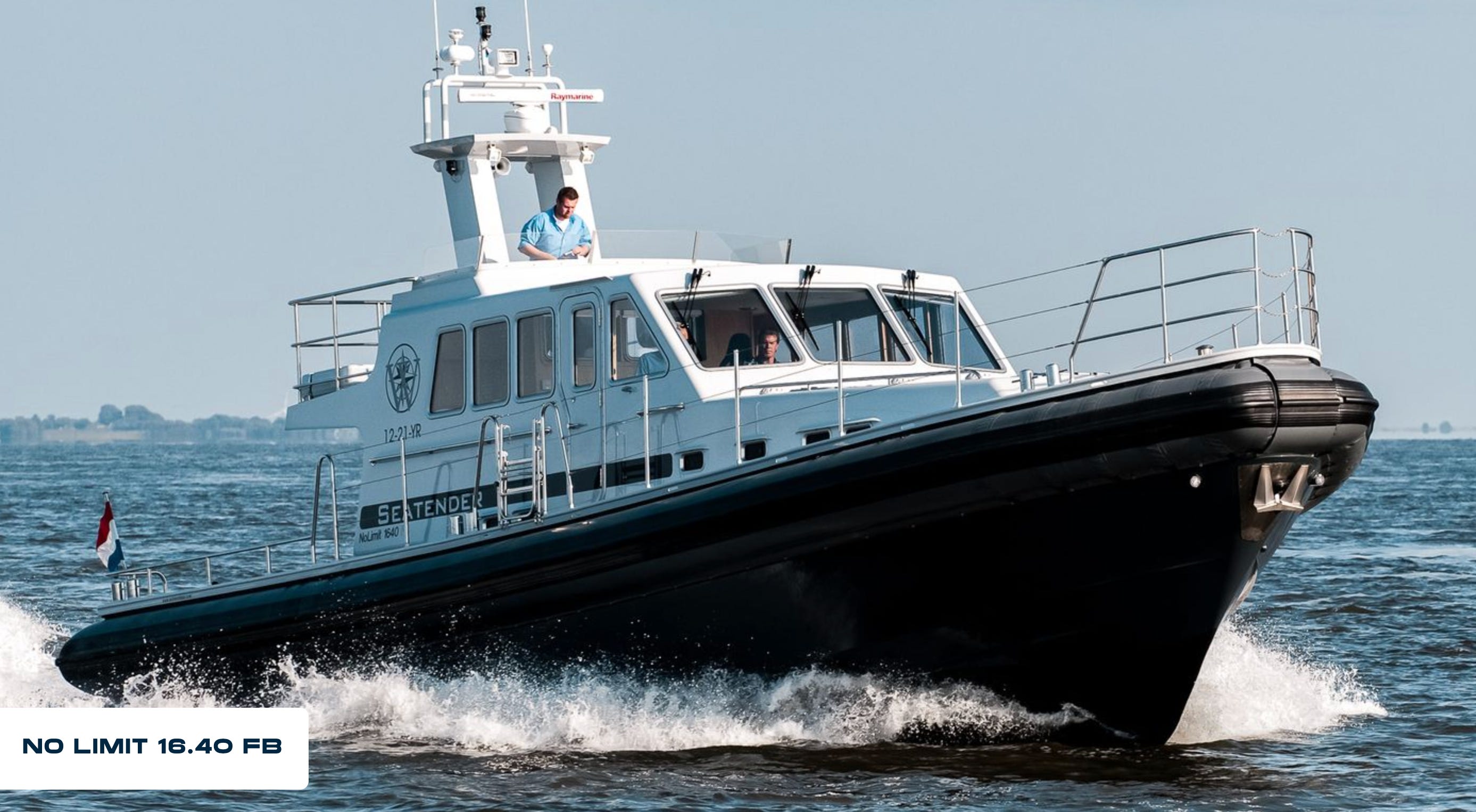
Next up is the 16.40, which is developed from the yard’s professional 1640 PRO workboat and the 16.40 FB, which is an aluminium flybridge version that runs twin Volvo Penta IPS900 pods, pushing her aluminium hull to a top speed of 32+ knots (I got to experience a sea trial on this boat - scroll through my playlist for the video).
No Limit ships also builds the Blauwe Stad Line, a tugboat-styled touring vessel in 8.8 and 10.4 metre versions that have been coming off the production line since 2004.
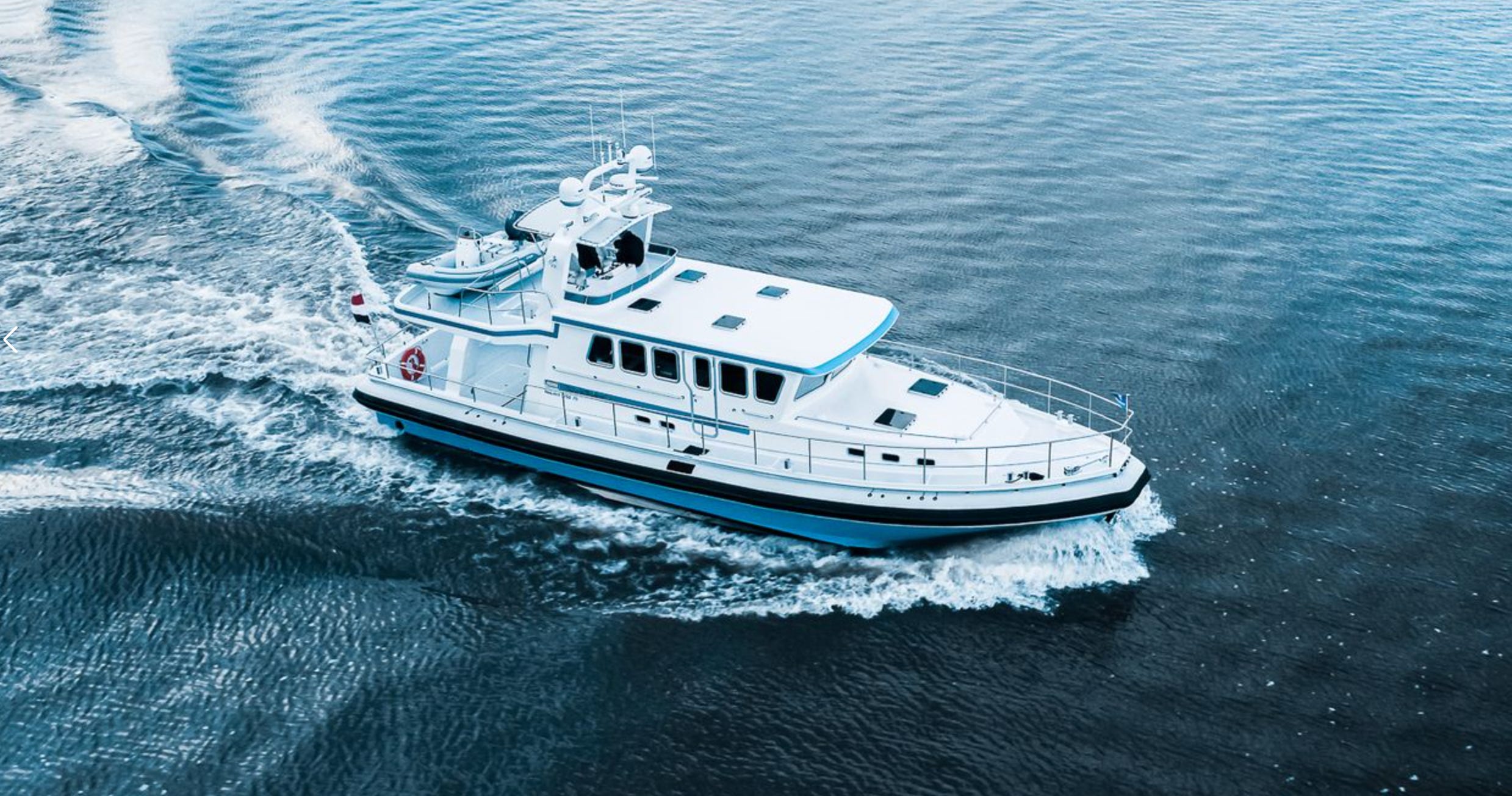
They also build the No Limit 17.50 FB and non-FB version, which, despite never having been on board (as it currently operates in Canadian waters), is one of my favourite mid-range explorer yachts.
I aim to head over to Canada at some point to film the 17.50 FB, but that depends on how many paying subscribers I have on my newsletter, as it is thanks to my paying subscribers that I can fund these trips aboard (I never take a payment for reviewing a boat, as my journalistic independence is very important to me).
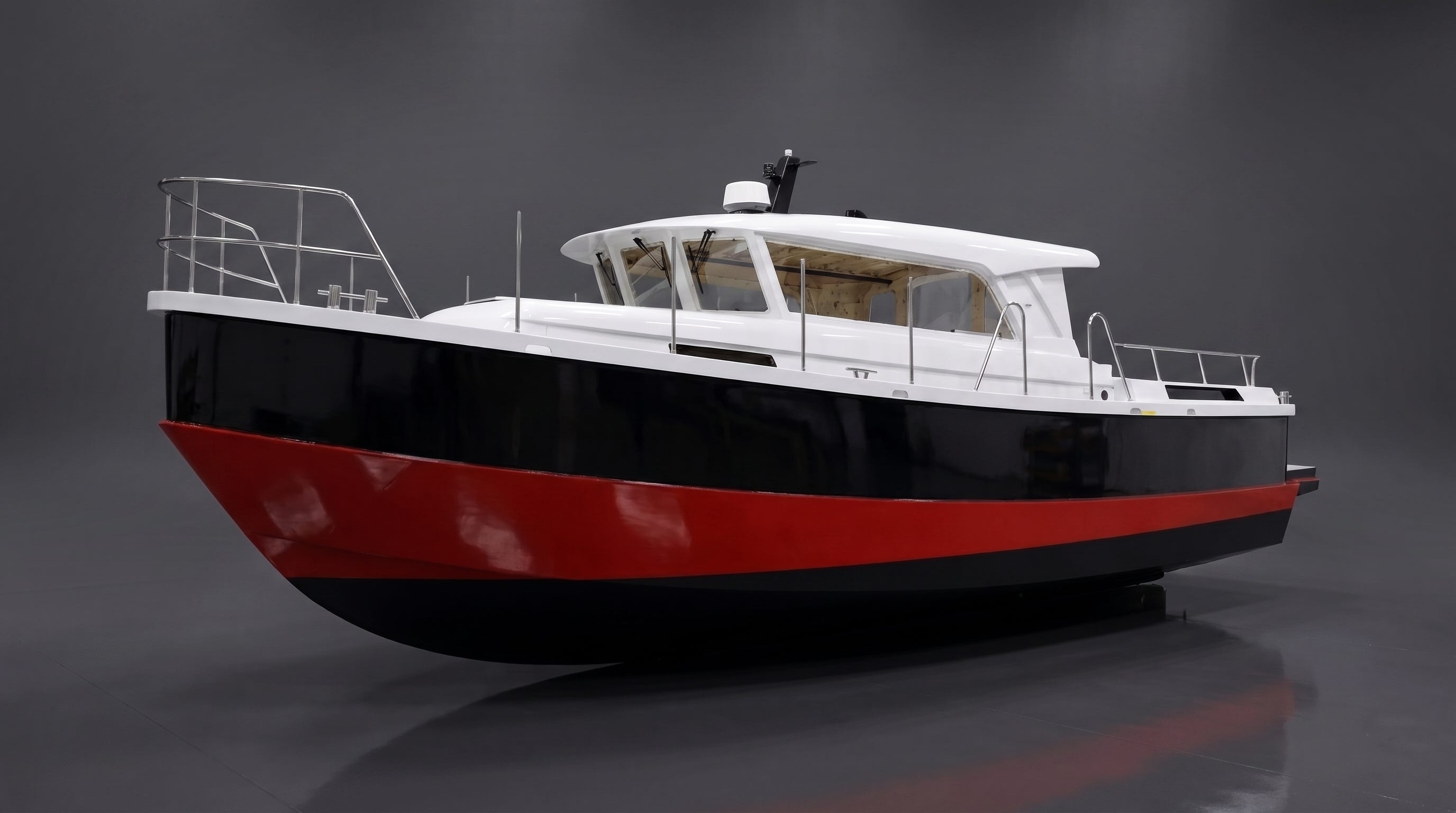
The Finished Boat
Despite her name, she measures 13.25 metres overall, with a 4.65 metre beam and a draft of around 1.2 metres, and she is the smallest private vessel that the yard currently builds. Like her larger siblings, her deep-V hull and decks are built from Corten steel plate, and her superstructure is made from seawater-resistant aluminium. Fully loaded, she displaces around 19 tonnes.
Twin Volvo Penta IPS600 pod drives power her, but an owner can spec a different propulsion and power setup if they want. The yard’s spec sheet quotes a design top speed of 28 knots, but in practice she achieves 30 knots, which is exactly what I expected when I saw her in the shed and seriously quick for a 19-tonne steel boat. She carries 2,250 litres of diesel in an integrated steel tank.
With her mast lowered, her air draft is just 3.3 metres, so low enough for bridges and canals that would otherwise stop most CE Cat ‘A’ vessels in their tracks.
Below deck, she has an owner’s cabin and a guest cabin, around 1.95 metres of headroom and a full-size walk-in shower with Grohe fittings. Underfloor heating runs throughout, with the aft cabin, shower and wheelhouse/saloon each controlled individually, fed by a Kabola 7kW diesel combi boiler that also supplies the hot water. The galley has an induction hob with four burners, an oven/microwave combination, and an integrated Isotherm Cruise Inox 130 fridge/freezer; she carries 690 litres of fresh water, along with a 385 litre blackwater tank.
She comes kitted out with a full Raymarine nav suite as standard (twin Axiom² Pro displays with an RMK10 remote keypad, Evolution autopilot, a Quantum Q24D Doppler radar, an AIS700 transponder, twin Ray90 VHF radios, a YachtSense Link WiFi router and an Airmar 110WX weather station, all networked over SeaTalk NG). Power comes from a Victron system with 10kWh of LiFePO₄ batteries, topped up by a second alternator on each engine, a 5kW Victron Quattro inverter/charger and a Northern Lights 5kW generator for time at anchor.
The rest of this article is for my premium subscribers, who make the whole ‘Yacht Buoy’ outfit possible, so if you are already a paying subscriber or you become one, then I would like to say a huge thank you for making all of this possible.
In the premium section below, I cover:
What hull number one actually means: why being the first of a new model is a genuine, albeit exciting, consideration and what I would want confirmed before ordering my own
Corten steel, explained in full: what this material buys you below the waterline.
IPS Drive: why IPS drives are a very clever option for this boat
My honest assessment of the 13.20 as a proposition: who this boat actually suits, what she costs and what it would realistically cost to own one
PLUS much more, not just in this article, but in all of the articles I have written and am yet to write!
